A shipment tracking platform should do more than show where a parcel is. It should pull events from every carrier and transport mode into one view, flag shipments that are going wrong before the customer notices, and feed the data back into inventory and transportation decisions. If yours only repeats a carrier’s status code, you have a lookup page, not a platform.
This guide is for ecommerce sellers, wholesalers, manufacturers and logistics managers who ship across carriers, countries or modes. It covers what separates real visibility from a tracking widget, a checklist for evaluating options, and how tracking connects to the courier, freight and fulfillment work behind it.
TL;DR
- A tracking platform earns its place when it covers parcel, ocean, air and road in one view, and when it raises exceptions, not just statuses.
- Professional visibility is about operations: inventory levels, transport planning and fewer surprises, not only customer notification emails.
- Evaluate coverage, data freshness, exception handling, integrations and who owns the data. Ask for a live test with your own lanes.
- Tracking is only as good as the shipping behind it. Reliable couriers, clean customs data and organized warehousing produce better events to track.
- Or-ner combines freight booking, couriers, customs clearance, warehousing and tracking in one platform for sellers and brands.
Table of Contents
- Tracking platform, software, system: what is the difference?
- What real visibility looks like
- The checklist: how to evaluate a shipment tracking platform
- Tracking, couriers and customs: why events depend on the work behind them
- Where tracking fits for different sellers
- Rolling out tracking without disrupting operations
- Our perspective
- Put tracking on top of reliable shipping
- FAQ
- Sources
Tracking platform, software, system: what is the difference?
Buyers use these words interchangeably, and vendors do too. In practice they describe three layers.
Tracking pages and lookups. A consumer-style tool where you paste a number and see a carrier’s last scan. Fine for one-off checks. It does nothing when you have 2,000 open orders.
Tracking software. Usually a tool tied to your store or shipping account. It collects carrier events, sends branded notifications and shows delivery status in a dashboard. Most small online shops start here.
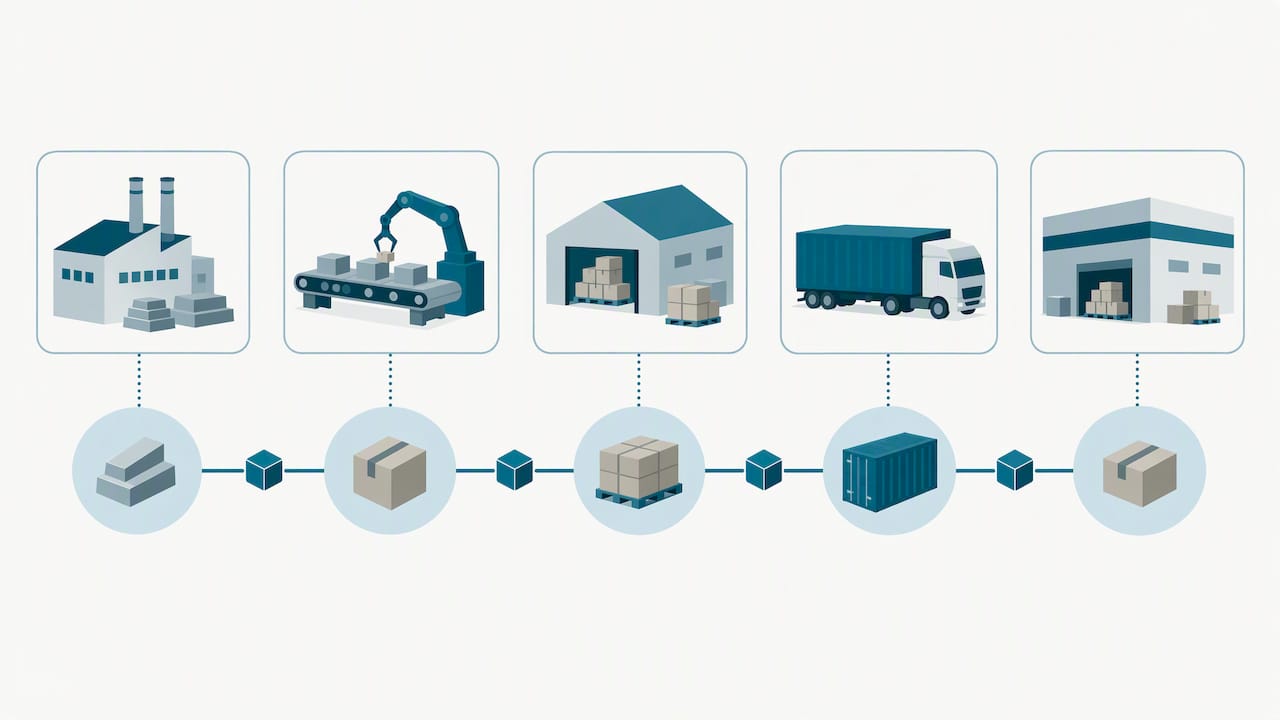
A shipment tracking platform. It connects several parties and modes: parcel carriers, ocean lines, air cargo, trucking, warehouses. It normalizes their events into one timeline per order or purchase order, applies rules, and exposes the data through dashboards and integrations.
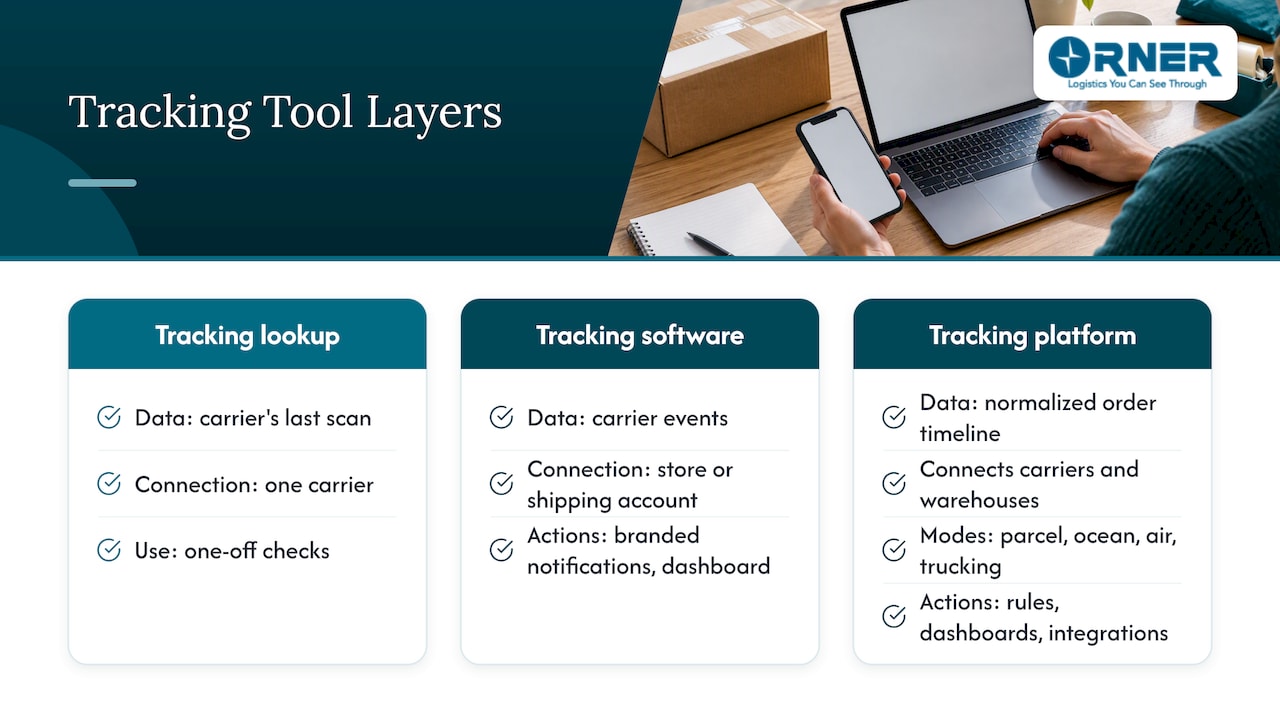
The third category matters once you import from overseas, split inventory across locations or sell through marketplaces such as Amazon, where late or lost shipments cost you ranking and money.
What real visibility looks like
It is tempting to judge a platform by its map. Maps are cheap. Three things are not.
Live data, not historical status codes
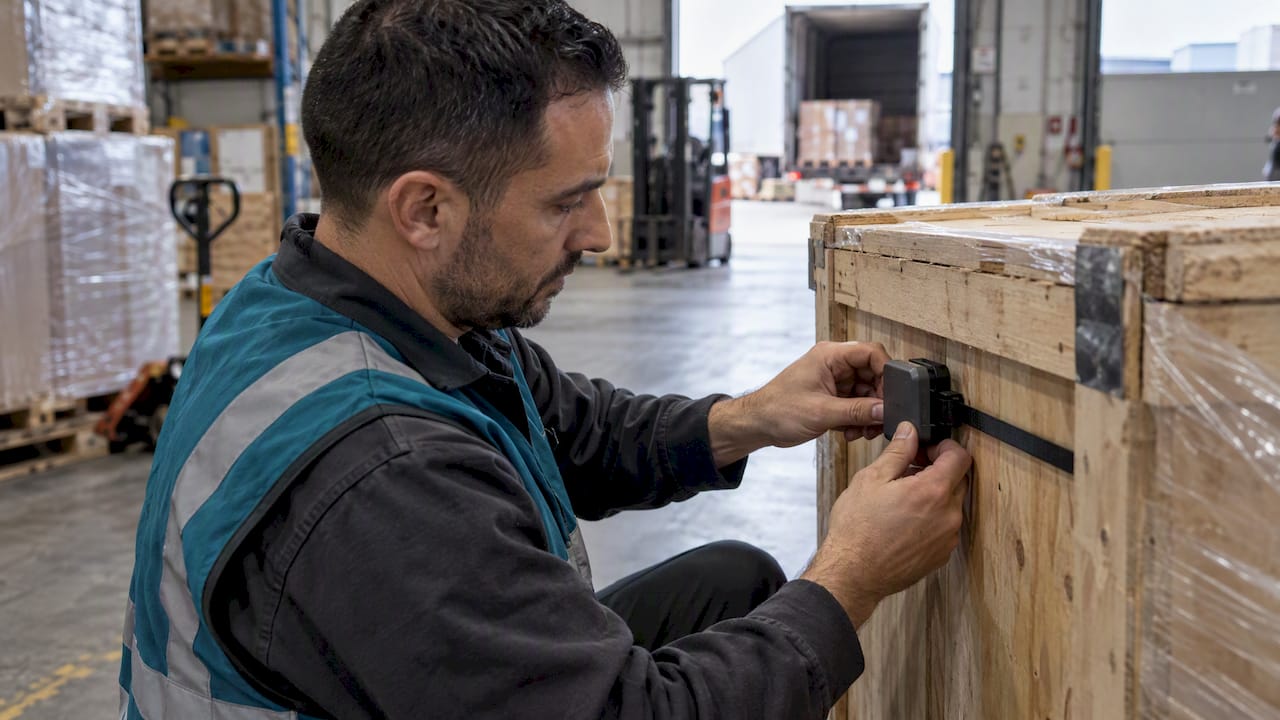
A 2025 survey of commercial tracking tools by Oak Ridge National Laboratory found that effective platforms typically combine IoT-enabled GPS hardware with predictive analytics. That gives real-time visibility, remote monitoring of shipment conditions and alerts, rather than a log of past status codes. You may not need hardware on every parcel, but the principle holds: a good platform tells you what is likely to happen next, not only what already did.
Visibility that serves operations
Analysts frame this clearly. Gartner’s work on real-time transportation visibility platforms describes it as a continuing priority for shippers and logistics providers, and it evaluates vendors on both their ability to execute and the completeness of their vision. In plain terms: fragmented data from a handful of carriers is not enough. The people using it are planners deciding when to reorder, which mode to book and where to route stock.
Shared data across the network
The direction of travel in the United States is toward shared data, not just two-way carrier updates. The Department of Transportation’s FLOW initiative is a government and industry partnership built as an information exchange for a forward-looking view of supply chain conditions. Participation is voluntary and requires sharing your own data. In return, members see aggregated, anonymized information, such as incoming container volumes and available equipment at major ports, to anticipate bottlenecks.
You do not need to join FLOW to learn from it. It shows what buyers should expect from tracking: forward-looking data, not rear-view data.
The checklist: how to evaluate a shipment tracking platform
Use these criteria with every option, including ours.
| Criterion | What to ask | Red flag |
|---|---|---|
| Mode coverage | Does it track parcel, ocean, air and road in one timeline? | Parcel only, or separate logins per mode |
| Carrier and lane coverage | Are the carriers and countries you use supported today? | “Coming soon” on your main lanes |
| Data freshness | How often are events pulled, and from what source? | Daily batch updates |
| Exception management | Does it flag delays, customs holds and missed scans, and who gets alerted? | You must search the dashboard to find problems |
| Integrations | Does it connect to your store, marketplace, warehouse and ERP? | CSV uploads as the only route in |
| Analytics | Can you measure on-time performance by carrier, lane and warehouse? | Only a count of delivered orders |
| Customer communication | Can you send proactive updates under your brand? | Customers are pushed to a carrier site |
| Data ownership | Can you export your history and use your own carrier accounts? | History lost when you leave |
Two practical tests are worth more than any demo. First, give the vendor ten real tracking numbers from your hardest lanes and see what comes back. Second, ask what happens when a container is held: who is told, how fast, and what the platform suggests doing.
Tracking, couriers and customs: why events depend on the work behind them
Tracking can only report what the network produces. A parcel with a poorly formatted label, missing commercial data or an unreliable last-mile carrier generates gaps, and no dashboard fixes a gap. That is why sellers who care about tracking end up caring about the whole chain.
Cross-border data is getting stricter
For low-value imports into the U.S., regulators are pushing for data up front. U.S. Customs and Border Protection runs the Section 321 Data Pilot, a voluntary collaboration with marketplaces, carriers, technology firms and logistics providers. CBP says it processes more than 600 million express consignment and international mail shipments a year, roughly 1.8 million a day. Sending clean data early helps focus attention on high-risk shipments and lets legitimate goods move faster. A platform that captures item-level data at booking, rather than after the fact, puts you in a better position.
Traceability beyond the parcel
Manufacturers and brands often need to know more than where a box is. NIST’s supply chain traceability framework describes a continuous history of events such as make, assemble, store, ship and receive, connected by verifiable links. It also notes that participants do not have to hand all their data to one central repository. For a buyer, the takeaway is to ask how a platform links events across suppliers, warehouses and carriers, and what you control.
Choosing the right shipping partner first
If your tracking shows frequent late scans from one courier, switch the courier, not only the software. Our guides on reliable couriers for ecommerce and reliable courier services in the USA explain how to judge delivery performance. For cross-border sellers, real-time data in logistics covers what live events can and cannot tell you.
Where tracking fits for different sellers
A small online store shipping domestically. You need branded notifications, multi-carrier status in one place and a way to see late parcels. Start with our overview of shipment tracking software options and keep integration effort low.
A cross-border seller importing from Asia. Your biggest risk is the middle of the journey: ocean or air legs, customs, then a handoff to a domestic carrier. Look for one timeline across those handoffs. Our guide to global order tracking shows how integration scope affects time to launch.
A wholesaler or manufacturer. Purchase-order-level visibility, container and pallet tracking, and inventory signals matter more than parcel notifications. See supply chain visibility tools for what logistics professionals typically need.
A brand selling through marketplaces. Inbound shipments to fulfillment centers need scheduling, labeling and tracking that match marketplace rules. Tracking must tie to inventory so you know what will be sellable and when.
Some cross-border enablement providers also bundle importer-of-record services, customs and multi-courier fulfillment for brands entering new regions. MoreShores’ fulfillment and logistics services are one example of that model, aimed at merchants selling into African marketplaces.
Rolling out tracking without disrupting operations
A phased rollout works better than a switch-over. A fuller version is in our six-step shipment tracking rollout; the outline is below.
- Baseline. Record current late, lost and exception rates by carrier and lane for 30 days.
- Connect sources. Link stores, marketplace accounts, carrier accounts and warehouse systems.
- Define exceptions. Decide what counts as delayed, who is alerted and what the response is.
- Pilot one lane. Pick your busiest or most troublesome route and compare against the baseline.
- Turn on customer updates. Send proactive messages only when data quality is proven.
- Review monthly. Use analytics to renegotiate with carriers and rebalance stock.
The point of step 3 is the one most teams skip. Without agreed responses, alerts become noise.
Our perspective
Most sellers come to us asking for tracking and discover their real problem sits upstream. Late events usually trace back to a booking made without enough data, a customs document that arrived after the cargo, or stock sitting in the wrong warehouse. Tracking exposes these problems. It does not remove them.
That is why we built Or-ner as one platform rather than a stand-alone tracker. Freight booking, courier services, customs clearance, warehousing, inventory and catalog management sit alongside real-time visibility, automation and exception management, across ocean, air and land. When one system holds the booking and the events, you can see why a shipment slipped and fix the cause. We also integrate with major ecommerce operators such as Amazon, because many of our customers sell there and need inbound shipments to line up with marketplace requirements.
Our advice: pick the platform that shortens the time between a problem occurring and someone acting on it. Ask every vendor, us included, to show that on your own shipments.
— Maayan
Put tracking on top of reliable shipping
If you want visibility and the logistics behind it from one provider, Or-ner covers reliable courier services, ocean and air freight, cross-border shipping, e-commerce fulfillment and more. You can start a request through freight booking, or look at customs clearance and warehousing if your shipments cross borders. We do not publish prices, so tell us your lanes and volumes and we will scope it with you.
FAQ
What is a shipment tracking platform?
It is a system that collects shipment events from carriers and transport providers, merges them into one timeline per order and alerts you when something goes off plan. Better ones cover several modes, such as parcel, ocean, air and road, and connect to your store and warehouse data.
Do I need tracking software or a full platform?
If you ship mostly domestic parcels through a few carriers, tracking software tied to your store may be enough. Once you import freight, use several warehouses or sell on marketplaces, a platform that unifies modes and manages exceptions saves far more time.
Can one tool track shipments worldwide?
Some tools cover many carriers and postal services, but coverage varies by country and mode, and data quality varies by carrier. Test with real tracking numbers from your own lanes before you commit.
What should I look for first?
Start with coverage of your actual carriers and lanes, then how exceptions are detected and routed to people. Integrations and data export come next. Branded customer pages matter, but they come after the operational basics.
Sources
- CBP and trade partners take action to secure ecommerce supply chains
- Survey Report on Commercial Off-The-Shelf (COTS) Tracking Tools, Oak Ridge National Laboratory
- Gartner Magic Quadrant for Real-Time Transportation Visibility Platforms
- Frequently Asked Questions about FLOW, U.S. Department of Transportation
- Joining and Onboarding, FLOW, U.S. Department of Transportation
- FLOW expands to largest West Coast container ports, U.S. Department of Transportation
- IR 8536, Supply Chain Traceability: Manufacturing Meta-Framework, NIST