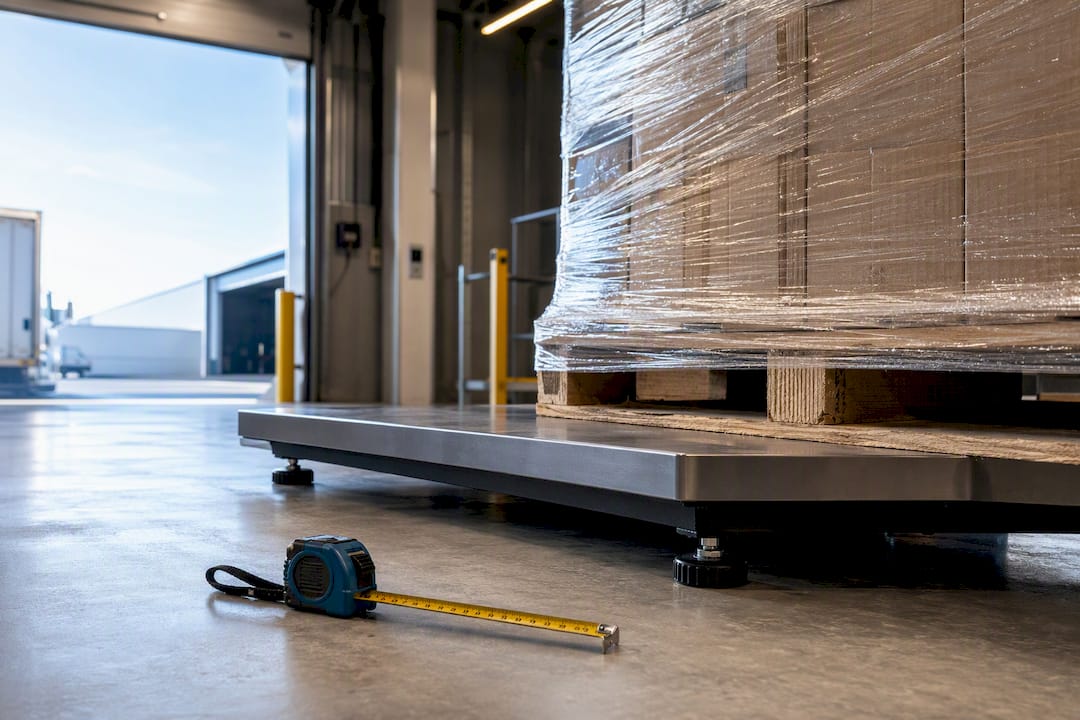
A reliable freight shipping estimate starts with exact weight, palletized dimensions, pickup and delivery postcodes, and a chosen service level. Feed those into a freight calculator or a broker quote and you’ll get a defensible number fast. Density and freight class, along with accessorials like liftgate or residential delivery, are what typically separate that first estimate from the invoice you actually pay.
TL;DR:
- Properly measuring weight, dimensions, and pallet count before requesting quotes prevents invoice surprises caused by reweighs or reclassification fees.
- Shipping costs can vary widely based on freight density, with lower-density cargo often classified higher and charged at a higher rate per pound.
- Accessorial charges such as liftgate, residential delivery, or inside pickup can add 15 to 40 percent to the base LTL rate, making accurate flagging essential upfront.
- Mode selection depends on shipment size and weight, with under 5,000 pounds suited for LTL, 6 to 12 pallets for combined LTL, PTL, or FTL, and above 12 pallets favoring FTL for cost and safety.
- Using saved shipment templates and integrated dimensioning tools can significantly reduce quoting errors and streamline requoting for recurring shipments.
Table of Contents
- How to Calculate a Freight Shipping Estimate Step by Step
- What Actually Drives Your Freight Costs?
- LTL, FTL, or PTL: Which Mode Actually Fits Your Load?
- Show Me the Math: A Worked Freight Class and Quote Example
- Why Freight Estimating Still Trips Up Experienced Shippers
- Get a Freight Estimate You Can Actually Book Against
- Sources
- FAQ
How to Calculate a Freight Shipping Estimate Step by Step
Most bad quotes trace back to bad inputs, not bad math. Before you touch a truck freight calculator or call a broker, gather the numbers carriers actually price against.
- Weigh the shipped unit, not the product alone. Include the pallet (35 to 50 pounds for a standard wood pallet), stretch wrap, and any dunnage on a calibrated scale, since carriers reweigh at the terminal and will reclassify shipments with inaccurate figures.
- Measure length, width, and height to the farthest protrusion, including overhangs and crating, per pallet.
- Count pallets and note stackability. A non-stackable load changes both pricing and equipment needs.
- Confirm pickup and delivery postcodes, and flag anything unusual: no dock, residential address, limited access hours, or liftgate required.
- Pick a service level (standard, guaranteed, expedited) and disclose hazardous-material status before requesting a rate, not after.
- Run the numbers through a calculator for quick validation, or send them to a broker for complex or high-volume lanes where rate negotiation matters more than speed.
Instant calculators work well for straightforward, single-pallet domestic lanes where you need a ballpark in under a minute. Complex freight, multi-stop routes, or anything crossing a border generally warrants a broker or 3PL quote, since those requests need someone accounting for customs, capacity, and lane-specific pricing.
Shippers who standardize this process avoid the most common failure point in freight quoting. Incomplete or inconsistent shipment details can inflate quotes by 10 to 20 percent once carriers correct them at the dock.
Pro Tip: Build a saved shipment template for every recurring SKU or pallet configuration. Once weight and dimensions are locked in, requoting takes seconds instead of a fresh measurement every time.
What Actually Drives Your Freight Costs?
Two shipments with identical weight can cost wildly different amounts, and density is usually why. Freight density in pounds per cubic foot (PCF) is calculated as total weight divided by total volume, where volume in cubic feet equals length times width times height in inches, divided by 1,728. Carriers map that PCF to an NMFC freight class, and lower density freight (bulky, light items) gets a higher class number and a higher rate per hundredweight. This is why a pallet of pillows can cost more to ship than a pallet of steel brackets at the same weight.
LTL carriers bill using CWT (cost per hundred pounds) tied to weight breaks, so pricing isn’t linear. A shipment that crosses from 499 pounds into the 500-pound weight break can actually get cheaper per pound. That’s part of why measuring the full shipped unit, pallet and packaging included, matters so much: shaving or padding a few inches changes your class.
Accessorial charges routinely add 15 to 40 percent on top of the base LTL rate, and most shippers never see them coming until the invoice lands.
The usual culprits:
- Liftgate service for docks without a loading ramp
- Residential delivery fees for non-commercial addresses
- Reweigh and reclassification charges when declared dimensions or weight don’t match what the carrier measures
- Fuel surcharges, which float weekly against a published diesel index and can shift a quote before pickup even happens
- Limited-access or inside-delivery fees for schools, construction sites, or storage facilities
Quotes also carry validity windows, often just a few days, because fuel indexes and market capacity move constantly. A rate you locked in on Monday may not hold by Friday if diesel prices spike or capacity tightens on that lane.
LTL, FTL, or PTL: Which Mode Actually Fits Your Load?
Mode selection is where most shippers leave money on the table, mainly because they default to whatever they used last time instead of pricing the load against every option. LTL is priced per hundredweight and freight class, which rewards small, dense shipments. FTL is priced per lane or per mile, flat regardless of how full the trailer is. Partial truckload (PTL) sits in between, priced more like volume or flat freight, and it’s the mode most shippers under-quote simply because they never ask for it.
The rough breakeven sits around 8 to 12 pallets or 10,000 to 15,000 pounds, but that threshold moves with lane, freight class, and current market capacity. Treat it as a starting point, not a rule.
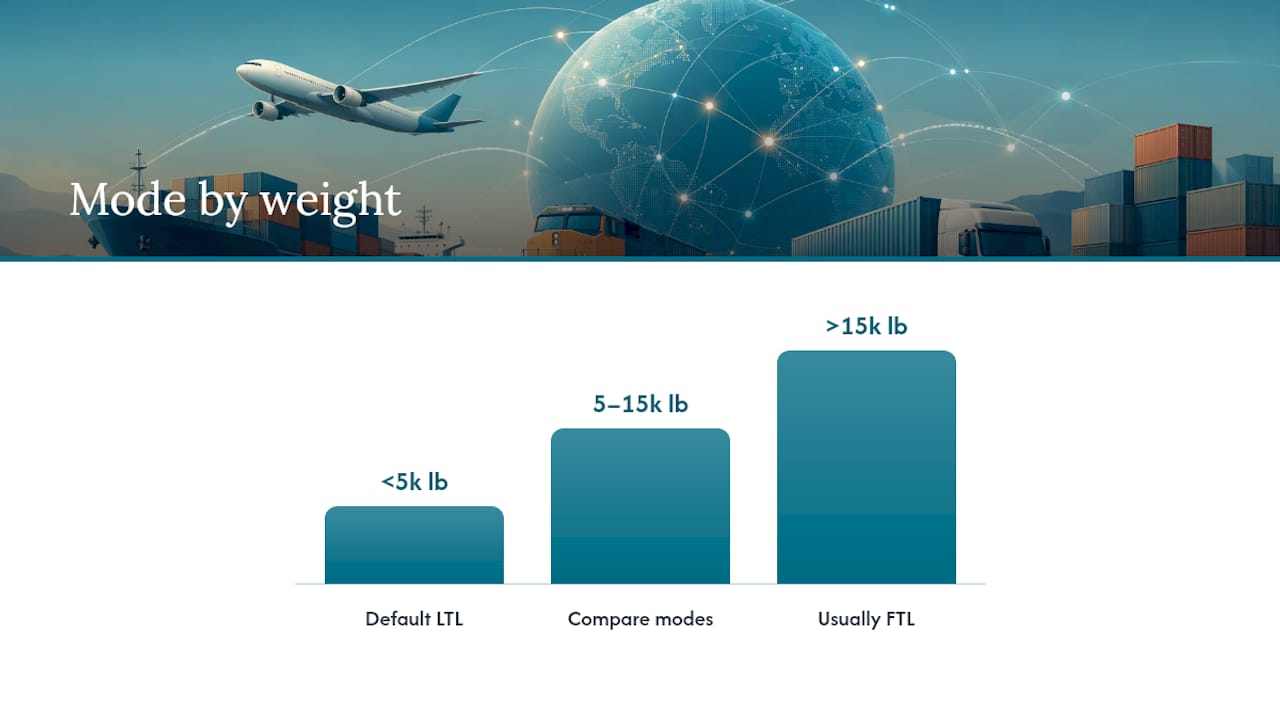
- Under roughly 5,000 pounds: default to LTL and compare two or three carriers.
- In the 6 to 12 pallet range: request LTL, PTL, and FTL quotes side by side. This is the zone where PTL often wins on both cost and handling, since freight moves without transferring between trucks at terminals.
- Above roughly 12 pallets or 15,000 pounds: FTL usually wins on cost, transit time, and damage risk, since the freight isn’t handled by multiple carriers along the way.
- Repeat lanes: negotiate contract rates once volume is predictable. Spot-market pricing punishes shippers who requote from scratch every time.
Pull 90 days of actual lane spend before committing to a mode. A static weight threshold ignores how much a single freight class shift or a capacity crunch on a specific lane can flip the math.
Show Me the Math: A Worked Freight Class and Quote Example
Here’s the density formula in action, using the same math carriers apply at the dock.
Step 1: Find the volume. A pallet measuring 48 by 40 by 60 inches equals 115,200 cubic inches. Divide by 1,728 to get 66.67 cubic feet.
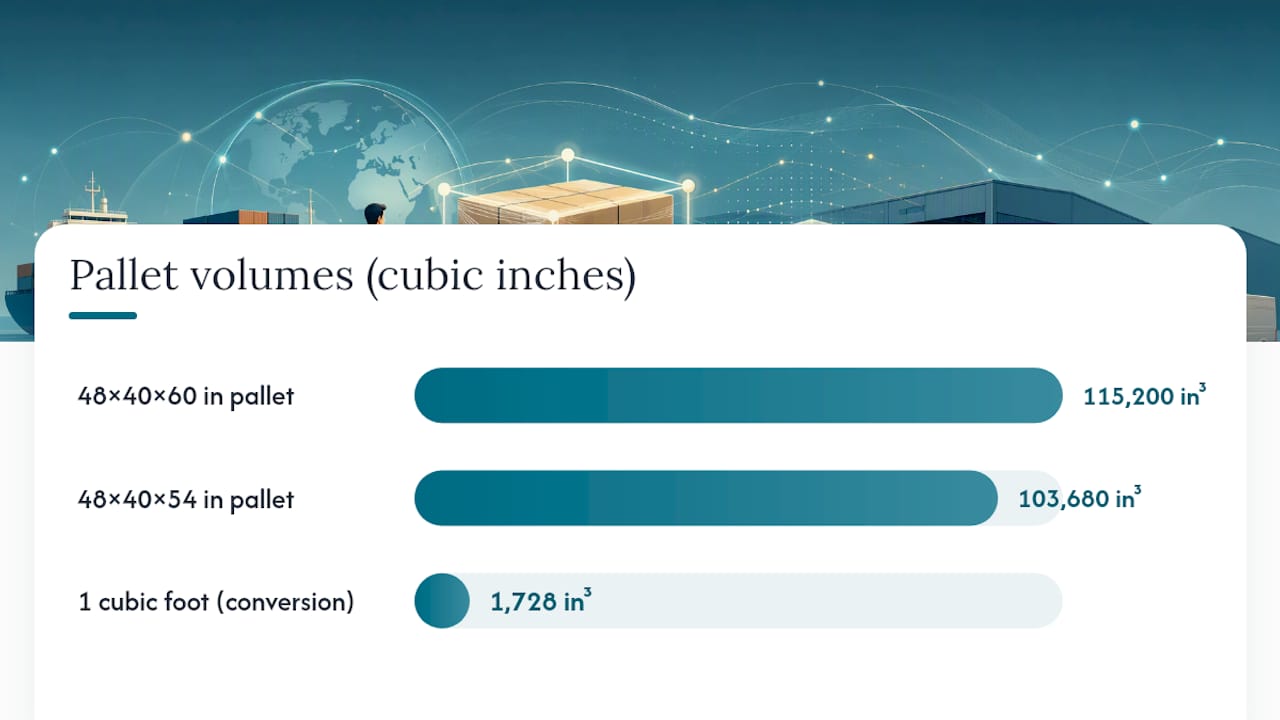
Step 2: Calculate density. At 900 pounds, that’s 900 divided by 66.67, or 13.5 PCF.
Step 3: Map to freight class. A density of 13.5 PCF lands at Class 77.5. Compress that same pallet to 54 inches tall instead of 60, and density rises to 15.0 PCF, dropping it to Class 70, one class lower and a meaningfully cheaper rate.
| Shipment scenario | Approximate mode fit | Why |
|---|---|---|
| 9 pallets, 800-mile lane, mixed density | Request LTL, PTL, and FTL | Sits in the classic breakeven gray zone |
| 2 pallets, dense electronics, regional lane | LTL | Below breakeven, low class number |
| 9 pallets, same 800-mile lane | FTL | Above pallet/weight breakeven, better damage profile |
For that 9-pallet, 800-mile load, LTL pricing (CWT times class) frequently runs higher than PTL once accessorials are added, while FTL can undercut both if the truck is priced per mile regardless of fill. The only way to know for a specific lane is to request all three.
- Measure every pallet to its tallest and widest point, not just the base footprint.
- Weigh the full unit, including pallet and wrap.
- Recalculate PCF whenever packaging changes.
- Compare the resulting class against your last invoice to catch any carrier-side reclassification.
Why Freight Estimating Still Trips Up Experienced Shippers
Most freight cost overruns don’t come from carriers gaming the system. They come from shippers treating an estimate as a fixed number instead of a moving target tied to density, fuel indexes, and lane capacity. The math is public. The NMFC density tables exist for anyone to check. Yet plenty of logistics teams still eyeball pallet dimensions instead of measuring to the farthest protrusion, and then act surprised when a reweigh fee shows up on the invoice.
The bigger blind spot is mode selection. Shippers get comfortable with LTL because it’s familiar, and they skip requesting a PTL quote even in the exact pallet range where it tends to perform best. That habit costs real money on recurring lanes. The fix isn’t complicated: build the discipline of quoting every mode for mid-size shipments, and treat your first calculator number as a hypothesis to verify, not a final answer. Automated dimensioning tools and saved shipment templates close most of the gap between what a shipper estimates and what a carrier actually bills, because they remove the guesswork that reclassification fees exploit.
— Maayan
Get a Freight Estimate You Can Actually Book Against
Some freight platforms turn the checklist in this guide into something you don’t have to rebuild every time you ship by using saved shipment templates, carrier integrations, and dimensioning tools so the weight, dimensions, and pallet count you enter once carry through to your next quote request, cutting the back-and-forth that leads to reweigh and reclassification surprises.
If you’re ready to move from estimating to actually booking a shipment, the step-by-step freight booking guide walks through the process for ecommerce sellers, from entering shipment data to confirming carrier pickup. Start there and get a number you can trust before the truck ever shows up.
Sources
- Freight class & density: NMFC codes explained — PackCalc
- Warehousingcosts
- Freight Quote Guide: How to Get Accurate Rates in 2026 — CharterSync
FAQ
What Information Do I Need for an Accurate Freight Shipping Estimate?
You need total shipped weight (including pallet and packaging), full pallet dimensions, pallet count, pickup and delivery postcodes, and your chosen service level. Missing any of these is the most common reason a quote changes after booking.
How Do I Calculate Freight Density?
Divide total weight in pounds by total volume in cubic feet, where volume equals length times width times height in inches divided by 1,728. A 48 by 40 by 60 inch pallet weighing 900 pounds works out to 13.5 PCF, which maps to Class 77.5.
When Should I Choose FTL Instead of LTL?
FTL typically makes sense above roughly 12 pallets or 15,000 pounds, though the actual breakeven shifts with lane, freight class, and current market capacity. For loads between 6 and 12 pallets, request LTL, PTL, and FTL quotes together before deciding.
Why Did My Final Freight Invoice Differ From the Estimate?
Reweighs, reclassification, and accessorials like liftgate or residential delivery are the usual causes, and these can add 15 to 40 percent to a base LTL rate. Fuel surcharges tied to weekly diesel index updates can also shift the total between quote and pickup.
How Fast Can I Get a Freight Quote Back?
Instant freight calculators return a number in seconds to minutes for straightforward domestic lanes. Broker or 3PL quotes for complex, cross-border, or high-volume shipments typically take longer, since they involve capacity checks and rate negotiation. Some platforms use saved templates and carrier integrations to shorten that turnaround for repeat shippers.