The best way to ship small packages is the cheapest service that still meets your delivery promise, and that depends on three things: the weight, the box dimensions and where it is going. For light parcels sent inside the U.S., a postal ground service is usually the lowest-cost starting point. Private ground carriers can win on heavier or denser boxes, on certain zones, and on negotiated commercial rates. If you ship more than a handful a week, the real savings come from comparing rates per order, not picking one carrier forever.
This guide is for ecommerce sellers, small brands and logistics managers who ship small boxes, polybags and padded mailers every day. It explains how rates are really built, which service types fit which parcels, and when it makes sense to hand the whole job to a fulfillment partner.
TL;DR
- Small, light parcels (under a pound) usually ship cheapest on a postal ground service. Heavier or denser boxes often price better on private ground services or cubic pricing.
- Package size matters as much as weight. Carriers bill on dimensions, so a smaller box is often the quickest saving.
- Do not commit to one carrier. Rate shop each order across service types and review the mix quarterly.
- If you sell online, a delivery promise is a legal commitment in the U.S. Pick a service you can actually hit.
- Past a few hundred parcels a month, outsourcing pick, pack and shipping to a 3PL usually saves more than another rate tweak.
Table of Contents
- What “small package” means to a carrier
- The main ways to ship a small package in the U.S.
- How to find the best rate for your parcels
- Cut the cost before you compare carriers
- Speed, tracking and what customers expect
- Sending a single box versus shipping every day
- Where a fulfillment partner changes the math
- Our view: stop asking “which carrier” and start asking “which parcel”
- Common mistakes with small-parcel shipping
- FAQ
- Sources
What “small package” means to a carrier
Carriers do not share one definition, but the practical cut-offs are consistent. Under 1 lb, your parcel is in the lightest price tiers. Between 1 and 5 lb you are in the zone where weight and zone both move the price. Above that, dimensions start to dominate, and a bulky 3 lb box can cost more than a dense 6 lb one.
Two numbers decide the bill:
- Actual weight, what the scale says.
- Dimensional (volume) weight, calculated from length, width and height. If it exceeds actual weight, you pay for the larger figure.
That is why a 10-ounce pair of shoes in an oversized box can cost more than a 2 lb book in a snug mailer. Measure the packed box, not the product.
The main ways to ship a small package in the U.S.
By service type, not by brand, you have five realistic options.
| Option | Best for | Typical strengths | Watch out for |
|---|---|---|---|
| Postal first-class style service | Flat, light items, under 16 oz | Lowest price tier for light parcels, no residential surcharge | Limited tracking detail on some tiers, weight cap |
| Postal ground service | Parcels up to 70 lb at a simple ground price | One product for light and mid-weight parcels | Delivery windows are estimates, not guarantees |
| Postal priority service | 1 to 5 lb, 1 to 3 day expectations | Flat-rate boxes can suit dense items | Flat rate is poor value for light items |
| Private ground service | Mid-weight, higher volume, commercial contracts | Negotiated discounts, strong tracking, pickup | Surcharges and dimensional pricing |
| Express / air service | Time-critical, high-value parcels | Fast, guaranteed windows | Highest cost per parcel |
The national postal service has pushed hard into this space. A GAO review of the Postal Service describes its ground product as a single service for parcels weighing up to 70 pounds, built by merging three earlier products, and notes that First-Class Mail volume fell 50 percent between 2007 and 2025. That decline is why parcels now matter so much to the postal strategy, and why its small-parcel pricing stays competitive.
Why the cheapest option is not always the same one
The market is no longer a two-player game. According to a 2025 policy paper on parcel shipping, the postal service held the largest share of parcel volume in 2024 at 31%, with Amazon’s own delivery network close behind at 28%. The same paper notes that the private national carriers earn more per package because they lean on heavier and expedited freight. For you, the lesson is practical: carriers are chasing the most profitable segments, which can shift pricing on lightweight ecommerce parcels from year to year.
How to find the best rate for your parcels
Forget universal rankings. Run your own numbers in five steps.
- Pull 30 to 90 days of orders. Note weight, packed dimensions and destination ZIP for each.
- Group them into bands. For example: under 8 oz, 8 to 16 oz, 1 to 3 lb, 3 to 10 lb.
- Price each band across a postal ground service, a private ground service and a priority option, using commercial rather than retail rates where you can.
- Add the extras: residential and delivery-area surcharges, fuel, signature fees, address correction.
- Pick a winner per band, not per business. It is normal for sub-pound parcels to go one way and 3 to 5 lb parcels another.
If you want to automate this, a structured approach to carrier rate shopping through an auditable API checklist shows what to verify before you let software choose the carrier for each order.
For a deeper look at how the numbers are built, see our guides on how to calculate shipping rates for ecommerce sellers and shipping rates explained for 2026.
A worked example
Imagine a store shipping three products:
- A 6 oz phone case in a padded mailer, 9 x 6 x 1 inches.
- A 14 oz candle in a small box, 5 x 5 x 5 inches.
- A 2.5 lb set of kitchen tools in a 12 x 8 x 4 inch box.
The phone case is a clear fit for a light-parcel postal service. The candle is just under the 16 oz line, so the postal first-class style tier is still in play, but a few ounces of extra packing material can push it into a higher band: weigh it packed. The kitchen set is where rate shopping pays off, because zone and box volume matter more than the product weight. Run all three and you will often find three different winners. The prices change, which is why we do not quote a table of dollar figures that would be stale within a season.
Cut the cost before you compare carriers
The cheapest parcel is often the one you repackaged.
- Right-size the box. Removing an inch from each dimension can drop a parcel into a lower volume tier.
- Switch to poly mailers for soft goods. They weigh less and take less volume.
- Ask about cubic pricing. Postal commercial cubic pricing sets rates by package volume rather than weight, which can suit small, dense, heavy-for-their-size items. The rate schedule is in USPS Notice 123, and eligibility rules apply, so check them before you plan around it.
- Use commercial, not retail, rates. Printing labels through a shipping account typically undercuts the counter price on the same parcel.
- Watch surcharges. Supply Chain Dive reported that growing surcharges can limit the savings shippers get, even when base rates look attractive. Read the surcharge table, not only the headline rate.
- Consolidate. Two items in one box usually beat two parcels.
Speed, tracking and what customers expect
Price is half the decision. The other half is what you promise at checkout. The U.S. Department of Transportation’s supply chain assessment of freight and logistics describes how ecommerce growth has raised delivery expectations, with a large share of U.S. consumers expecting same-, next- or two-day delivery. You do not have to meet that everywhere. You do have to be honest about what you can deliver.
A sensible rule for small parcels:
- Use a ground-type service for standard orders and show a realistic range, such as 2 to 5 business days.
- Offer a faster priority or express option for customers who will pay for it.
- Pass the tracking number to the customer automatically. Fewer “where is my order” emails is a real cost saving.
Our guide to what shoppers demand from delivery in 2026 goes deeper on the expectations side.
Your delivery promise is a legal matter
If you sell online in the U.S., shipping timing is regulated. The FTC’s prompt delivery rules for internet sellers require that you have a reasonable basis for the shipping time you state, and that you notify customers of delays and give them the option to cancel for a refund. The FTC has also written about enforcement actions that show why records of your shipping procedures matter. The practical step: choose a service whose real transit times support your checkout message, and keep documentation. For anything beyond that, such as how the rule applies to your specific terms, talk to a attorney who handles ecommerce compliance. We also cover the topic in ecommerce shipping laws sellers must know.
Sending a single box versus shipping every day
The answer changes with volume.
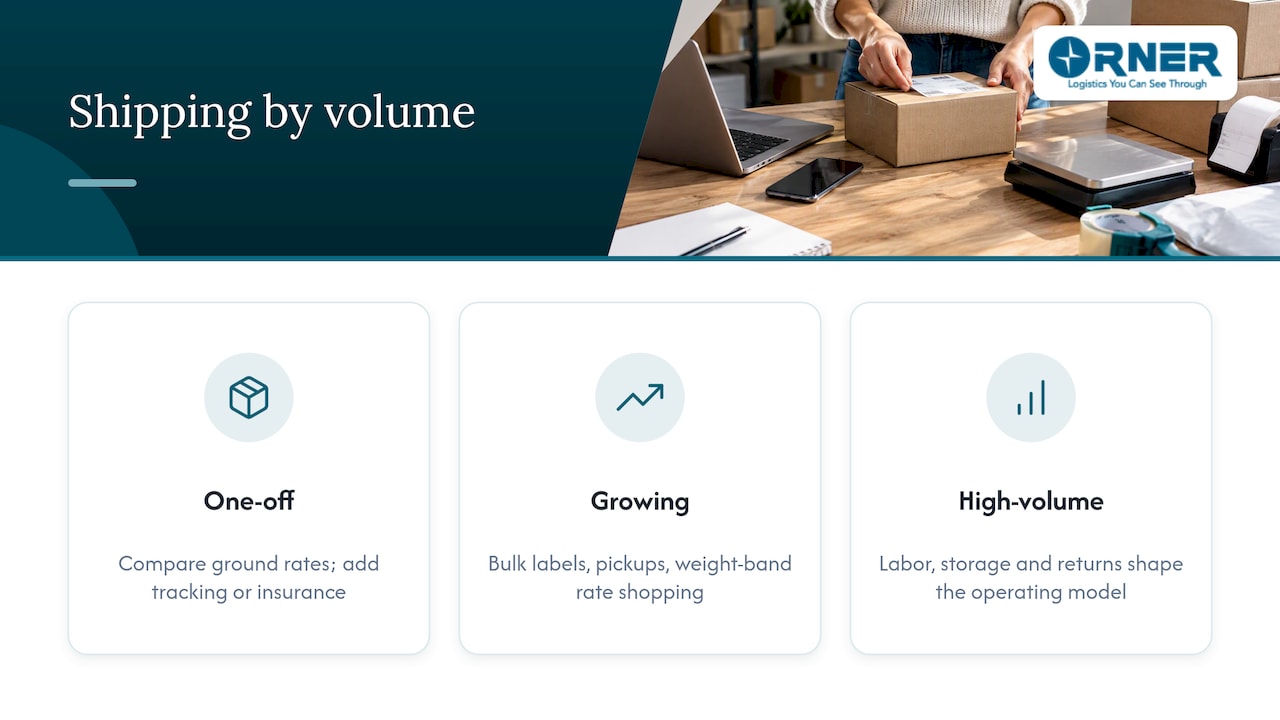
One-off senders (a few parcels a month). Use a retail shipping counter or an online label tool, compare a postal ground service against a private ground service for your destination, and choose the lower price that meets your date. Pay for tracking and, if the item is valuable, insurance.
Growing sellers (dozens to hundreds a week). You are now a commercial shipper. Open commercial accounts, print labels in bulk, schedule pickups, and rate shop by weight band. Packaging optimization pays for itself quickly at this stage.
High-volume or multi-channel sellers. Parcel rates are only one line. Labor for picking and packing, storage, returns and split shipments across channels often cost more than postage. This is where the best shipping setup is no longer a carrier choice but an operating model.
Where a fulfillment partner changes the math
When you ship from a spare room or your own stockroom, you carry every cost: staff time, packing materials, carrier minimums and missed pickups. Moving inventory into a fulfillment network can shorten the distance each parcel travels, which lowers zones and speeds delivery. It also keeps you from rebuilding your shipping process every time volume jumps.
Or-ner is a logistics and supply chain platform built for ecommerce sellers, manufacturers, wholesalers and brands. Our offering covers courier services, e-commerce fulfillment, 3PL services for pick and pack, storage, labeling and palletization, warehousing, inventory management and freight booking, with real-time shipment tracking and exception management in one place. If your small-parcel volume has outgrown a kitchen table, see our reliable courier and fulfillment services or read how outsourcing order fulfillment works step by step. We do not publish fixed prices, because rates depend on your volumes, parcel profile and lanes.
Our view: stop asking “which carrier” and start asking “which parcel”
We talk to sellers every week who are certain they have found the best carrier. Usually they have found the best carrier for one product. Their small, light orders are well served, while their mid-weight boxes quietly cost them an extra dollar or two each.
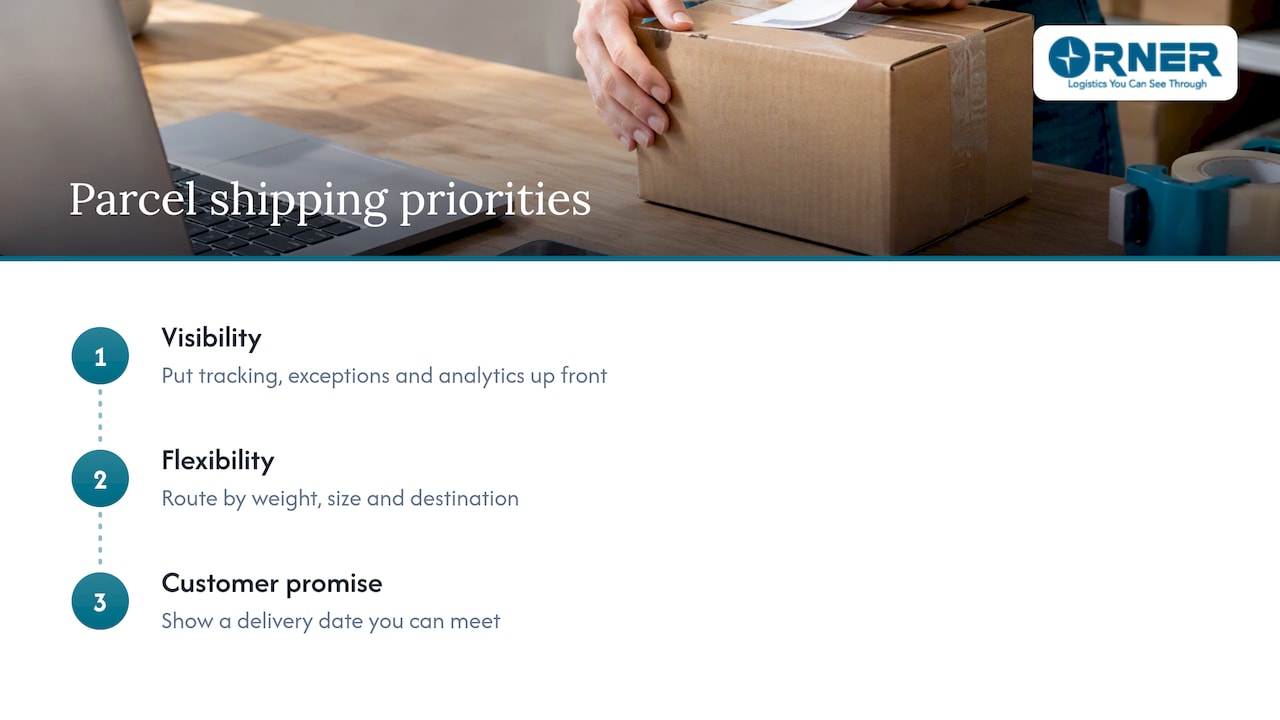
Here is how we think about it at Or-ner. Visibility comes first: you cannot optimize what you cannot see, so tracking, exceptions and analytics should sit in front of you, not buried in five carrier portals. Then flexibility: a good setup lets you route each order by its weight, size and destination, and change the routing when the market changes. Finally, ownership of the customer promise: the delivery date you show at checkout is a commitment, so we would rather you pick a slightly slower service you can hit than a fast one you cannot.
For most small sellers, our advice is simple. Start with the lowest-cost service for each weight band, review it every quarter, and move to a fulfillment partner when logistics begins to eat time you would rather spend on product and marketing.
— Maayan
Common mistakes with small-parcel shipping
- Shipping a small item in a large box. You pay for the air.
- Using flat-rate boxes for light goods. Flat rate rewards dense items, not feathers.
- Ignoring residential and delivery-area charges. They can erase a low base rate.
- Estimating weight. Weigh and measure the packed parcel, then let the label software verify it.
- Promising speed you cannot deliver. This causes refunds and, in the worst case, compliance trouble.
- Never revisiting your rates. Carrier pricing and strategy shift regularly, as the parcel market analysis makes clear.
For a broader menu of options, our article on the best ways to ship small packages for ecommerce and the guide to reliable parcel delivery for ecommerce cover additional scenarios.
FAQ
What is the cheapest way to ship a small package?
For parcels under about a pound, a postal first-class style or ground service is usually the lowest-priced option. As weight and box size grow, private ground services and cubic pricing can come out ahead. Price each weight band separately instead of assuming one winner.
Is it cheaper to ship small packages with the postal service or a private carrier?
It depends on weight, dimensions and zone. Light parcels tend to favor the postal service, while heavier or denser boxes and sellers with negotiated commercial contracts often find private carriers cheaper. Always compare the final price including surcharges.
What is the best way to ship a box that is small but heavy?
Check cubic pricing and compare ground services, because volume matters more than weight for compact, dense items. Use the smallest box that protects the contents. Flat-rate boxes can also work well when the item is dense.
When should I use a fulfillment partner for small parcels?
Consider one when packing and shipping take a meaningful share of your week, when you sell across several channels, or when slow delivery to distant zones is costing you orders. A partner with a warehouse network can also reduce shipping distance. We can walk you through the options at or-ner.com.
Sources
- GAO-26-109008: U.S. Postal Service business model and service performance
- Parcel Shipping and E-Commerce: Unpacking the Shakeup in Competition
- USPS Notice 123 price list
- Parcel delivery rates: What 2025 could bring, Supply Chain Dive
- DOT Supply Chain Assessment: Freight and Logistics
- FTC: Selling on the Internet, Prompt Delivery Rules