Real-time tracking technology improves delivery accuracy by over 30%, yet many ecommerce sellers struggle with fulfillment delays and visibility gaps. Reliable parcel delivery is no longer optional, it’s essential for customer satisfaction and business growth. This guide helps North American ecommerce sellers and logistics managers understand key metrics, technologies, courier features, and practical strategies to streamline fulfillment and boost tracking visibility.
Table of Contents
- Understanding Reliable Parcel Delivery: Definition And Key Metrics
- Technology Enabling Shipment Tracking And Communication
Key takeaways
| Point | Details |
|---|---|
| Reliable delivery boosts satisfaction | High on-time rates and real-time tracking reduce delays and improve customer trust. |
| Technology integration is essential | GPS, RFID, and API automation enhance shipment visibility and operational efficiency. |
| Courier features drive reliability | Flexible last-mile solutions, integrated warehouses, and proactive exception management ensure consistent performance. |
| Evaluation criteria matter | Assess couriers by speed, technology, network coverage, and exception handling capability. |
| Proactive strategies accelerate growth | Data-driven monitoring and scalable logistics partnerships improve inventory turnover and reorder rates. |
Understanding reliable parcel delivery: definition and key metrics
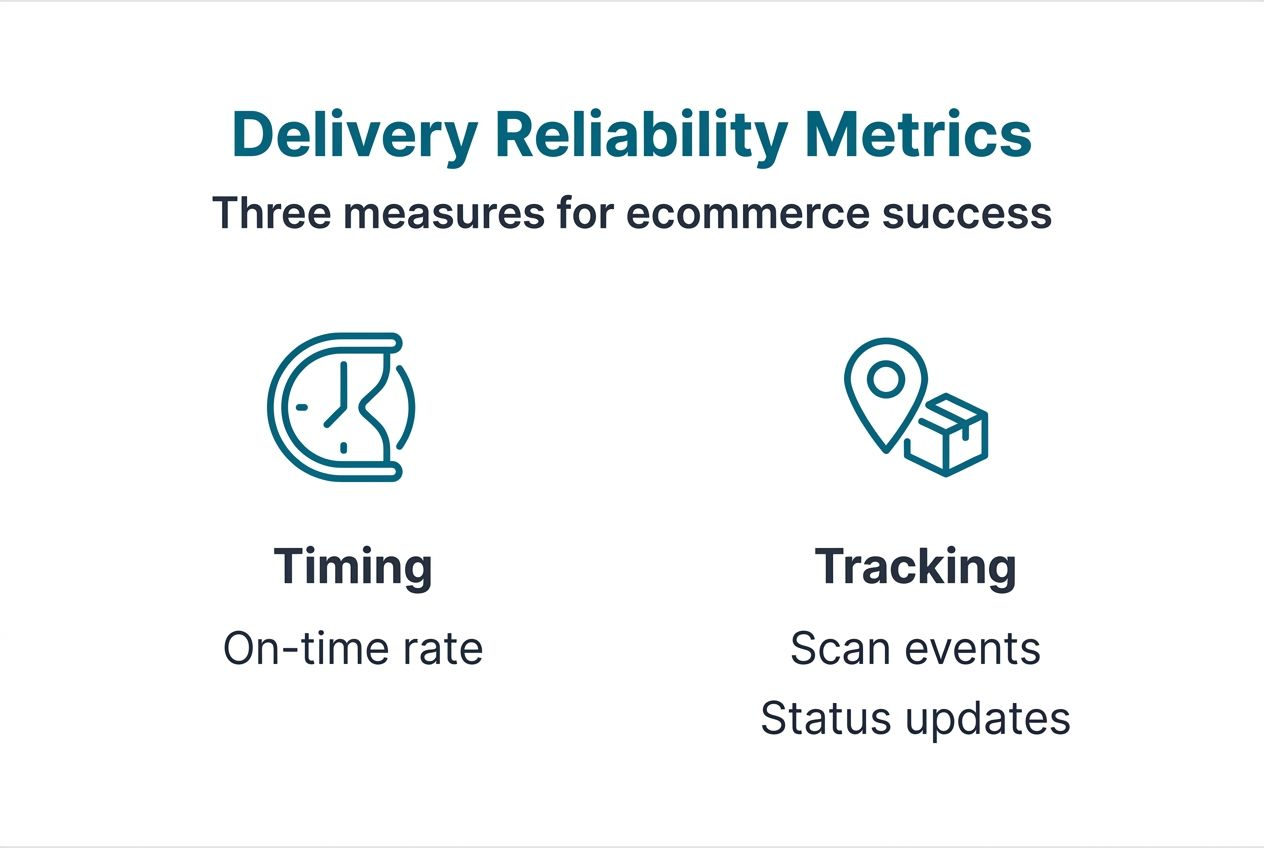
Reliable parcel delivery means your shipments arrive on time, intact, and fully traceable throughout the journey. For ecommerce businesses, this reliability directly impacts customer satisfaction and repeat purchase rates. Parcel delivery reliability is measured by delivery time accuracy, on-time delivery rate, and parcel loss rate impacting fulfillment success, establishing clear benchmarks for operational performance.
Three core metrics define reliability. Delivery time accuracy measures how closely actual delivery matches promised timelines. On-time delivery rate tracks the percentage of shipments arriving within the expected window. Parcel loss rate captures how often packages go missing or get damaged in transit. Together, these indicators reveal the true health of your fulfillment operations.

These metrics directly influence customer experience and operational costs. Late deliveries trigger refund requests and negative reviews. Lost parcels require costly replacements and damage brand reputation. Consistent performance across these metrics builds customer loyalty and reduces support inquiries.
Ecommerce sellers face specific challenges monitoring these indicators:
- Fragmented tracking systems across multiple courier partners create visibility gaps
- Manual data collection consumes time and introduces errors
- Delayed exception alerts prevent proactive problem resolution
- Inconsistent reporting formats complicate performance comparisons
Data-driven measurement enables continuous improvement. Tracking parcel delivery reliability metrics over time identifies patterns and problem areas. Regular analysis helps you adjust courier partnerships, refine packaging best practices, and implement logistics success tips that reduce delays.
Technology enabling shipment tracking and communication
Modern tracking technology transforms parcel delivery from a black box into a transparent, predictable process. Real-time tracking technologies like GPS, RFID, and IoT sensors significantly improve delivery time accuracy and reduce parcel loss, giving ecommerce sellers unprecedented visibility into shipment status. GPS provides location updates throughout transit, RFID tags enable automated scanning at checkpoints, and IoT sensors monitor environmental conditions for sensitive products.
API integration connects courier tracking systems directly with your ecommerce platform. This automation eliminates manual status checks and ensures customers receive instant updates. When a package scans at a distribution center, your system automatically sends notifications without human intervention. The result is faster information flow and fewer customer inquiries.
Proactive communication workflows keep customers informed at every stage. Automated notifications cover key milestones:
- Order confirmation and shipment creation
- Departure from fulfillment center
- In-transit updates with estimated delivery time
- Out for delivery alerts with delivery window
- Successful delivery confirmation with proof
These workflows deliver measurable benefits. Support teams spend less time answering