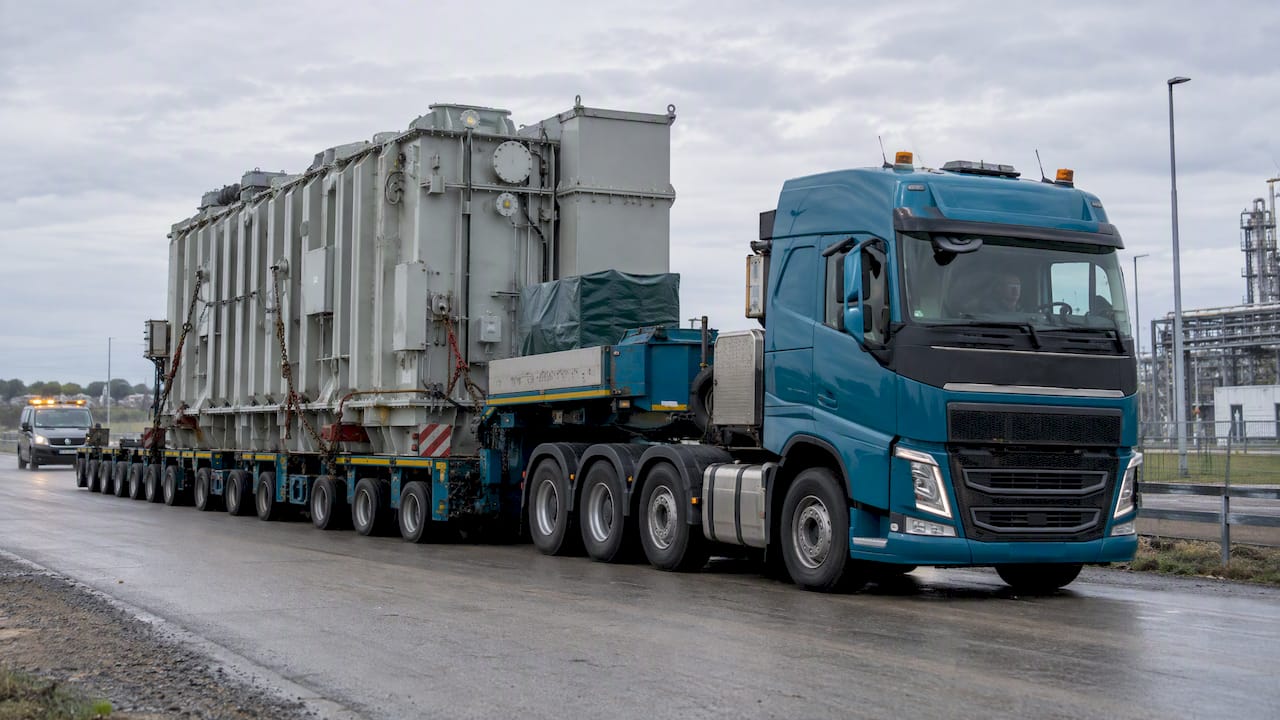
Global project logistics is the planning and movement of oversized, heavy or high-value cargo that does not fit a standard shipping lane: transformers, turbines, modules, production lines. The cargo often travels by several modes, on custom schedules, and has to arrive in sequence with a construction or installation timeline. This guide explains how these moves are built, where they fail, and what to settle before you book.
TL;DR
- Project logistics starts well before transport: route and port surveys, site-access checks and a handling plan come first.
- Sea carries most project cargo, but sequencing across ocean, inland and sometimes air legs is what protects your schedule.
- Documents and Incoterms decide who pays for what. Settle them in the sales contract, not at the port.
- For US exports, check Electronic Export Information (EEI) filing rules and deadlines early.
- Choose one accountable partner with real-time visibility across every leg.
Table of Contents
- What project logistics actually means
- Why demand is rising
- The planning stage most shippers rush
- Sequencing: where end-to-end becomes a technical need
- Documents, customs and who pays for what
- Choosing a forwarder for project work
- Our perspective
- Where Orner fits
- A pre-booking checklist
- FAQ
- Sources
What project logistics actually means
A standard container shipment follows a published schedule and a fixed process. Project cargo does not. Academic work on the sector describes project logistics as the transport of oversized cargo, driven in recent years by renewable energy build-outs and modular construction.
Three traits separate it from regular freight:
- Dimensions and weight. Pieces can exceed what roads, bridges, cranes or ports can handle without special equipment.
- Timing tied to a project. The cargo is a dependency. A late generator can idle a crew, a crane and a site.
- Irregular movement. Project cargo often moves under customized charters or tramp-style arrangements rather than fixed sailings, so reliable communication and live visibility matter more.
If you are a manufacturer, wholesaler or brand shipping large equipment, fixtures or bulky inventory, you face a smaller version of the same problem. Our guide to managing oversized shipments covers that end of the scale.
Why demand is rising
One market report values the global project cargo logistics market at USD 18,203.33 million in 2025, heading for USD 25,807.08 million by 2034, a 4.5% compound annual growth rate. The same report puts sea freight at 62% of shipments. Treat these as one publisher’s estimates, useful for direction rather than precision.
The US picture is shaped by data centers. Reporting on the AI build-out describes an 18 to 20% rise in project cargo shipments to job sites compared with 2024, driven by over-dimensional components such as transformers and generators. When many projects compete for the same heavy-lift equipment and port slots, early booking and clear planning stop being optional.
The planning stage most shippers rush
The cheapest mistakes are made on paper. The research on project logistics points to an integrated approach that starts before physical transport: route and port surveys, risk evaluation and handling plans for oversized components.
Surveys and site access
A route that works on a map can fail at a low bridge, a tight turn or a soft shoulder. Ask for a survey of the origin port, the discharge port and the inland route. Confirm that the final installation point can physically receive the load, including crane access and ground bearing capacity.
Measure before you quote
A quote built on estimated dimensions is a quote that will change. Collect gross weight, length, width, height, center of gravity and lifting points for every piece. Our checklist on the four numbers to measure before shipping large items overseas walks through what to capture and why.
Pick the mode for each leg
Sea is the default for heavy pieces, air for urgent small-but-critical parts, and inland moves connect them. Most project moves combine modes. We explain the trade-offs in sea freight versus air freight and in our look at multimodal shipping options.
Sequencing: where end-to-end becomes a technical need
In project work, “end-to-end” is not a slogan. Practitioners describe it as a technical necessity: total delivery cost depends on lifting and stowage requirements, and specialized marine or inland equipment, such as heavy-lift vessels, barges and module carriers, must be coordinated with manufacturing and installation dates.
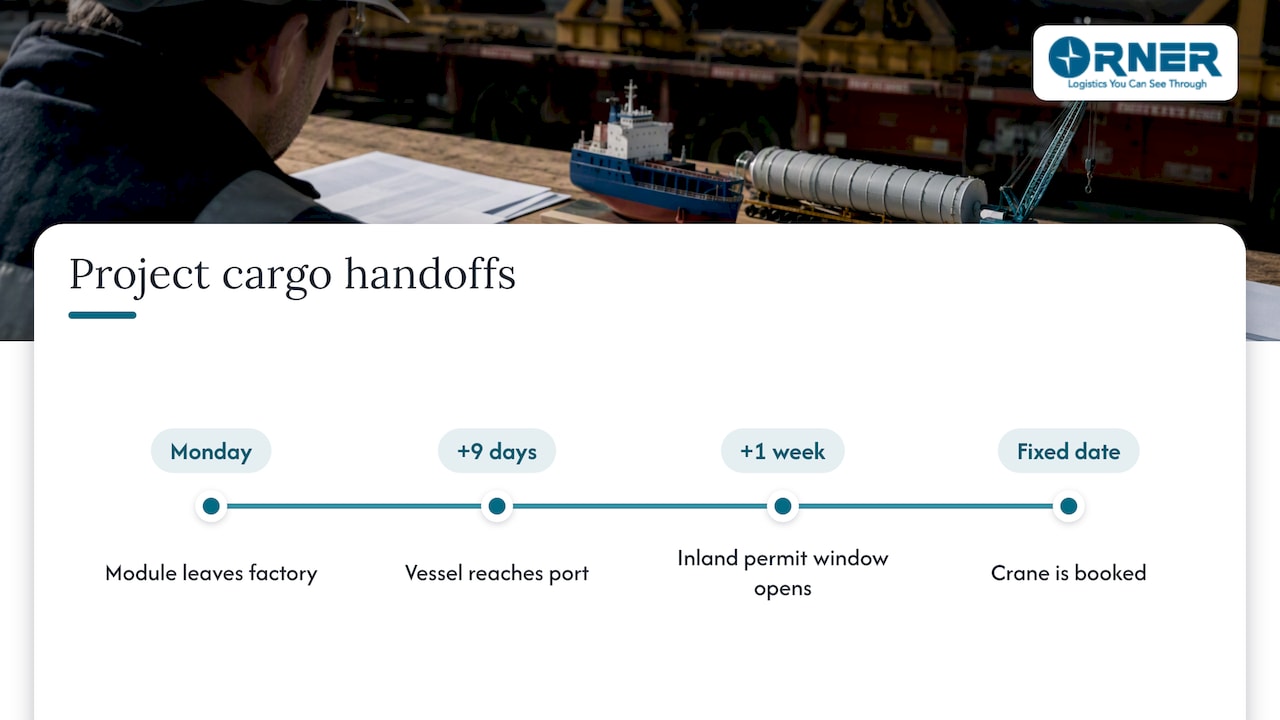
A simple example of why this matters. A module leaves the factory on a Monday, but the vessel arrives at the port nine days later, the permit window for the inland route opens a week after that, and the crane is booked for a fixed date. If one handoff slips and no one owns the whole chain, you pay storage, demurrage or standby fees on equipment that is waiting. A single accountable coordinator sees the gap before it costs money.
Documents, customs and who pays for what
Project shipments carry high values and complex paperwork. Research on the sector warns that mismanaged documentation can cause delays at customs or port bottlenecks far beyond what a standard shipment would face.
Incoterms in the contract
The International Trade Administration explains that Incoterms define the responsibilities of buyers and sellers in an export transaction. On a project, the terms decide who arranges export clearance, who insures the cargo during heavy-lift handling, and who carries risk at each handoff. Agree them before you sign. Our Incoterms guide covers how each one plays out in practice.
US export filing
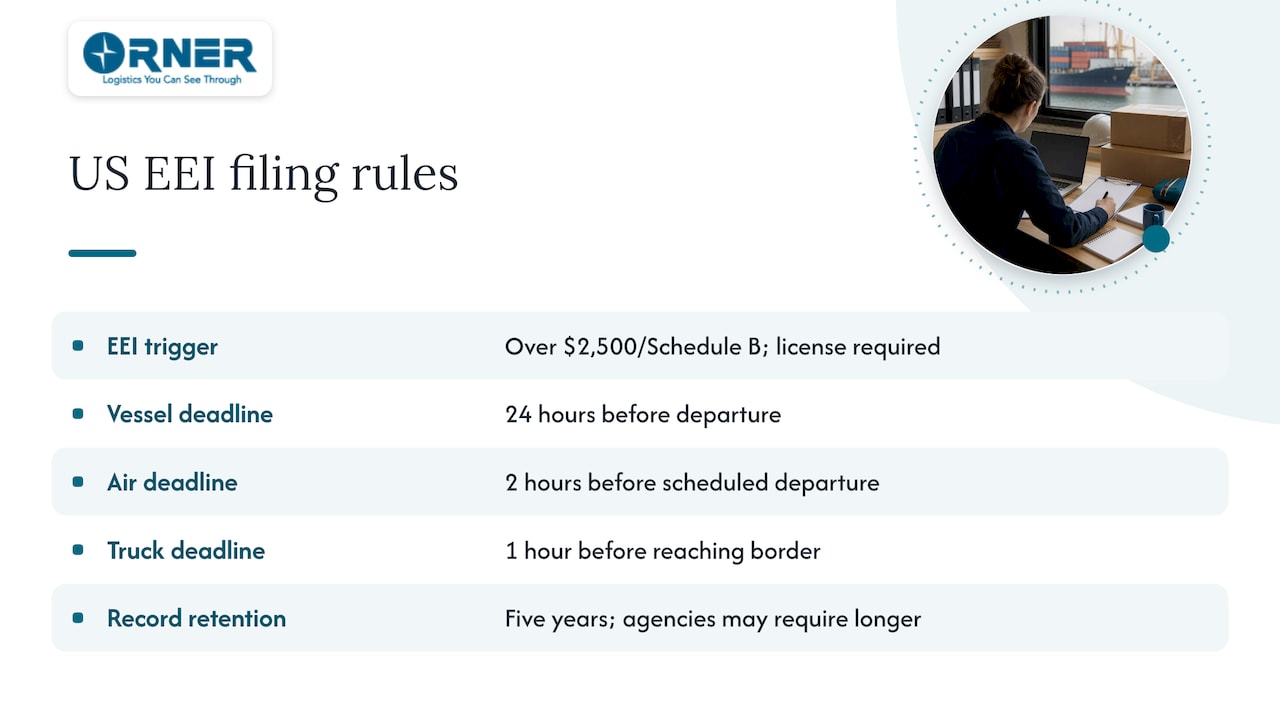
For exports from the United States, the Census Bureau states that EEI must be filed in the Automated Export System for shipments valued over $2,500 per Schedule B number, or when a license is required. For non-USML shipments, the filing deadlines are 24 hours before vessel departure, 2 hours before scheduled air departure and 1 hour before a truck reaches the border. Records must be kept for five years under Census regulations, and other agencies may require longer. Confirm your specific commodity and license requirements with your forwarder or a licensed customs broker.
The paperwork chain for any international move is explained in our guides to freight forwarding documentation and the freight forwarding procedure.
Choosing a forwarder for project work
The ITA describes freight forwarders as the “travel agents for freight”: they know international regulations and licensing, and can arrange packing, routing and documents. For a project, that role grows. Before you commit, ask:
| Question | What a good answer looks like |
|---|---|
| Who owns the move end to end? | One named coordinator, not a chain of subcontractors with no single point of contact |
| How do you handle surveys and permits? | A defined step before the quote is final, with findings shared with you |
| What visibility do I get? | Live status across every leg, with alerts when something slips |
| How are exceptions handled? | A documented escalation path and a person who calls you first |
| What is in the quote? | Itemized: origin handling, main carriage, customs, inland, storage, insurance |
| What if the site is not ready? | Warehousing or staging options and clear storage terms |
The duties split between you and your forwarder are laid out in our guide to freight forwarder responsibilities.
Our perspective
Most of the project shipments we see go wrong for ordinary reasons, not exotic ones. The dimensions were estimated. The Incoterm was copied from an old contract. The documents disagreed with each other. Nobody could say where the cargo was on a Thursday afternoon.
That is why we built Orner around one idea: a single platform where booking, tracking, customs, warehousing and inventory sit together, so the people responsible for a shipment work from the same information. For a shipper with a large or complicated move, we think three things matter most. Get the numbers right before the quote. Make every handoff someone’s explicit job. See the whole chain in real time, so a problem becomes a phone call on day one rather than an invoice on day thirty.
We also believe in matching the tool to the job. A one-off turbine and a recurring flow of bulky wholesale goods need different handling, but both benefit from the same discipline of planning first and visibility throughout.
— Maayan
Where Orner fits
If your cargo is large, valuable or on a tight timeline, we can help you plan the move and keep it visible. Orner brings freight booking across ocean, air and land into one place, and supports customs clearance and warehousing through a global network of warehouses and fulfillment centers. Pricing is not published, so the starting point is a freight estimate request with your measurements and route. You can see our full range on the Orner home page.
A pre-booking checklist
- Final dimensions, weights and lifting points for every piece.
- Origin, discharge port and final site, with access confirmed for each.
- Incoterm agreed in the sales contract.
- Commercial invoice, packing list and any license or permit requirements identified.
- EEI responsibility assigned if the shipment leaves the US.
- Insurance scope confirmed for loading, lifting and inland transit.
- Staging or storage plan if the site is delayed.
- Named contacts and an escalation path on both sides.
For related import-side detail, see our walk-through of sea import forwarding and demurrage risk and the guide to air import forwarding.
FAQ
What is project logistics?
It is the planning and transport of oversized, heavy or high-value cargo that needs special equipment, permits or routing. It often combines sea, inland and air legs, and it is scheduled around a construction or installation timeline rather than a carrier’s fixed sailings.
How is project cargo different from regular freight?
Regular freight fits standard containers and published schedules. Project cargo may need heavy-lift vessels, route surveys and custom charters, and one late piece can hold up a whole site. Documentation errors also cost more, because the cargo is valuable and time-critical.
Do I need a freight forwarder for a project move?
In practice, yes. A forwarder handles regulations, licensing, documents and routing, and coordinates the carriers. The International Trade Administration suggests comparing several providers before you choose, so request more than one quote.
When do US exports need an EEI filing?
For shipments valued over $2,500 per Schedule B number, or whenever a license is required, according to the Census Bureau. Deadlines depend on the mode of transport. Check your commodity with a licensed customs broker.
Sources
- The study of project cargo logistics operation: a general overview, Journal of Shipping and Trade
- Project Cargo Logistic Market Size, Market Growth Reports
- AI and data center boom drives project cargo
- Know Your Incoterms, International Trade Administration
- Shipping Options, International Trade Administration
- Trade Regulations, US Census Bureau