TL;DR:
- Cross-border success depends on Incoterms, duties, and local payment handling, not just shipping rates.
- Optimizing logistics requires choosing the right transport modes, partners, and regional warehouses.
- Building trust through clear returns and understanding regional regulations is crucial for sustainable growth.
Most e-commerce businesses entering international markets focus almost entirely on shipping rates and transit times. That narrow lens causes more failed expansions than any other single factor. The real differentiators are the decisions most teams treat as secondary: which Incoterms you choose, how you handle duties at checkout, whether your payment options match local buyer habits, and how your warehouse network is structured. Get those wrong, and even a competitive price won’t save your conversion rate or your margins. This guide walks you through the frameworks, tools, and field-tested strategies that logistics managers and supply chain teams need to build a cross-border operation that actually scales.
Table of Contents
- Understanding cross-border logistics: Key concepts and common challenges
- Incoterms, duties, and local payments: Navigating the make-or-break decisions
- Optimizing your shipping network: Modes, partners, and regional warehouses
- Scaling up: Systems, technology, and continuous improvement
- The overlooked reality of cross-border logistics: Lessons from the field
- Supercharge your cross-border logistics with expert solutions
- Frequently asked questions
Key Takeaways
| Point | Details |
|---|---|
| Incoterms drive satisfaction | Choosing DDP often leads to happier international customers and fewer abandoned carts. |
| Payment localization boosts sales | Offering local payment methods can significantly increase your global conversion rates. |
| Warehouse strategy matters | Using regional warehouses can reduce delays and costs for businesses with high cross-border volumes. |
| Multimodal and 3PL improve reliability | Blending shipping modes and leveraging logistics partners helps streamline your cross-border fulfillment. |
| Continuous improvement is key | Monitoring KPIs and automating systems ensures ongoing efficiency in international logistics. |
Understanding cross-border logistics: Key concepts and common challenges
Cross-border logistics refers to the movement of goods across international borders, covering everything from customs clearance and duties to carrier selection, documentation, and last-mile delivery. Unlike domestic shipping, it introduces a layer of legal, financial, and operational complexity that changes by country, product category, and even shipment value. Understanding the cross-border shipping benefits is only the starting point. The real work is managing what happens between the order and the doorstep.
One of the most important concepts to understand is Incoterms, which are standardized trade terms published by the International Chamber of Commerce that define who is responsible for shipping costs, insurance, and risk at each stage of a shipment. The three most relevant for e-commerce are:
- DDP (Delivered Duty Paid): The seller covers all costs including import duties and taxes. The buyer receives a clean, surprise-free delivery.
- DDU (Delivered Duty Unpaid): The buyer is responsible for duties upon arrival. This often causes package holds, unexpected fees, and abandoned deliveries.
- DAP (Delivered at Place): Similar to DDU, the seller handles transport but the buyer pays duties on arrival. Slightly cleaner operationally, but still creates friction.
According to the 2026 APAC expansion guide, customs compliance and duty visibility are among the top barriers to successful cross-border entry in high-growth markets. The key Incoterms impact on customer satisfaction is significant enough to affect repeat purchase rates and brand perception.
Beyond Incoterms, the most common pain points in cross-border logistics include:
- Customs delays caused by incomplete or incorrect documentation
- Unexpected duty and tax charges that surprise buyers at delivery
- High return shipping costs that erode margins on international orders
- Inconsistent payment method support across different markets
- Regulatory non-compliance that results in shipment holds or fines
“The businesses that win in cross-border e-commerce are not the ones with the cheapest shipping. They are the ones whose customers never have to think about customs.”
Applying cost reduction strategies early in your planning process helps you avoid the expensive corrections that come from ignoring these fundamentals.
Incoterms, duties, and local payments: Navigating the make-or-break decisions
Choosing the right Incoterm is not just a legal formality. It directly shapes the customer experience and your bottom line. DDP outperforms DDU/DAP for customer satisfaction and repeat purchase rates because it removes uncertainty at delivery. When a buyer in Germany or Japan receives a package with an unexpected customs bill, the damage to trust is often permanent.
| Incoterm | Who pays duties | Pros | Cons | Best use case |
|---|---|---|---|---|
| DDP | Seller | High satisfaction, fewer returns | Higher upfront cost, complex compliance | Consumer-facing brands, repeat buyers |
| DDU | Buyer | Lower seller risk | High abandonment, poor experience | B2B, informed buyers |
| DAP | Buyer | Seller controls transport | Duty surprise at delivery | Mid-market, mixed audiences |
Beyond Incoterms, payment localization is a conversion lever most logistics teams underestimate. Offering international payment methods that match local preferences, such as iDEAL in the Netherlands, Klarna in Scandinavia, or Alipay in China, signals trust and reduces checkout friction. Displaying prices in local currency at checkout can boost cross-border conversion by up to 24%.
Here is a practical checklist for setting up your duty and payment configuration:
- Identify the top 3 to 5 target markets and research their preferred payment methods.
- Calculate landed cost (product price plus shipping plus duties plus taxes) for each market.
- Decide on DDP versus DAP based on your margin tolerance and customer experience goals.
- Integrate a duty calculation tool at checkout so buyers see total cost before purchasing.
- Test checkout flows in each market with local payment options enabled.
Pro Tip: Displaying local currency at checkout is not just a UX nicety. It is a measurable revenue driver. Brands that localize currency and payment methods consistently see lower cart abandonment on international orders.
Optimizing your shipping network: Modes, partners, and regional warehouses
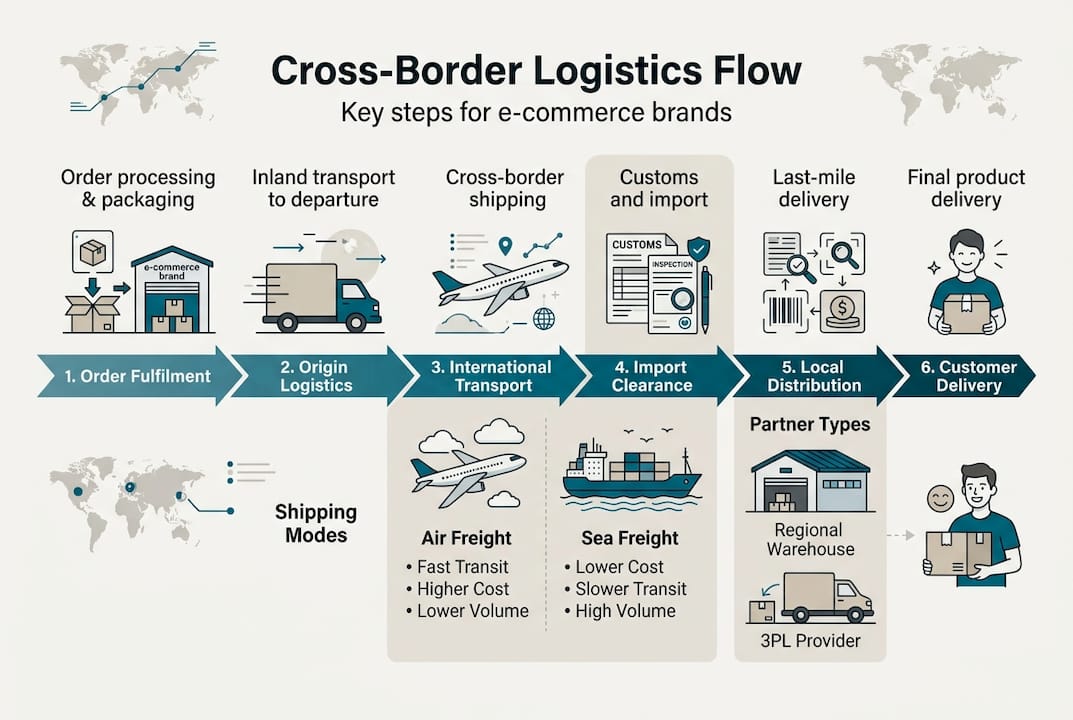
Building a resilient international shipping network means making deliberate choices about transport modes, third-party partners, and where you store inventory. Each decision has cost, speed, and reliability tradeoffs that compound across thousands of shipments.
| Shipping mode | Cost | Speed | Reliability | Best for |
|---|---|---|---|---|
| Air freight | High | Fast (1-5 days) | High | High-value, time-sensitive goods |
| Ocean freight | Low | Slow (15-40 days) | Medium | Bulk, heavy, or low-margin goods |
| Rail freight | Medium | Medium (10-20 days) | Medium | Asia-Europe corridors |
| Multimodal | Variable | Flexible | High | Complex routes, cost-speed balance |
Experts recommend multimodal transport planning combined with 3PL partners for customs handling and a TMS (transportation management system) for visibility. For businesses shipping over 500 international orders per month, regional warehouses recommended by logistics experts become a practical necessity rather than a luxury.
Third-party logistics providers (3PLs) are especially valuable for handling customs brokerage, local carrier relationships, and returns management in markets where you lack in-house expertise. Understanding cross-border delivery challenges helps you evaluate which 3PL capabilities matter most for your specific product mix and target regions.
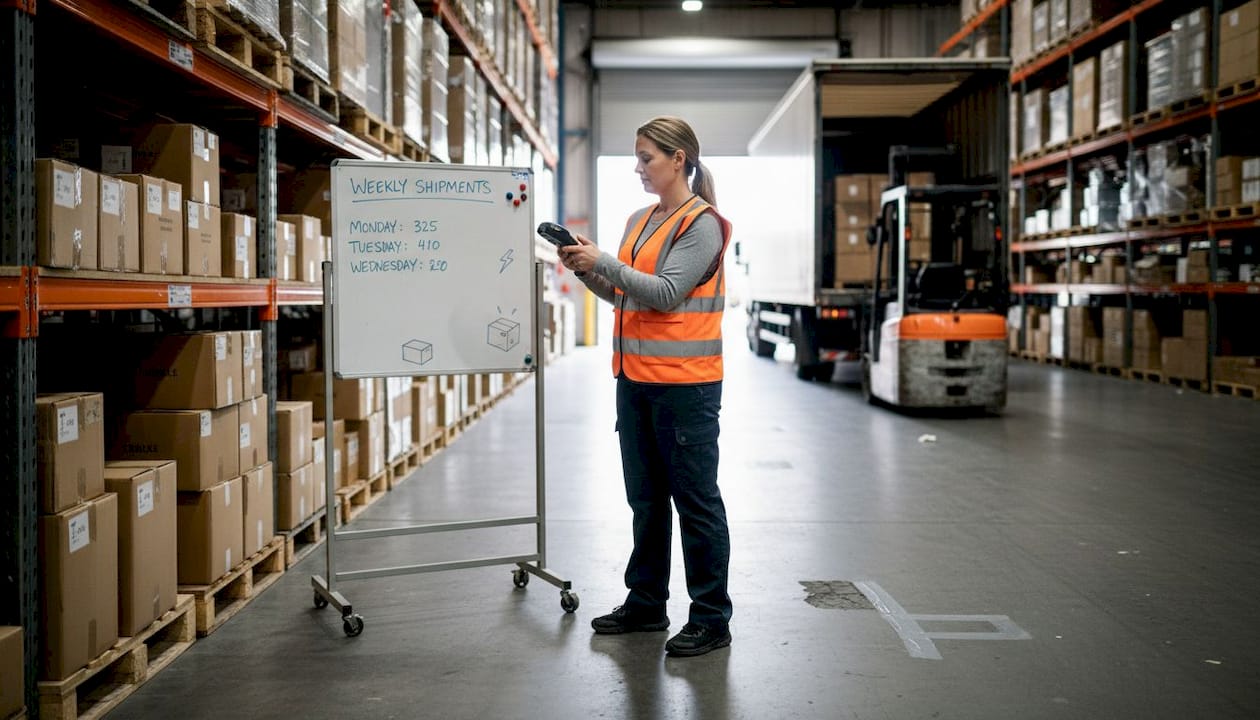
Regional warehousing reduces transit times, lowers last-mile costs, and allows faster response to demand spikes. Pair that with solid warehousing best practices and you have a network that can absorb volume growth without degrading delivery performance.
Top technology platforms that help you control cross-border networks include:
- TMS platforms for route optimization and carrier management
- WMS (warehouse management systems) for inventory accuracy across multiple locations
- Real-time tracking tools for shipment visibility and exception alerts
- Customs compliance software for automated document generation and HS code classification
- Returns management platforms for streamlined reverse logistics across borders
Scaling up: Systems, technology, and continuous improvement
Operational excellence in cross-border logistics does not happen by accident. It requires a deliberate tech stack, clear performance metrics, and a culture of continuous improvement. 3PLs, TMS platforms, and localization are the three pillars that drive scalable, borderless logistics.
Here is a step-by-step approach to auditing and scaling your international logistics:
- Baseline your current performance. Pull data on on-time delivery rate, average landed cost per market, and customer satisfaction (NPS) by region.
- Identify your top 3 failure points. Are delays concentrated in customs? Last-mile? A specific carrier or lane?
- Implement TMS and WMS integrations. Automate shipment routing, carrier selection, and inventory replenishment across your regional nodes.
- Set KPIs with clear ownership. On-time delivery rate, landed cost variance, and return rate by market should each have a named owner.
- Run quarterly logistics audits. Review carrier performance, duty calculation accuracy, and payment conversion by market.
- Automate exception management. Use real-time alerts to catch delays, customs holds, or inventory shortfalls before they escalate.
Pro Tip: Regulations in cross-border markets change faster than most teams expect. Set a calendar reminder each quarter to review local tax thresholds, import restrictions, and carrier certification requirements for your top markets. One overlooked regulatory change can freeze an entire shipping lane.
To optimize your ecommerce supply chain at scale, you need systems that surface the right data at the right time. Dashboards that show landed cost trends, carrier reliability scores, and customs clearance rates by country give your team the visibility to act before problems become expensive.
The overlooked reality of cross-border logistics: Lessons from the field
Here is what most logistics guides skip: technology and Incoterm selection alone will not fix a broken cross-border operation. The most expensive mistakes we see are not about choosing the wrong carrier or TMS. They are about underestimating regional tax complexity, ignoring local payment friction, and treating post-sale service as an afterthought.
One pattern we encounter repeatedly is a brand that launches in Southeast Asia with a solid DDP setup and a capable 3PL, but then loses ground because their returns process is unclear and their customer service team operates in a different time zone with no local language support. The logistics infrastructure was sound. The customer trust layer was missing.
Another common blind spot is regional tax thresholds. Many markets have de minimis thresholds (the shipment value below which duties are not collected) that change with little notice. Brands that rely on those thresholds as part of their pricing strategy get caught off guard when rules shift. Understanding freight forwarder benefits and working with partners who monitor regulatory changes in real time is one of the most underrated advantages in cross-border logistics.
The field lesson is simple: build the trust layer alongside the logistics layer, not after it.
Supercharge your cross-border logistics with expert solutions
If these strategies have surfaced gaps in your current international setup, you are not alone. Most e-commerce teams are managing cross-border complexity with tools and processes built for domestic scale. That mismatch costs real money in delays, abandoned carts, and compliance errors.
Orner’s global logistics platform is built specifically for e-commerce businesses that need reliable courier services and end-to-end visibility across international lanes. From customs clearance and regional warehousing to real-time tracking and payment localization support, the platform connects every piece of your cross-border operation. Explore cross-border shipping solutions and see how Orner helps you move faster, reduce costs, and deliver the experience your international customers expect.
Frequently asked questions
What is the best Incoterm for cross-border e-commerce?
DDP outperforms DDU/DAP for customer satisfaction and repeat purchase rates because the buyer receives their package with no unexpected charges. DDU and DAP can reduce seller risk but typically lead to higher cart abandonment and more delivery failures.
How can I reduce cross-border shipping delays?
Using 3PLs with customs expertise, selecting multimodal transport options, and positioning regional warehouses in high-volume markets are the most effective ways to cut delays and improve delivery consistency.
Why does localizing payment methods matter for international customers?
Localized payment options can raise cross-border conversions by up to 24% and reduce checkout abandonment by matching the payment habits buyers already trust in their home market.
When should an e-commerce business invest in regional warehouses?
Regional warehouses become cost-effective when you are consistently shipping more than 500 international orders per month to a given region, at which point the savings in last-mile costs and transit time outweigh the warehousing overhead.
Recommended
- Maximize growth with cross-border shipping benefits – ORNER
- Navigate cross-border delivery challenges for reliable shipping – ORNER
- Cross-Border Logistics: 1.5x Cost Reduction Strategies – ORNER
- Import freight forwarder guide: streamline ecommerce 2026 – ORNER
- Master industry terms for shipping containers: a guide