TL;DR:
- Nearly 75% of online shoppers expect delivery within two days, prompting ecommerce brands to prioritize instant shipping. Evaluating speed, coverage, cost, and technology is essential to select effective services, with options like 3PLs and regional couriers offering scalable solutions. Building a reliable instant shipping strategy involves analyzing customer geography, costs, fulfillment infrastructure, and measuring key performance metrics.
Nearly 75% of online shoppers expect delivery within two days, and that window keeps shrinking. For ecommerce sellers, instant shipping is no longer a premium perk you offer to stand out. It’s a baseline expectation that directly affects whether a customer completes a purchase or abandons their cart. The challenge is that not every instant shipping solution fits every business. Speed tiers, cost structures, geographic coverage, and integration requirements vary widely. This guide breaks down how to evaluate your options, compares the top services available in 2026, and gives you a practical framework for deciding what actually works for your operation.
Table of Contents
- Key takeaways
- 1. Understanding what instant shipping actually means for ecommerce
- 2. Key criteria to evaluate instant shipping services
- 3. Top instant shipping options for ecommerce businesses
- 4. Comparison of top instant shipping services
- 5. Additional instant shipping solutions for niche ecommerce needs
- 6. How to decide and implement the right instant shipping strategy
- My honest take on instant shipping in ecommerce
- How Or-ner helps you build a faster, more reliable shipping operation
- FAQ
Key takeaways
| Point | Details |
|---|---|
| Speed is a retention lever | Slow delivery costs you sales. Instant shipping directly reduces cart abandonment and improves repeat purchase rates. |
| Coverage and cost both matter | A fast service that doesn’t reach your customers or destroys your margins is not a real solution. |
| Multi-carrier strategies win | Using multiple carriers for different regions and product categories reduces risk and optimizes delivery times. |
| Technology drives reliability | Real-time tracking and platform integration are non-negotiable for managing quick order fulfillment at scale. |
| 3PLs unlock speed without infrastructure | A multi-node 3PL network positions inventory near customers, cutting delivery times without heavy capital investment. |
1. Understanding what instant shipping actually means for ecommerce
“Instant shipping” covers a wide spectrum. At one end, you have Amazon Now’s 30-minute delivery model using micro-fulfillment centers in dense urban areas. At the other, you have same day delivery services that promise arrival within a few hours of order placement. Overnight shipping rates fall somewhere in between, offering next-morning delivery for orders placed before a cutoff time.
For most ecommerce businesses, instant shipping means any service that gets a package to the customer the same day or the next day. That’s the realistic, scalable version of speed that most sellers should be building toward.
2. Key criteria to evaluate instant shipping services
Before comparing specific providers, get clear on what matters most for your business. Not every criterion carries equal weight depending on your product type, margins, and customer base.
- Delivery speed and coverage: Does the service cover the zip codes where your customers actually live? A two-hour delivery window means nothing if it only covers three metro areas.
- Cost structure: Look beyond the base rate. Fuel surcharges, residential delivery fees, and dimensional weight pricing can turn an affordable-looking service into a margin killer.
- Platform integration: Your shipping solution should connect directly to your order management system. Manual order entry at scale creates errors and delays.
- Tracking visibility: Real-time tracking reduces customer anxiety and cuts down on “where is my order” support tickets. This is not optional for expedited shipping services.
- Reliability metrics: On-time delivery rates matter more than advertised speed. A service that claims two-hour delivery but hits it 60% of the time will hurt your brand.
- Scalability: Can the service handle your peak season volume without degrading performance? Many instant shipping providers buckle under Q4 pressure.
- Sustainability options: Customer preference is diversifying with some shoppers choosing slower, greener shipping. Offering a no-rush option alongside instant delivery can actually strengthen brand loyalty.
Pro Tip: Ask potential carriers for their on-time delivery rate specifically for same day delivery and overnight orders, not just their overall performance average. The gap between those numbers reveals how they perform under pressure.
3. Top instant shipping options for ecommerce businesses
Here is where the market stands in 2026. Each option has a distinct profile, and the right one depends on your geography, product catalog, and fulfillment setup.
Amazon Now and ultra-fast delivery networks
Amazon’s 30-minute model uses dark stores sized between 5,000 and 10,000 square feet, stocked with thousands of fast-moving items. This model is powerful but largely closed to third-party sellers unless you’re selling through Amazon’s own marketplace. If your products are listed on Amazon and eligible, this is the fastest delivery infrastructure on the market.
FedEx and UPS same-day and overnight services
FedEx SameDay and UPS Next Day Air are the workhorses of expedited shipping services for independent ecommerce sellers. FedEx SameDay delivers within hours based on flight availability. UPS Next Day Air guarantees next-morning delivery. Both offer nationwide reach, time-definite guarantees, and deep integration with major ecommerce platforms. Overnight shipping rates from these carriers vary significantly by package weight, origin, and destination, so build a rate model before committing.
Regional and local courier services
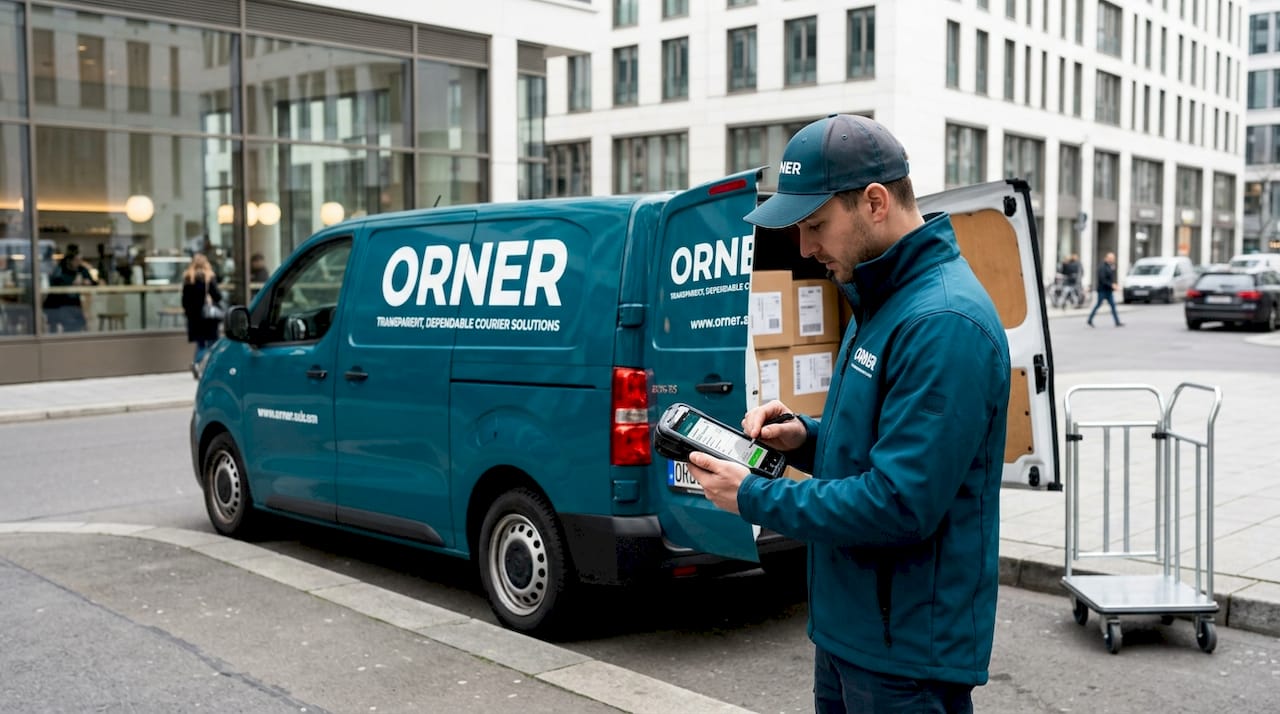
Regional couriers often outperform national carriers on same day delivery within specific metro areas. They know local traffic patterns, can offer flexible pickup windows, and typically charge less for short-distance runs. The tradeoff is limited coverage. If your sales are concentrated in one or two cities, a regional partner can be a strong primary option for your fastest tier.
Gig economy and tech-driven delivery platforms
Local courier networks and gig platforms complement traditional carriers for flexible last-mile delivery. These services work especially well for bulky items, restaurant-style deliveries, or anything that requires white-glove handling. Pricing and reliability vary widely, so vet them carefully before using them as a primary channel.
Third-party logistics providers with instant fulfillment capabilities
A well-chosen 3PL with multi-node warehouses is often the most scalable path to instant shipping for growing brands. By positioning your inventory closer to customer clusters, you convert ground shipping into same-day or next-day delivery without paying air freight rates. Top providers maintain 99.9% order accuracy and use machine learning to forecast demand and pre-position stock. For a deeper look at how this works, Or-ner’s guide to demand forecasting in logistics covers the AI-driven side of inventory positioning in detail.
Pro Tip: If you’re evaluating a 3PL for quick order fulfillment, map their warehouse locations against your top 10 customer zip codes. If their nodes don’t align with your demand clusters, the speed gains will be limited regardless of what their marketing promises.
4. Comparison of top instant shipping services
| Service | Delivery speed | Geographic coverage | Pricing model | Platform integration | Best for |
|---|---|---|---|---|---|
| Amazon Now | 30 minutes | Dozens of U.S. cities | Starts at $3.99 for Prime members | Amazon marketplace only | Amazon sellers with eligible SKUs |
| FedEx SameDay | Hours (flight-dependent) | Nationwide U.S. | Weight and distance based | Major ecommerce platforms | Urgent, high-value shipments |
| UPS Next Day Air | Next morning | Nationwide U.S. | Weight and zone based | Major ecommerce platforms | Reliable overnight shipping |
| Regional couriers | 1-4 hours | Metro-specific | Flat rate or per-mile | Varies by provider | High-density urban markets |
| Gig economy platforms | 1-3 hours | Urban and suburban | Per delivery or subscription | API-dependent | Flexible last-mile needs |
| 3PL with multi-node network | Same day to 2 days | 98% U.S. coverage possible | Per order or contract | Broad platform support | Scaling brands |
5. Additional instant shipping solutions for niche ecommerce needs
Not every ecommerce business fits the standard mold. Here are solutions worth knowing for sellers with specific requirements.
Micro-fulfillment centers and dark stores are increasingly accessible to brands outside Amazon’s ecosystem. Some 3PLs now operate urban micro-warehouses that mirror Amazon’s model. FIDELITONE’s network, for example, positions inventory to reach 98% of the U.S. population within one to two days using ground transport, which cuts air freight dependence significantly.
For sellers moving perishables, pharmaceuticals, or high-value goods, you need carriers with temperature-controlled options and chain-of-custody documentation. Standard instant shipping networks were not built for this. Specialized freight and trucking services can fill these gaps for regional deliveries where product integrity matters as much as speed.
Budget-conscious sellers often default to the cheapest fast option, but the real calculation is cost per successful delivery. A cheaper carrier with a 15% failure rate costs more in reshipments and customer service than a slightly more expensive carrier with a 99% success rate.
- Use multiple carriers across different regions rather than locking into one national provider.
- Reserve premium instant shipping options for high-margin products where the cost is justifiable.
- Communicate delivery windows clearly at checkout. Overpromising is more damaging to customer trust than offering a slightly longer window.
Pro Tip: Build a “carrier matrix” for your business. Map your SKUs to their ideal carrier by region, weight, and delivery urgency. This prevents you from paying overnight shipping rates on products that only needed same day delivery within a 30-mile radius.
6. How to decide and implement the right instant shipping strategy
Deciding how to get instant shipping right for your business comes down to five practical steps.
- Map your customer geography. Pull your order data and identify where 80% of your customers are located. Your shipping strategy should be built around serving those clusters fast and affordably first.
- Set a budget that accounts for total landed cost. Factor in carrier fees, fulfillment labor, packaging, and returns. The goal is to offer competitive delivery speeds while protecting your margins.
- Choose your fulfillment infrastructure. Decide whether you’ll fulfill in-house, use a 3PL, or a hybrid model. Or-ner’s breakdown of logistics solutions for ecommerce is a useful reference for comparing these models side by side.
- Pilot before scaling. Launch instant shipping on your top 10 SKUs in your highest-concentration region first. This limits financial exposure while you work out the operational kinks.
- Measure the right metrics. Track on-time delivery rate, customer satisfaction scores tied to shipping, delivery cost as a percentage of revenue, and return rate. These four numbers will tell you whether your instant shipping investment is actually working.
Pro Tip: Set your initial pilot target as a specific geography, not a product category. Geographic pilots give you cleaner data because customer expectations are consistent within a region, while product categories introduce too many variables.
My honest take on instant shipping in ecommerce
I’ve worked with enough ecommerce brands to know that instant shipping is where ambition runs ahead of execution. I’ve seen sellers launch same day delivery to win customers, only to discover their fulfillment center couldn’t consistently pick, pack, and hand off orders within the required window. The carrier was ready. The warehouse wasn’t.
The uncomfortable truth is that speed is only as good as the slowest point in your operation. Most brands focus entirely on selecting the right carrier and ignore the internal fulfillment process that feeds it. Before you invest in expedited shipping services, audit your own pick-and-pack times. If your average order takes 90 minutes to leave the warehouse, a “same day” promise is fiction.
I’ve also seen the opposite mistake. Sellers assume they need a dedicated instant shipping carrier when a well-positioned 3PL with multiple distribution nodes would get the same result at a fraction of the cost. Inventory positioning through a distributed warehouse network converts standard ground shipping into fast delivery without paying premium air rates. That’s the lever most brands underutilize.
Speed is a necessity. But speed built on a shaky foundation destroys customer trust faster than slow shipping ever would.
— Maayan
How Or-ner helps you build a faster, more reliable shipping operation
Or-ner’s global logistics platform is built specifically for ecommerce sellers who need reliable courier services at scale. The platform connects you to a global network of fulfillment centers, real-time shipment tracking, and carrier integrations that make quick order fulfillment manageable without building your own infrastructure. For businesses focused on cost efficiency, Or-ner’s cloud logistics platform delivers measurable savings on ecommerce shipping operations. Whether you’re launching same day delivery in your first market or managing cross-border fulfillment across multiple regions, Or-ner gives you the visibility and control to do it without the operational chaos.
FAQ
What is instant shipping for ecommerce?
Instant shipping refers to delivery services that fulfill and deliver orders the same day or within a few hours of purchase. It covers models ranging from ultra-fast 30-minute delivery to same day and overnight shipping options.
How do I get instant shipping for my online store?
To get instant shipping, you need to either partner with a carrier that offers same day or overnight services, work with a 3PL that has fulfillment centers near your customers, or list products on a marketplace with built-in fast delivery infrastructure. Or-ner’s logistics partner strategies guide walks through how to evaluate and select the right partners.
How much do instant shipping services cost?
Costs vary widely. Amazon Now starts at $3.99 for Prime members, while FedEx and UPS overnight shipping rates are calculated by weight, zone, and service level. Budget for surcharges on top of the base rate, as these can add 20-40% to the sticker price.
Is a 3PL better than using a national carrier for fast delivery?
For most growing ecommerce brands, a 3PL with a multi-node warehouse network delivers better results than relying solely on a national carrier. Positioning inventory near your customer clusters converts standard ground shipping into same day or next day delivery at significantly lower cost than air freight.
What metrics should I track for instant shipping performance?
Track on-time delivery rate, delivery cost as a percentage of revenue, customer satisfaction scores tied to shipping experience, and return rate. These four indicators give you a complete picture of whether your instant shipping investment is generating real business value.