
Unreliable shipping partners cost ecommerce sellers thousands in lost revenue and damaged reputations every year. When packages arrive late or disappear entirely, customer trust evaporates faster than your profit margins. Reliable courier services solve these challenges by delivering guaranteed on-time shipments with transparent tracking and responsive support. For ecommerce sellers and logistics managers in 2026, choosing the right courier partner isn’t optional, it’s the foundation of sustainable growth. This guide explains how reliable courier options work, what features separate exceptional providers from mediocre ones, and practical strategies to optimize your shipping operations for maximum efficiency and customer satisfaction.
Table of Contents
- Understanding Reliable Courier Services And Their Benefits
- Comparing Courier Service Options: Features, Pricing, And Specializations
- Leveraging Technology And Logistics Solutions To Boost Courier Reliability
- Practical Tips For Ecommerce Sellers And Logistics Managers To Optimize Courier Partnerships
- Explore Expert Resources And Tools To Enhance Your Courier Operations
- Frequently Asked Questions
Key takeaways
| Point | Details |
|---|---|
| Guaranteed delivery | Reliable couriers provide on-time delivery commitments with transparent real-time tracking systems |
| Comprehensive features | Services include same-day delivery, cross-border logistics, and streamlined fulfillment workflows |
| Strategic selection | Choosing couriers requires evaluating shipping classes, rate structures, and company integrity |
| Technology integration | Tracking software and warehousing solutions enhance shipping efficiency and accuracy |
| Partnership optimization | Practical strategies help ecommerce sellers build courier relationships that drive growth |
Understanding reliable courier services and their benefits
Reliable courier services guarantee timely delivery with comprehensive tracking, responsive customer service, and consistent performance across all shipment types. Unlike standard mail carriers, these providers specialize in expedited handling and personalized attention to every package. They serve ecommerce businesses that cannot afford delays or errors in their fulfillment operations.
Unreliable couriers create cascading problems for online sellers. Lost packages trigger refund requests and negative reviews. Delayed shipments destroy customer loyalty and force you to spend hours managing complaints instead of growing your business. Poor tracking visibility leaves you guessing about package locations, making it impossible to provide accurate updates to anxious customers.
The benefits of partnering with dependable courier services transform your entire operation. Enhanced shipment visibility lets you monitor every package in real-time, catching potential issues before customers notice. Faster fulfillment cycles mean products reach buyers quickly, boosting satisfaction scores and repeat purchase rates. Transparent tracking builds customer trust because buyers can watch their orders progress from warehouse to doorstep. Your business reputation improves as delivery promises become reality, not empty marketing claims.
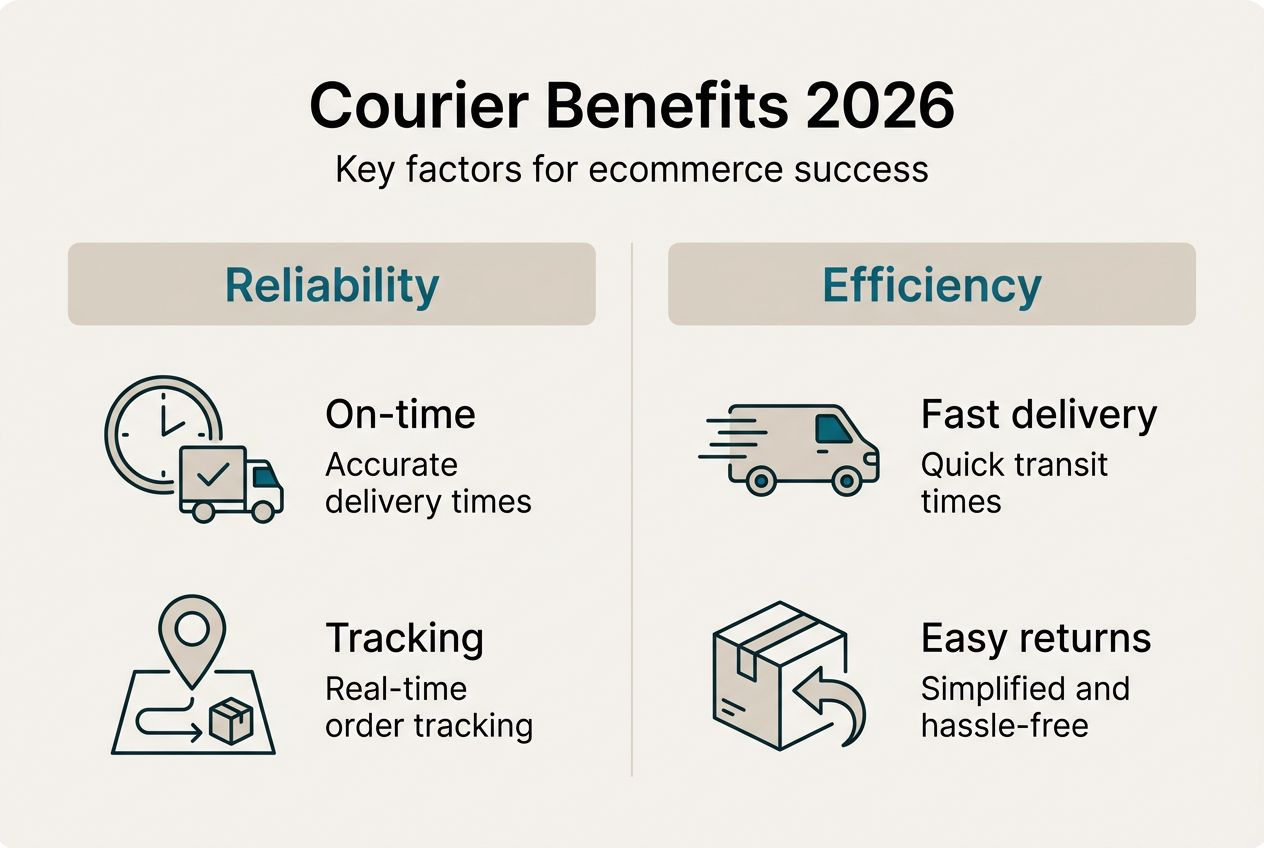
Modern reliable courier services offer features that were luxury options just years ago. Same-day delivery meets urgent customer needs and captures impulse purchases. Cross-border logistics solutions simplify international expansion by handling customs paperwork and international regulations. Transparent tracking systems provide minute-by-minute updates accessible through customer portals and mobile apps.
Pro Tip: When evaluating courier partners, prioritize companies demonstrating core values like Excellence and Customer First through their service guarantees and response protocols, not just marketing language.
Reliable Delivery has over 25 years of experience in high-priority delivery systems and emphasizes customer satisfaction through proven operational frameworks.
“Reliable courier services transform shipping from a cost center into a competitive advantage by turning every delivery into a positive brand experience.”
Key features distinguishing reliable providers include:
- Guaranteed delivery windows with financial penalties for late shipments
- Multi-channel tracking accessible via web, mobile, and API integrations
- Dedicated account managers who understand your business requirements
- Flexible pickup schedules accommodating variable order volumes
- Insurance options protecting high-value merchandise
Understanding reliable courier services requires examining how they structure operations differently than traditional carriers. These providers invest in route optimization technology, maintain smaller delivery territories for faster service, and empower drivers to make customer-focused decisions. They build redundancy into networks so equipment failures or weather events don’t derail your shipments.
The same-day delivery services market has expanded dramatically as consumer expectations shift toward instant gratification. Sellers leveraging these capabilities capture sales from competitors still offering standard three to five day shipping. Speed becomes a differentiator when product quality and pricing reach parity across vendors.
Comparing courier service options: features, pricing, and specializations
Courier services structure pricing around flat rates per delivery zone and shipping classes based on weight and volume thresholds. This simplified approach helps ecommerce sellers predict costs and build accurate shipping calculators for customers. Flat rate models eliminate surprise fees and make budgeting straightforward across thousands of monthly shipments.
Different courier types serve distinct business needs. Same-day delivery excels for local customers demanding immediate fulfillment. Medical delivery specialists handle temperature-sensitive items requiring chain of custody documentation. Freight services move palletized goods between warehouses and distribution centers. Parcel couriers focus on small package delivery optimized for residential addresses. Routed delivery consolidates multiple stops into efficient circuits, reducing per-package costs. Cross-border services navigate international customs and regulations, opening global markets.
Simplified pricing structures benefit sellers managing thin margins. When you know exactly what each shipment costs before printing labels, you can price products competitively while protecting profitability. Flat rates also speed up checkout processes because shipping calculations happen instantly without complex zone lookups or dimensional weight formulas.
| Service Type | Pricing Model | Typical Use Case |
| — | — |
| Same-day delivery | Flat rate per zone | Urgent local orders |
| Medical courier | Per-mile plus handling | Healthcare products |
| Freight service | Per-pallet or weight class | Bulk warehouse transfers |
| Parcel delivery | Tiered by weight/distance | Standard ecommerce orders |
| Cross-border | Flat rate plus customs fees | International expansion |
Some courier companies specialize in expedited service over standard mail alternatives. They prioritize speed and reliability, often charging premium rates justified by guaranteed delivery windows. These providers appeal to sellers whose customers value speed over rock-bottom shipping costs. Personalized delivery options like specific time windows or white-glove service create premium experiences justifying higher product prices.
Factors ecommerce sellers should evaluate when selecting courier services include:
- Delivery speed guarantees with compensation for failures
- Geographic coverage matching your customer base
- Real-time tracking granularity and customer access
- Insurance limits and claims process efficiency
- Technology integration capabilities with your ecommerce platform
- Pricing transparency and absence of hidden fees
- Customer service responsiveness and problem resolution speed
Understanding the difference between courier and freight helps you match service types to specific shipment characteristics. Couriers excel at time-sensitive small packages while freight handles bulk quantities. Using the wrong service type inflates costs and slows delivery.
Many sellers overlook courier services for small businesses designed specifically for growing operations. These providers offer flexible contracts without volume minimums, letting you scale services as order volumes fluctuate seasonally. They understand startup constraints and structure pricing to support early-stage growth.
Exploring courier service pricing structures reveals how different models impact your total logistics costs. Some providers offer volume discounts while others maintain consistent per-package rates. Analyzing your shipping patterns helps identify which structure minimizes expenses across your specific mix of package sizes and destinations.
Leveraging technology and logistics solutions to boost courier reliability
Shipment tracking software transforms courier reliability by providing real-time visibility into package locations and status updates. These platforms reduce errors through automated scanning at every checkpoint, eliminating manual data entry mistakes. Better customer communication happens automatically when tracking systems send proactive notifications about delays or delivery confirmations. You spend less time answering “where’s my order” emails and more time growing your business.

Warehousing strategies multiply courier reliability benefits. Multiple warehouse locations reduce shipping distances, enabling faster delivery at lower costs. Optimized layouts minimize picking errors and speed order processing. RFID technology improves inventory accuracy by automatically tracking items as they move through facilities, preventing stockouts and overselling situations that damage customer relationships.
Cross-border shipping complexity decreases dramatically when using US-based shipping addresses provided by international courier services. This approach consolidates packages at American facilities before international forwarding, reducing per-item shipping costs. Customs clearance accelerates because consolidated shipments process faster than individual packages. International ecommerce sellers access American supplier networks and customer bases without establishing physical US operations.
Steps ecommerce sellers can take to leverage technology and logistics for courier reliability:
- Implement tracking software that integrates directly with your ecommerce platform and courier APIs
- Establish automated notification workflows alerting customers at key shipment milestones
- Analyze delivery data monthly to identify problematic routes or recurring delay patterns
- Deploy warehouse management systems with barcode scanning at every handling point
- Test cross-border consolidation services if international sales exceed 15% of revenue
- Configure exception alerts notifying your team immediately when shipments deviate from expected progress
| Solution | Primary Benefit | Implementation Complexity |
|---|---|---|
| Tracking software | Real-time visibility and automated updates | Medium |
| Multi-location warehouses | Faster delivery and lower shipping costs | High |
| RFID inventory systems | Improved accuracy and reduced errors | Medium |
| Cross-border consolidation | Lower international shipping costs | Low |
| API integrations | Seamless data flow between systems | Medium |
Pro Tip: Select tracking platforms offering native integrations with your courier partners rather than third-party middleware solutions to minimize data sync delays and technical failures.
The best shipment tracking software combines carrier-agnostic tracking with predictive analytics identifying potential delays before they impact customers. Advanced platforms use machine learning to forecast delivery times more accurately than carrier estimates, letting you set realistic customer expectations.
Implementing warehousing best practices for ecommerce operations requires balancing automation investments against order volumes. Small sellers benefit from cloud-based warehouse management systems with monthly subscriptions rather than enterprise software requiring six-figure implementations. As volumes grow, graduated technology investments maintain efficiency without overextending budgets.
Comparing cross-border shipping solutions reveals significant cost variations between providers. Some specialize in specific countries or regions while others offer global coverage. Evaluating your international customer concentration helps identify specialists delivering better service at lower costs than generalist carriers.
Practical tips for ecommerce sellers and logistics managers to optimize courier partnerships
Building and maintaining effective courier relationships requires ongoing attention and strategic management. Top tips for optimizing these partnerships include:
- Establish clear performance metrics before signing contracts, including on-time delivery percentages and maximum acceptable error rates
- Schedule quarterly business reviews with courier account managers to discuss performance trends and improvement opportunities
- Negotiate flat rate agreements locking in predictable costs as your volume grows
- Test new courier services with small shipment batches before committing large volumes
- Maintain backup courier relationships preventing disruptions when primary providers face capacity constraints
- Document all service failures with timestamps and tracking numbers for constructive performance discussions
- Share forecasted volume increases early so couriers can allocate adequate capacity
Clear communication prevents most courier relationship problems. Set explicit expectations about pickup times, packaging requirements, and special handling needs during onboarding. Provide couriers with accurate shipping volumes forecasts so they staff appropriately for your needs. When issues arise, contact account managers immediately with specific details rather than waiting for patterns to emerge.
Tracking key performance indicators reveals courier reliability trends before they impact customers. Monitor on-time delivery rates weekly, calculating percentages for different service levels and geographic zones. Measure average delivery times against promised windows. Track damage rates and claims processing speed. Calculate the percentage of shipments requiring customer service intervention. These metrics identify problems early and provide objective data for improvement conversations.
Negotiating simplified pricing controls costs as your business scales. Flat rate structures eliminate surprise fees from dimensional weight calculations or residential delivery surcharges. Request volume discounts triggered automatically when monthly shipment counts exceed thresholds. Lock in rates for 12-month periods protecting against mid-contract price increases that erode margins.
Pro Tip: Partnering with rapid response couriers offering sub-30-minute windows dramatically improves customer satisfaction for same-day delivery promises, justifying premium shipping fees.
Periodic courier performance reviews should happen quarterly at minimum. Compare actual delivery times against service level agreements. Analyze error rates and identify root causes like specific facilities or routes producing disproportionate failures. Discuss technology upgrade opportunities improving integration between your systems. Explore new service offerings like weekend delivery or extended hours pickup.
Adjusting logistics workflows based on courier performance data optimizes overall efficiency. If certain package sizes consistently miss delivery windows, split them into multiple smaller shipments. When specific destinations show recurring delays, switch those orders to alternative carriers. Modify warehouse cutoff times if couriers frequently arrive before shipments are ready.
Exploring courier service tips for efficient ecommerce shipping provides additional strategies for maximizing carrier relationships. Successful sellers treat couriers as strategic partners rather than interchangeable vendors, investing time in relationship building that pays dividends during peak seasons or crisis situations.
Learning how to streamline logistics with reliable courier services requires understanding how courier capabilities integrate with broader supply chain operations. The best partnerships align courier strengths with your specific business model and customer expectations.
Explore expert resources and tools to enhance your courier operations
ORNER provides comprehensive comparisons and guides helping ecommerce sellers and logistics managers make informed courier service decisions. Our curated resources cover everything from parcel delivery provider evaluations to shipment tracking software reviews and cross-border shipping strategy frameworks. These expert analyses save you countless research hours by consolidating industry insights into actionable recommendations.
Whether you’re selecting your first reliable parcel delivery service for ecommerce success or upgrading existing carrier relationships, ORNER’s platform offers the data and tools you need. Explore our shipment tracking software comparisons to find solutions integrating seamlessly with your operations. Review our cross-border shipping solutions analysis before expanding internationally. ORNER serves as your trusted partner for building logistics infrastructure supporting sustainable ecommerce growth.
Frequently asked questions
What factors make a courier service reliable for ecommerce shipments?
Reliable couriers demonstrate consistent on-time delivery rates exceeding 95%, provide real-time tracking with proactive exception notifications, and maintain responsive customer service resolving issues within hours. They offer transparent pricing without hidden fees, carry adequate insurance protecting your merchandise, and integrate technologically with ecommerce platforms for automated workflows. Financial stability and positive industry reputation indicate they’ll remain operational during your growth phase.
How do shipment tracking technologies improve courier reliability?
Tracking systems provide real-time visibility into package locations, automatically alerting customers and sellers about delivery progress and potential delays. This transparency enables faster issue resolution because problems are identified immediately rather than after customer complaints. Advanced platforms use predictive analytics forecasting delivery times more accurately than static estimates, helping you set realistic customer expectations that build trust.
What are the advantages of using a US-based shipping address for international ecommerce?
US-based addresses consolidate multiple packages into single international shipments, dramatically reducing per-item shipping costs through economies of scale. Customs clearance accelerates because consolidated shipments receive priority processing compared to individual packages. This approach grants access to American supplier networks and customer bases without establishing physical US operations or navigating complex international business registration requirements.
How can ecommerce sellers ensure cost-effective courier pricing?
Understanding flat rate structures and shipping class thresholds helps predict costs accurately and build profitable pricing models. Negotiate volume discounts triggered automatically as monthly shipment counts grow. Compare multiple providers using identical shipment profiles to identify true cost differences beyond advertised base rates. Request detailed breakdowns of all fees including fuel surcharges, residential delivery fees, and dimensional weight calculations before committing to contracts.