Shipping large parcels often leads to frustration and unexpected costs for ecommerce sellers. Finding a reliable courier and ensuring safe, timely delivery requires more than picking the first option you see at checkout. Without the right knowledge, you risk damaged goods, shipping delays, or paying more than you should.
This list breaks down the practical steps to master large-parcel shipping for your business. You’ll discover proven strategies for choosing top couriers, packing safely, optimizing costs, and avoiding international headaches. Get ready to unlock actionable tips that will save you money and keep your customers satisfied.
Table of Contents
- 1. Compare Leading Large-Parcel Courier Services
- 2. Choose the Right Shipping Method for Your Parcel Size
- 3. Prepare and Pack Your Large Parcel Safely
- 4. Optimize Shipping Costs With Volume Discounts
- 5. Handle Customs Clearance for International Shipping
- 6. Track Your Parcel and Manage Delivery Exceptions
Quick Summary
| Takeaway | Explanation |
|---|---|
| 1. Choose proven couriers for large parcels | Reliable couriers with extensive networks ensure quick and efficient delivery of large parcels, crucial for ecommerce success. |
| 2. Match shipping methods to parcel size | Understanding the appropriate shipping method can optimize costs and meet customer delivery expectations effectively. |
| 3. Invest in quality packing materials | Proper packing protects items during transit and reduces damage claims, ultimately saving money and maintaining a good reputation. |
| 4. Utilize volume discounts for cost savings | Negotiating bulk contracts with carriers based on shipping volume can significantly lower per-parcel shipping costs. |
| 5. Ensure accurate customs documentation | Proper documentation for international shipments prevents delays and penalties, facilitating smoother customs clearance processes. |
1. Compare Leading Large-Parcel Courier Services
Choosing the right courier for your large parcels can make or break your ecommerce operation. You need a provider that handles volume efficiently while keeping costs reasonable.
When comparing courier services, focus on the providers with proven track records in large parcel delivery. United Parcel Service (UPS), established in 1907, operates one of the most extensive logistics networks in the United States, handling massive shipment volumes daily. DHL, founded in 1969, brings global expertise to large parcel solutions, with specialized international freight services.
Here’s what sets leading couriers apart:
- Network size: More locations mean faster pickup and delivery times for your customers
- Handling capacity: Established carriers have equipment designed specifically for large parcels
- International reach: If you sell globally, you need providers with customs clearance experience
- Real-time tracking: Modern systems let you and your customers monitor shipments live
- Scalability: During peak seasons, reliable carriers can handle volume spikes without service degradation
The best courier for your business depends on where your customers are located. A carrier dominating domestic shipping might lag internationally. Your shipping volume matters too—high-volume sellers often negotiate better rates than occasional shippers.
The right comparison focuses on your specific needs, not just the biggest names in the industry.
Speed isn’t everything. You should weigh delivery timeframes against costs, especially for large parcels where dimensional weight charges apply. Some carriers excel at economy shipping; others prioritize express delivery. Your product type matters as well—fragile items need different handling than durable goods.
Consider requesting quotes from multiple carriers for your typical large parcel. Include your monthly volume and shipping corridors in the request. Real pricing data beats generic rate cards every time.
Pro tip: Test each courier with a small shipment first—track delivery speed, condition of the parcel upon arrival, and ease of the claims process before committing to volume.
2. Choose the Right Shipping Method for Your Parcel Size
Your parcel size dictates which shipping method makes sense financially and logistically. A small package needs different handling than a furniture set or industrial equipment.
Understanding shipping method categories helps you match your parcels to the right service. Courier services differentiate through speed, security, and tracking capabilities, making them ideal for time-sensitive large shipments. Standard ground shipping works well for non-urgent items. Express options suit customer expectations for faster delivery, though they cost more.
Three main shipping methods serve different parcel profiles:
- Standard ground shipping: Best for parcels under 50 pounds going domestically, lower cost but slower delivery
- Express or priority: Optimal for larger parcels requiring faster arrival, typically 1-3 days, higher price point
- Specialized freight: Essential for very heavy items (100+ pounds) or oversized parcels, may require additional handling equipment
Your parcel dimensions matter as much as weight. A light but bulky item might cost more to ship than a compact heavy package due to dimensional weight pricing. Many carriers charge based on whichever is greater: actual weight or dimensional weight calculated from length, width, and height.
Delivery speed requirements drive method selection too. If your customers expect items within three days, ground shipping won’t work. Peak season demands might require booking express services weeks in advance.
Matching parcel size to shipping method reduces costs and keeps customers happy with realistic delivery timelines.
Geography affects your choice significantly. Shipping to rural areas costs more and takes longer than urban deliveries. International large parcels require customs documentation and specialized handling that standard methods cannot provide.
Test different methods with sample shipments to understand real costs in your operation. Track which methods your customers prefer and which generate the fewest complaints about delivery time or package condition.
Pro tip: Create a shipping decision matrix based on parcel weight, dimensions, and destination zone—this removes guesswork and ensures consistent cost management across your entire operation.
3. Prepare and Pack Your Large Parcel Safely
Poor packing costs you money through damaged goods, returns, and unhappy customers. Your packaging is the only protection between your product and rough handling during transit.
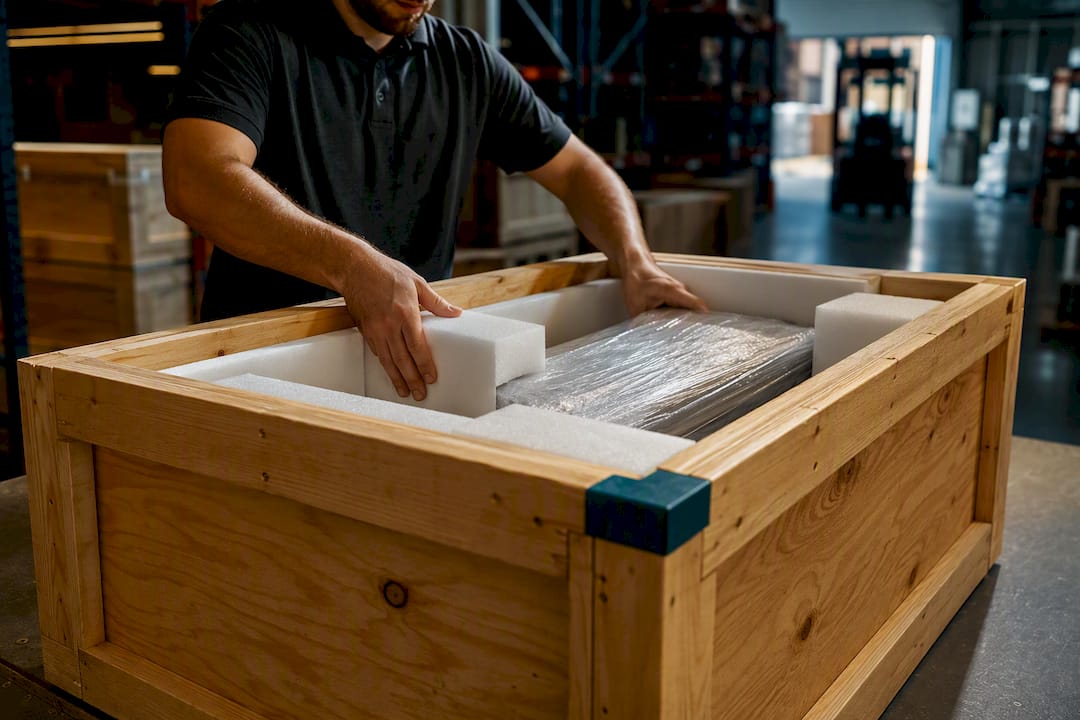
Start with the right box or container. Choose sturdy cardboard rated for the parcel’s weight, not flimsy boxes that collapse under pressure. The box should have minimal empty space inside, or you’ll need excessive cushioning material to compensate.
Safe packing requires adequate cushioning, sturdy containers, and correct sealing techniques to protect contents throughout the shipping journey. This means investing in quality materials upfront rather than gambling on cheap alternatives that fail in transit.
Follow these packing fundamentals:
- Cushioning material: Use bubble wrap, foam sheets, or packing peanuts to surround items on all sides with at least 2-3 inches of protection
- Weight distribution: Place heavier items at the bottom and center of the box to prevent shifting
- Fragile items: Wrap each piece individually and label the package clearly with fragile stickers
- Sealing: Use packing tape across all seams and along the bottom, creating an H-pattern for reinforcement
- Labeling: Print clear shipping labels and apply them flat, not on edges or corners
Dimensional accuracy matters for shipping costs and carrier acceptance. Measure your packed parcel exactly as the carrier requires. Underestimating dimensions leads to surcharges; oversizing wastes money on unused space.
Proper packing reduces damage claims and protects your reputation more effectively than any marketing campaign.
Consider your product type when planning protection. Electronics need static-free materials. Furniture needs edge protection. Fragile glassware demands individual wrapping plus cushioning layers. One-size-fits-all packing rarely works.
Test your packing by dropping test parcels from waist height. If items survive, your method works. If something breaks, adjust before shipping customer orders.
Pro tip: Invest in a shipping scale and measure tape for your packing station—accurate dimensional data prevents costly carrier surcharges and ensures your quotes reflect real costs.
4. Optimize Shipping Costs With Volume Discounts
Your shipping budget can shrink significantly through volume discounts. Courier companies reward consistent business with lower rates, and you leave money on the table if you ignore this.
Volume discounts work through bulk contracts with carriers. The more you ship monthly, the better your per-parcel rate becomes. Most major carriers offer tiered pricing structures that reward loyalty and predictable volume.
Leveraging volume discounts through bulk contracts reduces per-unit shipping expenses significantly for ecommerce sellers who ship regularly. This means establishing relationships with carriers and committing to consistent shipment patterns unlocks savings you cannot access as a casual shipper.
Understand how volume tiers typically work:
- Tier 1 (50-100 parcels monthly): Base rate with minimal discount
- Tier 2 (100-500 parcels monthly): 5-10% discount on standard pricing
- Tier 3 (500-2000 parcels monthly): 10-20% discount with account management
- Tier 4 (2000+ parcels monthly): Custom negotiated rates, often 20-35% below list prices
You don’t need massive volume to qualify for meaningful discounts. Many carriers start offering tier benefits at just 50 monthly shipments. Calculate your average monthly parcel count before approaching carriers with rate negotiations.
Consolidating shipments with fewer carriers unlocks better rates and creates negotiating leverage you cannot achieve splitting volume across multiple providers.
Beyond per-parcel rates, volume discounts open other benefits. You gain dedicated account support, priority handling during peak seasons, and better claim resolution. Some carriers offer discounted rates on insurance or custom clearance services.
Building relationships with account managers matters more than you think. They know when rate adjustments are possible and can advocate for you during contract reviews. Regular communication demonstrates your commitment to the partnership.
Track competitor rates quarterly. Use that data during contract renewals to negotiate better terms. Carriers expect this conversation and often match or beat competitor offers for reliable high-volume shippers.
Pro tip: Analyze your shipping data for the past 12 months to determine your true volume tier, then request rate quotes from at least three major carriers before signing any new contract.
5. Handle Customs Clearance for International Shipping
Customs clearance is where international shipments either flow smoothly or get stuck. Get it wrong and your parcels sit in warehouses for weeks while you scramble to fix documentation.
Customs clearance requires accurate documentation before your parcels even leave your warehouse. The paperwork determines whether your shipment moves quickly or triggers inspections and delays. Most ecommerce sellers underestimate how critical this step is.
Customs clearance requires accurate documentation including commercial invoices, packing lists, and customs declaration forms to prevent delays and additional fees in cross-border delivery. Understanding tariff classifications ensures you classify products correctly and avoid penalties when shipments arrive at destination countries.
Key documents you need:
- Commercial invoice: Details what is inside, quantities, unit prices, and total value
- Packing list: Shows exactly how items are packaged and organized
- Customs declaration form: Declares the shipment contents and purpose (sale, gift, sample, return)
- Certificates of origin: Required for certain products to confirm manufacturing country
- Harmonized tariff codes: Specific classification codes for each product type
Incorrect product descriptions cause headaches. “Miscellaneous items” won’t work—customs agents need specific, accurate descriptions. “Winter gloves, acrylic blend, size medium” works much better than vague terminology.
Product values must match your actual selling price. Undervaluing shipments to reduce duties triggers customs investigations and penalties. Be honest and transparent about what your parcels contain and their true value.
Accurate customs documentation from the start prevents holds, inspections, and penalties that can damage customer relationships.
Different countries have different import restrictions. Electronics might face tariffs in one country but duties in another. Textiles, food products, and liquids have specific rules. Research destination country regulations before shipping.
Many carriers offer customs clearance services. This can be worth the cost—professionals handle paperwork correctly and know destination regulations better than most sellers. Your courier often has existing relationships with customs brokers that expedite processing.
Pro tip: Create a master spreadsheet listing every product you sell with its harmonized tariff code, country of origin, and material composition—this becomes your customs documentation template and saves hours when preparing international shipments.
6. Track Your Parcel and Manage Delivery Exceptions
Real-time tracking transforms the customer experience. Your buyers want visibility into shipment status, and you need to catch problems before they become complaints.
Tracking systems provide live updates from the moment your parcel leaves your facility until it reaches the customer. Comprehensive parcel tracking enables you to monitor shipment status throughout delivery and alert users to any deviations from the planned route or schedule. This visibility builds trust and reduces customer service inquiries.
Delivery exceptions are deviations from normal shipping flow. They include failed delivery attempts, address issues, weather delays, customs holds, or carrier equipment failures. Without tracking, you discover these problems too late.
Common exceptions to watch for:
- Failed delivery attempts: Package left at wrong address or recipient unavailable
- Address issues: Incomplete, incorrect, or undeliverable addresses
- Customs delays: International parcels held for documentation review
- Weather disruptions: Severe weather preventing scheduled deliveries
- Carrier delays: Mechanical issues or routing problems causing late arrival
Proactive exception management saves your reputation. Set up automated alerts for delivery exceptions so you can contact customers immediately with solutions. A customer who hears about a problem from you before they notice it themselves feels valued and supported.
Many carriers provide tracking APIs you can integrate into your ecommerce platform. This lets customers track parcels directly from your website without leaving to check with the courier. Seamless integration improves the overall purchase experience.
Catching exceptions early and communicating proactively transforms potential complaints into opportunities to demonstrate exceptional service.
Track trends in your shipment data. If certain routes consistently experience delays, switch to faster services or different carriers. If address issues appear frequently, implement better address validation at checkout.
Integrate tracking data with your customer service team. When someone calls about a delayed parcel, your team should already know about the exception and have a solution ready. This prevents frustration and builds loyalty.
Pro tip: Set up automated notifications for customers at each major milestone (picked up, in transit, out for delivery) and immediately when exceptions occur—this reduces customer service inquiries and turns tracking into a positive brand experience.
Below is a comprehensive table summarizing the key considerations and strategies discussed in the article for managing and optimizing large-parcel shipping.
| Aspect | Key Information | Considerations |
|---|---|---|
| Leading Courier Services | UPS and DHL offer extensive networks suitable for large-parcel delivery, each with unique strengths domestically or globally. | Assess your shipping needs considering volume and geographical areas covered. |
| Shipping Method Selection | Match parcels to methods such as ground, express, and freight shipping based on size, weight, and urgency. | Dimensional weights impact cost; plan accordingly. |
| Packaging and Protection | Use suitable materials and pack securely to prevent transit damages. | Proper packing protects items and maintains customer satisfaction. |
| Cost Optimization | Explore volume discounts via tiered pricing models with carriers. | Consolidating shipments with select carriers may yield additional benefits. |
| International Shipping | Provide accurate customs documents like invoices, tariffs, and certificates of origin. | Efficient documentation avoids delays and enhances shipment flows. |
| Tracking and Exception Management | Real-time tracking enables monitoring and proactive issues handling. | Automated updates improve both customer satisfaction and service efficiency. |
This table encapsulates the guidelines and insights for efficient large-parcel courier management as detailed in the article.
Streamline Your Large Parcel Shipping With Reliable Courier Services
Shipping large parcels efficiently can challenge even the most experienced ecommerce sellers. From selecting the right courier to managing packaging, customs clearance, and tracking delivery exceptions, every step impacts customer satisfaction and your bottom line. The article highlights crucial pain points like matching parcel size to shipping methods, avoiding costly dimensional weight fees, and ensuring smooth international customs processing. It also stresses the value of real-time tracking and handling delivery issues proactively.
With or-ner.com, you gain access to a comprehensive platform that solves these challenges by connecting you to reliable courier services and specialized fulfillment solutions tailored for ecommerce sellers. Our end-to-end tools help optimize shipping decisions, provide transparent real-time shipment tracking, and streamline cross-border logistics including customs clearance. You get scalable support whether you handle small batches or bulk volumes, ensuring your parcels arrive safely and on time while controlling costs and exceptions.
Take control of your large parcel shipments now. Explore how our platform integrates freight booking, warehousing, and smart logistics to meet your specific needs and power your ecommerce growth. Start with or-ner.com and turn complex shipping hurdles into reliable advantages for your business.
Frequently Asked Questions
What are the best courier services for sending large parcels?
Choosing the right courier service is crucial for shipping large parcels. Look for carriers that offer extensive logistics networks, real-time tracking, and scalable solutions to accommodate your shipping volume.
How can I determine the best shipping method for my oversized items?
Select a shipping method based on the size and weight of your parcels. For large items, consider options like express or specialized freight services that offer adequate handling and faster delivery.
What packing materials should I use for shipping large parcels safely?
Use sturdy cardboard boxes, ample cushioning materials such as bubble wrap or foam sheets, and strong packing tape to secure the contents. Ensure that there is minimal empty space to prevent damage during transit.
How can I save on shipping costs when sending large parcels?
Negotiate volume discounts with carriers based on your regular shipping patterns. Establishing a consistent shipping volume can help reduce your per-parcel rate by significant margins, potentially by 10-20% or more.
How do I handle customs clearance for international shipments of large parcels?
Ensure all necessary documentation is accurate and complete before shipping, including commercial invoices and customs declaration forms. This preparation prevents delays and complications at customs, helping to ensure timely delivery to your international customers.
What should I do if my shipment encounters a delivery exception?
Monitor your shipment’s tracking updates for any delivery exceptions, such as failed delivery attempts or customs holds. Contact your customers proactively with updates and solutions to enhance their experience and maintain trust in your service.