TL;DR:
- Choosing the right carrier and packaging is essential for cost-effective heavy box shipping, considering weight limits, dimensional weight, surcharges, and damage risks. Implementing standardized box sizes, proper reinforcement, and regular carrier rate comparisons can reduce surcharges and operational complexity. For shipments exceeding 150 pounds or with high surcharges, freight options become more economical than parcel carriers, with careful evaluation improving delivery efficiency and margins.
Shipping heavy boxes is one of the most expensive and operationally complex challenges in ecommerce logistics. The best way to ship heavy boxes is rarely obvious because carrier rates, surcharge triggers, and packaging decisions each compound on each other in ways that quietly drain your margins. Get the box wrong and you pay dimensional weight penalties. Pick the wrong carrier and a single large package surcharge wipes out your profit on that order. This article breaks down exactly how to evaluate carriers, choose packaging, and match your shipping method to your specific business scenario so you stop guessing and start saving.
Key takeaways
| Point | Details |
|---|---|
| Carrier choice depends on weight | USPS wins under 70 lbs; UPS and FedEx Ground become more competitive above that threshold. |
| Packaging directly affects cost | Right-sizing boxes and minimizing void space reduces both damage risk and dimensional weight charges. |
| Surcharges are the hidden cost | Large package fees from UPS and FedEx can exceed $300 per shipment, making carrier selection critical. |
| Freight is worth considering | For items over 150 lbs or with extreme dimensions, LTL freight often beats parcel carrier pricing. |
| Standardize to save money | Limiting your box SKU count reduces oversize charges and speeds up fulfillment operations. |
1. Best way to ship heavy boxes: the criteria that matter most
Before comparing carriers, you need a clear framework for evaluating your options. Without one, you end up chasing the lowest base rate and missing the total landed shipping cost, which includes surcharges, dimensional weight, fuel fees, and residential delivery charges.
Here is what to evaluate for every heavy shipment:
- Weight limits: Each carrier sets a maximum weight per package. USPS caps at 70 lbs. UPS and FedEx Ground accept up to 150 lbs. Anything heavier requires freight.
- Dimensional weight pricing: Carriers charge based on the greater of actual weight or dimensional weight, calculated by dividing cubic inches by a carrier-specific divisor. FedEx uses a divisor of 139 for Ground shipments.
- Surcharge thresholds: Large package surcharges kick in well before you hit absolute size limits. Knowing these numbers in advance prevents expensive surprises.
- Delivery speed vs. cost: Ground services cost significantly less than express, but for time-sensitive shipments, the premium may be justified.
- Damage risk: Heavier packages experience more stress in transit. Carrier handling, stacking during storage, and drop impacts all factor in.
- Quoting multiple carriers: No single carrier wins every lane or weight class. Rate shopping across at least two to three carriers on every shipment category is standard practice for reducing shipping costs.
Pro Tip: Always measure your packed dimensions before quoting. Carriers measure and reweigh packages at the point of pickup or processing, and a single inch over a threshold can trigger a surcharge that exceeds your base shipping cost.
2. Parcel carrier options for heavy boxes under 150 pounds
For most ecommerce sellers, the choice comes down to three carriers. Here is how they compare on heavy shipments.
USPS Ground Advantage
USPS Ground Advantage handles packages up to 70 pounds with typical delivery of two to five business days and includes tracking plus $100 of insurance. The max combined length and girth is 130 inches, and oversize fees apply beyond that. For shipments under 70 lbs, USPS tends to offer the most competitive base rate, particularly for shorter distances and residential delivery, where other carriers layer on additional fees.
UPS Ground
UPS accepts packages up to 150 pounds, with a maximum length of 108 inches and a combined length-plus-girth limit of 165 inches. Exceeding the volume threshold triggers large package surcharges that can reach $356 or more in 2026. UPS Ground becomes more cost-effective than USPS in the 70 to 150 lb range, especially on longer hauls. UPS Simple Rate is worth checking for boxes that fit within its fixed size tiers, as it eliminates dimensional weight calculations entirely.
FedEx Ground
FedEx Ground applies oversize surcharges of $255 to $330 for packages over its size limits. Four separate criteria must all be satisfied to avoid fees: length, length plus girth, volume, and actual weight. FedEx’s dimensional weight divisor of 139 means that large but light boxes get hit hard. For dense, heavy items that stay within size thresholds, FedEx Ground can compete directly with UPS on pricing.
| Carrier | Max Weight | Max Length + Girth | Large Package Surcharge (2026) |
|---|---|---|---|
| USPS Ground Advantage | 70 lbs | 130 inches | Varies by package size |
| UPS Ground | 150 lbs | 165 inches | Up to $356+ |
| FedEx Ground | 150 lbs | 165 inches | $255 to $330 |
Rate changes effective January 2026 have shifted the competitive balance between UPS and FedEx, which is exactly why quoting both carriers on your top-volume SKUs is not optional.
3. Packaging best practices that control cost and prevent damage
Packaging is where most businesses leak money without realizing it. The box you choose determines your dimensional weight, your surcharge exposure, and your damage rate simultaneously.
Box strength
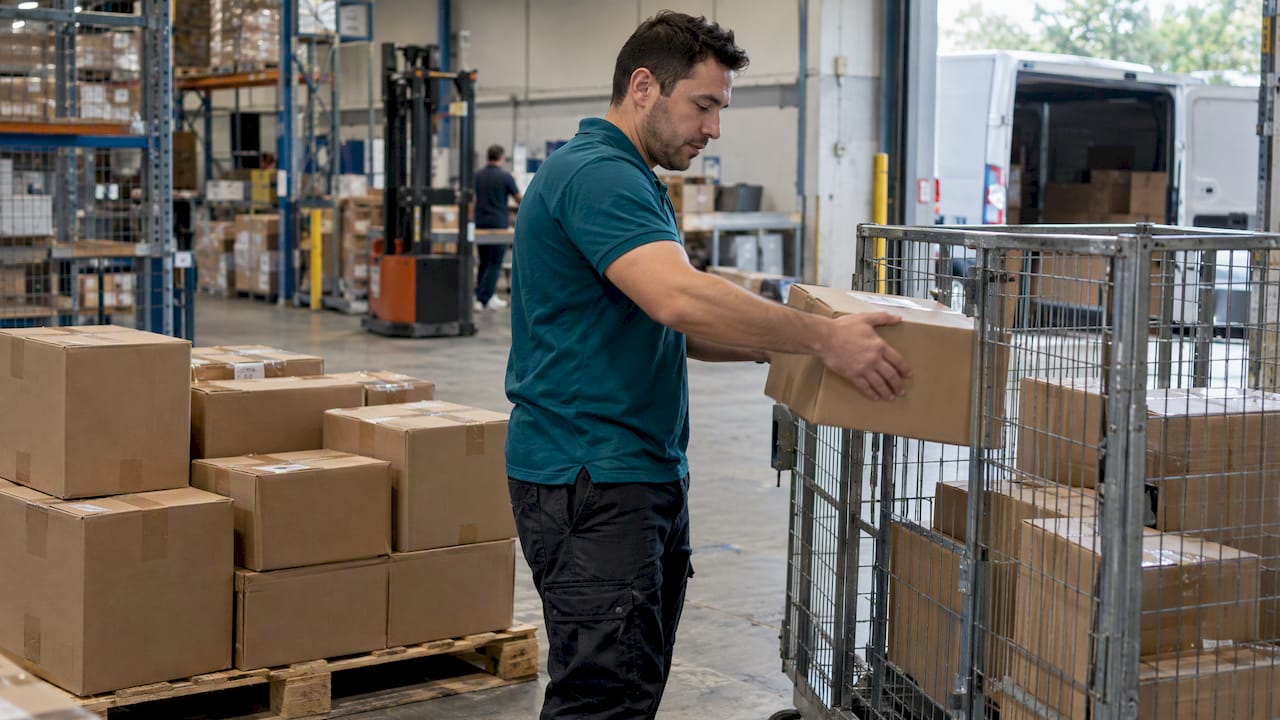
For items over roughly 65 lbs, double-wall construction reduces damage by resisting corner crush and panel flex, the two failure modes that cause the most problems with dense, heavy shipments. Single-wall cartons typically fail first at the corners under repeated drop impacts or stacking pressure. The edge crush test rating on your box should match the combined weight of the product and any stacking load it will experience in a carrier facility.
Right-sizing the box
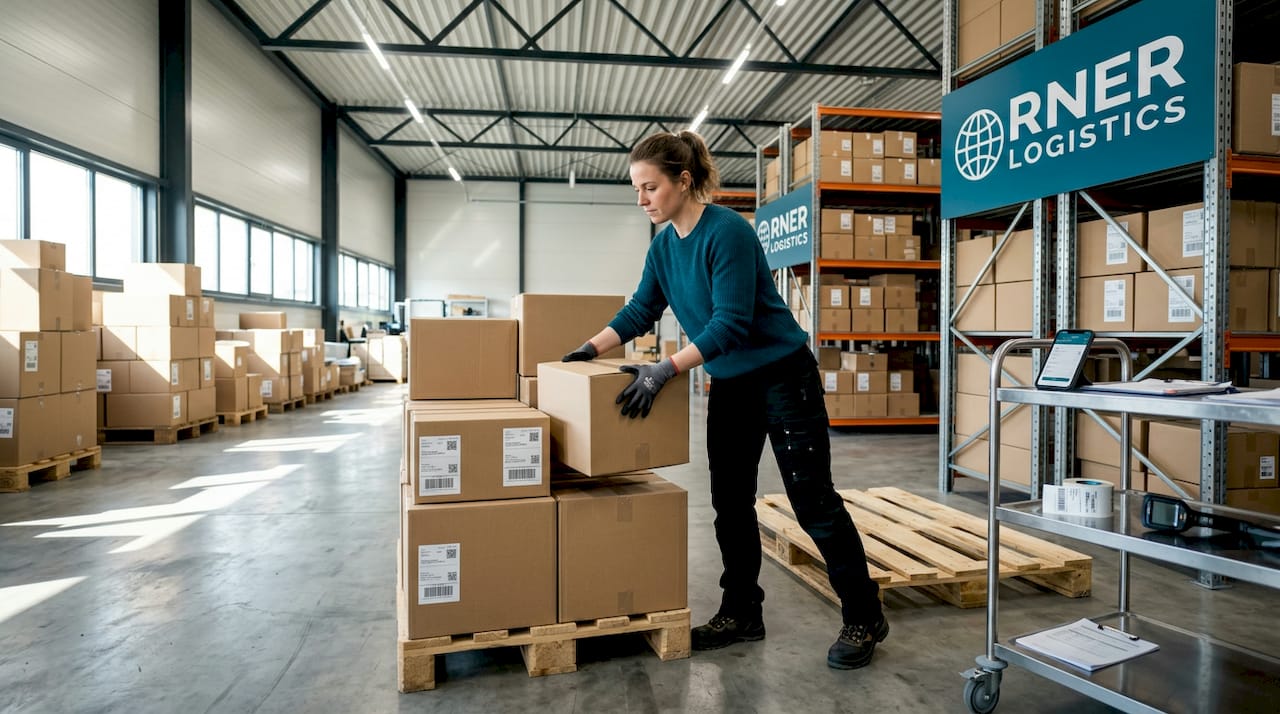
Leaving one to two inches of padding space around your product is the sweet spot. Too much void space increases your dimensional weight and wastes filler material. Too little space and your product moves in transit, which causes internal product damage even when the box itself survives the journey. Right-sizing gets you below surcharge thresholds and reduces material costs.
Pro Tip: Stronger box board only solves problems caused by box failure. If your product shifts inside the box during transit, upgrading board quality will not stop damage. Fix the interior pack-out first, then reassess whether you need a heavier box.
Reinforcement and sealing
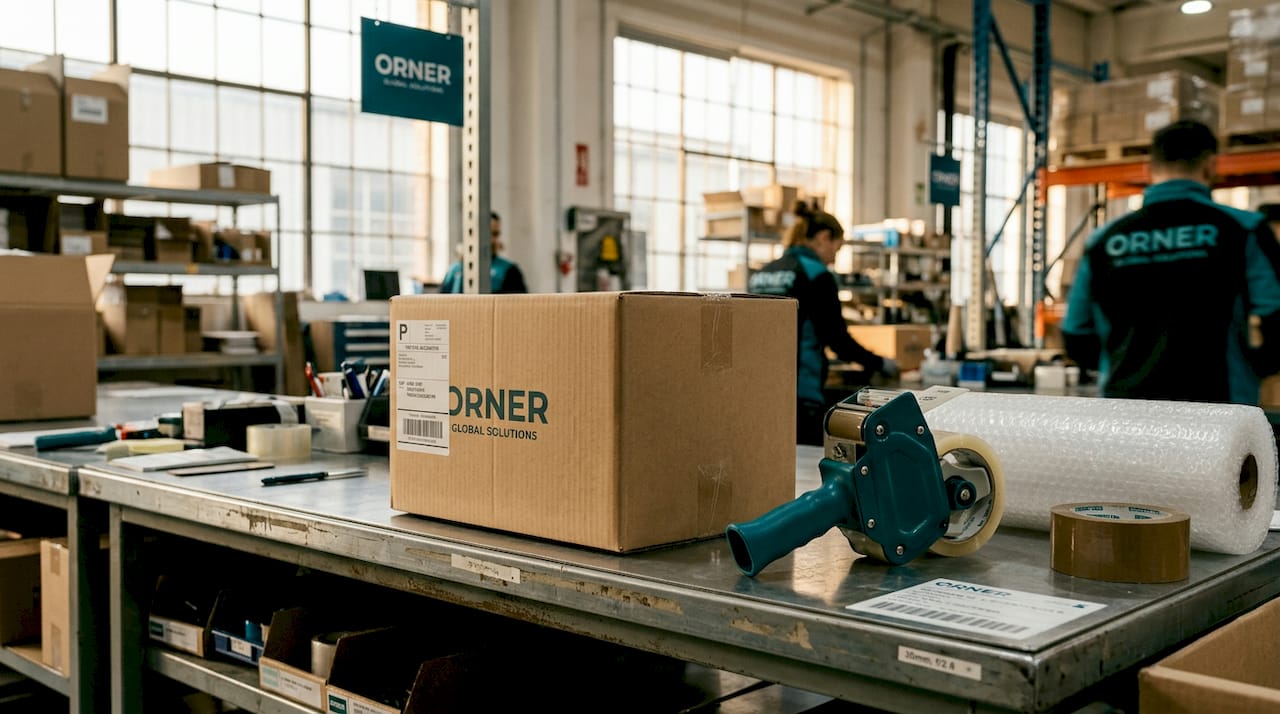
Taping seams and adding extra board layers at corners significantly improves damage resistance on heavy packages. Use H-tape patterns on both the top and bottom seams, and add corner reinforcement strips for anything over 50 lbs shipping through a high-volume fulfillment network.
Standardizing your box sizes
Limiting your box SKU count to a handful of sizes that closely fit your product catalog reduces oversize exposure, speeds up packing, and lowers your per-unit packaging cost through volume purchasing. More box sizes mean more opportunities for your team to grab the wrong one. Standardization is one of the highest-leverage decisions a logistics manager can make. You can find more detail on this in Or-ner’s ecommerce packaging guide.
4. When to move from parcel to freight shipping
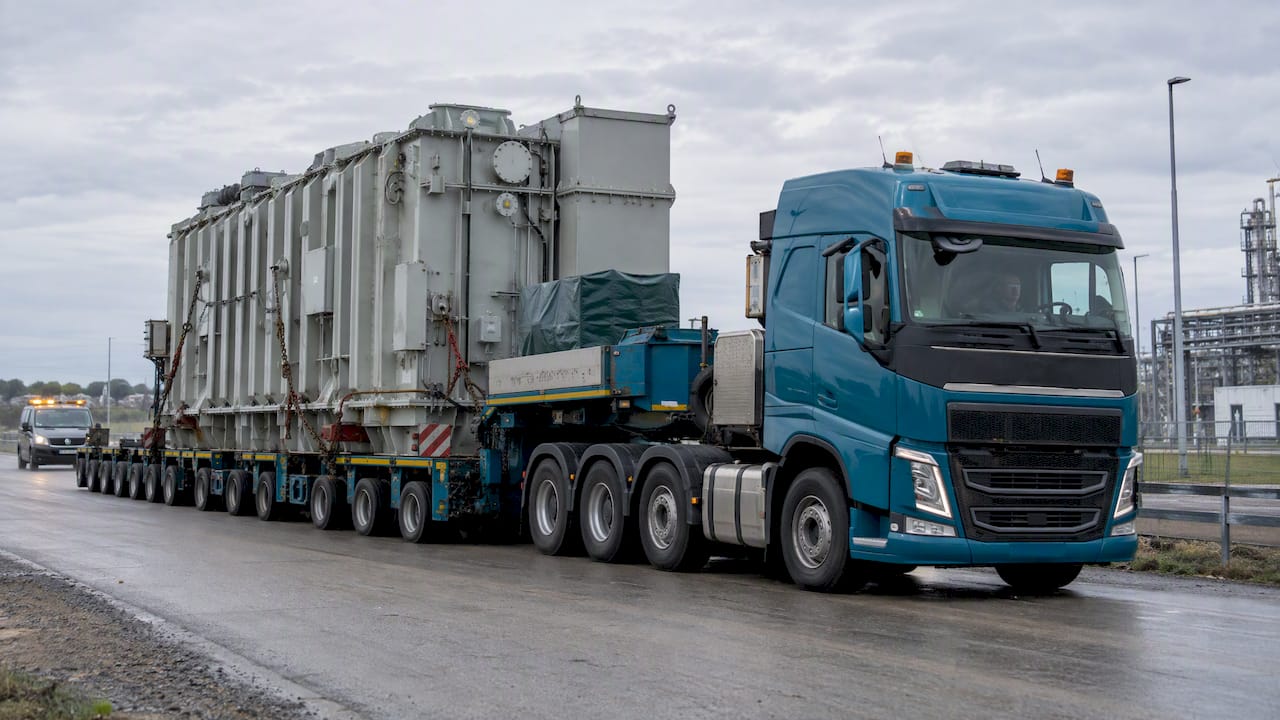
Parcel carriers work well up to about 150 lbs and within standard size limits. Once you exceed those thresholds, or once surcharges push your parcel cost into freight territory, less-than-truckload freight becomes the smarter option.
Here is how to decide:
- Weight over 150 lbs: No major parcel carrier will accept the shipment. LTL freight is your only option for single-carton shipments at this weight.
- Surcharges exceed freight rates: If your FedEx or UPS surcharges are pushing a single parcel to $400 or more, request an LTL quote. You may find freight costs less for the same lane.
- Palletizable freight: Items like furniture, appliances, heavy home goods, and industrial equipment are natural fits for freight. These categories rarely benefit from parcel carrier pricing at scale.
- Consolidation opportunities: If you regularly ship multiple heavy boxes to the same destination, consolidating onto a pallet and moving it as one LTL shipment typically cuts cost per unit significantly.
- International heavy shipments: For businesses learning how to ship large items internationally, ocean freight often becomes the most cost-effective mode once weight and volume exceed parcel thresholds, particularly for cross-border trade to Asia or Europe.
The primary trade-off is transit time. LTL freight typically runs five to ten business days on most domestic lanes, compared to two to five days for ground parcel. For replenishment inventory or non-urgent B2B orders, that time gap rarely matters. For direct-to-consumer shipments with customer expectations set by two-day delivery norms, it requires clear communication. You can explore the full comparison of courier vs. freight options in Or-ner’s courier and freight guide.
5. Building a decision matrix for your business
No single shipping method wins universally. The right choice depends on four variables: cost per shipment, transit time, damage rate, and operational complexity. Building even a simple decision matrix gives your team a repeatable framework instead of making carrier choices ad hoc.
| Scenario | Recommended Method | Key Reason |
|---|---|---|
| Under 70 lbs, short distance | USPS Ground Advantage | Lowest base rate for this weight class |
| 70 to 150 lbs, long distance | UPS or FedEx Ground | More competitive at higher weights |
| Over 150 lbs or extreme dimensions | LTL freight | Parcel carriers will not accept or will surcharge heavily |
| Multiple boxes to same address | LTL or consolidated parcel | Consolidation reduces per-unit cost |
| Time-sensitive heavy shipment | FedEx or UPS Express | Speed premium justified for customer SLAs |
Online quoting tools and multi-carrier platforms let you run this comparison automatically for each shipment based on dimensions, weight, destination, and required transit time. Or-ner’s platform does exactly this, giving ecommerce sellers and logistics managers live rate comparisons across carriers without manual lookups. Monitoring your damage rates by carrier and box type on a monthly basis tells you whether your current packaging and carrier combination is actually working, or just appearing to.
My honest take on shipping heavy boxes
I have spent years watching businesses make the same two mistakes. The first is choosing packaging based on material cost alone. A box that costs $0.40 less per unit looks attractive until you run the numbers on damage claims, carrier reweighs, and surcharge exposure that the wrong size creates. The real cost of cheap or wrong-sized packaging is almost always higher than the savings.
The second mistake is treating carrier selection as a one-time decision. I have seen logistics managers lock in a UPS account, negotiate a rate discount, and then never revisit the comparison even as FedEx shifts pricing or USPS rolls out changes like the January 2026 rate adjustments. Carrier economics shift every year. What was the cheapest option 18 months ago may not be today.
What actually works: test two or three carrier and packaging combinations on your top-volume heavy SKUs, measure total cost per delivered order including damage claims, and let the data make the decision. Operational standardization around a tight set of box sizes and clear carrier selection rules for each weight class is how you scale without chaos. The businesses I have seen get this right share one trait. They treat shipping as a system, not a transaction.
— Maayan
How Or-ner helps you ship heavy boxes more affordably
Finding the best way to send heavy packages at scale requires more than a single carrier contract. Or-ner’s reliable courier services give ecommerce sellers and business shippers access to multi-carrier rate comparisons, real-time tracking, and fulfillment support built specifically for heavy and oversized shipments. Whether you are moving furniture, industrial parts, or bulk home goods, Or-ner connects you to the right carrier at the right rate without manual quoting on every order.
For small businesses that need cost-effective access to these capabilities without enterprise-level overhead, Or-ner’s small business courier solutions are designed to scale with your volume. The platform handles domestic and cross-border shipments, integrates with your ecommerce stack, and gives you the visibility you need to catch exceptions before they become customer complaints. Stop leaving money on the table with the wrong carrier. Or-ner makes the right choice the default.
FAQ
What is the cheapest carrier for heavy packages?
USPS Ground Advantage is typically cheapest under 70 lbs, while UPS and FedEx Ground offer better rates from 70 to 150 lbs, especially on longer distances. Always quote both carriers for this weight range.
When should I use freight instead of a parcel carrier?
Use LTL freight when your shipment exceeds 150 lbs, exceeds parcel size limits, or when carrier surcharges push your parcel cost above comparable freight rates on the same lane.
How do I avoid large package surcharges?
Right-size your packaging to stay within carrier dimension thresholds and measure packed dimensions before shipping. FedEx and UPS both apply surcharges based on four separate size criteria, so staying under all of them is required to avoid fees.
Does box quality affect shipping cost?
Yes, indirectly. A box that is too large increases your dimensional weight and may trigger oversize surcharges, while a box that is too weak leads to damage claims. Both outcomes cost more than investing in the right box upfront.
Is double-wall boxing worth the extra cost for heavy items?
For items over 65 lbs, double-wall construction meaningfully reduces damage from corner crush and panel flex. Combined with proper interior packing, it lowers damage rates and the claim costs that follow.