A freight forwarder saves your company time and money by coordinating multimodal transport, handling export and import paperwork, and using volume buying power to secure better rates. This matters most for ecommerce sellers, exporters, and B2B shippers who move goods across borders regularly and cannot afford delays, documentation errors, or unpredictable freight costs, especially those in specialized sectors such as textiles requiring detailed cross-border shipping procedures like those outlined in Cross-Border Textile Import: A Logistics Guide.
TL;DR:
- Groupage lets shippers pay for the container or pallet space they use, while carrier volume contracts can lower rates beyond an individual shipper’s reach.
- Even when a forwarder files customs entries, the importer of record remains responsible for entry accuracy and duty payment, so confirm licensing and filing authority.
- Request a landed cost estimate covering duties, inland delivery, and demurrage risk, not just the ocean or air freight charge.
- For peak periods, ask whether the forwarder reserves carrier space through standing contracts or NVOCC access, and verify quoted lead times with a test shipment.
- Marketplace shipments need platform specific labels, carton markings, and delivery windows; choose a forwarder that builds those rules into freight and fulfillment plans.
Table of Contents
- Freight forwarder benefits at a glance
- How forwarders cut landed cost and transit time
- One point of contact for coordination and exceptions
- Documentation, compliance, and customs clearance
- Securing capacity across ocean, air, rail, and road
- Warehousing, packaging, and insurance as extensions of forwarding
- How to choose and onboard a freight forwarder
- Handling last-mile delivery through courier partnerships
- Scalability and flexibility for growing ecommerce businesses
- Risk management and cargo insurance in practice
- Ecommerce integrations, including Amazon-specific shipping
- What experienced shippers get right about using a forwarder
- Request a freight estimate and put these benefits to work
- FAQ
- Sources
Freight forwarder benefits at a glance
When you are evaluating whether to bring in outside help for shipping, it helps to see the full scope of what a forwarder actually does before diving into the details. Each of these functions solves a specific operational headache that tends to grow as your shipping volume increases.
- One point of contact: a single account manager coordinates carriers, customs brokers, and inland transport instead of you juggling five vendors.
- Cost savings: consolidating smaller shipments with other cargo lowers your per-unit freight cost compared to booking alone.
- Documentation and customs: forwarders prepare bills of lading, commercial invoices, and certificates, cutting the paperwork errors that cause port holds.
- Booking and capacity: forwarders reserve carrier space ahead of peak season, protecting your shipment from being bumped.
- Multimodal coordination: ocean, air, rail, and truck legs are scheduled as one itinerary instead of separate bookings.
- Value-added services: warehousing, packaging, and insurance are bundled so you are not sourcing them from separate vendors.
- Tracking and visibility: milestone updates and dashboards replace phone calls to carriers for status checks.
How forwarders cut landed cost and transit time
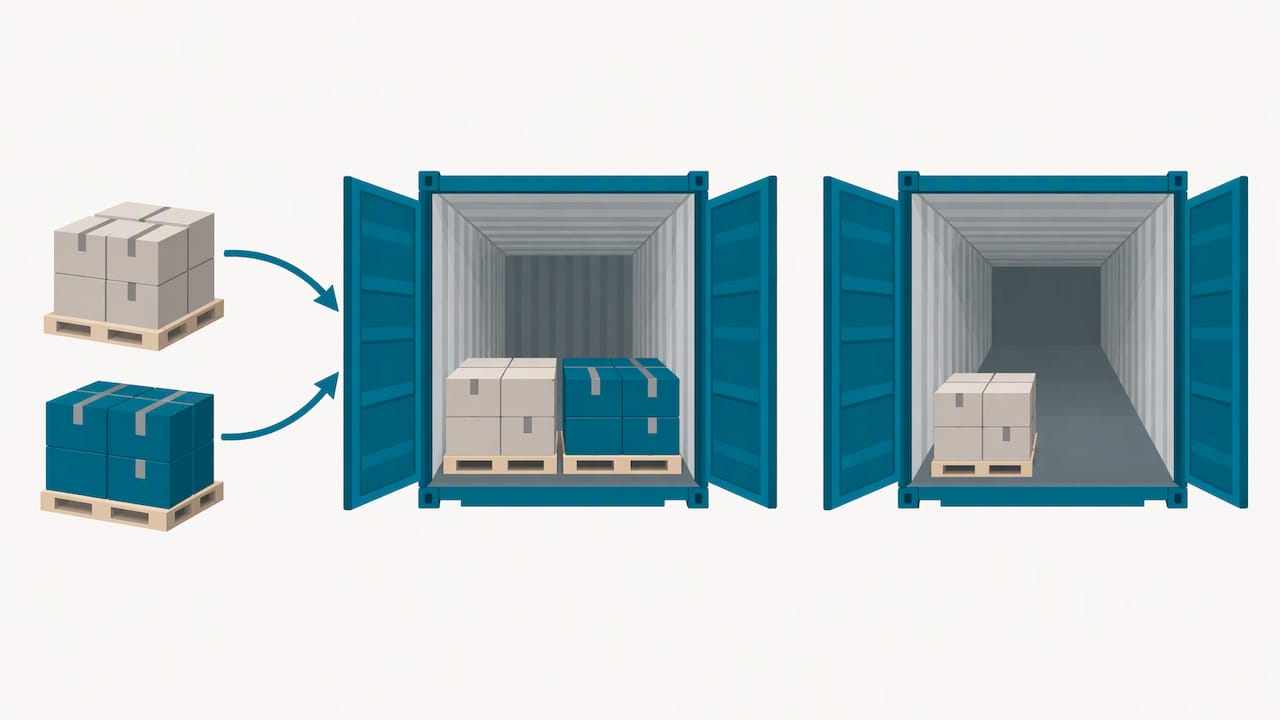
Consolidation, also called groupage, is the clearest cost lever a forwarder offers. When your shipment is combined with cargo from other shippers heading to the same destination, you pay for the container or pallet space you actually use rather than a full container load you only partly fill. A business shipping two pallets a month pays a fraction of a full-container rate under this model, instead of absorbing the cost of empty space.
Forwarders also negotiate standing contracts with ocean and air carriers based on aggregate volume across all their clients. International freight forwarders provide dock-to-door services including booking space, consolidating freight, and arranging inland transport, and their buying power on carrier contracts is part of what keeps your per-shipment rate below what you would negotiate alone.
Routing decisions matter just as much as rate negotiation. A forwarder weighing air against ocean for a time-sensitive order will factor in not just freight cost but inventory carrying cost and the risk of stockouts, sometimes recommending a hybrid: air for the first batch to restock quickly, ocean for the bulk reorder. On the ground, a forwarder monitoring container dwell time at port can reroute or expedite pickup before demurrage and storage charges start accruing, a cost that catches many first-time importers off guard.
- Groupage shipments reduce per-unit freight cost versus booking a dedicated container.
- Carrier volume contracts give you rate access you could not negotiate independently.
- Active dwell-time monitoring helps you avoid demurrage and storage fees.
Pro Tip: Ask your forwarder for a landed cost estimate that includes duties, demurrage risk, and inland delivery, not just the ocean or air freight line item.
One point of contact for coordination and exceptions
Without a forwarder, your team becomes the coordinator between the factory, the trucking company, the ocean carrier, the customs broker, and the last-mile courier. Every delay or document mismatch lands on your desk. A forwarder’s account manager absorbs that coordination load and becomes the single party accountable for the shipment’s progress from origin to destination.
When something goes wrong, a delayed vessel, a damaged pallet, a missing certificate, the forwarder manages the exception directly with the relevant carrier or supplier rather than routing the problem back to you to solve. Freight forwarders act as an extension of the shipper’s team, and an experienced freight forwarder handles this kind of administrative overhead so your staff is not absorbing it internally.
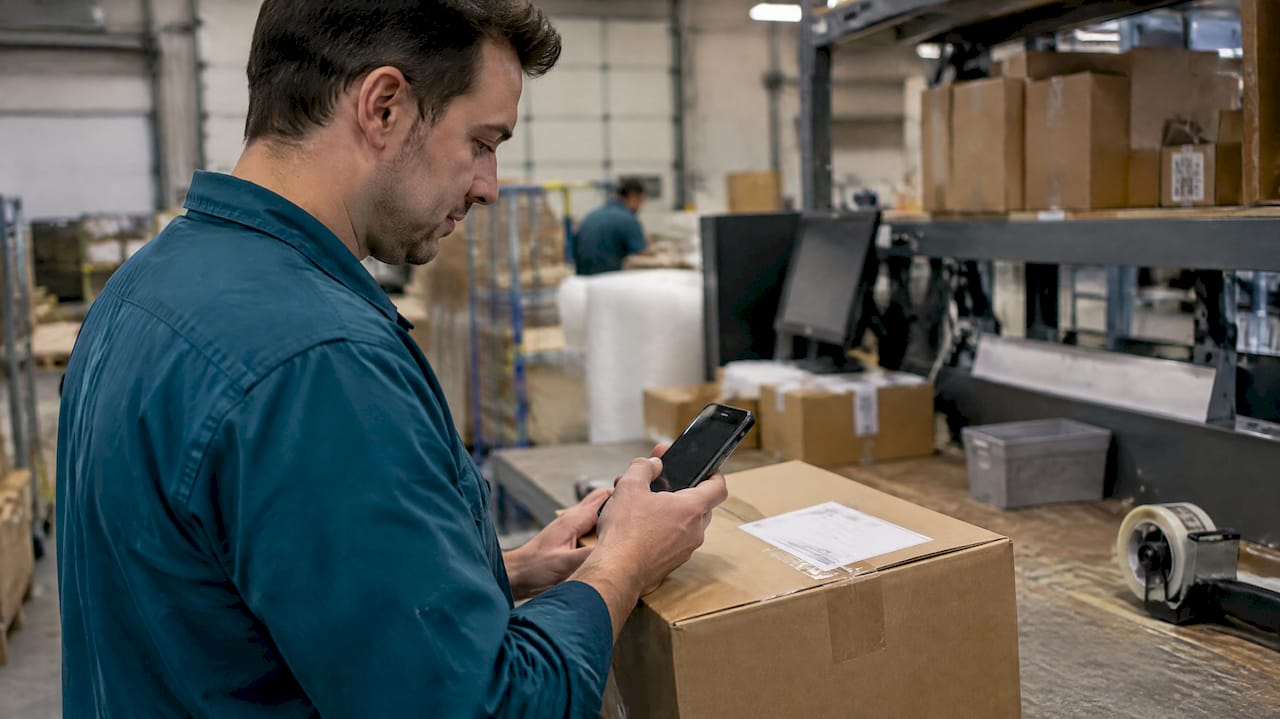
Visibility tools reinforce this. Milestone tracking, whether that is a booking confirmation, a departure scan, or a customs release notice, replaces the need for your team to call carriers for status updates. For a company moving a dozen shipments a month, that alone can save several hours a week that would otherwise go to status chasing.
- A single account manager replaces multiple vendor relationships for each shipment.
- Exception handling, delays, damage, re-routing, is managed by the forwarder, not escalated to you.
- Milestone tracking cuts the internal hours your team spends chasing carrier updates.
Documentation, compliance, and customs clearance
Export and import shipments require a consistent set of documents: the bill of lading or air waybill, the commercial invoice, the packing list, and, depending on the product and destination, certificates of origin or inspection. Freight forwarders advise on freight costs, port charges, and special documentation, and many assist with Automated Export System filing and letter-of-credit paperwork, which reduces the administrative risk that comes with getting these filings wrong.
Forwarders also advise on Incoterms, the standardized trade terms that determine who pays for freight, insurance, and duties at each stage of the shipment. Getting the Incoterm wrong on a purchase order can shift thousands of dollars in unexpected cost onto the wrong party, so this guidance has real financial weight.
It is worth being clear about where responsibility actually sits. CBP guidance states that the importer of record remains responsible for the accuracy of entry documentation and duty payment even when a broker or forwarder handles the filing, and brokers must execute a power of attorney directly with the importer of record rather than through an intermediary. A forwarder streamlines the process; it does not transfer your legal accountability for what gets filed under your name. Our guide to freight forwarding documentation walks through the specific forms in more detail.
Companies that export are 17% more profitable than companies that do not, according to EXIM’s analysis of exporters, and forwarders support that gap by streamlining the export administration that otherwise slows smaller businesses from shipping internationally at all.
- Bills of lading, commercial invoices, and packing lists are standard across most international shipments.
- AES filing and letter-of-credit documentation are commonly handled with forwarder support.
- The importer of record, not the forwarder, remains legally responsible for entry accuracy.
Securing capacity across ocean, air, rail, and road
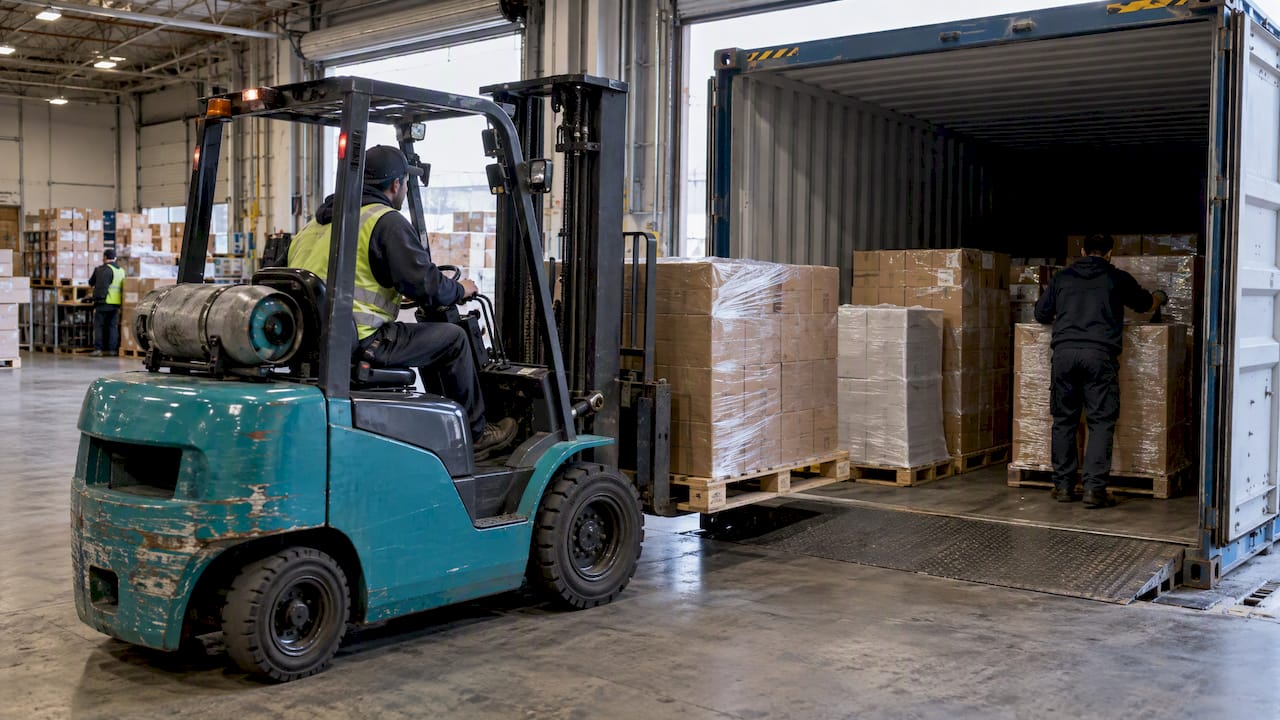
Space on ocean vessels and aircraft is finite, and during peak shipping periods it gets allocated to whoever booked first or holds a standing contract. Forwarders reserve that space ahead of demand spikes, which is why a shipper working through a forwarder is less likely to get bumped from a sailing than one booking spot cargo directly with a carrier.
Many forwarders operate as or partner with Non-Vessel Operating Common Carriers, which let them consolidate multiple clients’ cargo under a single ocean booking and offer sailing schedules independent of any one carrier’s capacity. This NVOCC structure is part of how forwarders manage seasonal capacity shortages for their clients.
Multimodal coordination is where this gets practical: a shipment might move by ocean from the origin port, transfer to rail for the inland leg, then finish by truck to a distribution center, all scheduled as one itinerary rather than three separate bookings. Our ocean freight forwarding guide covers the cost and timeline trade-offs between ocean and air in more depth.
- Reserved carrier space protects your shipment schedule during peak season.
- NVOCC access gives forwarders consolidation options independent of a single carrier.
- Intermodal handoffs (ocean, rail, truck, air) are planned as one coordinated itinerary.
Warehousing, packaging, and insurance as extensions of forwarding
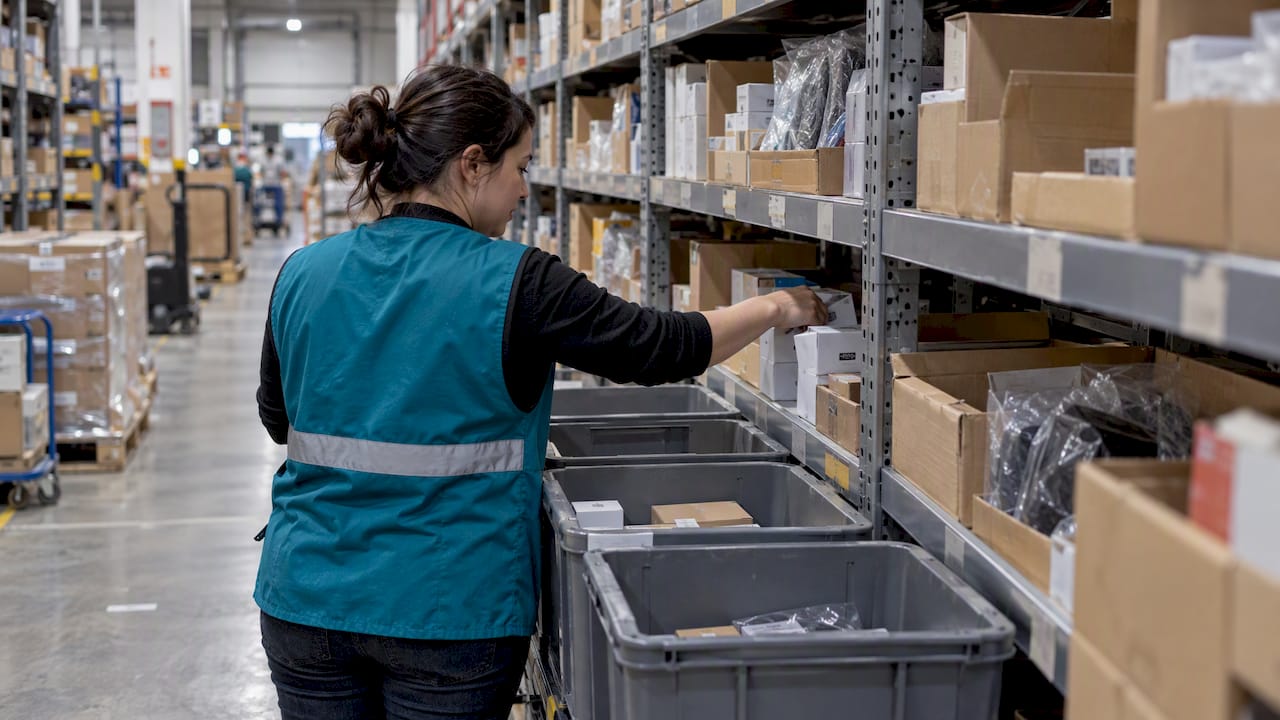
Modern forwarding rarely stops at the port. Short-term warehousing and cross-dock services let you stage inventory close to your end customer, while pick-and-pack integration turns a freight shipment directly into fulfillable ecommerce inventory without a separate handoff to a third-party warehouse.
Packaging and container stuffing services reduce damage claims and help you meet destination-country packaging compliance rules, both of which get expensive to fix after the fact. Tracking APIs that tie shipment status back into your own inventory system give your operations team real-time visibility without manual data entry.
Cargo insurance is worth the added line item whenever the value of a shipment exceeds what you can absorb as a write-off. For high-value or fragile goods, the premium is small relative to the replacement cost of a damaged or lost container.
- Short-term warehousing and cross-dock services bridge freight arrival and fulfillment.
- Packaging and stuffing services lower damage claims and compliance risk.
- Cargo insurance protects against loss on shipments you cannot afford to write off.
How to choose and onboard a freight forwarder
Not every forwarder is a fit for every business, so a short evaluation checklist saves you from a costly switch later. Confirm licensing, since ocean forwarders are regulated by the Federal Maritime Commission and air forwarders typically hold IATA accreditation, and ask about customs clearance expertise, network reach in your key lanes, tracking technology, client references, and how claims are handled when cargo is damaged or delayed.
- Request a quote or sample shipment rate for your typical lane and volume.
- Share your standard documentation templates and confirm the forwarder’s process for AES filing and customs entries.
- Run a test shipment before committing full volume.
- Integrate tracking so your team has visibility without manual check-ins.
Ask directly about lead times by lane, the claims process timeline, and whether billing is itemized clearly enough to audit against your own cost projections.
Pro Tip: Negotiate demurrage and storage terms before you sign, and run at least one sample shipment to confirm actual transit times match what was quoted.
Handling last-mile delivery through courier partnerships
Getting a container to port or an airfreight shipment through customs solves only part of the delivery problem. The final leg, from a regional warehouse or distribution hub to the end customer’s door, is where many shipments lose time and where customer complaints concentrate.
Forwarders that also manage fulfillment typically maintain partnerships with regional and national couriers so that last-mile delivery is scheduled as part of the same shipment plan rather than handed off as a separate, disconnected step. That matters most for ecommerce sellers, where a customer expects a delivery window, not just a port arrival date.
These courier partnerships also give you flexibility by destination. A shipment heading to a dense urban area might route through a different last-mile partner than one going to a rural address, and a forwarder with multiple courier relationships can make that call without you having to manage separate carrier accounts for each region. That flexibility reduces both delivery time and the failed-delivery rate that comes from using a single courier network across every destination type.
Scalability and flexibility for growing ecommerce businesses
A business shipping 50 orders a month and one shipping 5,000 have very different logistics needs, and your freight setup should be able to move between those volumes without a full operational rebuild each time. Working through a forwarder with warehousing and fulfillment capacity lets you add shipping lanes, seasonal capacity, or new fulfillment locations without negotiating new carrier contracts from scratch each time your volume shifts.
This flexibility shows up most clearly around seasonal peaks, when a growing ecommerce brand might need double or triple its normal shipping volume for a few months a year. A forwarder with existing carrier relationships and warehouse capacity can absorb that spike, while a business managing its own carrier contracts has to renegotiate rates and capacity under time pressure.
The same logic applies to geographic expansion. Entering a new market usually means new customs requirements, new last-mile partners, and new documentation standards, and a forwarder already operating in that market removes the need to build those relationships yourself before your first shipment lands.
Risk management and cargo insurance in practice
Freight carries risk at every stage: damage in transit, loss, customs delays, and carrier insolvency can all disrupt a shipment and the revenue tied to it. Forwarders manage this risk partly through carrier selection, choosing carriers and routes with stronger reliability track records, and partly through cargo insurance options offered as part of the booking.
International freight forwarders commonly arrange cargo insurance alongside freight booking, which means you are not sourcing a separate insurance policy and reconciling it against a shipment that may already be in transit. For shippers moving high-value goods, this bundled approach also simplifies claims, since the forwarder who booked the shipment is typically the same party coordinating the claim.
Documentation errors are themselves a risk factor worth naming. Trade.gov guidance on export documentation notes that errors in shipping paperwork can cause delays, nonpayment, or cargo seizure, which is part of why forwarder-prepared documentation is a risk mitigation tool as much as a convenience.
Ecommerce integrations, including Amazon-specific shipping
Ecommerce sellers face shipping requirements that do not always map cleanly onto traditional freight processes, particularly when selling through a marketplace with its own inbound shipping rules. Amazon’s FBA program, for example, requires specific labeling, carton marking, and delivery window compliance that can trigger fees or rejected shipments if handled incorrectly.
A forwarder familiar with marketplace requirements builds those rules into the freight and fulfillment plan from the start, so inbound shipments arrive labeled and documented the way the platform expects rather than getting flagged on arrival. That reduces the back-and-forth that otherwise falls on your operations team to resolve after a shipment is already in transit.
Beyond Amazon specifically, catalog and inventory management integrations let your ecommerce platform reflect real-time stock levels tied to what is actually in transit or in a warehouse, rather than static counts that fall out of sync the moment a shipment is delayed.
What experienced shippers get right about using a forwarder
The businesses that get the most value from a freight forwarder treat the relationship as an extension of their own operations team, not a one-time transaction. They share forecasts early, flag seasonal volume shifts before they happen, and use the forwarder’s documentation and tracking tools consistently rather than only during a crisis.
The practical benefits described throughout this article, consolidation savings, documentation accuracy, booking reliability, tracking visibility, are realized through platform-enabled coordination: freight booking, customs clearance, warehousing, and tracking integrations working as one system rather than separate vendor relationships you manage by hand. That is the operational model a platform like ours is built around, connecting those pieces for ecommerce sellers and B2B shippers who need them to work together.
— Maayan
Request a freight estimate and put these benefits to work
We bring freight booking, customs clearance, warehousing, and real-time tracking into a single platform, so you are coordinating one account instead of five vendors. For ecommerce sellers and B2B shippers, that means faster onboarding, clearer visibility into where a shipment stands, and fewer surprises on landed cost.
Our services cover ocean freight, air freight, cross-border shipping, and ecommerce fulfillment, including customs clearance and warehousing built around integrations with major platforms like Amazon. If you ship regularly and want a clearer picture of cost and timeline before committing, request a freight shipping estimate and see how a coordinated setup compares to managing carriers on your own.
FAQ
What are the main benefits of using a freight forwarder?
A freight forwarder reduces your shipping costs through consolidation and carrier volume rates, handles export and import documentation, and coordinates multimodal transport so you are not managing multiple carriers directly. These benefits compound for businesses shipping internationally on a regular basis, where documentation errors and missed capacity windows carry real financial cost.
Who remains responsible for customs entries when using a forwarder?
The importer of record remains legally responsible for the accuracy of customs entries and duty payment, even when a forwarder or broker handles the filing, according to CBP guidance. Brokers are required to execute a power of attorney directly with the importer of record rather than through an intermediary.
How do freight forwarders help lower shipping costs?
Forwarders consolidate smaller shipments with other cargo so you pay for the space you use rather than a full container, and they apply carrier volume contracts that are typically out of reach for an individual shipper. Together, these mechanisms reduce per-unit freight cost without requiring you to negotiate directly with ocean or air carriers.
Do I still need a customs broker if I use a freight forwarder?
Many freight forwarders either hold customs brokerage licensing themselves or work directly with a licensed broker to file entries on your behalf. Whether you need a separate broker relationship depends on your forwarder’s own licensing and the complexity of your import requirements.
How can a freight forwarder support ecommerce sellers specifically?
Forwarders that support ecommerce integrate freight and fulfillment with marketplace requirements, such as Amazon’s inbound labeling and shipping rules, so shipments arrive compliant rather than flagged on arrival. They also tie tracking and inventory visibility back into your sales platform so stock levels reflect what is actually in transit.
Sources
- An Experienced Freight Forwarder is Your Friend in Exporting
- Customs Brokers and Freight Forwarders
- Make the Export Sale: Shipping Basics — Freight Forwarders
- Importer/Exporter tips — U.S. Customs and Border Protection