Every missed document or mismatched detail can mean days of delays and mounting costs for American ecommerce shipments bound for Canada, the European Union, or anywhere overseas. Freight forwarding paperwork sets the pace for your entire operation, impacting delivery speed and customer trust. This guide unpacks the freight forwarding documentation essentials you need, showing you how clear processes, careful recordkeeping, and the right compliance can keep your cross-border shipments moving without costly interruptions.
Table of Contents
- Freight Forwarding Documentation Essentials
- Key Types of Shipping Documents Explained
- Customs Compliance and Regulatory Requirements
- Roles and Responsibilities in Documentation
- Common Pitfalls and How to Avoid Them
Key Takeaways
| Point | Details |
|---|---|
| Documentation Accuracy is Crucial | Ensure all shipping documents match precisely to avoid customs delays and penalties. |
| Understand the Core Documents | Familiarize yourself with essential documents like the Commercial Invoice, Packing List, and Bill of Lading for seamless transactions. |
| Compliance with Customs Regulations is Mandatory | Keep up with the specific customs requirements to prevent costly mistakes during shipment clearance. |
| Automate Documentation Processes | Implement automation in record-keeping to significantly reduce human errors in shipment documentation. |
Freight Forwarding Documentation Essentials
Freight forwarding documentation is the backbone of successful cross-border shipping. Without accurate, complete paperwork, your shipments face delays, customs holds, or rejection outright. For ecommerce logistics managers, mastering these essentials means keeping inventory moving and customers satisfied.
Proper documentation serves multiple critical functions at once. It protects your business legally, ensures regulatory compliance, and provides clarity to every party handling your shipment. Cargo labeling and route planning requirements vary by transport mode, so one-size-fits-all approaches fail in real operations.
What Documents You Actually Need
The core documents appear across nearly every international shipment:
- Commercial Invoice – Details goods, quantities, values, and seller/buyer information
- Packing List – Shows how items are packaged and their weight distribution
- Bill of Lading (BOL) – The contract of carriage; proof of shipment receipt
- Customs Entry Forms – Required for declaring goods at border crossings
- Insurance Documentation – Protects against loss or damage during transit
- Certificates of Origin – Verifies where goods were manufactured for tariff purposes
Each document serves a specific stakeholder. Customs officials need different information than your freight forwarder. Carriers need weight and dimension data. Your customer needs tracking details.
Incomplete or inaccurate documentation adds 5–7 business days to customs clearance. Every error compounds the delay.
Why Documentation Standards Exist
Freight forwarding is governed by established rules for good reason. The FIATA Model Rules outline freight forwarder obligations, customer rights, and liability standards that apply globally. These guidelines ensure consistency and protect all parties involved.
When you work with a professional freight forwarding partner, they follow these documented standards. They communicate electronically with customs, carriers, and your business using standardized formats. No surprises. No guessing.
For your ecommerce operation, this means predictable processes and fewer exceptions to manage manually.
Common Documentation Mistakes
You’ve likely seen these issues slow shipments:
- Mismatched descriptions – Product names differ between invoice and packing list
- Missing HS codes – Goods can’t be classified without proper commodity codes
- Undervalued shipments – Declaring lower values to avoid duties catches customs attention instantly
- Incorrect dimensions or weight – Creates booking issues and carrier surcharges
- Incomplete recipient details – Leads to delivery delays or returns
These aren’t minor oversights. Each one adds handling time and cost.
Your Documentation Workflow
A reliable process prevents most problems before they occur:
- Collect accurate product, quantity, and value data from your warehouse
- Create or verify the commercial invoice matches your packing records exactly
- Prepare the packing list with weights and box dimensions
- Confirm the bill of lading details with your freight forwarder
- Submit all documents to customs through your forwarder before pickup
- Maintain copies in your system for record-keeping and disputes
Automation helps here. When your inventory system feeds directly into your shipping documentation, human errors drop significantly.
Pro tip: Create templates for each document type and require your warehouse team to verify all entries before submission. Templates reduce variation and catch missing fields before they delay shipments.
Key Types of Shipping Documents Explained
Shipping documents aren’t just paperwork—they’re the legal proof that goods moved from point A to point B. For ecommerce logistics managers, understanding each document type prevents costly delays and customs complications.
Every shipment requires specific documentation depending on its origin, destination, and transport mode. Air shipments need different paperwork than ocean freight. International shipments require more than domestic ones. There’s no universal checklist that works everywhere.
The Core Documents Every Shipper Needs
Three documents appear on nearly every cross-border shipment:
Bill of Lading (BOL) serves as the contract between you, the carrier, and the destination. It’s the legal proof that goods were picked up and are en route. Ocean shipments use ocean bills of lading; air shipments use air waybills.
Commercial Invoice is your legal sales document. It shows the buyer, seller, goods description, quantities, unit prices, and total value. Customs uses this to determine duties and taxes owed.
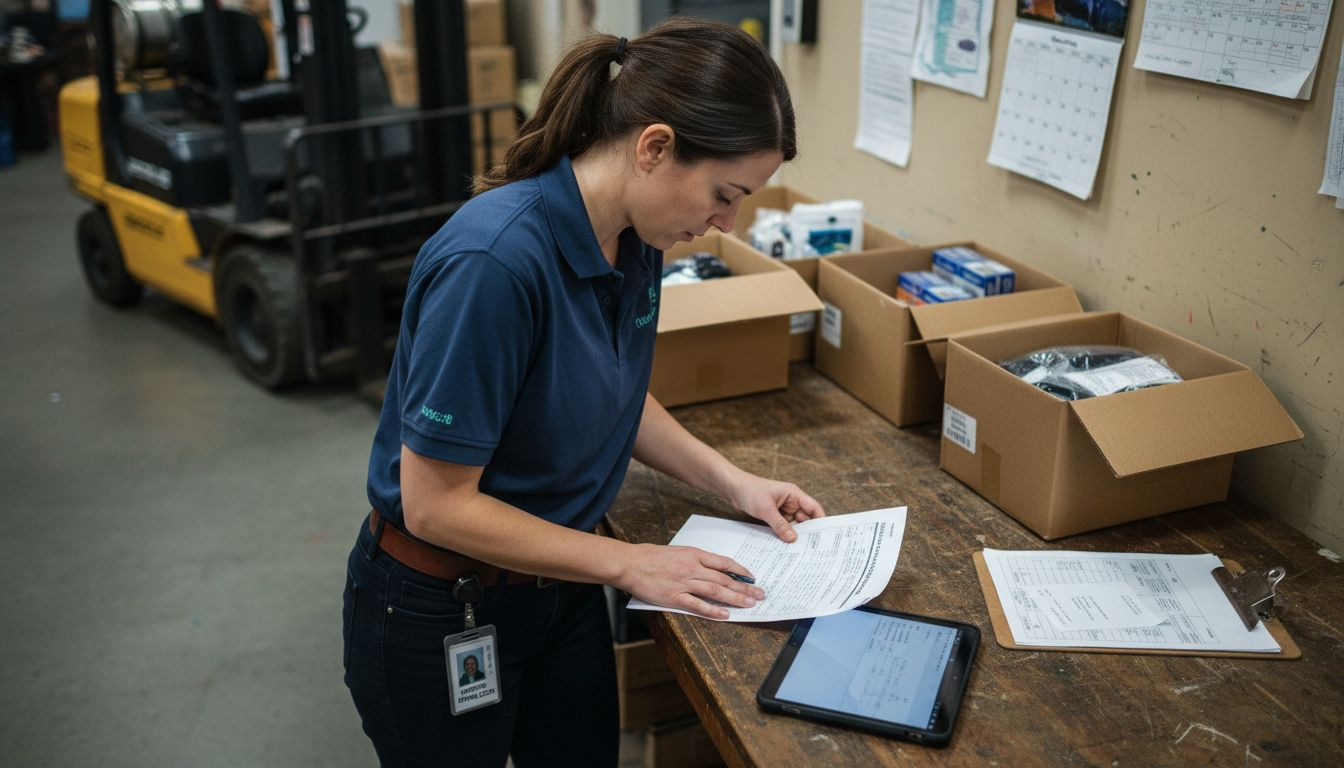
Packing List breaks down exactly what’s inside each box or pallet. A packing list provides detailed piece counts, dimensions, batch numbers, and content descriptions for each unit. This supports accuracy when goods move through multiple handling points.
Documents Required by Customs and Regulators
Beyond the core three, customs authorities demand additional paperwork:
- Entry/Declaration Form – Declares goods entering a country for duty assessment
- Certificate of Origin – Proves where goods were manufactured for tariff classification
- Import License – Required for restricted goods in certain countries
- Insurance Certificate – Proves cargo is covered against loss or damage
- Inspection Certificates – Confirms goods meet health, safety, or quality standards
Missing any of these can halt your shipment at the border. Customs won’t release goods without complete documentation.
A waybill functions as an informal contract containing shipment details and handling instructions to ensure traceability throughout transport.
Mode-Specific Documentation
Different transport modes require different documents. Ocean freight involves bills of lading and ocean-specific forms. Air cargo requires air waybills and IATA compliance documentation. Ground shipments use different BOL formats entirely.
Multimodal shipments—where your goods move by multiple modes—need documentation that covers each leg of the journey. This is where professional freight forwarders earn their value; they know exactly what each carrier and each border requires.
The table below summarizes how transport mode impacts core documentation:
| Mode of Transport | Main Document | Special Requirements |
|---|---|---|
| Ocean Freight | Ocean BOL | Port forms, container numbers |
| Air Cargo | Air Waybill | IATA declarations, airway codes |
| Ground | Truck/Rail BOL | Local route forms, chassis info |
| Multimodal | Combined BOL | Docs for each segment, carrier transfer details |
Why Document Organization Matters
You’re managing dozens of shipments monthly. Each requires 5–12 different documents. Organization prevents chaos.
Store originals in your system. Keep digital copies accessible to your freight forwarder. Provide copies to customers upon request. Never send originals unless absolutely required; keep them for your records.
Pro tip: Establish a document checklist template for each route you ship regularly. Before each shipment, verify every required document is complete and accurate before submitting to your freight forwarder. This catches errors before they delay customs clearance.
Customs Compliance and Regulatory Requirements
Customs compliance isn’t optional—it’s the foundation of every successful cross-border shipment. Miss a requirement, and your goods sit detained at the border while penalties pile up. For ecommerce logistics managers, understanding what customs actually requires prevents expensive mistakes.
Every country has its own customs rules, but they all demand the same basic elements: accurate declarations, complete documentation, and timely submissions. The United States, Canada, and European Union all follow similar frameworks with specific variations.
What Customs Actually Requires
Customs authorities need specific information to assess duties, verify legality, and confirm safety compliance:
- Accurate cargo declarations – Detailed descriptions matching your commercial invoice exactly
- Correct HS codes – Harmonized System codes that classify goods for tariff purposes
- Declared values – Actual costs of goods; undervaluation triggers audits and penalties
- Origin documentation – Certificates proving where goods were manufactured
- Required permits – Import licenses for restricted or controlled items
- Tax payments – Customs duties and consumption taxes calculated and submitted
Mandatory declarations of cargo details to customs authorities, inspection processes, and tax payments are essential steps in cross-border compliance. Missing any step delays clearance.
The Inspection and Clearance Process
Your shipment goes through multiple checkpoints. First, customs receives your declaration and reviews it against your documentation. If everything matches, you’re flagged as low-risk and move forward quickly.
If discrepancies exist, your shipment gets selected for physical inspection. Inspectors open boxes, verify contents match documents, and check for prohibited items. This process adds 3–7 days depending on inspection severity.
Correctly prepared freight forwarding documentation is the single best way to avoid inspections and clearance delays.
Common Compliance Mistakes
These errors trigger holds and penalties:
- Mismatched descriptions – Product names differ between invoice and declaration
- Incorrect HS codes – Classification errors lead to wrong duty calculations
- Undervalued shipments – Claiming lower values to avoid duties raises red flags instantly
- Missing permits – Some items require import licenses; lacking them stops shipments cold
- Incomplete origin documentation – Customs can’t verify manufacturer location without certificates
Each mistake costs time and money. Prevention beats correction every time.
Staying Aligned with Regulations
The FIATA Model Rules emphasize updating service agreements to align with national customs laws and international regulations to avoid penalties. Your freight forwarder should know your country’s specific requirements and help you stay compliant.
Different routes have different rules. Shipments to Canada follow different procedures than shipments to the European Union. Knowing your destination’s specific requirements prevents costly surprises.
Pro tip: Request a customs compliance checklist from your freight forwarder for each route you ship regularly. Before submitting documents, verify every item on the checklist is complete and accurate. This single step catches issues before they delay clearance.
Roles and Responsibilities in Documentation
Freight forwarding documentation doesn’t happen in a vacuum. Multiple parties—you, your freight forwarder, customs brokers, and carriers—all play specific roles. Understanding who does what prevents confusion, delays, and costly mistakes.
When responsibilities blur, documentation falls through the cracks. Your shipment stalls at customs because no one confirmed the paperwork was complete. When roles are clear, everything moves smoothly.
Your Role as the Shipper
You’re responsible for providing accurate information to your freight forwarder:
- Product details – Exact descriptions, quantities, and harmonized system codes
- Pricing information – Actual invoice values; no undervaluation schemes
- Origin documentation – Certificates of origin and manufacturing location proof
- Special requirements – Permits, licenses, or compliance docs for restricted items
- Recipient information – Complete and accurate destination details
Your data feeds everything downstream. If you provide incorrect information, your freight forwarder builds bad documentation on that foundation. Garbage in, garbage out.
What Your Freight Forwarder Actually Does
Freight forwarders act as agents arranging cargo transportation and ensuring all necessary paperwork is prepared and compliant. They’re not just booking agents—they’re documentation experts managing your entire shipping operation.
Specific freight forwarder duties include:
- Generating transport documents – Bills of lading, waybills, and air freight forms
- Coordinating with carriers – Booking space and confirming shipment details
- Managing customs documentation – Preparing declarations and coordinating with customs brokers
- Tracking compliance – Verifying all documents meet destination country requirements
- Problem-solving – Addressing discrepancies before customs sees them
A professional freight forwarder catches errors in your documentation before submission. This is where you get value.
Freight forwarders serve as intermediaries to streamline documentation flows, mitigate errors, and facilitate efficient cargo movement across borders.
Customs Brokers and Their Role
Customs brokers specialize in navigating customs regulations. They arrange documentation for compliance with customs and transportation laws, filing entries and handling duty calculations.
Your freight forwarder coordinates with customs brokers on your behalf. You rarely interact with them directly. They work behind the scenes ensuring your shipment clears customs smoothly.
Here is a quick reference comparing the roles of each party involved in freight forwarding documentation:
| Role | Main Responsibility | Typical Documents Handled | Impact of Errors |
|---|---|---|---|
| Shipper | Provide accurate shipment data | Product details, invoices, origin proof | Causes downstream errors and customs delays |
| Freight Forwarder | Prepare compliant shipping docs | BOL, shipping forms, customs entries | Error here leads to costly regulatory holds |
| Customs Broker | Ensure customs compliance | Declarations, duty/tax paperwork | Mistakes cause fines and clearance issues |
| Carrier | Move cargo per legal requirements | BOL, hazard certificates, weight specs | Incomplete docs can stop cargo acceptance |
Carriers and Documentation Responsibilities
Carriers need specific documentation to transport your goods legally:
- Bill of lading – Proof of shipment contract and liability terms
- Weight and dimensions – Accurate cargo specs for routing and loading
- Hazmat declarations – If applicable, proper dangerous goods documentation
- Insurance certificates – Proof cargo is covered during transit
Carriers don’t verify if your commercial invoice matches reality—that’s customs’ job. Carriers verify you’ve provided the right transport documents for their mode.
Communication Flow Matters
Clear communication between parties prevents errors. You provide data to your freight forwarder. They generate documents and send drafts to you for approval. You confirm everything’s accurate before they submit to customs.
This back-and-forth catches mistakes early. A discrepancy you catch before submission beats catching it at the border.
Pro tip: Establish a document review process with your freight forwarder where you receive drafts 48 hours before submission. Review everything against your source records and flag any discrepancies immediately. This window prevents costly surprises at customs.
Common Pitfalls and How to Avoid Them
Documentation mistakes happen. They happen to experienced shippers and new ones. The difference between smooth operations and chaos often comes down to whether you recognize patterns and fix them before they derail shipments.
Your ecommerce operation handles volume. When you’re processing dozens of shipments weekly, small mistakes compound into major problems. Catching patterns early prevents losing customers and revenue.
The Missing Document Problem
Incomplete documentation is the fastest way to delay a shipment. You think everything’s submitted, but customs receives your package and finds a missing certificate of origin or export license.
Incomplete or inaccurate documentation such as missing waybills, packing lists, or customs forms can cause shipment delays or loss. A single missing form adds days to clearance.
These documents go missing because:
- No one confirmed all documents were prepared
- Documentation requirements changed for that route and no one updated the checklist
- The shipper and freight forwarder assumed someone else provided it
- Your supplier in the origin country forgot to send required certificates
The fix is simple: create a pre-submission checklist for each route and verify every item before your freight forwarder submits anything to customs.
Data Mismatches Kill Efficiency
Your commercial invoice says “Widget A,” your packing list says “Product A,” and your customs declaration says “Item A.” All three are the same product, but the mismatch raises red flags with customs.
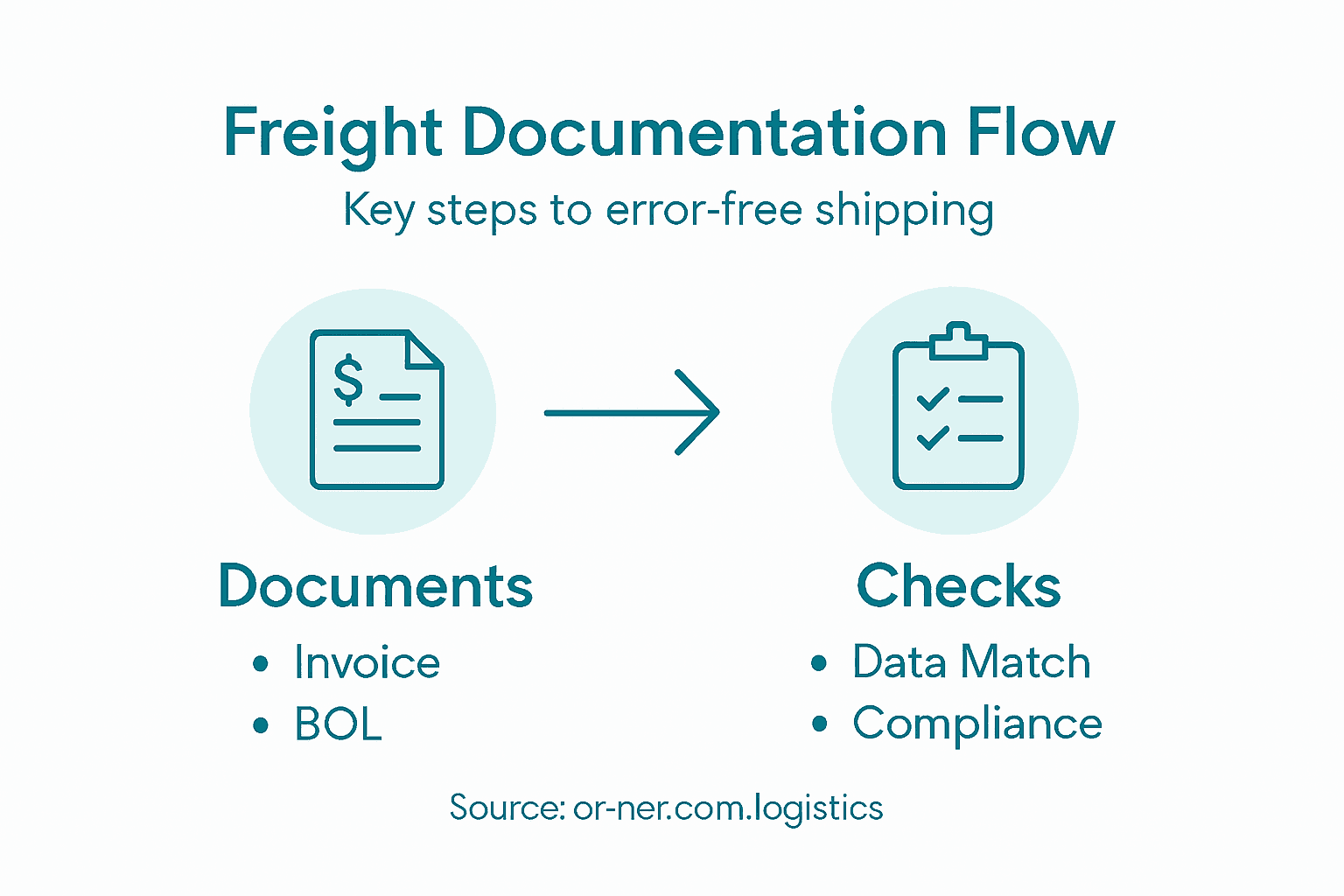
Inspectors assume discrepancies hide something illegal. They pull your shipment for physical inspection. What should have cleared in hours takes days.
Data mismatches happen because different departments create different documents without cross-checking. Your warehouse packing team uses one naming convention. Your finance team uses another. Your freight forwarder receives conflicting information.
Maintain transparent and detailed paperwork by confirming accuracy across all parties responsible for cargo handling to prevent discrepancies.
Undervaluation and Tariff Classification Errors
Some shippers intentionally undervalue shipments to avoid duties. Customs catches this instantly. You get audited, penalized, and your shipment sits detained while the process unfolds.
Other shippers use incorrect HS codes because they don’t understand commodity classification. Goods get assessed at the wrong duty rate. You either overpay or customs recalculates and demands additional payment.
Non-compliance with cargo documentation regulations can result in fines, shipment delays, or rejections. Prevention beats dealing with penalties.
Accuracy Verification at Each Stage
Prevent problems by verifying accuracy before each handoff:
- After you prepare shipping data – Review product descriptions, quantities, and values
- After your freight forwarder generates documents – Compare their draft against your source records
- Before customs submission – Final verification that everything matches
- Before carrier pickup – Confirm BOL details match your shipment
This multi-point verification catches 95% of errors before they become problems.
Automation Reduces Human Error
When your inventory system feeds directly into shipping documentation, manual entry errors drop dramatically. Templates standardize formats. Validation rules catch obvious mistakes before submission.
Your freight forwarder likely offers system integration. Use it. Automation is worth the setup time.
Pro tip: Conduct a documentation audit on your last 20 shipments. Identify which errors appeared most frequently, then create specific safeguards to prevent them. Focus prevention efforts on your highest-frequency mistakes first.
Streamline Your Freight Forwarding Documentation with Reliable Courier Services
Cross-border shipping demands flawless freight forwarding documentation to avoid costly delays, customs holds, and compliance issues. The challenges you face include managing accurate commercial invoices, packing lists, bills of lading, and customs declarations while ensuring every detail matches to prevent inspections and penalties. If you struggle with mismatched data, missing paperwork, or navigating complex customs requirements, you are not alone.
At or-ner.com, we specialize in providing reliable courier services combined with integrated logistics solutions that simplify your entire documentation workflow. Our platform automates shipments, customs clearance, and real-time tracking across ocean, air, and land transport modes. This helps you gain visibility, reduce errors, and meet regulatory demands with confidence. Discover how seamless freight booking, centralized document management, and expert support can protect your ecommerce business from shipment delays.
Take control of your cross-border shipping now. Visit or-ner.com to explore how our end-to-end logistics platform can support your freight forwarding documentation process and deliver faster customs clearance. Get started with reliable courier services and transform challenges into smooth, scalable ecommerce growth today.
Frequently Asked Questions
What are the essential documents required for freight forwarding?
The core documents required include the Commercial Invoice, Packing List, Bill of Lading, Customs Entry Forms, Insurance Documentation, and Certificates of Origin. Each plays a specific role in facilitating cross-border shipping and customs clearance.
How can documentation mistakes impact the shipping process?
Documentation mistakes, such as mismatched descriptions or missing HS codes, can lead to delays of 5–7 business days in customs clearance. Each error adds handling time and can complicate the shipping process significantly.
Why is it important to have accurate customs documentation?
Accurate customs documentation is vital because customs authorities use this information to assess duties, verify legality, and confirm safety compliance. Missing or incomplete documents can halt shipments at the border.
How can I streamline my documentation workflow for shipping?
To streamline your documentation workflow, collect accurate data from your warehouse, verify it against packing records, prepare documents systematically, and maintain copies for future reference. Automation through an integrated inventory system can also significantly reduce human errors.