Ocean freight forwarding is the professional management of sea cargo from origin to destination, covering booking, documentation, customs clearance, and carrier coordination. A freight forwarder does not own ships. Instead, they act as the logistics coordinator between you and the ocean carriers, handling every moving part so your goods arrive legally, on time, and at the best available rate. A large majority of internationally traded goods move by sea, which tells you why getting this process right matters enormously for any business shipping across borders.
FIATA (the International Federation of Freight Forwarders Associations) defines freight forwarding services as covering carriage, consolidation, storage, handling, packing, distribution, customs, and advisory services, integrated with modern information and communication technology for total supply chain management. That definition captures the full scope. What it means in practice is that a good forwarder is less a booking agent and more a supply chain architect who keeps your shipment moving even when things go sideways.
Key components of ocean freight forwarding include:
- Cargo booking with ocean carriers to secure vessel space
- Documentation preparation, including the Bill of Lading, Commercial Invoice, and Packing List
- Customs clearance and compliance with US import and export regulations
- Carrier coordination and freight rate negotiation
- Exception management when port congestion, weather, or regulatory issues arise
- Advisory services on packaging, labeling, routing, and cost
Table of Contents
- What does an ocean freight forwarder actually do for you?
- What types of ocean freight services are available?
- How does the ocean freight forwarding process work, step by step?
- What are the real benefits and challenges of ocean freight forwarding?
- How freight forwarders have evolved into supply chain architects
- Or-ner handles ocean freight from booking to delivery
- FAQ
- Key Takeaways
What does an ocean freight forwarder actually do for you?
Freight forwarders are intermediaries who manage cargo booking, paperwork, and customs clearance while advising clients on packaging, routes, and cost. That covers a lot of ground, so it helps to break it down by function.

On the carrier side, forwarders initiate communication with shipping lines, obtain quotes, negotiate rates, and finalize booking details. Their network gives them access to better pricing and more reliable vessel space than most shippers could secure on their own. Freight forwarders negotiate rates and service conditions constantly, comparing costs across routes and modes to find the best balance of price, speed, and reliability.
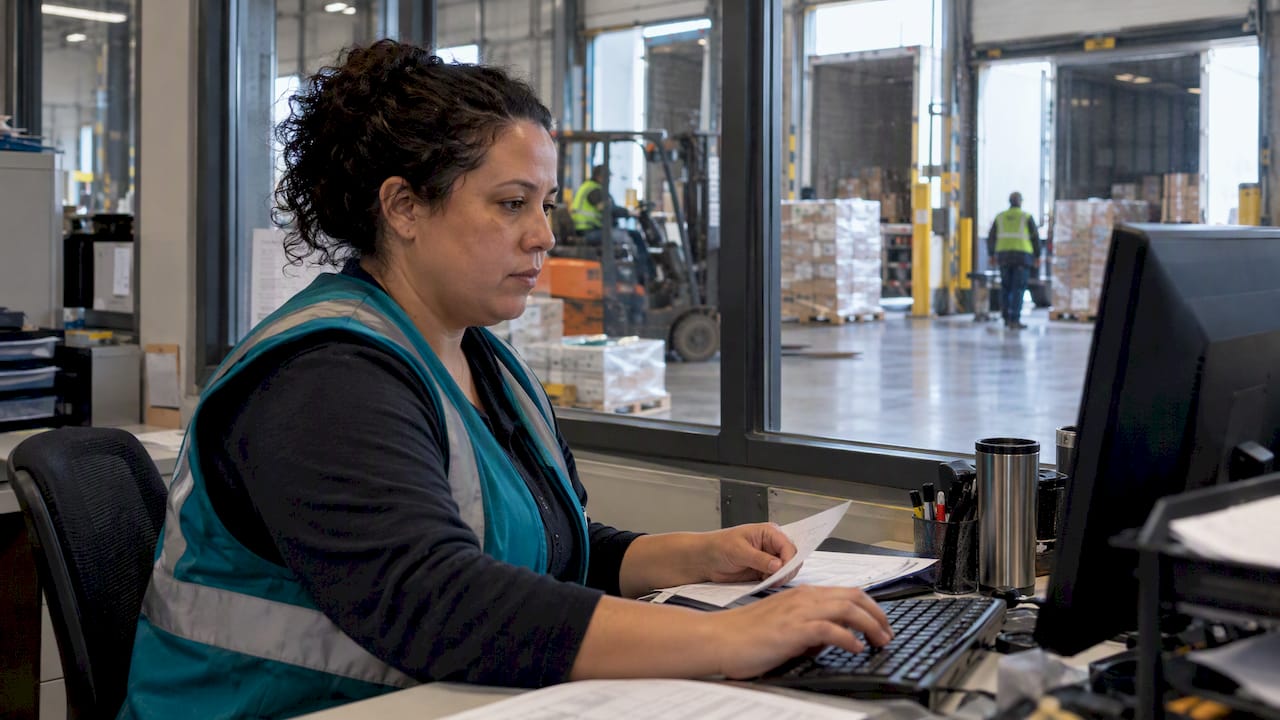
On the compliance side, forwarders prepare and submit every document customs requires, liaise with US Customs and Border Protection officials, and resolve issues before they become costly delays. For US importers, this means someone who knows exactly what CBP expects and can catch a documentation error before it holds your container at the port for weeks.
Pro Tip: Ask any forwarder you’re evaluating how they handle exceptions, specifically port congestion and documentation errors. Their answer tells you more about their real value than any rate quote.
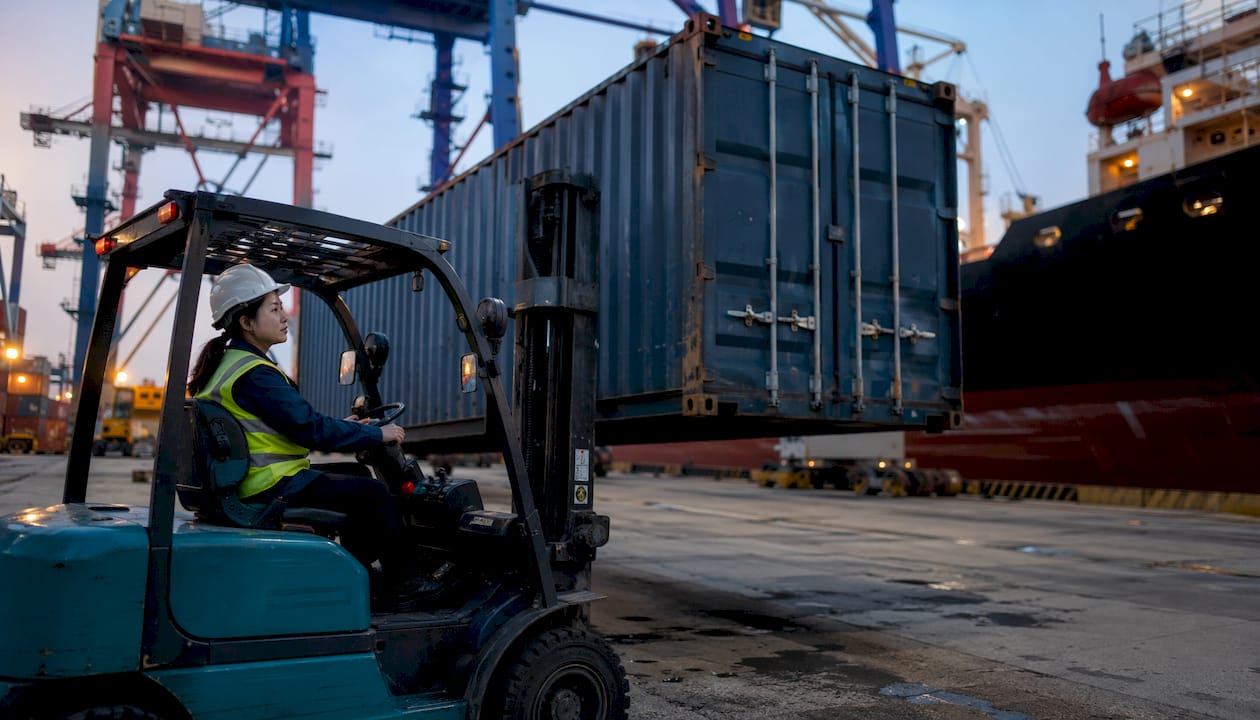
The advisory role is often underappreciated. A forwarder will tell you which container type fits your cargo, whether your packaging meets international standards, and which routing avoids known bottlenecks. That guidance can save you money and headaches before a single box leaves the warehouse. You can read more about freight forwarder responsibilities in Or-ner’s detailed breakdown for global brands.
What types of ocean freight services are available?
The four main service types cover most shipping scenarios, and choosing the right one directly affects your cost, transit time, and cargo handling.
| Service Type | Best For | Pricing Basis | Transit Notes |
|---|---|---|---|
| Full Container Load (FCL) | Large shipments filling a full container | Per container | Faster; no co-loading delays |
| Less than Container Load (LCL) | Smaller shipments sharing container space | Per cubic meter or weight | Slightly longer; consolidation adds time |
| Bulk Cargo | Unpackaged commodities (grain, coal, liquids) | Per ton or volume | Specialized vessels required |
| Refrigerated (Reefer) | Perishables, pharmaceuticals, temperature-sensitive goods | Per container, premium rate | Strict temperature monitoring throughout |
FCL, LCL, bulk, and refrigerated shipments each carry different pricing, handling requirements, and transit characteristics that affect your total shipping cost and timing.
FCL works best when your cargo fills most of a container. You get the whole box, no one else’s freight touches yours, and loading is straightforward. LCL makes sense for smaller volumes where paying for a full container would be wasteful. Your cargo is consolidated with other shippers’ goods, which adds a consolidation step but keeps costs proportional to what you’re actually shipping.
Beyond the container type, forwarders also offer ancillary services worth knowing about:
- Cargo insurance to protect against loss or damage during transit
- Customs brokerage for formal entry filing with US CBP
- Consolidation services that combine smaller shipments into one container
- Warehousing at origin or destination ports for staging and storage
How does the ocean freight forwarding process work, step by step?
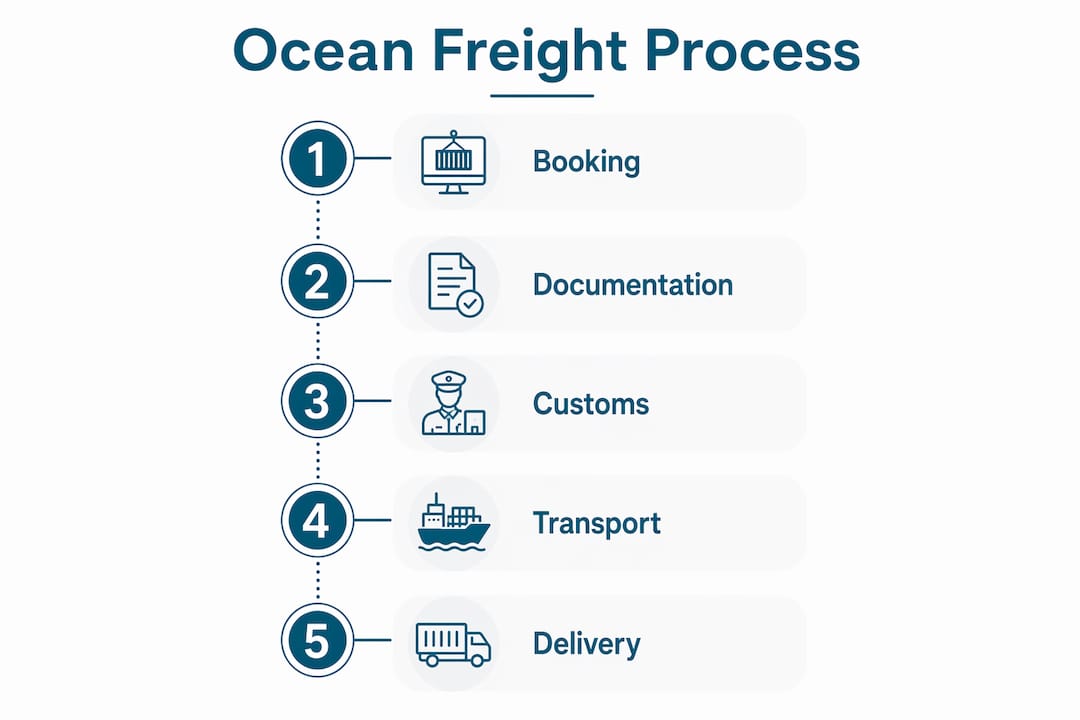
The ocean freight process runs from initial booking through final delivery, with forwarders managing each stage to prevent delays and handle complications.
- Cargo booking. The forwarder contacts ocean carriers, requests quotes, negotiates rates, and secures space on a vessel that fits your timeline and budget.
- Packing and labeling. Cargo must meet international standards for weight, dimensions, and hazardous material classification. The forwarder advises on requirements specific to your destination country.
- Container stuffing. Goods are loaded into the container at the origin warehouse or a container freight station, with the forwarder overseeing proper weight distribution and securing.
- Documentation preparation. The forwarder prepares the Bill of Lading, Commercial Invoice, Packing List, and any certificates of origin or special permits required for your cargo type.
- Export customs clearance. At the origin country, the forwarder files export declarations and clears the shipment through local customs authorities.
- Cargo loading and vessel departure. The container is transported to the port, loaded onto the vessel, and the forwarder confirms the booking and receives the Bill of Lading from the carrier.
- Ocean transit. The vessel travels the agreed route. Transit times vary widely depending on origin, destination, routing, and vessel schedule.
- Arrival and US customs clearance. The forwarder prepares and submits customs documentation including the Bill of Lading, Commercial Invoice, and Packing List to comply with US CBP requirements. This is where errors get expensive if the paperwork is wrong.
- Port unloading and drayage. The container is offloaded, cleared through the port, and transported by truck or rail to the final destination warehouse or delivery point.
- Final delivery. The forwarder coordinates last-mile delivery and confirms receipt, closing out the shipment.
Common challenges at each stage include:
- Port congestion causing vessel delays or missed sailings
- Documentation errors triggering customs holds
- Carrier capacity shortages during peak seasons
- Regulatory changes affecting import duties or restricted goods
Forwarders manage these exceptions proactively, which is the core of their value beyond basic coordination. Or-ner’s guide on understanding the forwarding process walks through each step with practical advice for first-time shippers.
What are the real benefits and challenges of ocean freight forwarding?
Ocean freight is the most cost-efficient mode for large, heavy, or bulky shipments. When you compare ocean freight vs. air freight, the cost difference for high-volume cargo is dramatic. Air freight moves faster, but the price per kilogram can be many times higher than sea freight, making it impractical for anything but urgent, high-value, low-weight goods.
Benefits of using ocean freight forwarding:
- Cost efficiency for large or heavy shipments that would be prohibitively expensive by air
- Global reach with regular services connecting virtually every major port worldwide
- Higher weight and volume capacity than any other transport mode
- Integrated logistics management through a single forwarder who handles the full chain
- Flexibility across container types, routing options, and service levels
Challenges to plan for:
- Longer transit times. A transpacific shipment from Asia to the US West Coast typically takes several weeks, compared to days by air.
- Documentation complexity. US CBP requires precise paperwork, and a single error can delay clearance significantly.
- Customs delays. Inspections, tariff disputes, and regulatory changes can hold cargo at the port unexpectedly.
- Carrier capacity issues. Peak seasons and global disruptions can make vessel space scarce and expensive.
- Cost components beyond the base freight rate. Fuel surcharges, port fees, terminal handling charges, and import duties all add to the final cost.
On the cost side, Incoterms such as CFR (Cost and Freight) define exactly which party pays for what and when risk transfers from seller to buyer, typically once cargo is loaded onto the vessel. Understanding which Incoterm applies to your shipment prevents disputes over who covers unexpected charges.
How freight forwarders have evolved into supply chain architects
The freight forwarder’s role has shifted considerably over the past decade. FIATA describes the modern forwarder as managing total supply chain operations, not just booking cargo space. Digitization and automation are driving this change, enabling real-time data sharing, better exception handling, and tighter integration across the supply chain.
What this means for US importers and exporters is that the best forwarders today function as strategic partners, not transaction processors. They track shipments in real time, flag problems before they escalate, and provide data that helps you make better sourcing and inventory decisions. Or-ner’s platform reflects this shift directly, combining freight booking, customs clearance, real-time tracking, and inventory management in one place so businesses can see their entire supply chain without switching between systems.
Practical advice for US shippers choosing a forwarder in 2026:
- Verify licensing. US-based freight forwarders handling ocean cargo should be licensed by the Federal Maritime Commission (FMC).
- Ask about technology. A forwarder with real-time tracking and digital document management reduces your administrative burden and catches errors faster.
- Check their customs expertise. US CBP compliance is non-negotiable. Confirm the forwarder has in-house customs brokerage or a reliable licensed partner.
- Evaluate their carrier network. A forwarder with established relationships across multiple shipping lines gives you more options when capacity is tight.
- Understand their exception management process. How they handle a delayed vessel or a customs hold tells you everything about their operational quality.
The trend toward multi-modal transport handling is also worth noting. Many forwarders now coordinate ocean, air, rail, and trucking legs within a single shipment, which is particularly relevant for US importers routing cargo from Asian ports through West Coast gateways to inland distribution centers.
Or-ner handles ocean freight from booking to delivery
Most businesses new to international shipping face the same problem: too many moving parts, too many vendors, and no single view of where their cargo actually is. Or-ner solves that by handling freight booking, customs clearance, real-time tracking, and warehousing under one platform built specifically for ecommerce sellers and growing brands.
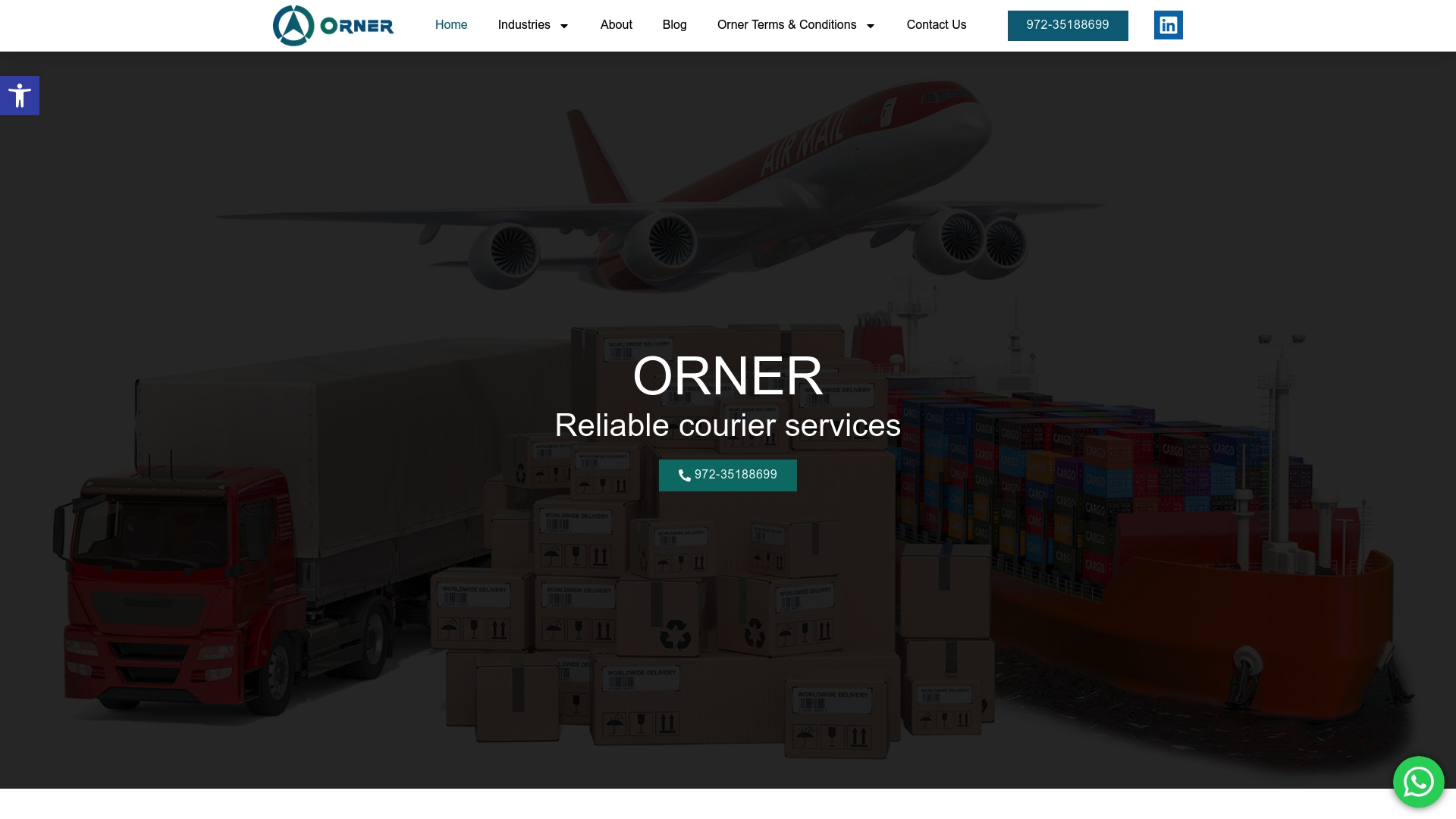
The concrete difference Or-ner offers is end-to-end visibility without the coordination overhead. You get ocean freight management alongside last-mile delivery, inventory control, and Amazon integration, so your supply chain runs as one connected operation rather than a series of handoffs between vendors who don’t talk to each other. Or-ner serves individual merchants, wholesalers, manufacturers, and global brands across categories including apparel, home goods, footwear, and electronics.
If you’re shipping internationally for the first time or looking to consolidate your logistics under one reliable partner, start with Or-ner’s reliable courier services page to see how the platform fits your shipping volume and product category.
FAQ
What does an ocean freight forwarder do?
An ocean freight forwarder manages cargo booking, documentation, customs clearance, and carrier coordination on behalf of importers and exporters, acting as the logistics intermediary between shippers and ocean carriers.
What is the purpose of freight forwarding?
Freight forwarding exists to move goods internationally in a way that is legally compliant, cost-efficient, and reliable, handling the complexity of carrier negotiations, customs regulations, and documentation so businesses can focus on their core operations.
What is the process of sea freight forwarding?
The process runs from booking vessel space and preparing documentation, through export and import customs clearance, ocean transit, port unloading, and final delivery, with the forwarder managing each step and resolving exceptions along the way.
Who pays for ocean freight?
Payment responsibility depends on the agreed Incoterm. Under CFR (Cost and Freight), for example, the seller covers carriage to the destination port, and risk transfers to the buyer once cargo is loaded onto the vessel.
How do I choose a reliable ocean freight forwarder in the US?
Look for FMC licensing, in-house customs brokerage, a strong carrier network, real-time tracking technology, and a clear process for handling exceptions like port delays or documentation errors. Or-ner combines all of these under one platform for ecommerce and brand shippers.
Key Takeaways
Ocean freight forwarding is the most cost-efficient method for moving large cargo internationally, with forwarders managing every step from booking to customs clearance to final delivery.
| Point | Details |
|---|---|
| Ocean freight dominates global trade | A large majority of internationally traded goods move by sea, making ocean forwarding the backbone of international commerce. |
| Forwarders are logistics coordinators | They handle booking, documentation, customs, and carrier negotiations, but do not own or operate vessels. |
| Four main service types | FCL, LCL, bulk, and refrigerated shipments each suit different cargo volumes, budgets, and handling needs. |
| US customs compliance is critical | CBP requires precise documentation including the Bill of Lading, Commercial Invoice, and Packing List; errors cause costly delays. |
| Or-ner as your logistics partner | Or-ner combines freight booking, customs clearance, tracking, and warehousing in one platform for ecommerce sellers and growing brands. |