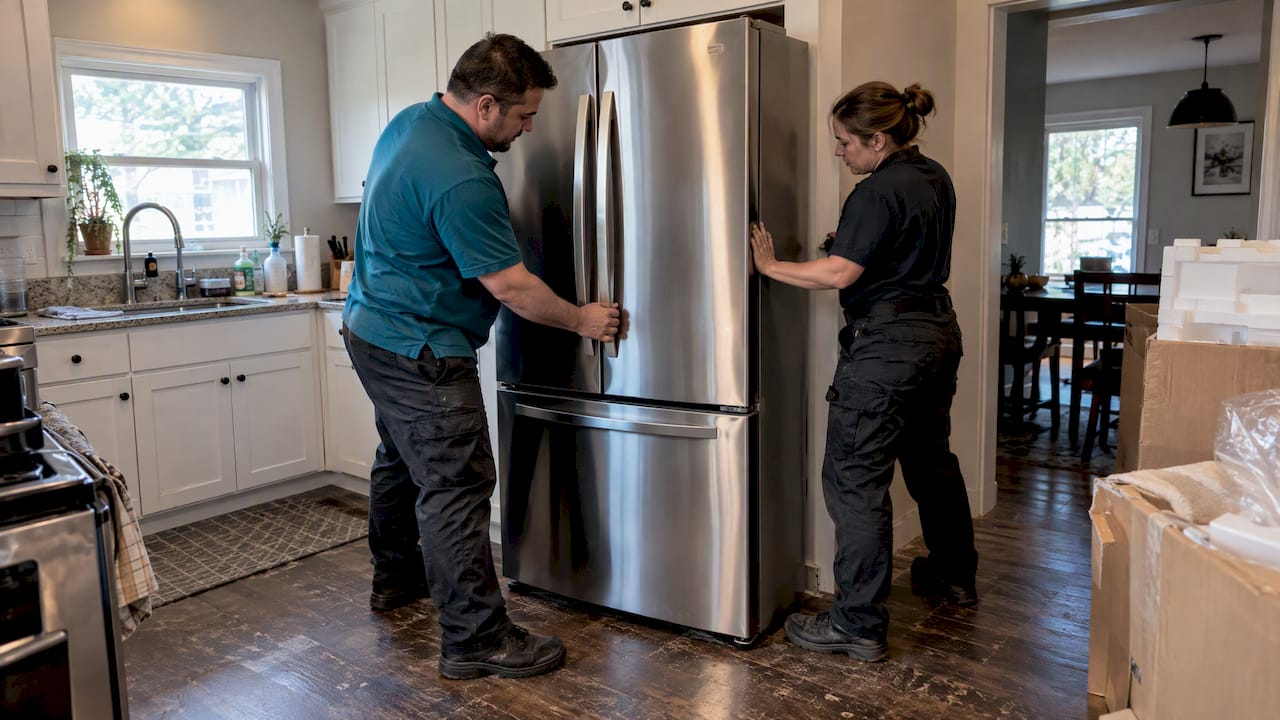
White glove delivery is a premium in-home service that brings your item inside, places it in the room you choose, unpacks it, assembles or installs it when needed, and hauls away the packaging. It suits bulky, fragile, or high-value purchases. Expect a scheduled appointment, fees above curbside delivery, a written service scope, and a clear insurance and claims process.
TL;DR:
- White glove service has no standard definition, so confirm whether your quote includes assembly, utility hookups, debris removal, and old item pickup.
- Use basic inside placement for small assembled items, choose unpacking and haul away for mattress replacements, and select full service for sectionals or appliances.
- Before paying, get the service scope, crew size, arrival window, cancellation terms, and every surcharge in writing; compare quotes using identical item and access details.
- Measure the full route against the item’s packaged dimensions, reserve building elevators, clear the path, and confirm utility access before the appointment.
- Inspect the item and surrounding walls and floors before signing; photograph its final position, record damage on the receipt, and keep packaging until claim resolution.
Table of Contents
- What does home delivery white glove include?
- How do white glove service tiers compare?
- How do you choose a white glove provider?
- How do you prepare your home for white glove delivery?
- What does white glove delivery cost?
- What happens from booking to final sign-off?
- What should you know about insurance, liability, and claims?
- Why does white glove matter enough to justify the cost?
- Where we land on white glove delivery
- How we can help coordinate premium delivery
- FAQ
- Sources
What does home delivery white glove include?
The core of a white glove job is inside placement. A standard carrier leaves a pallet or boxed item at the curb or the front door. A white glove crew carries it through the door, up the stairs, and into the room you named on the order. That one difference removes the hardest part of owning something large: moving it yourself.
Beyond carrying, crews typically handle these tasks:
- Unpacking: the crew removes cartons, straps, foam, and wrap so you can inspect the item on the spot.
- Debris removal: packaging leaves with the crew instead of piling up in your hallway.
- Placement: the item goes exactly where you want it, not simply “somewhere inside.”
- Assembly or installation: a bed frame is built, a sectional is joined, a wall unit is leveled, a TV is mounted, or an appliance is connected and tested.
- Functional checks: for electronics and appliances, the crew powers the unit on and confirms it runs.
Good crews also protect your property on the way in. Look for furniture sliders, floor runners, door-frame guards, and padding for stair transit. These are small details, but they decide whether a delivery day ends with a finished room or a scuffed wall.
Many providers sell add-ons on top of the base service:
- Old-item removal: the crew takes away the mattress, sofa, or appliance you are replacing.
- Disposal and hauling: larger debris leaves with them rather than staying on your property.
- Specialized setup: calibration for a home theater system, or leveling and hookup for a washer.
Crew size matters. Heavy or awkward goods call for an appropriately equipped crew, plus dollies, straps, and lift aids. A single driver working alone is a sign the job is curbside with a different label. If you want to see how a business frames the service, our explainer on what white glove delivery is and why it matters goes deeper on the definition, and our page on understanding white glove delivery services for businesses covers the operations side.
One more note on scope: “white glove” has no single legal definition. One provider’s white glove may stop at unpacking, while another’s includes full installation. That is why the next section matters.
How do white glove service tiers compare?
Providers label their offerings differently, so the useful move is to compare what each tier actually does.
| Dimension | Basic inside placement | Mid-tier: unpack and placement plus debris removal | Full service: assembly and installation |
|---|---|---|---|
| Included tasks | Carry inside, place in room | Carry inside, unpack, place, remove packaging | Everything in mid-tier plus assembly, mounting, hookups, testing |
| Scheduling | Appointment window, often a few hours | Appointment window, sometimes narrower | Longer slot booked for the job, often with a confirmation call |
| Fee model | Flat per item or per stop | Flat per item plus debris line item | Per item, per room, or hourly labor plus travel |
| Insurance | Carrier’s standard liability, often limited | Standard liability, sometimes upgraded | Higher coverage should be confirmed in writing |
| Technician skill | General delivery crew | Trained delivery crew | Trained assemblers or certified installers |
| Typical add-ons | Old-item pickup | Old-item pickup, disposal | Calibration, leveling, utility hookups |
The table helps you translate a vendor’s marketing label into a real scope. Here is how to read it:
- If a quote says “white glove” and nothing else, ask which tier it matches. Do not assume it includes assembly.
- If two quotes differ widely in price, check whether the cheaper one is a basic tier described with premium language.
- If the item needs a utility connection, only a full-service tier is likely to cover it, and a licensed technician may still be required.
Matching tiers to real scenarios makes the choice easier:
- A single accent chair or a boxed side table: basic inside placement is usually enough. The item is light, ships assembled or nearly so, and the main need is getting it past the door.
- A queen mattress replacing an old one: mid-tier fits, since you want unpacking, packaging removal, and often haul-away of the old unit.
- A sectional sofa, a modular wall system, or a large appliance: full service is the safer pick. The assembly, leveling, and testing are where problems appear, and having them specified in writing protects you.
Our own checklist on home delivery white glove service pairs well with this table when you need to decide which tier a given order requires.
How do you choose a white glove provider?
Choose on scope, pricing model, insurance, technician qualifications, and timing, and verify each one in writing before you pay. A friendly phone call is not a contract. The bill of lading or service order is.
Use these questions during phone screening or in a request for quote:
- Does the service include carrying the item inside and placing it in a specific room?
- Do you unpack the item and remove all packaging and debris?
- What exactly does “installation” or “assembly” cover, and what does it exclude?
- How many crew members will arrive, and what equipment do they bring?
- What insurance do you carry, and what is the claim process if something is damaged?
- What is my arrival window, and how will you notify me if it changes?
- What are your cancellation and rescheduling terms?
- Which surcharges apply (stairs, long carries, narrow access, same-day requests)?
- Can you provide photographs of the final placement?
Get these items in writing, not just by phone:
- The service order or bill of lading
- The arrival window
- Crew size
- A definition of what “installation” includes
- Cancellation and rescheduling terms
- All surcharges, spelled out
Warning signs to watch for:
- The provider will not put the scope in writing.
- The quote is far below others and does not name the tier.
- Nobody can explain the claims process or the insurance level.
- The company cannot say whether the crew is trained for your item type.
- There is no tracking, no reminder call, and no point of contact for the day.
Pro Tip: Insist on photographic proof of the item in its final position before you sign the delivery receipt.
If you are a business buyer building a vendor shortlist, these questions double as a scoring sheet. Rank each provider on the same criteria and the winner is usually clear. For readers comparing couriers more broadly, we cover what to look for in reliable couriers for e-commerce.
How do you prepare your home for white glove delivery?
Preparation shortens the appointment and protects both your property and the item. Many failed deliveries can be traced to something the customer could have checked in advance.
Work through this list in priority order:
- Measure the path. Check doorways, hallways, stair turns, and ceiling clearance against the item’s packaged dimensions, not just its finished size. Check the elevator too.
- Reserve the elevator. In apartments and condos, book the service elevator and loading dock in advance, and confirm building hours and any insurance certificate the property manager requires.
- Clear the route. Remove rugs, shoes, small furniture, and decor along the full path from door to destination room.
- Clear the destination. Leave the placement area empty, and decide exactly where the item goes before the crew arrives.
- Protect surfaces. Ask whether the crew brings floor runners and corner guards. If not, lay down your own on hardwood and around tight corners.
- Gather paperwork. Have the order number, serial numbers, and any pre-delivery photos handy. Keep payment, ID, and access codes ready.
- Confirm utilities. For appliances and electronics, check power, water, and gas connections, and find out whether a licensed technician must handle the hookup.
- Handle pets and children. Keep them in a closed room. Open doors and heavy loads are a bad mix.
- Sort out parking. Arrange a legal unloading spot, and get a permit if your street requires one.
A short walk-through in advance can catch many surprises. Stand where the crew will stand, and imagine carrying a bulky box along the route. If you would struggle, they will too.
For large and heavy goods specifically, our guide to the best ways to ship large heavy items explains how packaging and handling choices upstream affect what the crew meets at your door.
What does white glove delivery cost?
Pricing varies by item, access, and scope, so the practical goal is not to guess a number but to get quotes you can compare. Providers generally charge in one of these ways:
- Flat per item: one price for a defined piece of furniture or an appliance.
- Per room: a price tied to the number of rooms where items are placed.
- Hourly labor plus travel: common for complex installs, with a travel charge on top.
- Tiered packages: bundled levels of service, similar to the tiers above.
Surcharges often appear on top of the base rate:
- Stairs, especially multiple flights
- Long carries from the truck to the door
- Narrow access or tight turns
- Same-day or rush requests
- Waiting time if the building elevator is unavailable
Research suggests buyers will pay for good service. A Management Science study of attended home delivery found that customers value speed, a precise window, and timing options, and that willingness to pay differs between customer segments. That matters for you as a buyer because it means pricing reflects real preferences, and a narrower window is a feature worth asking about.
uShip’s oversized delivery survey reported that 28% of buyers valued proactive updates, 18% valued white glove services, 24% valued the choice of delivery company, and 19% valued in-home delivery. Buyers of bulky goods weigh communication and carry-in service alongside price.
To get apples-to-apples quotes, send every provider the same brief:
- A written scope that names the tier
- The exact item list and count
- The crew size you expect
- Access details such as floor level, elevator, and parking
- A request that all surcharges be listed on the quote
If one quote omits a line, ask for it before you compare totals. A low number with hidden surcharges is not low.
What happens from booking to final sign-off?
Delivery runs in a predictable sequence. Knowing it helps you spot a provider that skips steps.
Start by finding out which flow you are buying. Some retailers use a two-stage model: a carrier drops the item at your door, then a separate white glove team books an appointment for setup. GhostBed describes this pattern for its mattress and setup service, and it needs clear communication so you know who is responsible for which stage. Other providers run a single integrated appointment where one crew handles everything.
Here is the typical lifecycle:
- Booking confirmation: you receive the written scope, the appointment window, and a contact number.
- Reminder: expect a notice 24 to 48 hours ahead, then a narrower window or a two-hour slot on the day.
- Arrival call: the crew or dispatcher calls when they are close, especially for access issues.
- Inspection: the crew and you check the item on arrival before it moves inside.
- Placement and setup: the item goes to its room, gets unpacked, and is assembled or installed.
- Final walkthrough: you check the work, test any functions, and look over floors and walls.
- Photo evidence and receipt: the crew photographs the final placement, and you sign the delivery receipt only after you are satisfied.
If something goes wrong, speak up early. For delays, ask the dispatcher for a new window in writing. For a missed appointment, find out who rebooks and whether a fee applies. Rescheduling terms should already be in your service order, which is why we listed them in the buying section.
Signing the receipt has consequences. Once you sign without noting damage, a later claim gets harder, so inspect first and mark any problem on the paper. Our overview of the ecommerce shipping workflow shows where last-mile appointments fit into the wider fulfillment chain.
What should you know about insurance, liability, and claims?
The bill of lading is your key document. For household goods moved in interstate commerce, FMCSA guidance says a mover must provide a written estimate and a bill of lading, and that the bill of lading is the contract you should keep until delivery is complete and any claim is settled. The broader rules sit in 49 CFR Part 375, which covers estimates, bills of lading, and notices about pickup and delivery timing and delays.
Those rules govern household goods movers. A retail white glove delivery may be structured differently, so confirm which rules and which contract apply to your order, and ask for the coverage terms in writing.
FMCSA’s own consumer guidance puts much of the protection on you: choose a reputable carrier, understand the contract, and pursue your remedies.
If something is damaged, follow these steps:
- Photograph the item in its final position before you sign.
- Write any damage on the delivery receipt, with specifics.
- Keep all packaging until the claim is resolved.
- File the claim promptly using the process in your paperwork.
- If the provider does not respond, escalate to the retailer, then to the relevant regulator or consumer protection office.
Timelines and payouts depend on the contract, so read the claims clause before booking, not after.
Why does white glove matter enough to justify the cost?
The evidence points to white glove as something buyers want, not an indulgence. FIU Business research found that the importance of white glove service varies by customer segment, so retailers cannot offer the same level of service to every customer. Confidence in assembling a large item drives preference, which explains why buyers of sectionals and appliances lean toward full service.
For retailers, the case extends to sales. A Strategy+Business analysis of retail’s last mile found that retailers who position white glove delivery as part of the product experience can lift online sales, and that customers often value predictability and care over raw speed for durable goods.
The market reflects this. Mordor Intelligence’s U.S. report describes a sizable, growing segment where services commonly bundle delivery, installation, and packaging removal for furniture, electronics, and similar goods.
For a procurement team, that adds up to a straightforward case: spend more on the items where damage, setup failure, or buyer hesitation is costly, and keep standard delivery for everything else.
Where we land on white glove delivery
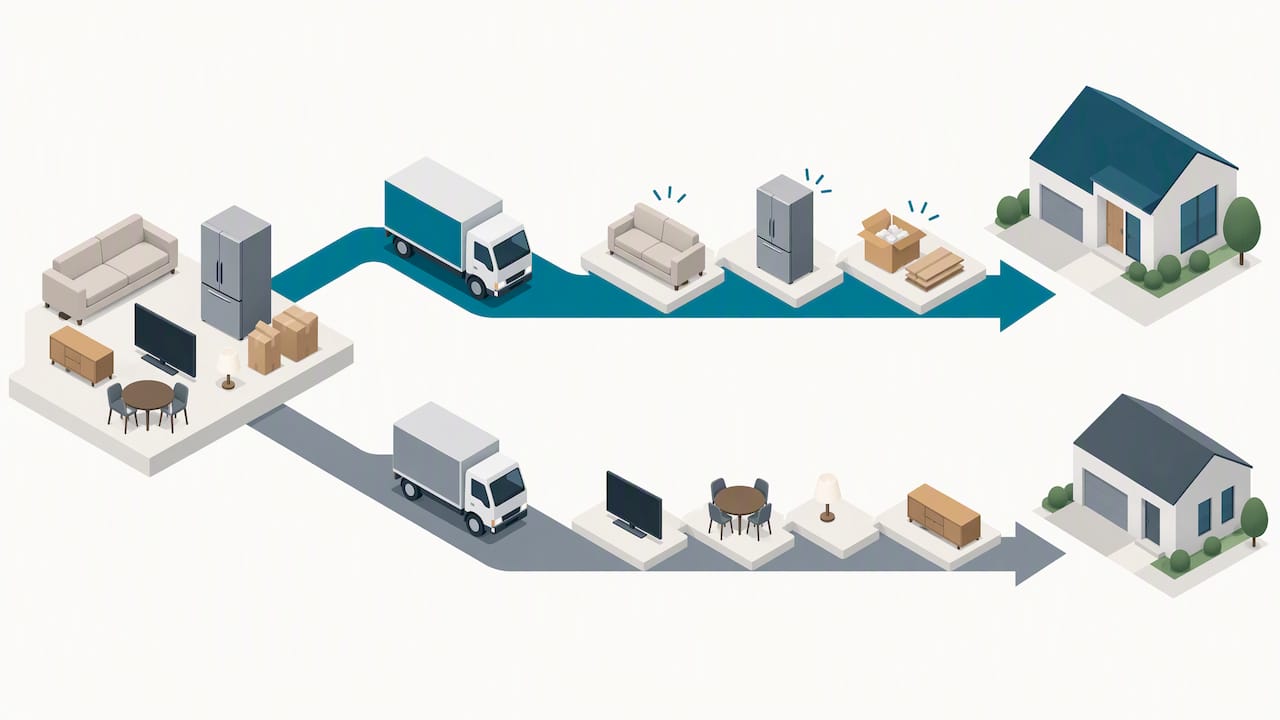
Use white glove selectively. It earns its price on high-risk items such as large furniture, heavy appliances, and fragile or valuable pieces, and on orders where the customer experience is part of what you sell. For a boxed lamp, it is overspending.
What we see most often is that cost creep comes from poor coordination, not from the service itself. When warehouse handoffs, carrier legs, and the final appointment are planned separately, hidden fees and missed windows follow. Planning them together removes most of that friction. If you manage orders at scale, we are glad to talk through how to coordinate fulfillment and last-mile options, and we can support quoting and scheduling.
— Maayan
How we can help coordinate premium delivery
We run an integrated logistics platform covering courier booking, e-commerce fulfillment, warehousing, and inventory management, so delivery does not have to be arranged on its own. When you contact us about logistics, ask for:
- An integrated quote that covers fulfillment and delivery
- Scheduling and tracking across the whole order, not just the final stop
- Warehousing options for items waiting on an appointment

Our next step for you is simple: request a tailored quote through our platform and tell us the items, the access details, and the tier you need, and we will help line up the booking.
FAQ
What is white glove delivery?
White glove delivery is a premium in-home service where a crew carries your item inside, places it where you want it, unpacks it, and removes the packaging. Many providers also assemble or install the item.
Is white glove delivery worth the extra cost?
It is worth it for bulky, fragile, or high-value items you cannot easily move or set up yourself. FIU Business research highlights the importance of white glove service for big and bulky online purchases. For small, light items, standard delivery is usually enough.
What should be in writing before white glove delivery?
Get the service order or bill of lading, the arrival window, the crew size, and a definition of what installation covers. Add cancellation and rescheduling terms, and every surcharge. Without these, you cannot hold a provider to a promise.
How do I file a claim if my item arrives damaged?
Photograph the item in its final position before you sign, and note the damage on the delivery receipt. Keep the packaging, then file the claim using the process in your paperwork. If the provider stalls, escalate to the retailer and then to a consumer protection office.
What is the difference between curbside and white glove delivery?
Curbside delivery leaves the item at the curb or doorstep, and moving it is your job. White glove brings it inside, places it in a room, and handles unpacking and packaging removal, with setup where included.
Sources
- Consumers’ confidence in their ability to assemble and install oversized purchases drives their preference for delivery, FIU Business research reveals. | FIU College of Business
- Navigating Retail’s Last Mile
- eCFR :: Appendix A to Part 375, Title 49 – Your Rights and Responsibilities When You Move