TL;DR:
- Reliable couriers deliver shipments on time, undamaged, with full tracking visibility, and fast claims resolution.
- A multi-carrier approach prevents service disruptions, improves operational resilience, and protects brand reputation.
Reliable couriers are defined as carriers that consistently deliver shipments on time, undamaged, and with full tracking visibility across every transit milestone. For e-commerce sellers, this definition matters more than ever. Reliability now outranks price as the top criterion when retailers select lead carriers, and 84% of consumers say past delivery experiences directly influence where they shop next. That means your courier choice is not a back-office decision. It is a brand decision that shapes repeat revenue.
What metrics actually define reliable couriers?
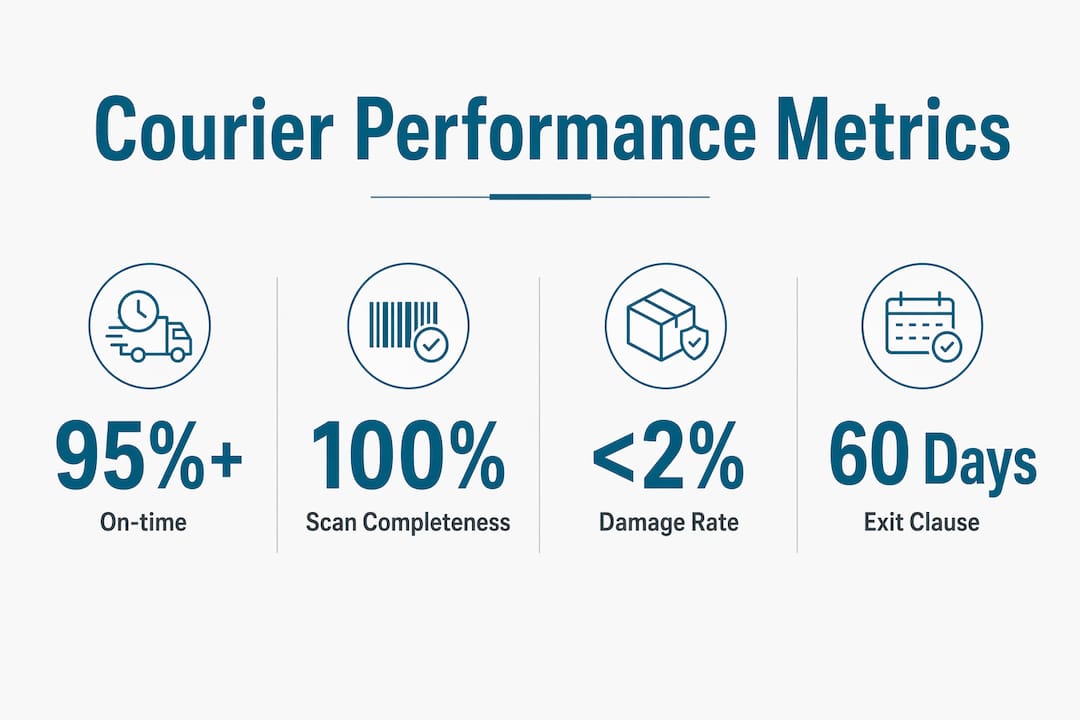
Speed gets all the attention, but it is the wrong metric to lead with. A carrier that delivers fast but damages 3% of packages, misses scans, and takes 48 hours to respond to claims costs you far more than its base rate suggests. The industry standard for on-time delivery performance is 95% or better, a benchmark regional carriers consistently hit. That number tells you whether a carrier is operationally healthy before you commit volume to them.
A complete carrier scorecard covers five core areas:
- On-time delivery rate: The baseline. Anything below 90% sustained over 30 days signals a structural problem, not a bad week.
- Scan quality: Missing transit scans create visibility gaps that generate avoidable customer service tickets, even when the package arrives on time. Scan completeness at every key milestone is the most reliable indicator of a carrier’s operational health.
- Damage and claims rate: High damage rates erode margin directly. Track claims as a percentage of shipments, not raw volume.
- Claims handling speed: How fast does the carrier resolve a claim? Slow resolution compounds the original problem.
- Support responsiveness: An unresponsive courier harms customer experience even when transit times look fine. Escalation speed matters.
| Metric | Target Benchmark |
|---|---|
| On-time delivery rate | 95% or higher |
| Scan completeness | 100% at key milestones |
| Damage rate | Under 0.5% of shipments |
| Claims resolution time | Under 5 business days |
| Support first response | Under 4 hours |
Pro Tip: Build your scorecard before you sign any contract. Carriers that resist sharing performance data during the sales process will not improve once you are locked in.
Why a multi-carrier strategy protects your business
Relying on a single carrier is a single point of failure. Carrier diversification is now a resilience play, not just a cost tactic. Top-performing e-commerce businesses build multi-carrier architectures that let them route around service failures in real time, protecting both delivery promises and customer trust.
The practical benefits are concrete:
- Demand surge coverage: Hybrid carrier networks flex with sales spikes, preventing capacity failures that damage customer satisfaction during peak periods like Q4 or flash sales.
- Geographic optimization: Regional carriers often outperform national networks in specific zones. A multi-carrier setup lets you assign volume by geography, not just by price.
- Negotiating leverage: Splitting volume across two or three carriers gives you real data to negotiate with. A carrier that knows it can lose volume to a competitor performs differently than one with a captive account.
- Brand protection: Shoppers do not distinguish between the retailer and the carrier. A bad last-mile experience is a bad brand experience, full stop.
“Brands now view last-mile delivery as part of their product. Consistent, tech-savvy carriers build trust. Unreliable ones erode it, regardless of how good the product itself is.”
The shift is real. With 55% of retailers moving volume away from major incumbents toward regional and specialized carriers, the multi-carrier model is no longer a workaround. It is the standard operating model for serious e-commerce fulfillment.
How to evaluate and select the right courier partners

Operational fit determines total logistics cost more than base rates or brand names. Strong communication and active issue resolution reduce margin erosion and support burden in ways that never show up in a rate card comparison. Start your evaluation there, not with price.
Use this numbered checklist when assessing any courier partner:
- Request 90-day performance data. Ask for on-time rates, damage rates, and scan completeness by zone. A carrier that cannot produce this data is not managing its own performance.
- Test their claims process before you need it. Submit a test claim or ask for a walkthrough of the process. Slow or opaque claims handling is a red flag.
- Evaluate their technology stack. Do they offer real-time tracking APIs? Can their data feed into your own systems? Carriers without modern tracking infrastructure create manual work for your team.
- Run a pilot with your actual shipping profile. Test with a representative mix of your SKUs, destinations, and package weights. A carrier that performs well on small parcels may struggle with bulky items.
- Ask about exception management. How do they handle a missed delivery attempt, a weather delay, or a lost package? The answer reveals how they operate under pressure.
- Check service area coverage against your customer map. A carrier with gaps in your top delivery zones is not a fit, regardless of their headline rate.
Red flags to avoid: carriers that offer rates significantly below market without explanation, carriers that cannot name a dedicated account contact, and carriers that have no SLA documentation for claims resolution.
Pro Tip: Always negotiate a 60-day exit clause into your first contract with a new carrier. It protects you if performance does not match the sales pitch, and it signals to the carrier that you are managing by data.
How to manage courier relationships for sustained performance
Selecting a good carrier is step one. Keeping them performing is the ongoing work. Data-driven volume shifts and renegotiations can yield measurable performance improvements within weeks when on-time rates drop below 90%. The key is having the systems in place to catch the drop before it becomes a customer complaint trend.
Effective ongoing management relies on a few core practices:
- Weekly scorecard reviews: Pull on-time rate, damage rate, and scan completeness every week, not monthly. Problems compound fast in fulfillment operations.
- Volume rebalancing as a signal: When a carrier’s on-time rate drops, shift 10–15% of their volume to an alternative carrier. Do it visibly. Carriers respond to volume changes faster than to emails.
- Automated performance dashboards: Per-route metric tracking enables rapid, evidence-based volume reallocation. Manual spreadsheets introduce lag that costs you customer satisfaction scores.
- Quarterly business reviews: Bring performance data to the table and use it to renegotiate rates, SLAs, or coverage terms. Carriers that see you managing by data take the relationship more seriously.
- Supplier relationship management: Treat courier partnerships like vendor relationships, not utilities. Regular communication, shared goals, and clear escalation paths produce better outcomes than transactional interactions.
| Management Action | Trigger |
|---|---|
| Volume rebalancing | On-time rate drops below 90% for 2+ weeks |
| Contract renegotiation | Consistent overperformance or underperformance vs. SLA |
| Carrier replacement | On-time rate below 85% for 30 days with no recovery plan |
| Scorecard update | New shipping zones, SKU categories, or volume thresholds |
The total delivered cost is the true metric of courier efficiency. A carrier with the lowest base rate often costs more when you factor in damage claims, delay-related customer service load, and the time your team spends managing exceptions. Track all of it.
Key Takeaways
Reliable courier services protect e-commerce revenue by combining consistent on-time delivery, full tracking visibility, and fast claims resolution across a managed, multi-carrier network.
| Point | Details |
|---|---|
| Reliability outranks price | Retailers now select carriers based on performance data, not rate cards alone. |
| Five-metric scorecard | Track on-time rate, scan quality, damage rate, claims speed, and support responsiveness. |
| Multi-carrier architecture | Diversifying across carriers prevents single-point failures and supports demand surges. |
| Operational fit over brand name | A carrier’s problem-solving capability and communication quality determine true logistics cost. |
| Data-driven management | Weekly scorecard reviews and volume rebalancing sustain carrier performance over time. |
The uncomfortable truth about courier selection
By Maayan
After years of watching e-commerce businesses make carrier decisions, the pattern is consistent. Sellers choose on price, then spend the next six months managing the consequences. The real cost of a cheap courier shows up in customer service tickets, refund requests, and the slow erosion of repeat purchase rates. Those costs never appear on the rate card.
The metric I keep coming back to is scan quality. Most sellers never check it. They look at on-time delivery and assume the rest is fine. But a carrier that delivers on time while skipping mid-transit scans is creating a trust problem you cannot see until a customer emails asking where their package is. That email costs you more than the rate difference ever saved.
The other thing I have seen consistently underestimated is the value of a carrier that picks up the phone. Support responsiveness sounds soft compared to on-time rates and damage percentages. It is not. When something goes wrong during a peak period, the carrier that responds in two hours versus two days is the difference between a resolved customer complaint and a chargeback.
My honest take on the industry shift toward multi-carrier models: it is not optional anymore. The businesses that treat courier selection as a one-time procurement decision are the ones that get hurt during demand surges and carrier disruptions. Build the architecture now, before you need it.
— Maayan
Or-ner’s platform for managing courier performance
E-commerce businesses that manage multiple carrier relationships need more than a spreadsheet. Or-ner’s global logistics platform connects multi-carrier orchestration, real-time shipment tracking, and performance analytics in one place, giving you the data to make fast, evidence-based decisions about carrier volume and contracts.
Or-ner supports carrier performance monitoring across ocean, air, and land transport modes, with exception management tools that flag problems before they reach your customers. For businesses managing cross-border fulfillment or scaling into new markets, the platform’s logistics contract negotiation resources help you negotiate from a position of data, not guesswork. If consistent, cost-effective delivery is the goal, Or-ner gives you the infrastructure to get there.
FAQ
What makes a courier reliable for e-commerce?
A reliable courier maintains on-time delivery rates of 95% or better, provides complete scan visibility at every transit milestone, and resolves claims within a defined SLA. Consistency across these metrics, not just speed, defines true reliability.
How do I choose between multiple courier options?
Evaluate carriers on operational fit first: service area coverage, technology integration, claims handling process, and support responsiveness. Run a 30-day pilot with your actual shipping profile before committing significant volume.
Why does scan quality matter so much?
Missing transit scans create tracking gaps that generate customer service contacts even when packages arrive on time. Complete scanning at every key milestone correlates directly with fewer support tickets and higher customer trust.
How often should I review courier performance?
Weekly reviews of on-time rate, damage rate, and scan completeness give you enough data to act before problems compound. Monthly reviews are too slow for fast-moving fulfillment operations.
What is a multi-carrier strategy and why does it help?
A multi-carrier strategy means routing shipments across two or more carriers based on performance, geography, and capacity. It prevents single-point failures, supports demand surges, and gives you negotiating leverage with each carrier in your network.