TL;DR:
- Global parcel tracking often includes gaps at borders and carrier handoffs, but understanding the process helps manage expectations.
- Using universal platforms, accurate tracking numbers, and verifying on carrier websites enables reliable international shipment monitoring.
You send a package abroad, wait a week, and the tracking page says “In Transit” with zero updates. Sound familiar? Tracking parcels globally is one of the most frustrating parts of international shipping for individuals and businesses alike. The good news is that you don’t need to guess where your shipment is. With the right tools, the right carrier information, and a clear understanding of how global parcel tracking actually works, you can follow your package from label creation to doorstep delivery, regardless of how many countries or carriers it passes through.
Table of Contents
- Key takeaways
- What you need before tracking parcels globally
- How to track your parcel step by step
- Common challenges in global parcel tracking
- Leveraging AI for smarter global shipment tracking
- What to expect at final delivery
- My take on global parcel tracking
- Track smarter with Or-ner’s courier network
- FAQ
Key takeaways
| Point | Details |
|---|---|
| Always save your tracking number | Your tracking number is the single most important piece of information for locating any shipment worldwide. |
| Use universal tracking platforms | Platforms supporting 1,700+ global carriers give you consolidated visibility across all carriers in one place. |
| Tracking gaps are normal | Updates may stop at borders or between carrier handoffs. This does not necessarily mean your package is lost. |
| AI tracking changes the game for businesses | AI-powered logistics tools can deliver significant ROI by automating exception management and improving shipping decisions. |
| Verify before panicking | Always cross-check carrier websites, universal platforms, and your sender before raising a lost parcel claim. |
What you need before tracking parcels globally
Before you can track anything, you need three things in hand: your tracking number, the name of the originating carrier, and access to a reliable tracking platform. Miss any one of these and you’re starting at a disadvantage.
Understanding tracking number formats
Tracking numbers are not one-size-fits-all. Common tracking number formats vary significantly by carrier: UPS uses an 18-character format starting with “1Z,” USPS uses 20 to 22 digits, FedEx uses 12 digits, DHL uses 10 to 11 digits, and international postal shipments often follow the UPU format. A UPU tracking number like RA123456789CN breaks down precisely: two leading letters indicate the shipment type, and the two trailing letters identify the country of origin.
Knowing this matters because entering the wrong format into a tracking tool will either return no results or pull up the wrong shipment entirely. Before you do anything else, locate your tracking number in your order confirmation email, shipping receipt, or seller dashboard.
Pro Tip: If you bought something from an international marketplace, look for both the seller’s tracking number and any secondary tracking number assigned after the package crosses into the destination country. These are often different numbers tied to different carriers.
| Carrier | Format | Example |
|---|---|---|
| UPS | 1Z + 16 characters | 1Z999AA10123456784 |
| USPS | 20-22 digits | 9400111899223397623910 |
| FedEx | 12 digits | 774899172137 |
| DHL | 10-11 digits | 1234567890 |
| UPU Postal | 2 letters + 8 digits + country code | RA123456789CN |
Once you have your tracking number confirmed, choose a universal tracking platform. These tools aggregate data from multiple carriers so you don’t have to check five websites separately. Leading platforms in this space support over 1,700 carriers worldwide, including USPS, UPS, FedEx, DHL, and hundreds of regional postal services.
How to track your parcel step by step
Tracking an international shipment is a process, not a single click. Following these steps in order will save you time and prevent the most common mistakes.
- Locate your tracking number. Check your order confirmation, shipping notification email, or seller account. Write it down exactly as it appears, including any letters.
- Identify your carrier. The tracking number format will usually tell you which carrier issued it. Match the format against the table above if you’re unsure.
- Enter the number on a universal platform. Paste your tracking number into a universal tracking tool. These platforms automatically detect the carrier and pull real-time status updates.
- Cross-verify on the carrier’s own website. Once you know which carrier is handling your shipment, go directly to their tracking page and enter the same number. This catches any delays in data syncing between platforms.
- Check the destination country’s postal service. When a package crosses a border, it is often handed off to the local postal service. If your original tracking stops updating, enter the same number into the destination country’s postal website.
- Note every scan event. Each status update (“Departed facility,” “Customs clearance,” “Out for delivery”) tells you exactly where your package is in the chain. Customs clearance scans are especially common and worth tracking closely.
- Set up notifications. Most universal platforms and carrier websites let you subscribe to SMS or email alerts so you don’t have to check manually.
Pro Tip: If your tracking number shows no activity after 48 hours of being issued, don’t assume the package is lost. Labels are often created days before the item is actually picked up and scanned into the system. Wait until the first carrier scan appears before troubleshooting.
Real-time shipment tracking through these platforms dramatically reduces the number of customer service inquiries for businesses, since buyers can self-serve their tracking questions without contacting support.
Common challenges in global parcel tracking
Even when you do everything right, international tracking can hit walls. Understanding why helps you respond without panic.

The most common issue is that tracking numbers aren’t always universal. A tracking number issued by a Chinese carrier, for example, may only show updates while the package is in China. Once it lands in the US and gets handed to USPS, a new tracking number may be assigned. Your original number appears frozen, but the package is still moving.
Here’s a quick rundown of other common issues and how to handle them:
- Tracking stops at the border. This happens frequently with economy shipping options. Some carriers stop providing updates after export because local scanning in the destination country isn’t available for that service tier. The package typically still arrives. Budget an extra week before escalating.
- “Delivered” status but no package. First check with neighbors and building staff. Then check for a delivery notice card. If nothing surfaces within 24 hours, contact the carrier directly with your tracking number and delivery address.
- Customs delays with no updates. Packages can sit in customs for days with no new scans. This is normal. The status will update once clearance is granted. If a package sits in customs for more than 10 business days, contact your carrier or a customs broker.
- Tracking number not found. Wait 24 to 48 hours after receiving your tracking number. If it still doesn’t appear, contact your seller. The number may have been entered incorrectly in the system.
- Wrong carrier detected. Some universal platforms misidentify the carrier based on number format. Manually select the correct carrier from the dropdown if the auto-detection gives unexpected results.
For businesses managing high shipment volumes, parcel tracking visibility tools that flag exceptions automatically are far more efficient than manually checking each order.
Leveraging AI for smarter global shipment tracking
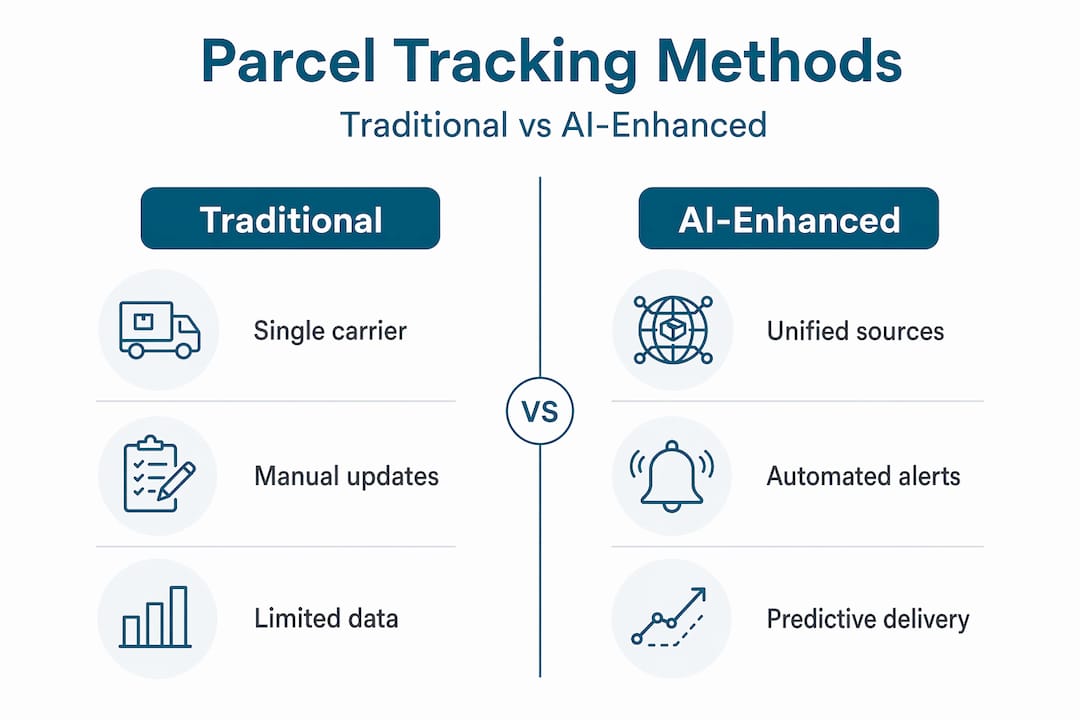
Traditional online courier tracking tells you where your package is. AI-powered tracking tells you what’s likely to happen next. That’s a meaningful difference, especially for businesses shipping at scale.
AI-driven logistics platforms unify fragmented operational and financial data, automate routine tasks, and can deliver up to a 9x return on investment within nine months for enterprise shippers. They move exception management from reactive to predictive, flagging shipments at risk of delay before the customer notices.
For supply chain teams, real-time container tracking supports just-in-time inventory strategies by reducing manual check-ins and improving warehouse labor planning. When you know a container is delayed by two days, you can adjust staffing and warehouse intake schedules accordingly rather than discovering the problem at the dock.
| Feature | Traditional tracking | AI-enhanced tracking |
|---|---|---|
| Data sources | Single carrier or platform | Multiple carriers, aggregated and normalized |
| Update frequency | Manual refresh or batch updates | Continuous real-time updates |
| Exception alerts | Reactive: you discover delays after the fact | Proactive: flags at-risk shipments before delay |
| Cost recovery | None | Automated freight cost auditing and recovery |
| Decision support | Shipment status only | Predictive insights and route optimization |
Small businesses often assume AI-powered tracking tools are only for large enterprises. That gap is closing quickly. Order tracking technology at accessible price points now gives growing ecommerce sellers visibility that was once reserved for logistics departments at Fortune 500 companies.
What to expect at final delivery
The last leg of international shipping is where most confusion and anxiety concentrates. Understanding what each final status means helps you act quickly if something goes wrong.
“Out for delivery” means the package is on a vehicle headed to your address that day. “Delivered” means a scan was recorded at or near your address, often including a GPS coordinate. These scans are not always 100% accurate. Drivers occasionally scan packages before physically leaving them, or scan at a cluster mailbox rather than your specific unit.
For international shipments, local postal and courier handoffs at the destination country are where tracking information can stop entirely. This is especially common with economy shipping tiers. The package is still en route and typically arrives within the expected window.
When tracking goes dark after the shipment reaches the destination country, check the local postal authority’s tracking site directly. Many carriers transfer custody silently without updating the original tracking record.
Pro Tip: If you’re a business receiving regular international shipments, use tracking data proactively to notify your recipients before delivery. A heads-up email or SMS a day ahead of arrival reduces failed delivery attempts significantly. Pairing this with a smart parcel locker at the delivery address also eliminates the “missed delivery” problem entirely for high-value packages.
If a package shows “Delivered” but never arrived, file a claim with the carrier within 30 days. Most carriers have defined windows for lost shipment claims, and missing that window forfeits your right to a refund or replacement.
My take on global parcel tracking
Over the years I’ve spent working with ecommerce logistics, I’ve watched countless businesses and individuals make the same mistake: treating tracking as an afterthought rather than a system. They pick a carrier, ship the package, and then scramble when something goes quiet.
What I’ve learned is that the frustration most people feel about world parcel tracking isn’t really about bad carriers. It’s about misaligned expectations. Most tracking gaps are structural, not operational. Two carriers, two countries, two different data systems. The handoff between them simply doesn’t guarantee continuity of the tracking record.
The businesses that handle this best don’t rely on a single tracking source. They build a process: one universal platform for visibility, direct carrier portals for verification, and proactive customer communication to manage expectations before questions arise. I’ve seen small sellers with under 100 monthly shipments use this exact approach and cut customer service inquiries related to shipping by more than half.
My honest take on AI-powered tracking? It’s genuinely useful for businesses above a certain volume threshold, but don’t invest in it hoping it will replace human judgment on customer-facing exceptions. Use it for internal logistics optimization. Keep the human touch for your buyers.
The one lesson I keep coming back to: when tracking stops updating, wait before escalating. Silence doesn’t mean lost. It usually means a handoff happened and the next carrier hasn’t scanned yet. Give it 72 hours before you call anyone.
— Maayan
Track smarter with Or-ner’s courier network
Or-ner is built for exactly the kind of global shipping complexity this article covers. From reliable courier services for domestic and international deliveries to real-time shipment tracking integrated across multiple carriers, Or-ner gives individuals and businesses a single place to manage freight, monitor parcels, and resolve delivery issues without bouncing between carrier portals. For small businesses in particular, courier solutions for growing sellers include dedicated support, automated tracking updates, and customs clearance assistance that take the guesswork out of cross-border shipping. If tracking parcels globally is part of your day-to-day operations, Or-ner is worth exploring as your logistics partner.
FAQ
What is the easiest way to track an international parcel?
Use a universal tracking platform that supports multiple carriers. Enter your tracking number once and the platform automatically pulls updates from the relevant carrier, including any destination country postal handoffs.
Why did my tracking stop updating after leaving the origin country?
Some carriers stop scanning after export for economy shipments. The package is typically still in transit. Check the destination country’s postal service website using the same tracking number.
Can I track a parcel with just the tracking number?
Yes. A universal platform will identify the carrier from the tracking number format and pull status data automatically. For UPU postal shipments, the two-letter prefix and country suffix identify the carrier and origin.
How long should I wait before reporting a missing international package?
Allow at least 7 to 10 business days beyond the estimated delivery window before filing a claim. Customs clearance and local postal handoffs regularly cause delays that fall within this range.
Is real-time tracking available for all international shipments?
Not always. Real-time shipment tracking coverage depends on the service tier and carrier. Premium services from carriers like DHL or FedEx provide granular real-time scans, while economy postal services may only update at key milestones like customs clearance and final delivery.