TL;DR:
- Cargo theft has shifted from physical to cyber tactics, with losses exceeding $725 million in 2025.
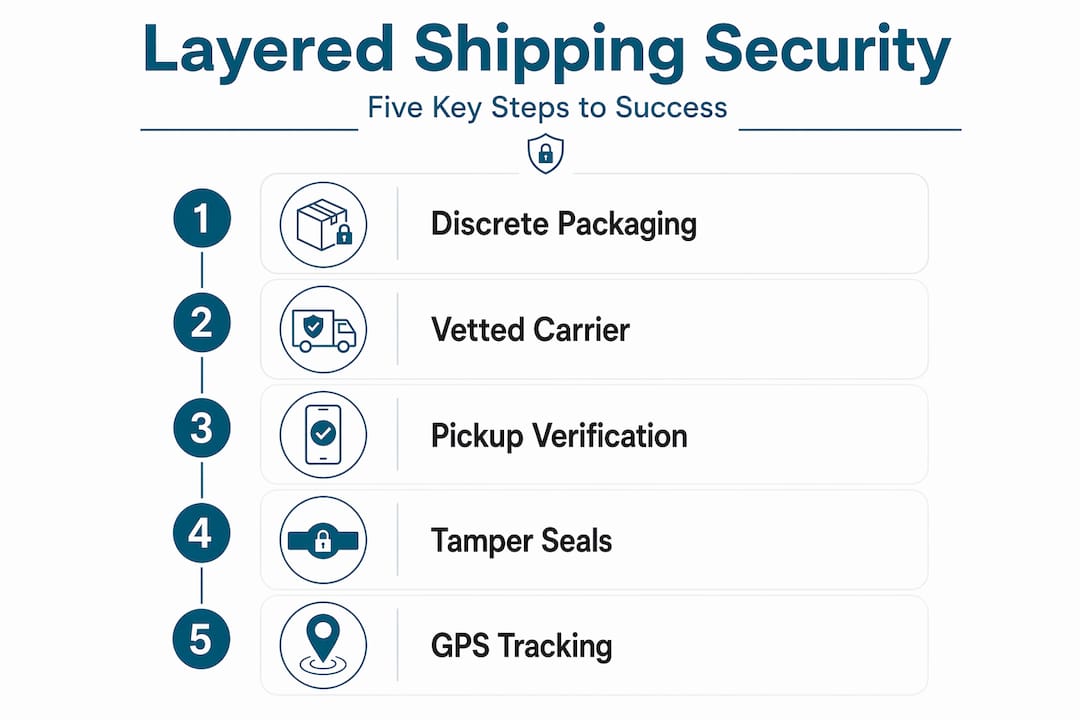
- Effective security requires a layered approach, including packaging, carrier vetting, tamper-evident seals, and facility controls.
Cargo theft is no longer just a docks-and-warehouses problem. Losses jumped 60% to $725 million in 2025, driven by cybercriminals who never touch a single box. They phish broker emails, impersonate carriers, and reroute shipments digitally before anyone realizes what happened. For ecommerce businesses and logistics managers, that means secure shipping techniques now span packaging, carrier vetting, GPS tracking, and facility controls. This article walks through each layer so you can build a defense that actually holds.
Table of Contents
- Understanding cargo theft risks in ecommerce shipping
- Packaging techniques to protect your shipments
- Layered security: carrier vetting and pickup verification
- Advanced shipment tracking and tamper-evident seals
- Physical facility controls and insurance considerations
- Why a layered approach to secure shipping is your best defense
- How ORNER supports your secure shipping needs
- Frequently asked questions
Understanding cargo theft risks in ecommerce shipping
The threat profile for cargo theft has changed fundamentally. Where thieves once relied on physical access, they now use phishing emails, fake carrier bids, and compromised broker accounts to redirect shipments without setting foot near a loading dock. Cyber-enabled cargo theft losses hit an estimated $725 million in 2025, using impersonation, fake online orders, and phishing attacks targeting freight brokers and carriers directly.
Ecommerce shipments are especially attractive targets. High product density, predictable routing, and detailed manifest data shared across multiple parties create multiple attack surfaces for sophisticated theft rings.
The tactics you should know about:
- Phishing attacks targeting broker and carrier email accounts to gain shipment details
- Fake carrier bids where criminals win loads through legitimate-looking but fraudulent offers
- Account compromise to access dispatch systems and reroute cargo mid-transit
- Double brokering where loads are re-brokered without the original shipper’s knowledge
“The barrier to cargo theft has lowered dramatically. A criminal with a laptop can reroute a $500,000 electronics shipment without ever touching it. Physical security alone cannot stop this.”
Understanding these risks is the foundation for everything else. If you want to prevent cargo theft effectively, you need to treat it as both a physical and a digital problem. The specific vulnerabilities of cargo theft prevention for ecommerce sellers differ from traditional freight, which is why generic logistics security advice often falls short.
Packaging techniques to protect your shipments
With risks clearly in view, packaging becomes your first physical line of defense. Done right, it deters opportunistic theft, prevents damage, and signals to handlers that contents are protected and monitored. Done wrong, even a well-tracked shipment can arrive damaged or tampered with.
Follow these steps to meet current best practices:
- Choose the right box grade. Use double-wall corrugated boxes for items between 10 and 25 kg. Triple-wall boxes are necessary for anything heavier or particularly high-value.
- Build a buffer zone. Secure packaging requires at least a 6 cm void fill buffer around all contents using foam, air pillows, or molded pulp inserts.
- Double-box fragile or high-value items. Place the inner box inside a larger outer box with 5 to 8 cm of suspension material on all sides. This is non-negotiable for electronics, glass, and jewelry.
- Apply H-taping correctly. Use three strips of 48mm pressure-sensitive tape in an H pattern on both the top and bottom of every parcel. Random taping leaves corners and edges vulnerable.
- Check your label placement. Labels must lie flat with no wrinkles. Barcodes placed on box edges or curves will fail scanners and cause routing errors, which can expose shipments to unnecessary handling.
Pro Tip: For high-value parcels, use plain outer boxes without product branding. A box that says “Premium 4K Smart TV” on the outside is an advertisement for theft. Keep the outside plain and put all branding inside.
| Box type | Best for | Key benefit |
|---|---|---|
| Single-wall corrugated | Under 5 kg, low-value items | Cost-effective for routine shipments |
| Double-wall corrugated | 10 to 25 kg, standard value | Good crush resistance for courier transit |
| Triple-wall corrugated | Over 25 kg, high-value items | Maximum stacking and impact protection |
| Double-boxed with suspension | Fragile, electronics, glass | Absorbs shock from drops and conveyor impacts |
Protecting your products physically also connects directly to your ecommerce packaging best practices strategy. For specific categories like ceramics or instruments, the rules for shipping fragile items safely go beyond basic void fill. A complete fragile item shipping guide covers the material choices that make the real difference for breakage claims.

Layered security: carrier vetting and pickup verification
Packaging protects the product. Carrier vetting protects the shipment from disappearing entirely. The most professionally packed pallet means nothing if it gets handed to a fraudulent carrier at the dock.
Effective shipping security methods for carrier verification include:
- Verify credentials directly. Check every driver’s CDL (commercial driver’s license), DOT (Department of Transportation) number, and MC (motor carrier) number against FMCSA records independently, not just from what the driver provides.
- Cross-check contact numbers. Never call numbers given to you by the driver or carrier. Look up the carrier’s official number through the broker’s own records and call that independently.
- Check truck door markings. The carrier name on the truck door must match the Bill of Lading exactly. A mismatch is the clearest indicator of double brokering.
- Use secure pickup codes. Generate a single-use pickup code shared only through your verified dispatch system. Require it before releasing any load.
- Control dock access physically. Only personnel with a direct role in loading should be on the dock. Every additional person is a potential information leak.
Stronger carrier vetting with consistent driver ID checks and secure pickup protocols are now considered essential, not optional, given the rise of phishing and impersonation schemes. The FMCSA database check takes about three minutes. The cost of skipping it can be a six-figure shipment loss.
Pro Tip: When a driver pushes back on credential verification or tries to rush the pickup, that is a signal, not an inconvenience. Legitimate carriers expect vetting. Fraudulent ones resist it.
These measures also apply directly to how you secure your supply chain at each handoff point, reducing exposure to the most common and costly theft vectors in cargo theft prevention ecommerce operations.
Advanced shipment tracking and tamper-evident seals
Carrier vetting handles the before. Tracking and seals handle the during. Once a shipment leaves your dock, your visibility into its condition and location determines how fast you can respond to any incident.
| Security method | What it detects | Response capability |
|---|---|---|
| ISO 17712 bolt seal | Physical container tampering | Post-event evidence |
| Electronic smart seal | Real-time cut or tamper events | Instant alert, immediate response |
| GPS with geofencing | Route deviations, unauthorized stops | Dispatch response within minutes |
| Anti-jamming GPS | Signal interference attempts | Continuous tracking under attack |
High-security bolt seals with breaking strength over 250 kg combined with electronic smart seals that alert on cut events give you both forensic evidence and real-time response capability. Neither alone is sufficient for high-value loads.
Key practices for tracking and seal management:
- Apply ISO 17712 compliant bolt seals on all container and trailer doors before departure
- Pair physical seals with electronic seals that send GPS-timestamped tamper alerts to your dispatch team
- Set geofence alerts for approved routes so any deviation triggers an immediate notification
- Configure dwell time alerts, where a shipment that stops for more than 30 to 45 minutes outside an approved location triggers automatic escalation
- Document every handoff with photos and e-signatures to maintain an unbroken chain of custody
Pro Tip: Anti-jamming GPS technology matters most for electronics and pharmaceutical shipments. Cargo thieves increasingly use signal jammers to create blind spots. Standard GPS devices go silent in these conditions. Anti-jamming units maintain location data even under active interference.
Understanding shipment tracking basics is the starting point, but high-value operations need to evaluate top shipment tracking software that integrates geofencing, smart seal alerts, and exception management in a single dashboard.
Physical facility controls and insurance considerations
A surprising percentage of cargo theft happens before a shipment ever leaves the facility. Inside access, weak dock controls, and poor information hygiene create opportunities that thieves exploit before GPS or seals even come into play.
Facility security with controlled dock access and camera coverage capturing facial detail is the most commonly overlooked layer of protection in ecommerce shipping operations. The checklist matters:
- Restrict dock access strictly. Only personnel actively involved in loading or unloading should enter the dock area. Rotate access codes regularly.
- Install cameras that capture facial detail. Wide-angle cameras that show the whole dock miss the faces. Position cameras to capture clear ID-quality images of everyone entering and exiting.
- Limit shipment information sharing. Departure times, routes, and cargo values should be available only on a need-to-know basis. Insider leaks are a primary source of targeted theft.
- Purchase comprehensive cargo insurance. Cover theft, damage, and in-transit risks. Standard carrier liability rarely covers the full value of lost ecommerce inventory.
- Document every handoff. Layer your defenses with photos and e-signatures at each transfer point. This documentation is essential for insurance claims and carrier liability disputes.
These measures are especially critical for businesses safeguarding ecommerce shipments through multiple fulfillment centers. Detailed guidance on coverage options is available in a dedicated ecommerce shipping insurance resource covering policy types and claim procedures.
Why a layered approach to secure shipping is your best defense
Here is what most articles on this topic get wrong: they present each security measure as an individual fix. Better packaging. Better tracking. Better insurance. Pick what fits your budget and move on. That framing misses the entire point.
Modern cargo theft is adaptive. Cyber-enabled cargo theft is expanding specifically because criminals identify the weakest link in a chain and exploit it. If you have excellent carrier vetting but weak facility access controls, they go through your dock staff. If you have strong physical seals but no electronic alerts, they have a head start before you notice anything. Single-layer security does not fail occasionally. It fails predictably.
The businesses that consistently reduce theft losses are the ones that treat security as a system. Packaging, vetting, facility controls, seals, tracking, insurance, and staff training all reinforce each other. Remove any one layer and the others compensate less than you expect. The gap is always wider than it looks.
Facility security remains an overlooked layer, which tells you something important about where most ecommerce operations are most exposed. Investing in technology while leaving dock access loosely managed is like buying a premium deadbolt and leaving a window open. The investment does not pay off until the full perimeter is covered.
Staff training deserves more credit than it usually gets. The most sophisticated GPS system cannot compensate for a dock worker who hands a load to an unverified driver because they seemed legitimate and were in a hurry. Human error and insider risk are still the most exploited vulnerabilities in cargo security. Regular audits, training on verification protocols, and a culture that normalizes checking credentials are cheaper than any single tech solution and often more effective.
Continuous auditing matters too. Threat tactics evolve faster than security policies. Build a quarterly review of your security protocols into your operations calendar. What worked against last year’s theft methods may leave gaps against this year’s. Your prevent cargo theft strategies need to evolve alongside the threats they address.
How ORNER supports your secure shipping needs
Knowing what safe delivery strategies require and actually executing them across dozens of daily shipments are two different challenges.
ORNER’s platform gives ecommerce businesses and logistics managers the tools to put these protective shipping techniques into practice without building separate systems for each layer. From reliable courier services with vetted carriers and real-time visibility to integrated shipment tracking basics with exception alerts, the platform centralizes what most operations currently manage across disconnected tools. Packaging guidance aligned with packaging best practices is built into the fulfillment workflow, not treated as an afterthought. If you are ready to move from understanding secure shipping techniques to actually implementing them at scale, ORNER is built for exactly that transition.
Frequently asked questions
What makes a shipping method ‘secure’ for ecommerce?
Secure shipping integrates layered physical protection, vetted carriers, tamper-evident seals, and real-time tracking to prevent theft and damage throughout transit. Cargo theft prevention requires physical security, vetted carriers, telemetry, and chain-of-custody documentation working together.
How can ecommerce businesses verify the identity of carriers and drivers?
Businesses should verify carrier and driver credentials directly through FMCSA databases, cross-check contact numbers independently, and use secure pickup codes to prevent impersonation fraud. Carrier vetting software that verifies FMCSA records and cross-checks phone numbers against broker files is the current standard for mid-to-large operations.
What types of seals are recommended for securing high-value shipments?
High-security bolt seals compliant with ISO 17712 standards and electronic smart seals that send instant tamper alerts are recommended for protecting high-value shipments. ISO 17712 bolt seals and electronic seals together provide both tamper evidence and real-time alert capability.
Why is facility security important in preventing cargo theft?
Facility security minimizes pre-transit theft risks by restricting dock access, monitoring loading areas with detail-capturing cameras, and limiting shipment information to prevent leaks. Facility security is often overlooked but represents the first physical layer that stops theft before a shipment ever moves.
How do GPS tracking and geofencing improve shipment security?
GPS tracking with geofencing sends instant alerts if a shipment deviates from approved routes or dwells unexpectedly, enabling rapid response to potential theft or mishandling. Geofence alerts and dwell time monitoring detect unauthorized stops and route deviations that are critical signals for high-value shipment security.