
For most mid-size and large shippers, a bank-backed or bank-partnered freight audit-and-payment provider delivers the strongest combination of cost control and payment security. Worth shortlisting first: Cass Information Systems, U.S. Bank Freight Payment (Syncada), Intelligent Audit, nVision Global, Trax Technologies, and CTSI-Global. Scan the comparison table below, then run the RFP checklist in our buying guide section before you contact any vendor.
TL;DR:
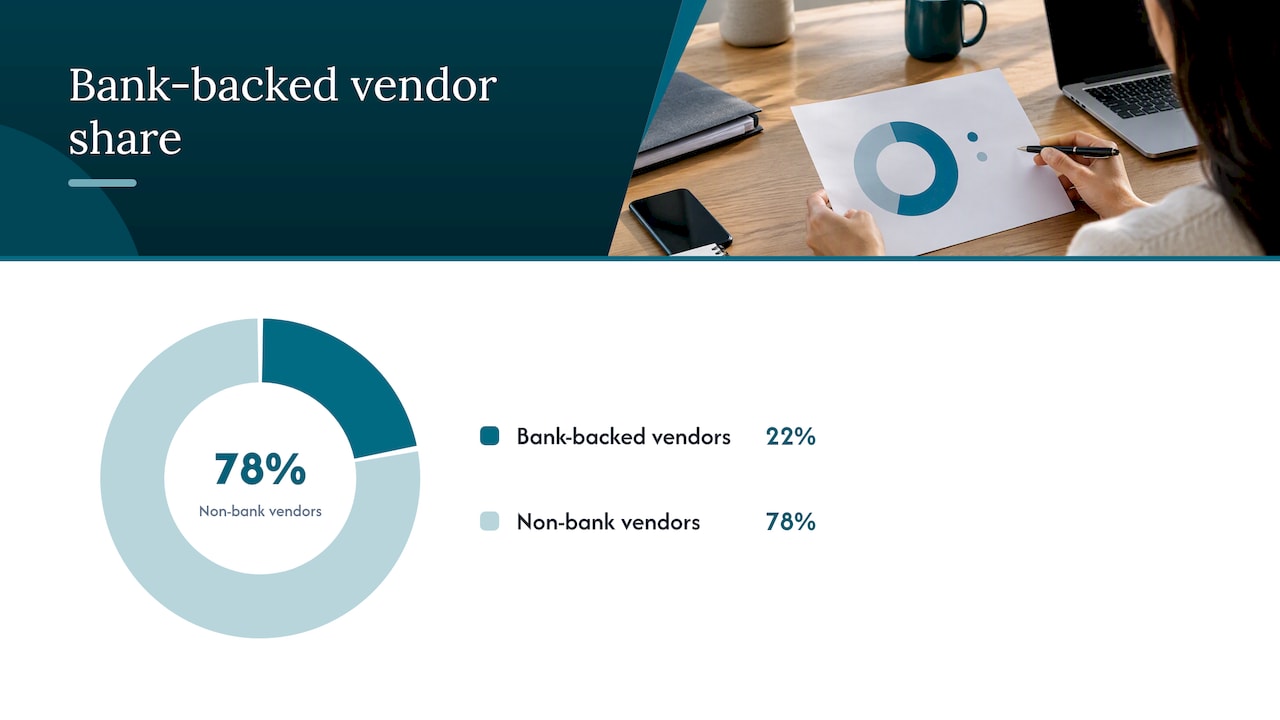
- Bank-backed providers like U.S. Bank Freight Payment and Cass offer stronger payment security and financing options, but most shippers currently use non-bank solutions.
- Effective RFPs demand detailed questions on audit accuracy, dispute SLAs, system integrations, and bank status, with verification of bank charter numbers recommended.
- Modern freight payment services integrate advanced APIs, automated workflows, anomaly detection, and BI reporting, which reduce operational risks and improve data quality.
- Savings from outsourcing freight audit and payment can reach around 10% of total transportation costs, driven by error recovery, reduced processing costs, and better rate compliance.
- Onboarding for full deployment typically takes several months, with pilots lasting 60 to 90 days, and success depends on data cleanliness, carrier mapping, and cross-department collaboration.
Table of Contents
- Comparing the Leading Freight Payment Companies
- Building an RFP-Ready Evaluation Checklist
- How Service Models and Technology Actually Differ
- What Savings and ROI Actually Look Like
- Onboarding Timelines and How Vendors Price Their Services
- When an Integrated Logistics Platform Makes More Sense
- Where Integration Gaps Actually Slow Teams Down
- Our Take on the Freight Payment Shortlist
- A Practical Alternative for Ecommerce and Cross-Border Sellers
- FAQ
- Sources
Comparing the Leading Freight Payment Companies
Freight audit and payment (FAP) providers range from century-old bank-affiliated processors to newer analytics-first platforms, and the differences matter more than most shortlists admit. Some carry a bank charter or bank partnership that changes how your payments settle and how long you hold cash. Others compete purely on audit accuracy, exception handling, or how deeply their software plugs into your TMS and ERP.
The table below lines up the main players on the dimensions that actually affect a buying decision: who backs the payment, what they actually do, who they fit best, how they charge, and what their technology covers.
Several of these names represent overlapping entities in the market: U.S. Bank Freight Payment operates through the Syncada platform, and ControlPay is the freight audit arm that joined the Transporeon network. Treat them as one evaluation line each rather than separate vendors when you build your shortlist.
A few buyer notes worth reading before you draft an RFP:
- Cass Information Systems carries deep legacy infrastructure for embedded carrier payment flows, which suits shippers who need proven scale over flashy dashboards.
- U.S. Bank Freight Payment (Syncada) pairs bank-backed settlement with supply chain financing, a fit for finance teams that want payment security tied to working-capital options.
- Intelligent Audit leans on automated anomaly detection backed by human exception teams, useful where invoice volume is high and error patterns are inconsistent.
- nVision Global runs multinational processing centers, which matters if your invoice volume spans several customs regimes and currencies.
- Trax Technologies puts more weight on carrier performance analytics than on payment mechanics, a fit for teams that want to spend visibility as much as audit accuracy.
- CTSI-Global specializes in high-volume parcel and multimodal processing, which suits enterprises drowning in invoice count rather than invoice complexity.
Beyond this core group sit smaller and more specialized processors, including CT Logistics (The Commercial Traffic Company) and its CT Global Freight Audit arm, Software Solutions Unlimited (SSI), Zero Down Supply Chain Solutions (FreightOptics), TranzAct, Condata Global, Freight Management, GMT, Interlog Services, PayAnyBiz, A3 Freight Payment, Acuitive Solutions, BirdDog, Bourque Logistics, and Broussard Logistics. These tend to serve regional carrier bases or niche modes, and they are worth a look when your lanes or industry don’t match the profile of the larger processors above.
The bank-backed versus non-bank distinction deserves its own line item on your scorecard. Survey data shows only about 22% of shippers use bank-backed vendors, which means most shippers are trusting non-bank intermediaries with freight payment flows. That split affects how your payment terms, days payable outstanding, and financial exposure play out, so it belongs in the evaluation criteria next.
Building an RFP-Ready Evaluation Checklist
A strong freight payment RFP does three things: it forces vendors to answer specifics instead of marketing copy, it protects you from payment risk, and it gives your finance and ops teams a shared scorecard.
- Audit accuracy and methodology. Ask for the exact process used to catch overcharges, duplicate billing, and accessorial errors, not just a stated accuracy percentage.
- Payment security and bank status. Confirm whether funds move through a bank-backed rail, an escrow arrangement, or the vendor’s own operating account.
- Dispute resolution SLA. Get a written turnaround time for carrier disputes and a named escalation path.
- Technology and integration specs. Request API documentation, supported ERP and TMS connectors, and sample data feeds.
- Global and multimodal coverage. Verify which countries, currencies, and modes the vendor actually processes today, not on a future roadmap.
- Sample KPIs and case outcomes. Ask for anonymized before-and-after figures from comparable shippers, including recovery rates and processing time.
- Contract terms. Review data ownership, termination notice, audit rights over the vendor’s own work, and indemnity language before signing.
Watch for vendors who dodge the bank-status question or describe their payment flow only in general terms. Modern freight payment providers have shifted from simple bill-paying toward data-driven platforms with automation and business intelligence, and a vendor still describing itself purely as a bill-payer is behind the market.
Pro Tip: Ask for the vendor’s bank charter number or named banking partner in writing, then verify it independently rather than accepting a marketing claim at face value.
For a deeper walkthrough of how audit and payment workflows fit together operationally, our guide to freight audit and payment processes breaks down the terminology procurement teams encounter during vendor demos.
How Service Models and Technology Actually Differ
Not every freight payment provider does the same job, and the labels matter more than they sound. An audit-only provider checks invoices for errors and reports them back to you, leaving payment execution in your hands. An audit-and-payment provider does both: it catches the error and settles the carrier invoice on your behalf, which is where most of the vendors above operate. A bank-backed model routes payment through a chartered bank or bank partnership, while a non-bank model routes it through the vendor’s own operating accounts or a third-party processor.
That distinction changes your operational exposure:
- Bank-backed providers typically offer stronger payment-fund protections and can bundle financing products alongside freight payment.
- Non-bank providers can still perform excellent audits, but your payment risk and days payable outstanding depend on that vendor’s own financial strength.
- SaaS-style platforms emphasize self-service dashboards and APIs over white-glove service, which fits teams with in-house analytics staff.
On the technology side, the capabilities that actually move the needle are API access for real-time data exchange, automated exception workflows that route disputes without manual triage, anomaly detection that flags billing patterns before a human reviews them, and business intelligence reporting that feeds rate negotiations. Providers that combine strong payment controls with robust APIs and a clear dispute workflow reduce operational friction and carrier relationship risk, which is the combination worth prioritizing over any single feature in isolation.
What Savings and ROI Actually Look Like
Shippers who outsource audit and payment functions report per-invoice processing costs significantly lower than those who handle everything in-house, according to a freight payment benchmark study. The same research found a notable average invoice inaccuracy rate, meaning roughly one in five freight invoices contains an error worth catching.
FAP solutions can deliver savings up to about 10% on total transportation spend in year one for some implementations, and large multi-year partnerships have generated cumulative savings exceeding tens of millions of dollars for some very large retailers. Those figures sit at the high end and depend heavily on starting invoice volume and error rates, so treat them as a ceiling rather than a typical outcome.
A simple way to frame expected ROI, using illustrative inputs only:
- Say you process 10,000 freight invoices a year at an average value of $500 each, for $5 million in annual freight spend.
- Apply the 20.8% inaccuracy rate as your rough exposure: roughly 2,080 invoices may carry an error of some kind.
- Even a partial recovery on a fraction of those errors, combined with lower per-invoice processing costs from outsourcing, can offset most or all of a provider’s fees within the first year.
Providers capture this value three ways: recovering carrier overcharges, reducing exception volume through cleaner data intake, and improving rate compliance by feeding audit data back into carrier negotiations. Practitioners note that the most strategic value from FAP comes when audit data gets integrated into broader landed-cost and procurement processes, not when it sits as an isolated back-office task.
Onboarding Timelines and How Vendors Price Their Services
Most freight payment pilots run 60 to 90 days, covering carrier mapping, data feed setup, and a limited lane sample before full rollout. A full enterprise rollout, across every carrier and invoice type, typically takes several additional months and needs active participation from operations, finance, and IT, since each team owns a different piece of the data handoff.
Practitioners report that pilots including a representative sample of exception-prone lanes and carriers, roughly 10 to 20% of invoice volume but 50 to 70% of exceptions, surface the real audit recovery opportunity faster than a broad but shallow pilot.
Pricing generally falls into three shapes:
- Per-invoice fees favor buyers with predictable, high invoice volume where the cost per unit stays low.
- Percentage-of-recovery fees favor buyers uncertain about error rates, since the vendor only earns when it finds money.
- Subscription or platform fees favor buyers who want predictable budgeting and plan to use the analytics layer heavily.
The biggest onboarding risks are messy carrier master data, incomplete historical invoice records, and an existing exception backlog that overwhelms the new workflow before it stabilizes. Mitigate these by cleaning carrier codes before kickoff and assigning one internal owner to triage legacy disputes separately from new ones. Our freight payment process guide walks through this handoff in more operational detail.
When an Integrated Logistics Platform Makes More Sense
Specialist freight audit and payment providers do one thing well: catching billing errors across complex carrier networks at scale. For ecommerce brands running freight booking, customs clearance, warehousing, and fulfillment through separate systems, though, the handoffs between those systems often create more friction than the invoice errors themselves.
We built our platform around a different starting point: freight booking, tracking, customs clearance, and fulfillment sitting in one system, so cost data doesn’t have to travel between disconnected tools before anyone can reconcile it. That single-pane approach trades some of the specialist audit depth a dedicated FAP vendor brings for faster reconciliation and fewer data handoffs across the supply chain.
Neither approach is universally right. A high-volume shipper with hundreds of carriers and a dedicated finance team auditing freight spend benefits from a specialist’s depth. An ecommerce brand managing cross-border shipping, warehousing, and fulfillment alongside freight payment may get more practical value from one connected operational view.
Where Integration Gaps Actually Slow Teams Down
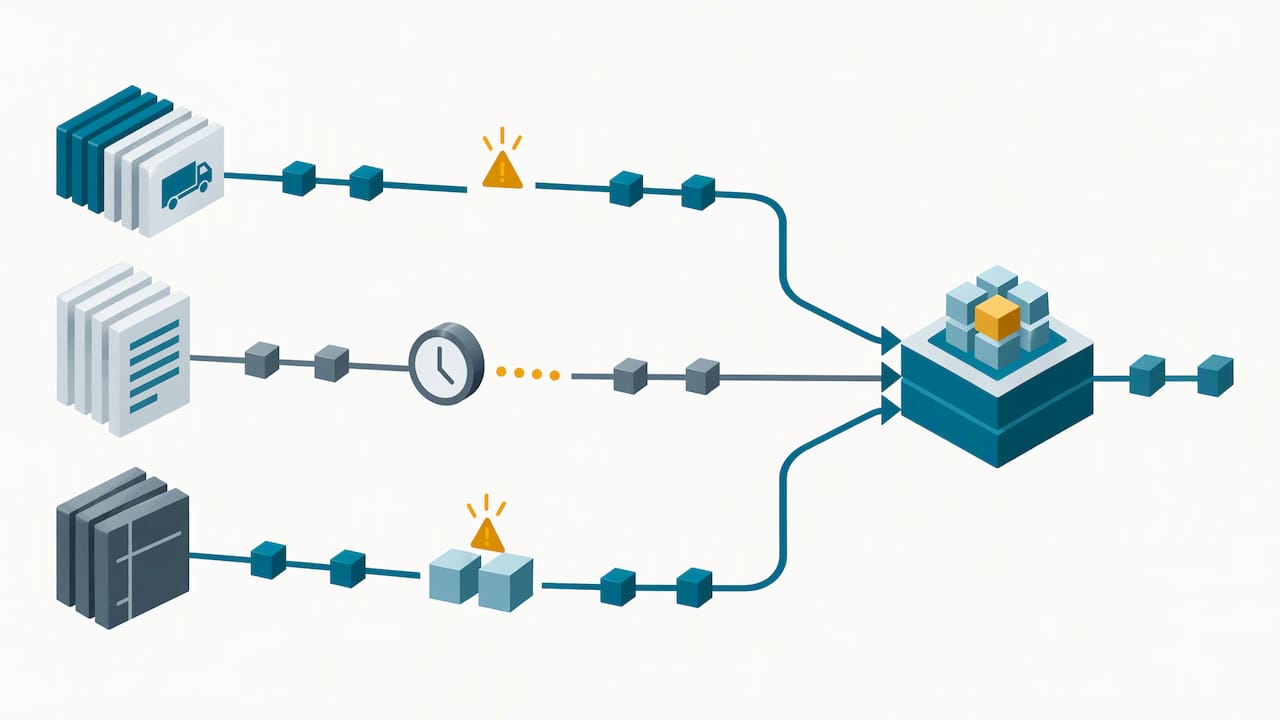
Freight payment data rarely lives on its own. It has to reconcile against purchase orders in an ERP, feed landed-cost calculations for product margins, and sync with a TMS that handles carrier selection and routing. When a freight payment vendor operates as a separate silo from these systems, someone on your team ends up manually exporting and re-matching invoice data, which reintroduces the exact errors an audit process is supposed to catch.
The most common friction points show up in three places: carrier code mismatches between the FAP vendor’s system and your TMS, timing gaps between when an invoice is audited and when it posts to your general ledger, and duplicate data entry when a vendor’s API doesn’t support your accounting software’s native connectors.
Before signing with any provider, confirm which ERP and TMS systems they already connect to natively, and ask for a sample data mapping document rather than a verbal assurance. A vendor with a thin integration list isn’t necessarily wrong for you, but it does mean your IT team should budget time for custom connector work rather than assuming a plug-and-play setup. Our ocean freight invoice audit checklist covers the data points worth validating before invoices ever reach a reconciliation system.
Our Take on the Freight Payment Shortlist
The conventional advice in this space treats freight audit and payment as a pure cost-recovery exercise, measured almost entirely by how many overcharges a vendor catches. That framing undersells what actually separates a good vendor relationship from a mediocre one. The providers that deliver lasting value are the ones whose audit data flows back into procurement and rate negotiation, not the ones with the flashiest anomaly-detection dashboard.
Most buyers also overweight bank-backed status as a binary pass or fail. It matters, and it belongs on your checklist, but a financially stable non-bank vendor with strong integration depth can outperform a bank-backed vendor with thin technology. Verify financial strength directly instead of treating “bank-backed” as a complete answer on its own.
If we had to prioritize one thing first: confirm how cleanly a vendor’s data integrates with your existing ERP and TMS before you compare their audit accuracy claims. A vendor that catches every error but creates three new manual reconciliation steps has not actually solved your problem.
— Maayan
A Practical Alternative for Ecommerce and Cross-Border Sellers
Specialist freight audit and payment vendors solve a specific problem well: catching billing errors across large, complex carrier networks. Not every team needs that level of specialization, especially ecommerce sellers and brands whose freight spend sits alongside booking, customs clearance, and fulfillment decisions that a pure audit vendor never touches.
We provide a platform that covers freight booking, customs clearance, warehousing, inventory management, and fulfillment, designed to keep cost and shipment data visible in one place rather than scattered across separate systems. For a brand managing cross-border orders, Amazon fulfillment, and multiple warehouses, that visibility often matters as much as a dedicated audit recovery program.
This isn’t a substitute for a deep specialist audit on a high-volume enterprise carrier network. For many ecommerce brands balancing freight, fulfillment, and customs across borders, though, one connected operational view answers more of the daily cost-control question than a standalone audit tool. Get a freight shipping estimate to see how booking and cost visibility work together before your next shipment.
FAQ
What is the difference between freight audit and freight payment?
Freight audit means checking carrier invoices for billing errors, duplicate charges, and incorrect rates before approval. Freight payment means actually settling those invoices with the carrier, and most providers today bundle both functions into a single audit-and-payment service.
Are bank-backed freight payment providers worth the extra cost?
Bank-backed providers route payment through a chartered bank or bank partnership, which generally adds stronger fund-protection controls. Survey data shows only about 22% of shippers currently use bank-backed vendors, so weigh that security against your existing vendor’s financial strength and track record rather than treating bank status as the only factor.
How much can a freight audit and payment provider actually save us?
Shippers outsourcing audit and payment report per-invoice processing costs roughly one-third of in-house costs, and some implementations see savings up to 10% of total transportation spend in the first year. Actual results depend on your invoice volume, existing error rate, and how quickly a vendor integrates with your systems.
How long does it take to onboard a freight payment vendor?
A typical pilot runs 60 to 90 days, covering carrier data mapping and a limited lane sample, while a full enterprise rollout takes several additional months depending on carrier count and data quality. Operations, finance, and IT teams all need to participate, since carrier mapping and system integration touch each department.
Does Orner offer freight audit and payment services?
We focus on an integrated logistics platform covering freight booking, customs clearance, warehousing, and fulfillment rather than standalone freight audit services. For ecommerce brands that want cost visibility alongside booking and fulfillment in one system, our freight booking page is the best starting point.
Sources
- Driving Strategic Value Through Outsourcing (JOC freight payment benchmark study)
- Freight Bill Audit & Payment: The Key to Supply Chain Clarity (Inbound Logistics)
- U.S. Bank freight payment industry overview