
Managing shipping expenses can make or break a company’s bottom line. Some businesses lose thousands every year to unnoticed billing mistakes, but here is something most people miss. Companies that adopt rigorous freight audit and payment processes routinely cut transportation costs by 5 to 10 percent. The real advantage goes far beyond paperwork and delivers strategic financial power few ever tap into.
Table of Contents
- What Is Freight Audit And Payment?
- Why Freight Audit And Payment Matters For Businesses
- How Freight Audit And Payment Works
- Key Concepts In Freight Audit And Payment
- Real-World Applications Of Freight Audit And Payment
Quick Summary
| Takeaway | Explanation |
|---|---|
| Freight audit reduces costs by 5-10% | Implementing rigorous audits can significantly lower transportation expenses through improved accuracy and error detection. |
| Automated systems enhance efficiency | Advanced technologies streamline document verification, reducing manual errors and providing real-time insights into shipping expenses. |
| Strategic risk management tool | Freight audit protects businesses from billing discrepancies, ensuring compliance and maintaining accurate financial records. |
| Optimize logistical spending models | Thorough analysis of transportation costs leads to better carrier negotiations and cost-effective solutions for shipping needs. |
| Transform finance management with data | Leveraging data analytics empowers businesses to forecast expenses and enhance overall supply chain performance. |
What is Freight Audit and Payment?
Freight audit and payment represents a comprehensive financial management process within logistics and transportation operations that ensures accuracy, cost control, and optimal financial performance. This critical function goes far beyond simple invoice reconciliation, serving as a strategic approach to managing transportation expenses and identifying potential inefficiencies in shipping operations.
Understanding the Core Concept
At its fundamental level, freight audit and payment involves thoroughly examining, verifying, and processing transportation invoices to confirm their accuracy, compliance with contractual agreements, and alignment with actual services rendered. Businesses leverage this process to detect billing errors, prevent overcharging, and maintain precise financial records related to shipping expenses.
Key components of freight audit and payment typically include:
- Detailed invoice verification against original shipping contracts
- Comprehensive rate and charge validation
- Identification and resolution of billing discrepancies
- Systematic payment processing to carriers and logistics providers
The Strategic Importance
Freight audit and payment is not merely an administrative task but a strategic financial management approach. According to Transportation Intermediaries Association, companies can potentially reduce transportation expenses by 5-10% through rigorous audit processes. The systematic examination of shipping invoices helps organizations uncover hidden cost inefficiencies, negotiate better rates, and optimize their overall logistics spending.
The process involves multiple sophisticated techniques, including automated software systems that cross-reference shipping documentation, contract terms, and actual service delivery. These advanced technologies enable businesses to streamline financial workflows, reduce manual errors, and gain deeper insights into their transportation expenditures.
By implementing robust freight audit and payment strategies, organizations transform what could be a mundane accounting function into a powerful tool for financial optimization and strategic decision making in their supply chain management.
Below is a summary table outlining the core components and technological features involved in modern freight audit and payment processes as described in the article.
| Component / Feature | Description |
|---|---|
| Invoice Verification | Examining freight invoices against shipping contracts to ensure accuracy |
| Rate and Charge Validation | Confirming billed amounts match predetermined contractual rates |
| Billing Discrepancy Resolution | Identifying and resolving any discrepancies or overcharges |
| Payment Processing | Systematic handling of payments to carriers and logistics providers |
| Machine Learning Algorithms | Leveraging AI to detect anomalies and pattern recognition in billing and logistics data |
| Automated Data Validation | Using software to validate documents and charges in real time |
| Financial Reporting | Generating comprehensive reports on logistics spend and process efficiency |
| Real-Time Tracking Systems | Monitoring and validating carrier performance and delivery standards as transactions occur |
Why Freight Audit and Payment Matters for Businesses
Businesses across diverse industries recognize freight audit and payment as a critical financial strategy that directly impacts operational efficiency, cost management, and overall profitability. By implementing comprehensive freight audit and payment processes, organizations can transform their logistics expenditures from a potential financial burden into a strategic advantage.
Financial Risk Mitigation
Freight audit and payment serves as a powerful risk management tool that protects businesses from potential financial discrepancies. Our guide on freight forwarding highlights how organizations can prevent unnecessary financial losses through meticulous invoice verification. By systematically examining transportation charges, businesses can:
- Detect and prevent billing errors
- Challenge incorrect or inflated charges
- Ensure compliance with contractual shipping agreements
- Maintain accurate financial records
Cost Optimization and Competitive Advantage
According to Gartner Research, businesses can achieve significant cost reductions through strategic freight audit processes. These financial reviews enable companies to identify inefficiencies, negotiate better carrier rates, and develop more transparent transportation spending models. The potential financial benefits extend beyond simple cost cutting, creating opportunities for reinvestment and strategic growth.

By leveraging advanced technologies and data analytics, organizations can transform their freight audit and payment processes from a routine administrative task into a sophisticated financial management strategy. Automated systems now enable real-time tracking, sophisticated error detection, and comprehensive financial reporting, providing businesses with unprecedented visibility into their transportation expenditures.
Ultimately, robust freight audit and payment practices represent more than just a financial control mechanism. They are a strategic approach that empowers businesses to make informed decisions, optimize their supply chain performance, and maintain a competitive edge in an increasingly complex global logistics landscape.
How Freight Audit and Payment Works
Freight audit and payment is a sophisticated process that involves multiple interconnected stages designed to ensure accurate financial management of transportation expenses. The process transforms complex shipping documentation into a streamlined financial workflow that protects businesses from potential billing errors and unnecessary expenditures.
Document Collection and Initial Verification
The process begins with comprehensive document collection, where businesses gather all relevant shipping documents, including bills of lading, freight invoices, shipping manifests, and carrier contracts. Learn more about freight forwarding benefits to understand the importance of meticulous documentation. During this initial stage, organizations focus on:
- Collecting electronic and physical shipping records
- Capturing detailed transportation service information
- Preparing documents for comprehensive review
- Organizing data for systematic examination
Advanced Technological Validation
According to Transportation Intermediaries Association, modern freight audit processes leverage advanced software technologies that automate complex verification procedures. These sophisticated systems perform multiple sophisticated checks, comparing invoiced charges against predefined contractual rates, actual service delivery records, and historical pricing data.
Automated platforms utilize machine learning algorithms and artificial intelligence to:
- Cross-reference shipping charges with original contracts
- Detect potential billing discrepancies
- Validate carrier performance against agreed service standards
- Generate comprehensive financial reports
The technological validation stage involves intricate cross-checking mechanisms that go beyond simple numerical comparisons.
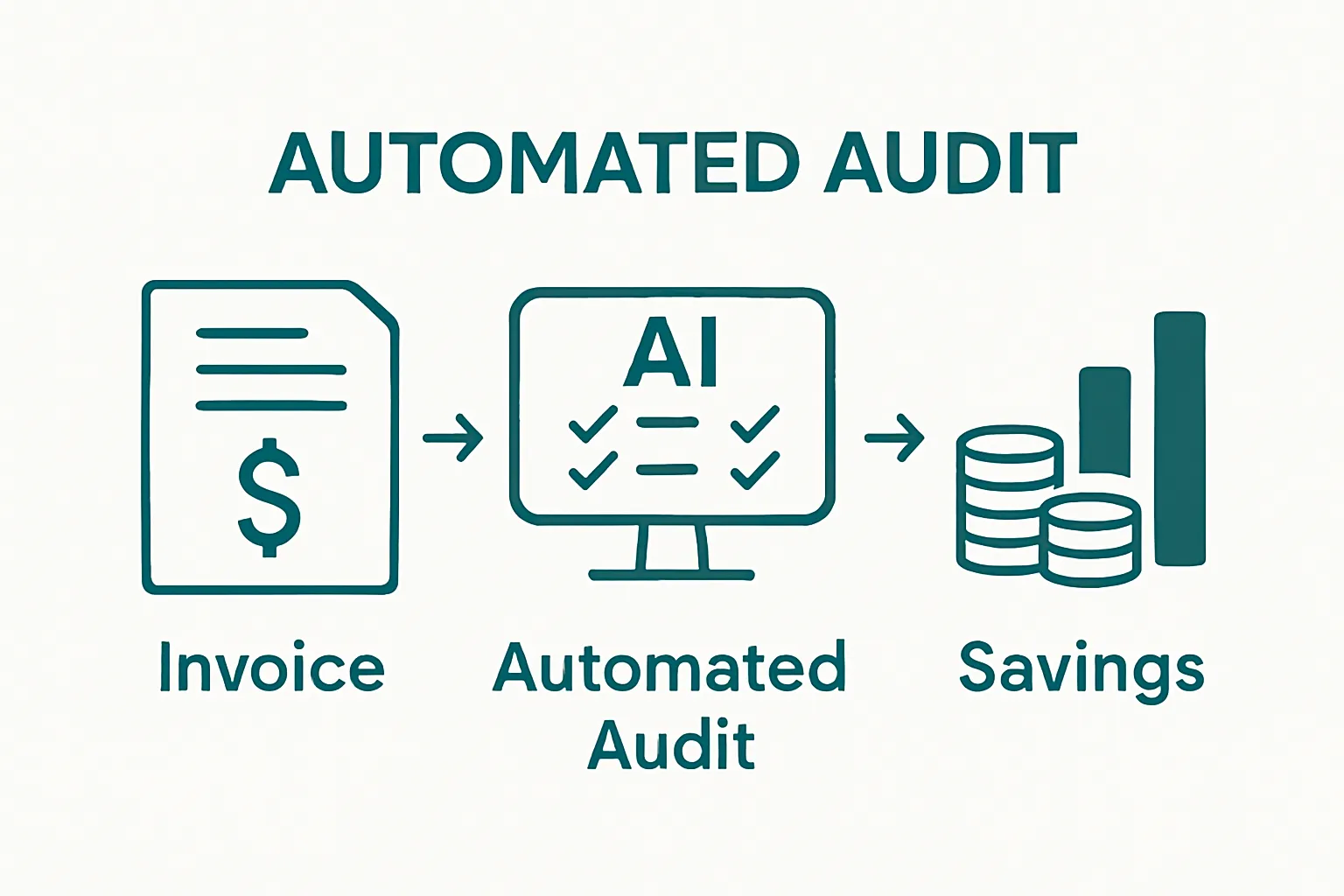 These systems analyze contextual details, transportation modes, weight measurements, and special handling requirements to ensure absolute precision in financial reconciliation.
Ultimately, the freight audit and payment process represents a dynamic intersection of financial management, technological innovation, and strategic logistics planning. By implementing rigorous verification protocols, businesses can transform their transportation expense management from a reactive accounting function into a proactive financial optimization strategy.
Key Concepts in Freight Audit and Payment
Freight audit and payment encompasses a range of sophisticated financial and logistical concepts that go beyond traditional accounting practices. Understanding these fundamental principles helps businesses develop more strategic and efficient transportation expense management approaches.
Core Financial Reconciliation Principles
At the heart of freight audit and payment lie critical financial reconciliation principles that ensure accuracy and transparency. Our comprehensive courier services guide provides deeper insights into these foundational concepts. The core reconciliation principles involve:
- Verifying actual services against contractual agreements
- Matching invoiced charges with predetermined rate structures
- Identifying and resolving billing discrepancies
- Maintaining comprehensive financial documentation
Technological and Analytical Frameworks
According to Deloitte Transportation Research, modern freight audit and payment processes rely on advanced technological frameworks that transform traditional financial management. These sophisticated systems integrate multiple analytical approaches to deliver precise financial insights.
Key technological components include:
- Machine learning algorithms for pattern recognition
- Automated data validation mechanisms
- Real-time financial tracking systems
- Advanced anomaly detection technologies
The integration of artificial intelligence and data analytics allows businesses to move beyond reactive financial management towards predictive and strategic expense optimization. These technological frameworks enable organizations to understand not just individual transactions, but broader patterns in transportation spending, carrier performance, and logistical efficiency.
Ultimately, freight audit and payment represents a complex ecosystem where financial precision, technological innovation, and strategic logistics planning converge. By mastering these key concepts, businesses can transform transportation expense management from a routine accounting function into a powerful strategic tool for operational excellence.
Real-World Applications of Freight Audit and Payment
Freight audit and payment strategies extend far beyond theoretical financial management, delivering tangible benefits across diverse industries and organizational scales. By implementing sophisticated verification and reconciliation processes, businesses can unlock significant operational and financial advantages.
Industry-Specific Implementation Scenarios
Different sectors leverage freight audit and payment processes uniquely to address their specific logistical challenges. Our guide on freight forwarding illustrates the versatility of these approaches across various business contexts. Critical implementation scenarios include:
- Manufacturing enterprises tracking complex international supply chains
- Ecommerce platforms managing multi-carrier shipping networks
- Retail organizations optimizing cross-border transportation expenses
- Pharmaceutical companies ensuring precise logistics documentation
Financial Performance and Strategic Optimization
According to McKinsey Logistics Research, companies implementing comprehensive freight audit strategies can achieve remarkable financial improvements. These advanced processes transform transportation expense management from a reactive function into a strategic competitive advantage.
Key performance optimization areas encompass:
- Identifying systemic billing inefficiencies
- Negotiating improved carrier contract terms
- Developing predictive transportation spending models
- Reducing overall logistics expenditure
The technological sophistication of modern freight audit and payment systems enables businesses to generate granular insights into their transportation ecosystems.
This table categorizes real-world scenarios where freight audit and payment processes create value across industries, as highlighted in the article.
| Industry / Sector | Freight Audit & Payment Application |
|---|---|
| Manufacturing | Tracking international supply chains, validating complex logistics documentation |
| Ecommerce | Managing multi-carrier shipping networks, ensuring accurate billing |
| Retail | Optimizing cross-border transportation costs and logistics partnerships |
| Pharmaceutical | Ensuring precise and compliant handling of documentation and shipping costs |
| General Supply Chains | Reducing systemic billing errors, improving contract negotiations, enhancing visibility |
| Logistics Service Providers | Leveraging audit data for performance improvement and client transparency |
Ultimately, freight audit and payment represents a powerful strategic tool that empowers businesses to transform complex logistical challenges into opportunities for financial optimization and competitive differentiation.
Make Freight Audit and Payment Effortless with Reliable Courier Services
Managing freight audit and payment is challenging for any business. If you have ever struggled with invoice errors, unclear shipment charges, or hidden logistics costs, you know how stressful these problems can be. Precise financial control and transparency are not optional—they are the difference between profit and frustration. This is where our focus on reliable courier services becomes essential for ecommerce businesses like yours seeking smooth operations, error-free billing, and predictable costs.
Bring peace of mind to your logistics by choosing a partner that handles end-to-end solutions including freight booking, real-time tracking, and automated expense management. Visit or-ner.com today to streamline your freight audit and payment process with the most trusted logistics platform for cross-border trade. Take the next step now to eliminate billing surprises and put control back in your hands.
Frequently Asked Questions
What is freight audit and payment?
Freight audit and payment is a comprehensive financial management process that involves verifying and processing transportation invoices to ensure accuracy, compliance with contracts, and effective cost control in logistics operations.
Why is freight audit and payment important for businesses?
Freight audit and payment is crucial as it helps businesses mitigate financial risks, reduce transportation costs, identify billing discrepancies, and optimize their overall logistics spending, turning transportation expenses into a strategic advantage.
How does the freight audit and payment process work?
The process includes collecting shipping documents, conducting initial verification, leveraging advanced technologies for validation, and systematically processing payments while ensuring compliance with contractual agreements and service delivery standards.
What technologies are used in freight audit and payment?
Modern freight audit and payment systems utilize machine learning algorithms, automated data validation mechanisms, and real-time financial tracking systems to analyze transportation costs, validate charges, and detect billing discrepancies effectively.