
Freight booking mistakes cost ecommerce businesses more than just money. A single documentation error or wrong carrier choice can delay shipments by days, frustrate customers, and eat into your margins. Checklist frameworks are essential to efficient ecommerce logistics, yet most sellers still rely on memory and guesswork. This guide walks you through a practical, step-by-step freight booking checklist covering selection criteria, service options, provider comparisons, documentation requirements, and technology tools so you can ship smarter and scale faster.
Table of Contents
- Establish your freight booking criteria
- Choose the right freight service options
- Evaluate and compare freight booking providers
- Prepare essential documentation for freight booking
- Integrate technology for tracking and booking
- Finalize your checklist and optimize ongoing freight booking
- Streamline your freight booking with expert support
- Frequently asked questions
Key Takeaways
| Point | Details |
|---|---|
| Define selection criteria | Outline logistics needs and customer expectations before booking freight. |
| Compare service options | Use side-by-side tables to evaluate the best fit for your ecommerce shipments. |
| Complete documentation | Prepare all necessary forms to ensure smooth, compliant shipping. |
| Leverage technology | Apply tracking and booking platforms for real-time visibility and process automation. |
| Review and improve | Regularly update your freight booking checklist to adapt to business growth. |
Establish your freight booking criteria
Before you book a single shipment, you need a clear picture of what your business actually requires. Jumping straight to carrier selection without defining your needs is like ordering supplies without checking your inventory first. It wastes time and money.
Start by mapping out the fundamentals of your shipping operation:
- Shipment volume and frequency: How many orders do you ship per week or month? High-volume sellers have more negotiating power with carriers.
- Destinations: Are you shipping domestically, regionally, or internationally? Cross-border routes add customs and compliance layers.
- Delivery timelines: What do your customers expect? Two-day delivery is standard for many ecommerce categories.
- Budget range: Know your cost-per-shipment ceiling before comparing rates.
- Service reliability: Delays hurt your seller ratings. Prioritize carriers with strong on-time delivery records.
These criteria form the backbone of mastering the freight booking process and feed directly into every decision you make downstream. Think of them as your logistics filter. Any carrier or service that does not meet your baseline gets removed from consideration immediately.
As your business grows, your criteria will shift. A seller moving from 50 to 500 orders per month needs a completely different logistics setup. Revisit your freight booking optimization criteria every quarter to stay aligned with your current scale and customer expectations.
Pro Tip: Set a recurring calendar reminder every 90 days to review your freight criteria. Even small changes in order volume or product weight can significantly affect which carriers offer you the best value.
Choose the right freight service options
Once your criteria are locked in, it is time to match them to the right freight service. Not all shipping methods are created equal, and choosing the wrong one can cost you in speed, reliability, or budget.
Here is a quick breakdown of the main freight service types:
- Courier services: Best for small, time-sensitive parcels. Fast, trackable, and reliable for last-mile delivery.
- Parcel shipping: Ideal for standard ecommerce orders. Scalable and widely available through major carriers.
- Air freight: High speed for international shipments. More expensive but essential for perishables or urgent stock replenishment.
- Sea freight: Cost-effective for large, heavy, or bulk shipments. Slower transit times but significantly lower rates per unit.
Selecting appropriate freight services is vital for cost-effective logistics, especially when you are managing multiple product categories with different shipping profiles.

Use this comparison table to quickly identify which service fits your shipment type:
| Service type | Best for | Speed | Cost | Tracking |
|---|---|---|---|---|
| Courier | Small, urgent parcels | Very fast | High | Excellent |
| Parcel | Standard ecommerce orders | Fast | Moderate | Good |
| Air freight | International, time-sensitive | Fast | High | Good |
| Sea freight | Bulk, heavy shipments | Slow | Low | Moderate |
For a deeper look at how each option fits ecommerce workflows, explore freight booking explained and review top freight booking options to see how sellers in your category are structuring their logistics mix.
Here is a simple prioritization order when choosing a service:
- Match service type to shipment urgency and size.
- Check if the service covers your destination markets.
- Confirm tracking capabilities meet your customer communication standards.
- Compare rates against your budget ceiling from your criteria list.
Evaluate and compare freight booking providers
Choosing a service type is only half the work. You still need to pick the right provider within that category. This is where most ecommerce sellers lose time by relying on brand recognition alone instead of doing a structured comparison.
Comparison tables and checklist items clarify provider strengths and weaknesses, making it far easier to spot the best fit for your specific needs.
Use this checklist when evaluating any freight provider:
- Reliability score: Look for on-time delivery rates above 95%.
- Delivery speed: Does the provider meet your customer-facing SLAs (service level agreements)?
- Insurance coverage: What is covered in case of loss or damage?
- Tracking technology: Real-time updates or just milestone scans?
- Pricing transparency: Are fuel surcharges and handling fees disclosed upfront?
- Customer support: Is there a dedicated account manager or just a generic helpdesk?
Here is a side-by-side provider comparison framework:
| Criteria | Provider A | Provider B | Provider C |
|---|---|---|---|
| On-time delivery rate | 97% | 93% | 95% |
| Real-time tracking | Yes | No | Yes |
| Insurance included | Yes | Optional | Yes |
| Transparent pricing | Yes | Partial | Yes |
| Dedicated support | Yes | No | Partial |
When choosing shipping carriers, always request references from businesses in your product category. A carrier that excels at apparel logistics may not perform as well for fragile home goods. Also review freight forwarding comparison data and weigh sea vs air freight trade-offs for your international routes.
Pro Tip: Ask potential providers for a 30-day trial period before committing to a long-term contract. Real-world performance data is far more valuable than a sales pitch.
Prepare essential documentation for freight booking
With your provider selected, documentation becomes your next critical focus. This step trips up even experienced ecommerce sellers, particularly when shipping internationally. Incomplete paperwork is a leading cause of shipment delays, and the consequences range from customs holds to full shipment returns.
Here are the core documents you need to have ready:
- Bill of lading (BOL): The legal contract between shipper and carrier. Required for all freight shipments.
- Commercial invoice: Details the goods, their value, and the parties involved. Essential for customs clearance.
- Packing list: Itemizes the contents of each package. Helps customs agents verify shipment contents.
- Customs declaration forms: Required for all cross-border shipments. Accuracy here is non-negotiable.
- Certificate of origin: Some trade agreements require proof of where goods were manufactured.
- Import/export licenses: Certain product categories require special permits depending on destination country.
For domestic shipments, the BOL and packing list are usually sufficient. International shipments require the full set. Review the complete international shipping paperwork requirements before booking any cross-border freight.
Expert reminder: The most common documentation errors are mismatched values between the commercial invoice and customs declaration, and missing HS (Harmonized System) codes on product descriptions. Double-check every field before submission. A single mismatch can hold your shipment for days.
Integrate technology for tracking and booking
Reliable operations go beyond paperwork. Technology is now a core requirement for any ecommerce business that wants real visibility into its freight operations. Manual tracking and spreadsheet-based booking are simply not scalable past a certain order volume.
Technology provides real-time visibility, helping ecommerce businesses prevent bottlenecks and streamline logistics across every shipping lane.
Here are the key technology tools to integrate into your freight workflow:
- Freight booking platforms: Centralize carrier selection, rate comparison, and booking confirmation in one interface.
- Shipment tracking software: Provides live status updates, exception alerts, and delivery confirmation across all carriers.
- Warehouse management system (WMS) integration: Connects inventory levels to outbound shipping schedules automatically.
- Customs clearance automation: Reduces manual data entry and speeds up cross-border documentation processing.
- Analytics dashboards: Track carrier performance, cost-per-shipment trends, and delivery success rates over time.
Explore the best shipment tracking software options to find platforms that integrate with your existing ecommerce stack, whether you are on Shopify, Amazon, or a custom storefront.
Pro Tip: Opt for freight technology solutions that offer open API integrations. This allows you to connect your booking platform directly to your order management system, eliminating manual data entry and reducing human error at scale.
Finalize your checklist and optimize ongoing freight booking
Now it is time to pull everything together. A personalized freight booking checklist reduces errors and improves shipping outcomes for ecommerce businesses, but only if you actually use it consistently and update it as your operations evolve.
Here is your step-by-step ongoing freight booking checklist:
- Review and update your shipping criteria every quarter.
- Confirm your freight service type matches current shipment profiles.
- Run a provider comparison check every six months or when performance dips.
- Verify all required documentation is complete before booking.
- Confirm tracking technology is active and integrated with your storefront.
- Analyze delivery performance data monthly and flag recurring issues.
- Renegotiate carrier rates annually based on volume growth.
Monitoring outcomes is just as important as the initial setup. Use your analytics dashboard to track on-time delivery rates, damage claims, and cost-per-shipment trends. When you spot a pattern, act on it fast. Waiting until a problem becomes a crisis is expensive.
Here is a summary of the major takeaways from this checklist:
| Checklist area | Key action | Why it matters |
|---|---|---|
| Criteria setting | Define volume, destinations, timelines | Filters out unsuitable carriers early |
| Service selection | Match service type to shipment needs | Balances speed and cost effectively |
| Provider evaluation | Use structured comparison framework | Prevents costly carrier mistakes |
| Documentation | Prepare full paperwork before booking | Avoids customs delays and fines |
| Technology | Integrate tracking and booking tools | Delivers real-time visibility and efficiency |
| Ongoing review | Quarterly audits and performance checks | Keeps logistics aligned with business growth |
For additional freight booking tips tailored to ecommerce sellers in 2026, review current best practices and adapt them to your specific product categories and markets.
Streamline your freight booking with expert support
Building a freight booking checklist is a strong first step, but executing it consistently at scale requires the right partner. ORNER offers reliable courier services and end-to-end logistics solutions designed specifically for ecommerce businesses like yours.
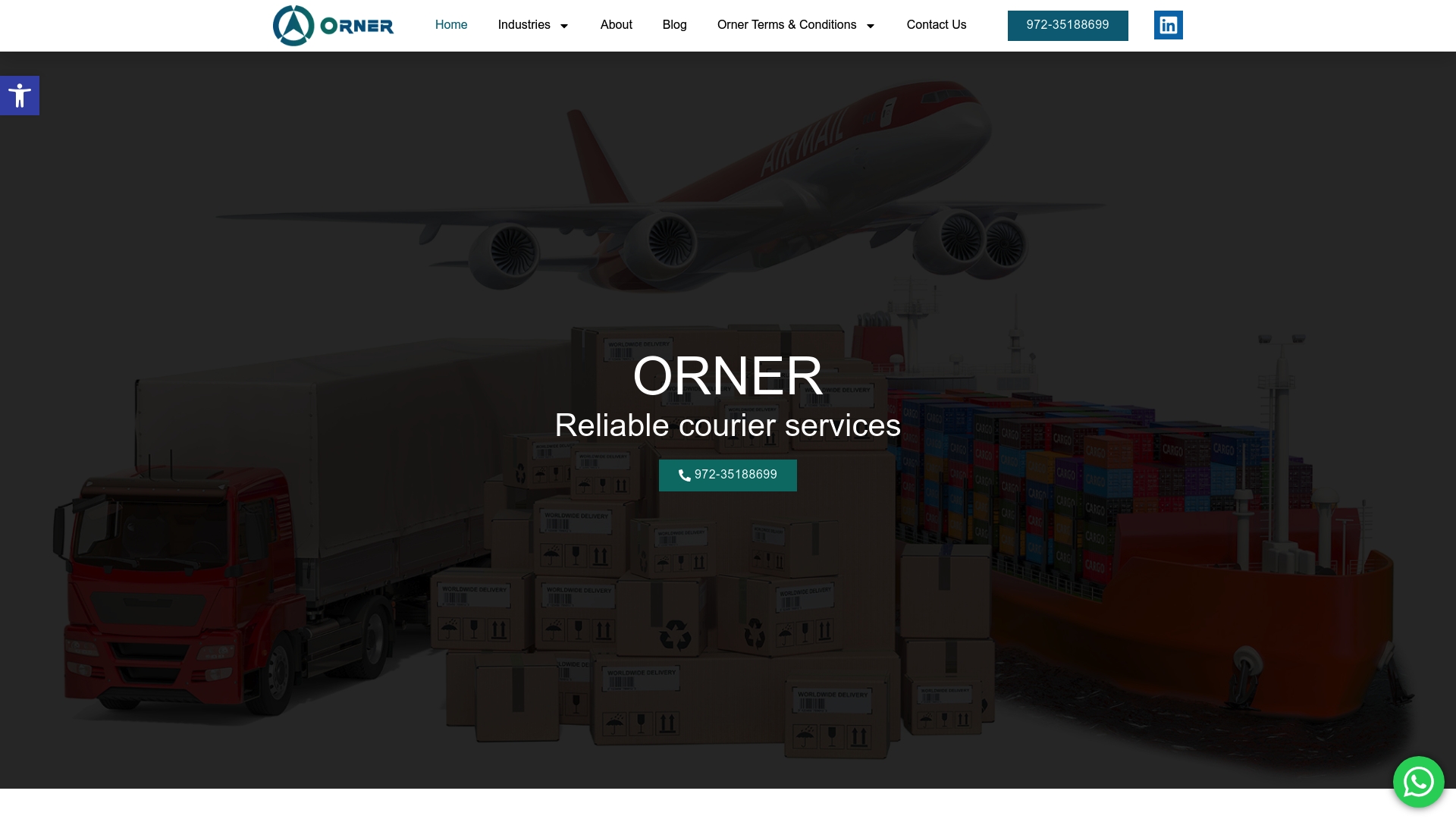
From real-time shipment tracking and customs clearance to warehousing and cross-border fulfillment, ORNER’s platform gives you the tools and expertise to move goods faster and with fewer errors. Whether you are shipping domestically or expanding into new international markets, explore ORNER’s freight booking solutions to see how the platform simplifies every step of the process. Ready to take your logistics further? Tap into ORNER’s freight booking expertise and start shipping with confidence today.
Frequently asked questions
What should I include in a freight booking checklist?
Your checklist should cover service criteria, provider comparison, required documentation, and technology solutions for tracking and optimization. A solid checklist framework ensures nothing critical gets missed before a shipment goes out.
How do I compare freight service providers for ecommerce?
Evaluate shipping companies on reliability, speed, insurance, rates, and technology offerings for the best fit to your logistics needs. Provider comparison tables make it easier to spot gaps and strengths side by side.
Why is documentation important in freight booking?
Proper paperwork ensures compliance and prevents shipment delays, especially in international logistics. Incomplete paperwork is one of the most common and avoidable causes of customs holds.
What technology tools help with freight booking?
Booking platforms, shipment tracking software, and automation systems offer real-time visibility and operational efficiency. The right tracking software connects your entire supply chain in one place, reducing manual work and errors.