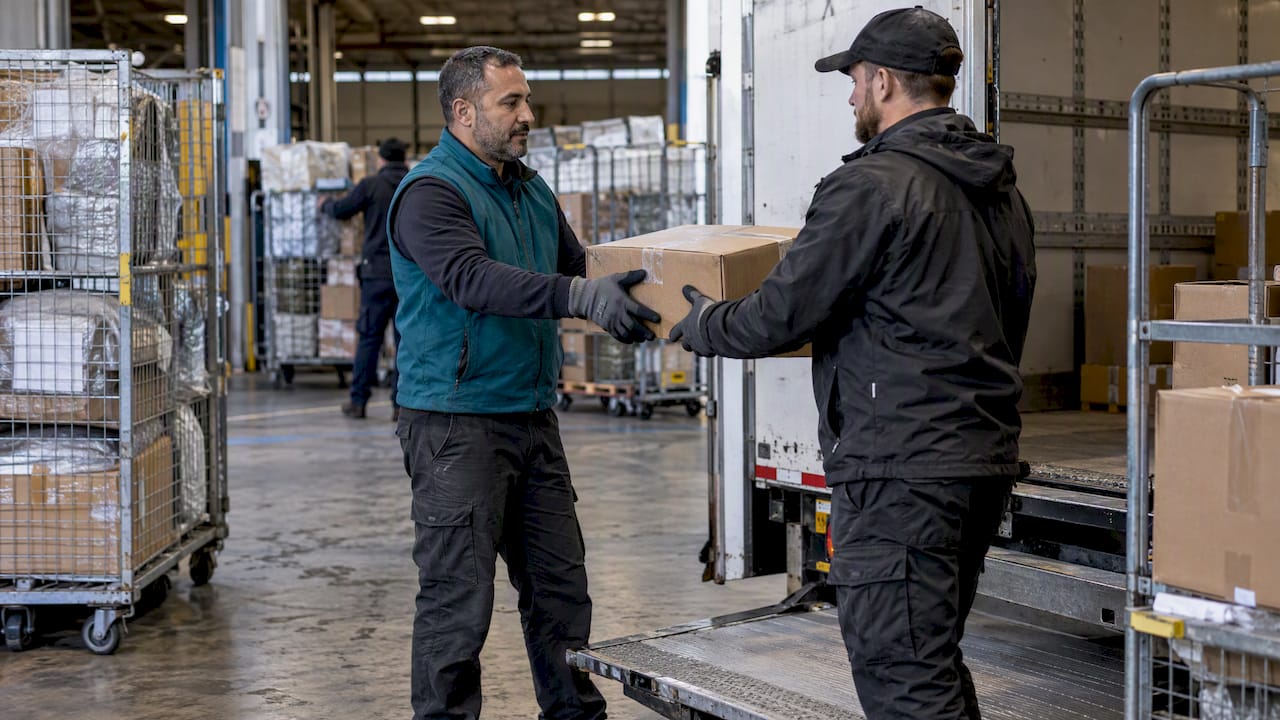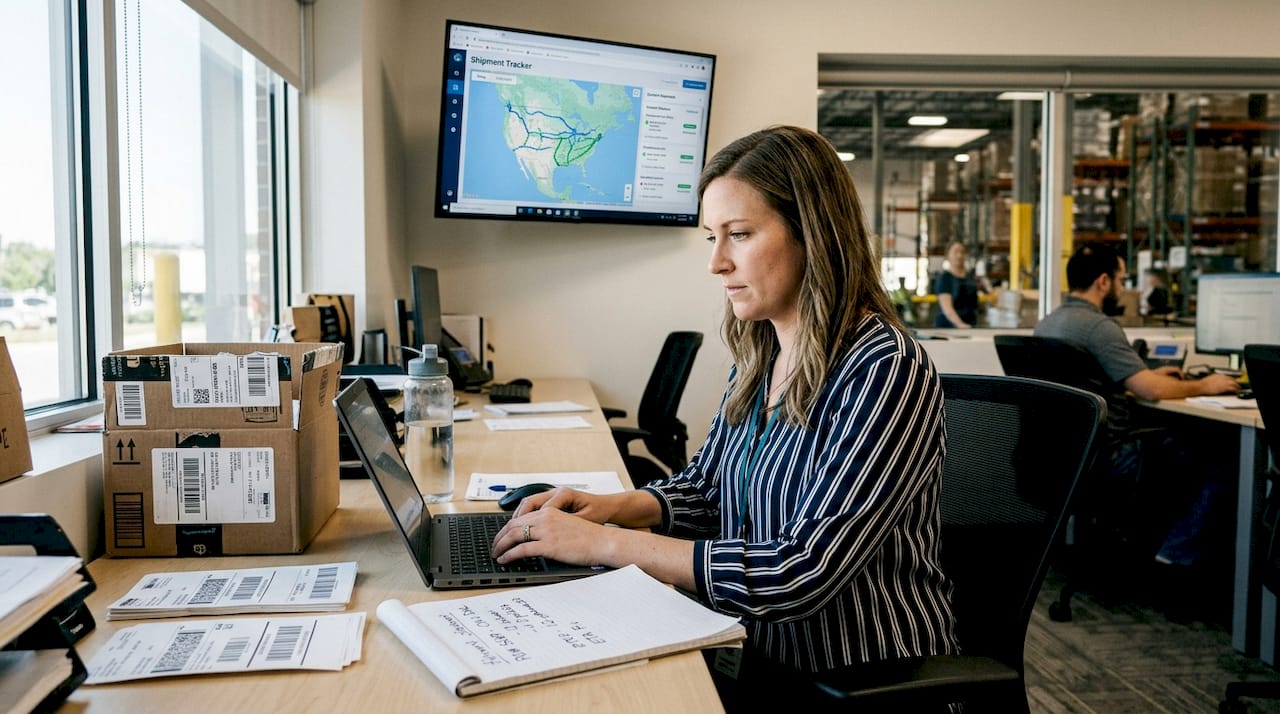
Many ecommerce sellers believe freight booking is a complex, time-consuming maze reserved for logistics experts with years of experience. The reality? Freight booking is a systematic process that, once understood, becomes a powerful tool for reducing costs and improving delivery speed. Whether you ship products domestically or internationally, mastering freight booking directly impacts your bottom line and customer satisfaction. This guide breaks down the freight booking process into clear, actionable steps, helping you navigate carriers, costs, and documentation with confidence. You’ll learn how to avoid common pitfalls, leverage digital tools, and make informed decisions that keep your supply chain moving smoothly.
Table of Contents
- Key takeaways
- Understanding the basics of freight booking
- Step-by-step process of booking freight
- Choosing the right freight type and understanding costs
- Common challenges in freight booking and how to avoid them
- How digital freight solutions streamline booking and improve efficiency
- Streamline your freight booking with ORNER
- Frequently asked questions
Key Takeaways
| Point | Details |
|---|---|
| Freight booking basics | Freight booking is the process of reserving space with a carrier to move goods from origin to destination. |
| Accurate shipment data | Providing exact weight, dimensions, origin and destination details prevents surcharges and delays. |
| Digital booking platforms | Digital tools streamline quotes, carrier comparisons, and booking communications. |
| Plan and compare quotes | Request quotes from multiple carriers using identical shipment details to secure the best rate and avoid hidden fees. |
Understanding the basics of freight booking
Freight booking is the process of reserving space with a carrier to transport goods from origin to destination. Think of it as making a reservation for your products to travel, whether by truck, ship, plane, or rail. Freight booking is essential to coordinate timely shipment and logistics across your supply chain.
Every freight booking involves key terminology you’ll encounter repeatedly. A bill of lading serves as both a receipt and a contract between shipper and carrier. A freight forwarder acts as an intermediary who arranges transportation on your behalf, handling complexities like customs and documentation. Understanding these terms helps you communicate effectively with carriers and avoid misunderstandings that lead to delays.
Accuracy in freight booking directly affects your ecommerce operations. Incorrect weight or dimension data can trigger surcharges or refused shipments. Booking the wrong freight type for your timeline creates customer service nightmares when orders arrive late. Getting booking details right the first time saves money, preserves your brand reputation, and keeps customers happy.
Freight booking also determines your delivery windows and total shipping costs. Rush bookings cost more, while advance planning unlocks better rates. The mode you select affects transit time dramatically. Air freight might deliver in days, while ocean freight takes weeks. Your booking choices ripple through inventory management, cash flow, and customer expectations.
Pro Tip: Create a freight booking checklist with all required shipment details before contacting carriers. Having dimensions, weight, destination, and timeline ready speeds up the quote process and reduces back-and-forth communication.
Step-by-step process of booking freight
Booking freight follows a logical sequence that becomes second nature with practice. A structured booking process helps avoid delays and hidden fees throughout your shipping operations.
Step 1: Gather complete shipment information
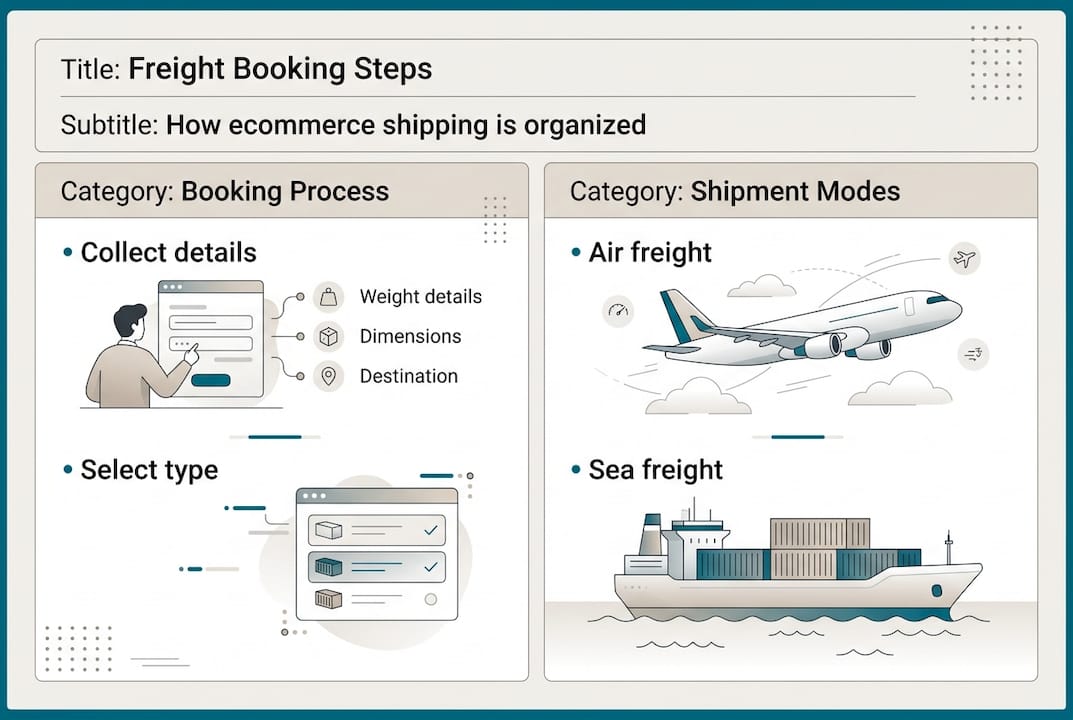
Start by collecting precise details about your shipment. You need exact weight and dimensions for each package or pallet. Measure carefully because carriers charge based on actual or dimensional weight, whichever is greater. Document the origin address, destination address, and any special handling requirements like temperature control or fragile items.
Step 2: Select your freight mode
Choose between air, sea, road, or rail based on your priorities. Air freight delivers fastest but costs significantly more. Ocean freight handles large volumes economically but requires longer lead times. Road freight offers flexibility for domestic shipments. Your budget, timeline, and shipment size determine the best option.
Step 3: Request quotes from multiple carriers
Contact at least three carriers or use a freight forwarding procedure guide to compare rates. Provide identical shipment details to each carrier for accurate comparisons. Ask about additional fees like fuel surcharges, terminal handling, or documentation charges that aren’t always included in base quotes.
Step 4: Compare quotes and select a carrier
Evaluate quotes beyond just price. Consider the carrier’s reliability record, transit time guarantees, tracking capabilities, and customer service reputation. A slightly higher rate from a dependable carrier often beats a low quote from an unreliable one. Check if the carrier has experience with your product type and destination.
Step 5: Complete the booking
Submit your booking request with all required information. Most carriers provide online booking portals or accept bookings via email or phone. Confirm pickup dates, delivery estimates, and any special instructions. Request a booking confirmation number and save all correspondence for reference.
Step 6: Prepare shipping documentation
Generate or obtain all necessary paperwork before pickup. This includes the bill of lading, commercial invoice, packing list, and any certificates required for your products. Understanding freight forwarding process requirements prevents last-minute scrambles that delay shipments.
Pro Tip: Book freight at least 48-72 hours before your desired pickup date. Last-minute bookings limit carrier availability and often carry premium charges that inflate your shipping costs unnecessarily.
Choosing the right freight type and understanding costs
Selecting the appropriate freight type balances speed, cost, and shipment characteristics. Each mode offers distinct advantages depending on your specific needs.
Less than truckload (LTL) freight works when your shipment doesn’t fill an entire truck. You share trailer space with other shippers, paying only for the space you use. LTL suits smaller shipments between 150 and 15,000 pounds. Transit times run longer than full truckload because drivers make multiple stops, but costs stay reasonable for mid-sized loads.
Full truckload (FTL) freight reserves an entire trailer for your shipment. This option makes sense for large volumes exceeding 15,000 pounds or when you need faster delivery without intermediate stops. FTL costs more upfront but offers better protection for your goods and predictable delivery schedules. You also avoid the handling that occurs with LTL consolidation.
Air freight delivers fastest, making it ideal for urgent shipments, high-value products, or perishable goods. Airlines charge premium rates based on actual or volumetric weight. Air freight works well for international ecommerce when customers pay for expedited shipping or when product margins justify the expense.
Sea freight handles the heaviest, largest shipments at the lowest per-unit cost. Container shipping takes weeks but moves enormous volumes economically. Ocean freight suits bulk inventory replenishment, seasonal stock buildup, or any situation where you can plan weeks ahead. Understanding freight class and costs is vital to budgeting and compliance.
| Freight type | Best for | Transit speed | Relative cost |
|---|---|---|---|
| LTL | 150-15,000 lbs, multiple stops acceptable | Moderate | Low to moderate |
| FTL | 15,000+ lbs, direct delivery needed | Fast | Moderate to high |
| Air | Urgent, high-value, or perishable items | Very fast | High |
| Sea | Large volumes, advance planning possible | Slow | Very low per unit |
Freight costs stem from multiple factors beyond just distance. Weight and volume both matter, with carriers charging for whichever calculation yields higher revenue. Freight class, determined by density, handling, and liability, affects LTL pricing significantly. Seasonal demand spikes during holidays or harvest seasons push rates higher.

Surcharges add unexpected costs if you’re not prepared. Fuel surcharges fluctuate with oil prices. Residential delivery fees apply when shipping to homes rather than commercial addresses. Liftgate service, inside delivery, and appointment scheduling all carry extra charges. Always ask carriers to itemize these fees upfront.
Negotiating better rates becomes possible once you establish shipping volume. Carriers offer discounts to reliable customers who provide consistent business. Consolidating shipments, booking during off-peak periods, and maintaining accurate shipment details all strengthen your negotiating position. Consider working with a freight class determination specialist to ensure you’re classified correctly and not overpaying.
Common challenges in freight booking and how to avoid them
Even experienced shippers encounter obstacles that delay shipments or inflate costs. Recognizing these pitfalls helps you implement preventive measures.
Incorrect shipment details cause the most frequent problems. Understating weight or dimensions triggers re-weighing fees and delays when carriers discover discrepancies. Overstating measurements means you overpay unnecessarily. Always measure and weigh shipments accurately using calibrated equipment. Double-check addresses to prevent misrouted freight that takes days to correct.
Missing or incomplete documentation stops international shipments at customs. Commercial invoices need precise product descriptions, values, and harmonized codes. Certificates of origin, permits, or licenses may be required depending on your products and destination. Many shipping delays and errors stem from incomplete or inaccurate booking info that could have been prevented with proper preparation.
Late bookings limit your options and increase costs. Carriers fill capacity on popular routes and dates quickly. Waiting until the last minute forces you to accept whatever space remains at premium prices or miss your shipping window entirely. Build freight booking into your production and inventory planning cycles to secure space when you need it.
Poor communication with freight providers creates confusion and missed pickups. Confirm pickup appointments, provide accurate contact information, and ensure someone is available to release the shipment. Use tracking tools to monitor progress and address exceptions immediately. Establish clear communication channels with your carrier representatives.
Key prevention strategies:
- Maintain a master document template with all standard shipment information
- Verify measurements using professional scales and measuring tools
- Build a freight booking calendar that aligns with production schedules
- Establish backup carrier relationships for peak season capacity
- Use digital booking platforms that validate data and flag errors before submission
Digital booking platforms reduce human error by automating data entry and validation. These systems catch common mistakes like transposed numbers, invalid postal codes, or incompatible freight modes before booking submission. Real-time tracking integrated into booking platforms lets you monitor shipments without phone calls or email chains.
How digital freight solutions streamline booking and improve efficiency
Technology transforms freight booking from a manual, error-prone process into a streamlined operation that saves time and money. Modern platforms offer capabilities that were impossible just a few years ago.
Freight booking software provides instant quotes from multiple carriers simultaneously. Instead of contacting carriers individually, you enter shipment details once and receive competitive quotes within minutes. This transparency helps you identify the best value and make informed decisions quickly. Digital platforms simplify freight booking and boost supply chain visibility across all shipping modes.
Booking automation eliminates repetitive data entry and reduces mistakes. Once you input shipment parameters, the system generates documentation, schedules pickups, and sends confirmation emails automatically. You can save shipment profiles for recurring routes, making future bookings even faster. Automation frees your team to focus on strategic decisions rather than administrative tasks.
Real-time tracking gives you visibility into shipment location and status throughout transit. GPS-enabled tracking updates automatically, alerting you to delays or exceptions that require attention. Customers appreciate proactive updates about their orders. You can address problems before they escalate into service failures.
Integration with ecommerce platforms connects freight booking directly to your order management system. When orders reach certain thresholds or destinations, the system can trigger freight bookings automatically. Inventory levels, warehouse locations, and customer delivery preferences all feed into optimized booking decisions. This integration eliminates manual coordination between systems.
| Platform feature | Benefit | Impact on efficiency |
|---|---|---|
| Multi-carrier quoting | Compare rates instantly | Saves 2-3 hours per booking |
| Automated documentation | Generate paperwork automatically | Reduces errors by 85% |
| Real-time tracking | Monitor shipments continuously | Cuts customer inquiries by 60% |
| System integration | Connect booking to order management | Eliminates duplicate data entry |
| Analytics dashboard | Identify cost-saving opportunities | Reduces shipping spend by 15-25% |
Analytics dashboards reveal patterns in your shipping data that aren’t obvious from individual bookings. You can identify your most expensive routes, compare carrier performance, track on-time delivery rates, and spot opportunities to consolidate shipments. Data-driven insights lead to better carrier negotiations and smarter freight decisions.
Mobile access lets you manage freight bookings from anywhere. Check quotes, approve bookings, and track shipments from your phone or tablet. This flexibility matters when you’re away from your desk but need to keep shipments moving. Mobile apps often include photo capture for damage documentation and electronic proof of delivery.
Pro Tip: Start with a freight booking platform that offers free trials or pay-as-you-go pricing. Test the system with a few shipments before committing to annual contracts. Evaluate how well it integrates with your existing systems and whether the interface matches your team’s workflow. The right top freight booking solutions should feel intuitive within days, not weeks.
Streamline your freight booking with ORNER
You’ve learned the fundamentals of freight booking, from understanding terminology to leveraging digital platforms. Now it’s time to put that knowledge into action with resources designed specifically for ecommerce shipping success.
ORNER provides comprehensive guides that walk you through mastering the freight booking process with step-by-step instructions tailored to online sellers. Our freight booking tips for ecommerce sellers address the unique challenges you face, from managing seasonal volume spikes to optimizing international shipments.
Explore our expert comparison of top freight booking solutions to find platforms that match your business size, shipping volume, and integration needs. ORNER’s logistics expertise helps you reduce freight costs, improve delivery times, and build a more efficient supply chain that supports your ecommerce growth.
Frequently asked questions
What documents are required for freight booking?
Standard freight bookings require a bill of lading, commercial invoice, and packing list at minimum. International shipments need additional documents like certificates of origin, import licenses, or product-specific permits depending on destination and product type. Proper freight forwarding documentation ensures smooth customs clearance and prevents delays at borders. Always verify specific requirements with your carrier or freight forwarder before shipping.
How do I choose between air and sea freight?
Air freight suits urgent shipments, high-value products, or items with short shelf lives where speed justifies premium costs. Sea freight works best for large volumes, heavy items, or situations where you can plan several weeks ahead and prioritize cost savings over speed. Consider your product margins, customer expectations, and inventory planning capabilities. Many ecommerce sellers use air freight for initial product launches or restocking bestsellers, then switch to sea freight for regular replenishment once demand stabilizes.
Can I book freight online without a freight forwarder?
Yes, many digital platforms allow direct freight booking with carriers, giving you control over the entire process and potentially reducing costs. However, freight forwarders add significant value by managing complex documentation, navigating customs regulations, and handling exceptions that arise during transit. For international shipments or specialized cargo, freight forwarders often save more time and money than they cost. Compare top freight booking solutions to find the approach that matches your shipping complexity and internal expertise.
How far in advance should I book freight?
Book freight at least 48-72 hours before your desired pickup date for domestic shipments and one to two weeks ahead for international freight. Advance booking secures better rates, ensures carrier availability, and provides time to prepare documentation properly. During peak seasons like holidays or harvest periods, extend your booking window to three weeks or more. Last-minute bookings limit your options and often carry surcharges that inflate costs significantly.
What causes freight booking costs to vary so much?
Freight costs fluctuate based on fuel prices, seasonal demand, route popularity, and carrier capacity. Your shipment characteristics like weight, dimensions, freight class, and special handling requirements all affect pricing. Surcharges for residential delivery, liftgate service, or appointment scheduling add to base rates. Market conditions change constantly, so quotes expire quickly. Always request fresh quotes for each shipment rather than assuming previous rates still apply.