
TL;DR:
- Handling bulk shipments requires specialized equipment, processes, and compliance to prevent costly errors and inefficiencies. Strategic freight consolidation, automation, and thorough documentation can dramatically reduce costs, improve delivery reliability, and protect against damage claims. Proper planning, process redesign, and carrier selection are essential for scaling bulk logistics effectively without incurring unnecessary expenses.
Most ecommerce sellers treat bulk shipments like oversized versions of regular orders. That assumption is where the money starts leaking. Handling bulk shipments involves an entirely different set of equipment requirements, compliance rules, carrier negotiations, and process structures that don’t scale from small-parcel thinking. Get it right, and you cut costs dramatically while improving delivery reliability. Get it wrong, and you’re paying demurrage fees, filing damage claims, and losing carrier relationships before your volume even justifies the freight rate. This guide covers every layer of bulk cargo management so you can stop improvising and start operating with precision.
Table of Contents
- Key takeaways
- Handling bulk shipments: what makes them fundamentally different
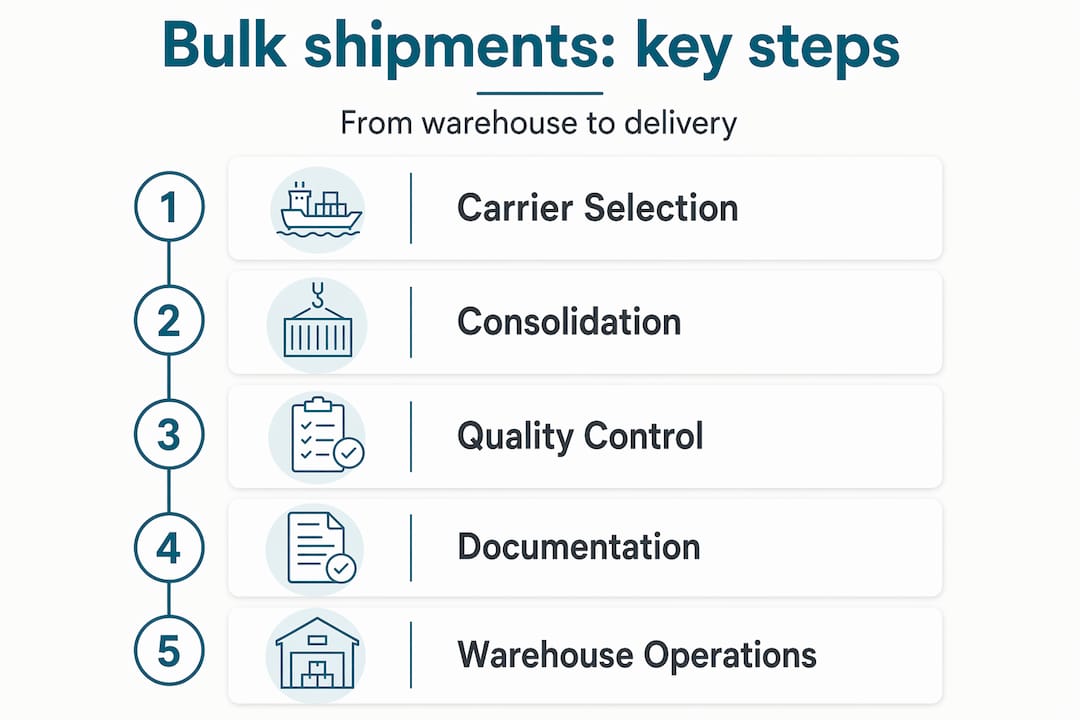
- Best practices for handling bulk shipments efficiently
- Quality control and risk in bulk cargo management
- Managing cost drivers: demurrage, freight class, and negotiation
- Warehouse and fulfillment operations at bulk scale
- My honest take after years of watching bulk shipping go wrong
- How Or-ner helps you scale bulk shipping without the chaos
- FAQ
Key takeaways
| Point | Details |
|---|---|
| Bulk shipping needs different processes | Managing bulk freight requires specific equipment, carrier terms, and workflows that small-parcel systems can’t handle. |
| Consolidation cuts costs significantly | Freight consolidation reduces inbound freight costs by 15 to 35% annually when applied consistently. |
| Documentation protects your cargo claims | Immediate photographic evidence and joint surveys within 48 to 72 hours are critical for successful damage claims. |
| Demurrage and detention are preventable | Verifying carrier invoices against terminal timestamps and contract free days eliminates billing errors before you pay. |
| Technology reduces costly manual errors | Automating EDI validation and using a TMS prevents classification errors that can push a $500 shipment cost to $1,200. |
Handling bulk shipments: what makes them fundamentally different
The term “bulk shipment” covers more than one scenario, and confusing them causes real operational problems. Bulk cargo broadly refers to freight shipped in large, undivided quantities. But the category breaks down into several distinct types, each with different handling requirements.
Dry bulk includes commodities like grain, coal, and raw materials shipped loose without packaging. Liquid bulk covers petroleum, chemicals, and food-grade liquids in tankers. Break bulk refers to cargo loaded individually rather than in containers, including large machinery and bundled materials. For ecommerce and wholesale operations, the most relevant category is palletized bulk, which includes large volumes of consumer goods, retail inventory, or industrial products stacked on pallets and moved as consolidated loads.
These distinctions matter because they dictate what equipment you need, what carriers you can use, and what regulations apply. Here’s how the main shipment types compare:
| Shipment type | Equipment needed | Key challenge | Common freight term |
|---|---|---|---|
| Dry bulk | Bulk carriers, silos | Weather exposure, contamination | Charter party |
| Liquid bulk | Tankers, ISO tanks | Spill risk, temperature control | BOL, CoA |
| Break bulk | Cranes, flatbeds | Loading time, cargo security | Stowage plan |
| Palletized bulk | Forklifts, dock levelers | Pallet integrity, stack weight | FTL, LTL |
| Parcel shipments | Conveyors, sorters | Volume caps, per-unit cost | Manifest, tracking ID |
Understanding where your freight fits determines your carrier selection, insurance requirements, and facility needs. An FTL (full truckload) shipment moves a dedicated truck from origin to destination. LTL (less than truckload) consolidates your cargo with other shippers’ freight, which lowers cost but adds handling touchpoints and risk. Demurrage and detention are two fees you’ll encounter constantly: demurrage covers containers held inside terminals beyond the free period, while detention applies to equipment held outside terminals, such as a chassis sitting at your warehouse dock.
Best practices for handling bulk shipments efficiently
Once you understand your cargo type, the work shifts to process. This is where most sellers leave the most money on the table.
-
Set freight consolidation thresholds. Don’t ship at the first order. Define a volume threshold, say a full pallet or a minimum cubic footage, before triggering a shipment. Advanced freight consolidation uses time windows and route analytics to batch orders into optimal shipment sizes, reducing per-unit freight costs and spreading fixed carrier fees. Load optimization software alone can cut costs by 15 to 20% immediately after implementation.
-
Use zone skipping for cross-regional bulk moves. Zone skipping bypasses regional carrier hubs and ships directly to a destination zone’s distribution center. For heavy palletized goods moving across multiple shipping zones, this reduces both transit time and per-zone handling fees. AI-driven consolidation analytics maximize shipment density and make zone skipping practical at ecommerce scale.
-
Implement a Transportation Management System. A TMS gives you rate shopping, carrier selection, load planning, and real-time tracking in one place. Without it, your team is manually comparing rates and booking shipments, which introduces errors and delays that compound at bulk volume.
-
Book with lead time, not urgency. Carriers price urgency. Booking bulk freight three to five days in advance instead of same-day typically yields better rates and gives you access to better equipment. Build your ordering cycles around freight schedules, not the reverse.
-
Select ports based on clearance speed. Ports with high automation can clear imports in under three days, while inefficient ports take 21 or more days. That gap alone can break your inventory planning.
Pro Tip: When picking carriers for palletized bulk, request their damage claim ratio before committing. Carriers rarely advertise this figure, but it tells you more about their freight handling culture than any sales pitch will.
For more on structuring your approach, the freight consolidation guide at Or-ner covers consolidation strategy at a practical level.
Quality control and risk in bulk cargo management
Cargo damage at bulk scale is expensive and surprisingly common. The solution is not hoping your carrier handles freight carefully. It’s building a systematic quality control process before the container leaves.
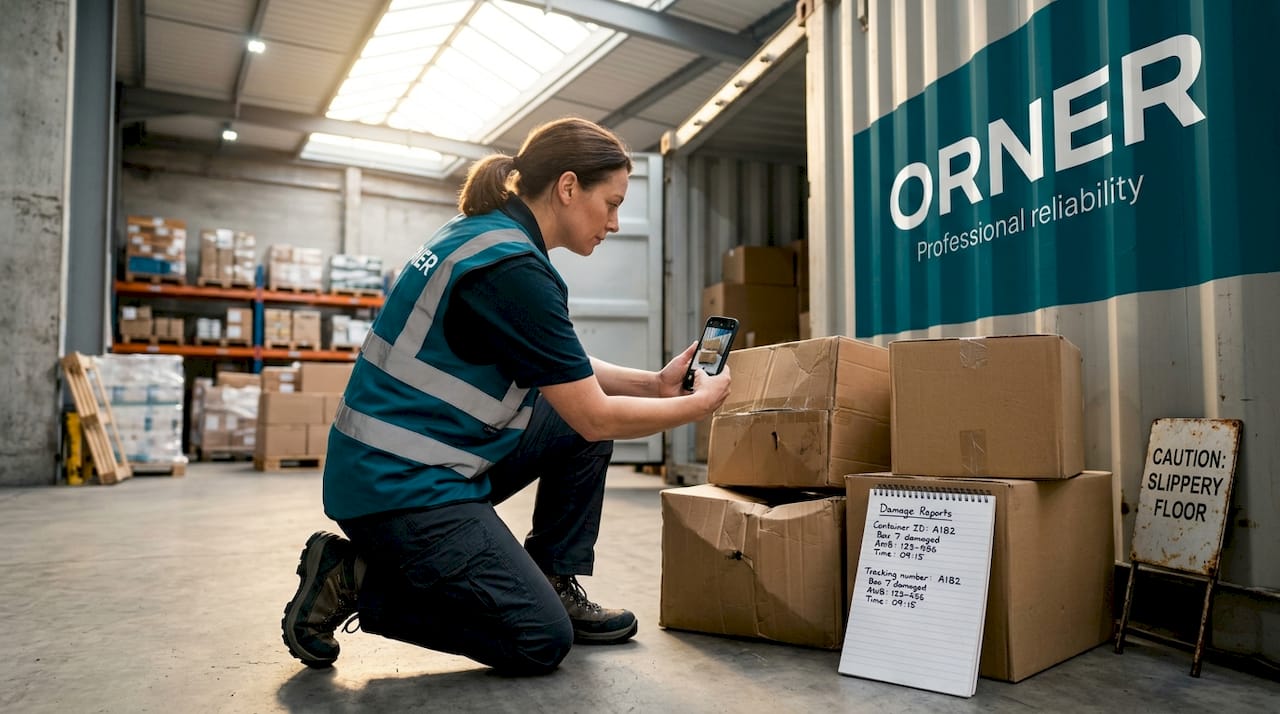
The first layer is container inspection before loading. A proper pre-load inspection checks for structural damage, moisture, odors, and contamination. The light test and sniff test are two non-obvious but critical steps: the light test involves checking a sealed container for pinhole light leaks that indicate structural breaches, while the sniff test detects chemical or mold odors that will damage food, textiles, and electronics. Skipping these steps has caused entire shipments to be declared unsalvageable.
Best practices for loading and packaging include:
- Use corner boards and edge protectors on all pallet stacks.
- Never mix heavy and fragile items on the same pallet without dividers.
- Label every pallet with weight, orientation, and handling instructions.
- Photograph every stage: before loading, during loading, and container seal placement.
- Record the container seal number yourself rather than relying solely on the bill of lading.
When damage does occur despite precautions, your claim lives or dies on documentation. A joint survey within 48 to 72 hours of cargo receipt, combined with immediate photos and preserved original packaging, is the foundation of any successful claim. Carriers will push back with defenses like “improper packaging” or “inherent vice.” Your photographic evidence and pre-shipment condition records are what counter those arguments.
Pro Tip: Don’t sign a clean bill of lading if you notice any visible damage at delivery. Write “subject to inspection” or note the damage directly on the delivery receipt. Once you sign clean, you’ve weakened your claim position significantly.
Documentation is your best defense in damage disputes. Every extra step you take before and during loading pays dividends if a carrier tries to deny your claim.
Managing cost drivers: demurrage, freight class, and negotiation
The biggest surprise costs in bulk freight aren’t the freight rates. They’re the fees that accumulate when processes break down.
Demurrage and detention are the most common. Demurrage applies to containers held inside terminals beyond the free time window, typically three to five days. Detention applies to equipment, usually a chassis or container, held outside the terminal after the free period, which ranges from four to seven days. Demurrage runs $75 to $250 per day per TEU. Detention runs $50 to $200 per day. Trucking detention adds $35 to $50 per hour after one to two free hours.
The critical rule here: never pay a demurrage or detention invoice without cross-verifying the terminal gate-in and gate-out timestamps against your appointment logs and the contractual free days in your carrier agreement. Billing errors are common, and carriers frequently bill incorrectly. Disputing those charges before payment is far easier than recovering money you’ve already paid.
Freight classification is equally consequential. In the US, the National Motor Freight Classification system assigns freight classes based on density, stowage, handling, and liability. Misclassifying freight, even accidentally, can escalate a shipment cost from $500 to $1,200 due to reclassification penalties. Audit your freight classifications annually and verify them against your carriers’ tariff sheets.
For rate negotiation, these tactics work:
- Commit to volume in writing. Even informal volume letters give carriers justification to offer better rates.
- Negotiate accessorial fees separately from base rates. Fees for liftgate service, inside delivery, and residential surcharges add up and are often negotiable.
- Use multiple carrier quotes even if you have a preferred vendor. Competitive pressure keeps pricing honest.
- Ask for extended free time during peak season contracts. Getting an extra two days of free time on demurrage is often easier than negotiating rate reductions and worth more in practice.
Selecting better ports also helps. Port congestion surged dramatically in early 2026, with some ports reporting wait times up to 300% longer year over year. Vancouver saw a 306% increase in vessel wait times. Building alternate port options into your logistics planning reduces exposure to congestion-driven delays and demurrage accumulation.
Warehouse and fulfillment operations at bulk scale
Your internal operations have to match the demands of bulk volume. Most fulfillment centers designed for parcel or small-order ecommerce will break under the weight of bulk freight without intentional layout and process adjustments.
The differences between B2C and B2B bulk fulfillment are significant. B2C fulfillment involves picking individual units for consumer orders. B2B bulk fulfillment moves full cases, full pallets, and freight-level quantities. The dock management requirements, fork equipment, and staff workflows are simply not the same. Key adjustments include:
- Design dedicated pallet staging zones near receiving docks to avoid congestion during unloading.
- Implement batch picking for bulk orders instead of unit-level pick-and-pack processes.
- Use barcode scanning at every transfer point: receiving, putaway, picking, and staging.
- Map your warehouse layout to minimize travel distance for high-frequency bulk SKUs.
- Position fast-moving bulk inventory closest to dock doors to cut pick-to-dock time.
Automating EDI order validation is one of the highest-return investments a bulk fulfillment operation can make. Manual EDI error fixes cost $15 to $25 each. At bulk order volumes, those costs accumulate fast. Automating validation catches formatting errors and order discrepancies before they enter the fulfillment workflow, reducing rework and avoiding chargebacks from retail partners.
For tips on cutting additional costs inside your freight operations, Or-ner’s resource on freight shipping cost reduction covers practical tactics applicable to bulk operations.
My honest take after years of watching bulk shipping go wrong
I’ve watched ecommerce sellers scale their order volumes and immediately assume their existing courier setup would absorb the change. It doesn’t. It never does. The mindset that “more orders just means more of the same” is the single most expensive assumption in this industry.
What I’ve found, consistently, is that the sellers who handle bulk freight well invest in process redesign before scaling volume. They don’t wait until their dock is a chaos of unlabeled pallets and missed pickup windows. They rebuild the workflow first, then increase throughput.
Documentation is the discipline that separates competent bulk shippers from constant claimants. I’ve seen companies recover tens of thousands of dollars in damage claims purely because someone took thirty minutes to photograph cargo at the loading dock. I’ve also seen companies lose every claim they filed because they couldn’t produce a single timestamped image.
My honest advice is this: treat container loading inspections like insurance premiums. They cost time and feel optional when everything is going fine. But the one time a container arrives with moisture damage across a full pallet load, that inspection checklist is the difference between a paid claim and a total loss. Teams that skip process redesign when scaling bulk volume don’t just move slower. They create recurring losses that compound across every shipment cycle.
Smarter carrier selection and freight consolidation aren’t theory. They’re where real savings happen, often 20 to 30% cost reductions that directly improve margin on every shipment.
— Maayan
How Or-ner helps you scale bulk shipping without the chaos
Or-ner is built for exactly the operational complexity that bulk freight creates. Whether you’re an ecommerce seller moving your first full truckload or a logistics team managing multi-lane freight programs, Or-ner’s reliable courier services handle heavy and bulk shipments with real-time tracking, freight booking, and customs clearance built in. For smaller businesses scaling into bulk operations, Or-ner’s small business courier solutions offer a practical on-ramp with flexible volume commitments. The platform also supports order fulfillment workflows designed for bulk and B2B scale, with EDI integration and inventory visibility that reduce the errors that cost you money.
FAQ
What is the difference between bulk and break bulk shipping?
Bulk shipping moves unpackaged commodities like grain or liquids in large quantities. Break bulk refers to cargo that is too large for standard containers and must be loaded individually, such as machinery or lumber bundles.
How do I reduce demurrage fees on bulk shipments?
Track your free time allowances carefully and always cross-verify carrier invoices against terminal timestamps and your contractual terms. Billing errors are common, and disputing incorrect charges before payment is far simpler than recovering overpayments.
What documentation do I need to file a cargo damage claim?
You need timestamped photographs taken immediately at delivery, original packaging preserved, and a joint survey conducted within 48 to 72 hours of receipt. These three elements are your strongest defense against carrier denials.
How much can freight consolidation save on bulk shipments?
Freight consolidation typically reduces inbound freight costs by 15 to 35% annually. Load optimization software alone often delivers 15 to 20% savings within the first months of implementation.
Why does freight classification matter for bulk shipments?
Misclassifying freight can increase your shipment cost from $500 to $1,200 due to reclassification penalties. Auditing your National Motor Freight Classification codes annually keeps your billing accurate and prevents carrier disputes.