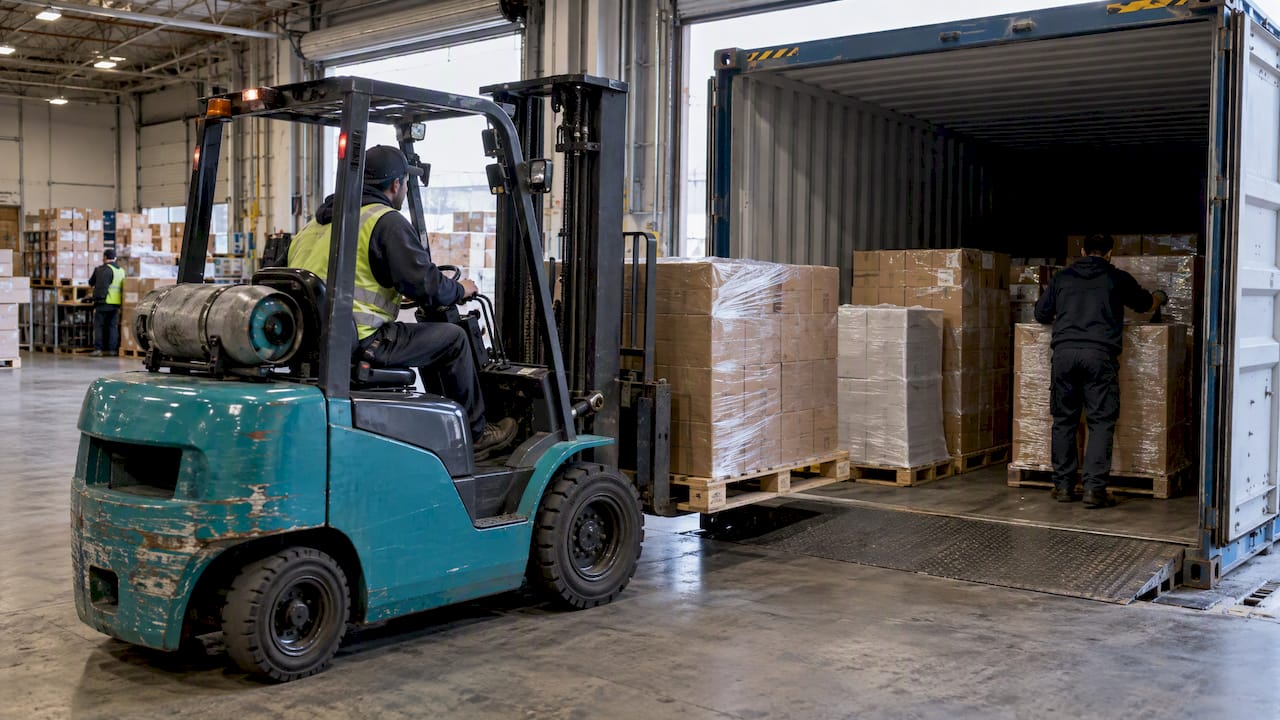
Enterprise-grade world parcel tracking is carrier-agnostic, real-time shipment visibility that covers every milestone, exception, predictive ETA, and condition data point across your cross-border network. It is not a consumer lookup tool. For ecommerce sellers, wholesalers, and manufacturers, it is the operational control layer between your TMS and your customer promise. The carrier-agnostic visibility market is projected to reach $1.4 billion in 2026 and $4.6 billion by 2036, driven by API normalization and predictive ETA engines.
Your single most important next action: map your highest-risk lanes and launch a focused single-lane pilot that combines carrier-agnostic APIs with on-cargo sensors.
- Define scope: identify lanes by exception rate, shipment value, or regulatory sensitivity (e.g., FDA 21 CFR Part 11 for pharma)
- Select a carrier-agnostic API: one integration point covering all carriers on that lane
- Instrument cargo: add GPS/sensor trackers for condition and location continuity during handoffs
- Set KPIs before go-live: OTD rate, exceptions per 1,000 shipments, time-to-resolution, dwell time
- Evaluate Or-ner as an implementation-ready option covering multi-mode tracking, customs, and warehousing
Key Takeaways
Enterprise-grade world parcel tracking requires carrier-agnostic APIs, normalized event data, on-cargo sensors, and defined KPI thresholds before any automation is trustworthy.
| Point | Details |
|---|---|
| Start with a single-lane pilot | Run 30–90 days on your highest-risk lane to validate data quality before scaling. |
| Require API normalization and reliability scoring | No automation is trustworthy until carrier data is scored for completeness and accuracy by lane. |
| Set KPIs before go-live | OTD, exceptions per 1,000 shipments, time-to-resolution, and dwell time are the four baseline metrics. |
| Choose control tower only after clean data | Centralizing poor TMS/WMS data amplifies bad decisions; fix master data first. |
| Or-ner as implementation path | Or-ner covers multi-mode tracking, customs clearance, warehousing, and carrier onboarding under one platform. |
Table of Contents
- Why does global parcel visibility matter for your bottom line?
- What features must a world-parcel-tracking system include?
- Visibility platform vs. control tower: which one fits your operation?
- What systems do you need to connect for tracking shipments online?
- How should you phase your implementation?
- How do you evaluate and select a vendor?
- How does Or-ner deliver on these requirements?
- The near future of parcel visibility and orchestration
- Or-ner’s pilot program for high-risk lanes
- Sources
- FAQ
Why does global parcel visibility matter for your bottom line?
Visibility gaps cost money in ways that rarely appear on a single line item. Demurrage charges accumulate when a container sits undetected at a port. Chargebacks hit when a retailer’s OTIF window closes before your team even knows the shipment is late. Stockouts follow when replenishment signals depend on arrival data that never arrived.
The KPIs that tie visibility to financial outcomes are specific:
- On-time delivery (OTD/OTIF): the primary SLA metric for retail and wholesale accounts
- Exceptions per 1,000 shipments: baseline for measuring improvement after a pilot
- Time-to-resolution: how fast your team closes an exception once detected
- Dwell time: time cargo spends stationary at a node, often a leading indicator of delay
- Inventory days of cover: how visibility gaps translate into safety-stock costs
Unified visibility moves teams from manual reconciliation to action, but data trust is the barrier. Operators need reliability scoring by carrier and lane before they can automate responses rather than just monitor them.
Pro Tip: Start your pilot on a lane where one prevented incident (a missed OTIF penalty, a damaged high-value shipment) covers the platform cost. Electronics and regulated pharma lanes typically qualify.
What features must a world-parcel-tracking system include?
A credible global parcel tracking platform delivers eight core capabilities. Each one depends on specific data inputs.
| Feature | Primary data inputs | Expected latency |
|---|---|---|
| Carrier-agnostic API ingestion | Carrier milestone APIs, EDI feeds | Near real-time (seconds to minutes) |
| Normalized event model | All carrier feeds mapped to a common schema | Batch or streaming |
| Predictive ETA | Historical lane data, carrier performance, weather | Updated per milestone |
| Exception detection and alerting | Normalized events vs. SLA rules | Sub-minute on webhook push |
| Condition monitoring | IoT/GPS sensors (temp, shock, humidity) | Continuous; backfill on reconnect |
| SLA monitoring and audit logs | ERP order data, carrier ETAs, delivery scans | Per event |
| Reconciliation | WMS scan events, carrier POD, ERP receipts | End-of-leg |
| Webhooks and real-time push | Platform event bus to TMS/ERP endpoints | Sub-second |
On-cargo multi-sensor trackers fill the gaps that carrier milestone data misses, particularly during mode changes and carrier handoffs where scan events drop entirely. For regulated lanes, continuous condition records from these devices are the audit trail.
A carrier-agnostic API covering thousands of global carriers via a single integration cuts the engineering cost of onboarding new carriers from weeks to hours. Require an API normalization engine and reliability scoring from any vendor before trusting automated alerts.
Pro Tip: *Ask vendors for their carrier coverage matrix by geography and mode, not just a headline carrier count.
Visibility platform vs. control tower: which one fits your operation?
A visibility platform lets you see what is happening. A control tower lets you see, decide, and act, with people, processes, and analytics sitting on top of your execution systems.
| Dimension | Visibility platform | Control tower |
|---|---|---|
| Primary output | Real-time dashboards, alerts, notifications | Decisions, recommendations, automated responses |
| Who runs it | Logistics ops team | Dedicated control team or managed service |
| Data maturity required | Moderate (normalized carrier feeds) | High (clean TMS, WMS, telematics, visibility layer) |
| IT investment | Lower; API integration | Higher; analytics, workflow, scenario modeling |
| Best adopted when | You need transparency across carriers | You need orchestration and continuous improvement |
Choose a visibility platform when your team lacks a unified view across carriers. Move to a control tower when you have clean data, defined exception workflows, and enough shipment volume to justify the analytics investment.
The critical caution: buying a control tower before fixing your TMS and master data centralizes bad decisions faster. Clean and standardize your TMS data first.
Pro Tip: Outsourced IT managed services are a practical path to close analytics and integration gaps without hiring a full control-tower team internally.
What systems do you need to connect for tracking shipments online?
Integration scope determines whether your visibility layer works or just looks good in a demo. Core systems to connect:
- TMS — order and shipment records, planned routes, carrier assignments
- ERP — purchase orders, inventory positions, financial SLAs
- WMS — warehouse scan events, inbound receipts, outbound confirmations
- Carrier APIs or carrier-agnostic API — milestone events, POD, exception codes
- EDI endpoints — where carriers or 3PLs still require EDI 214/856
- Telematics/ELD — truck location and driver hours for over-the-road legs
- IoT/sensor platforms — on-cargo condition and location data
- Customs/manifest feeds — CBP entry data, ACE filings, broker updates
- Customer-facing order systems — to push status updates downstream
For integration patterns, prefer webhook push over polling wherever the carrier or sensor platform supports it. Real-time webhooks reduce polling overhead and cut event latency from minutes to seconds. Add message queuing for high-volume lanes to handle burst traffic without dropping events.
Carrier onboarding checklist for each new carrier:
- Obtain API credentials and authenticate via OAuth 2.0
- Request sample payloads for all event types you need
- Run sandbox tests against your normalization engine
- Confirm latency SLA and error-rate tolerance
- Validate TLS encryption in transit and data-at-rest encryption
- Document PII handling and data retention policy per US CBP and state requirements
How should you phase your implementation?
Run a focused pilot first. Three months is enough to validate data quality, alert accuracy, and team adoption before committing to full network rollout.
- Discovery and data mapping (weeks 1–4): audit TMS/ERP data quality, map carrier coverage gaps, identify pilot lane, define KPIs and SLA thresholds
- Pilot instrumentation (weeks 4–8): onboard carrier APIs for the pilot lane, deploy on-cargo sensors, configure normalization and reliability scoring
- Platform integration and alerts (weeks 8–12): connect TMS/ERP webhooks, build exception alerting rules, train ops team on dashboard and escalation paths
- Automation rules and escalation (months 4–6): add automated exception routing, integrate customer notification triggers, set up audit logs
- Scale and continuous improvement (months 6–18): roll out lane by lane, refine ETA models with accumulated data, expand to control-tower analytics when data quality thresholds are met
Gating criteria to move from pilot to scale:
- Data completeness above 95% for the pilot lane
- Exception alert false-positive rate below 5%
- Manual chase time reduced by a measurable margin vs. baseline
- SLA adherence documented for at least 30 days of production traffic
For real-time data implementation guidance specific to webhooks and API flows, Or-ner’s ops guide covers the technical setup in detail.
How do you evaluate and select a vendor?
Selection checklist, in priority order:
- Carrier coverage matrix by geography, mode, and lane (verify against your actual network)
- API uptime SLA of 99.9% or higher, with documented incident history
- Webhook latency under 60 seconds for milestone events
- Normalization approach: ask for the event schema and how edge cases are handled
- Historical data access: at least 12 months for ETA model training
- ETA accuracy methodology: ask for accuracy rates by lane and mode, not just averages
- Security certifications: SOC 2 Type II minimum for US enterprise buyers
- Integration support: dedicated onboarding engineer and documented carrier onboarding time
Vendor questions for demos and POCs: request sample payloads for your specific carriers, ask for error rates by carrier, get reference customers operating your lane types, and confirm onboarding timeline in writing.
For cost models, the carrier-agnostic visibility market has moved toward SaaS/cloud deployment. Pricing structures typically fall into three buckets: subscription (fixed monthly fee by module), per-tracking (variable cost that scales with volume), and tiered (bands by shipment count). At scale, per-tracking fees compound quickly. Total cost of ownership includes integration engineering, carrier onboarding labor, ongoing data ops, and any managed-service fees for control-tower analytics. For a detailed shipment tracking software comparison, Or-ner’s guide covers evaluation criteria across platform types.
How does Or-ner deliver on these requirements?
Or-ner provides a multi-mode logistics platform built for ecommerce sellers, wholesalers, and manufacturers operating cross-border. Its capabilities map directly to the buyer criteria above.
| Buyer priority | Or-ner capability |
|---|---|
| Carrier-agnostic ingestion | Multi-mode coverage: ocean, air, and land |
| Real-time tracking | Live shipment status across modes |
| TMS/ERP integration readiness | Platform connectors and API support |
| Customs and compliance | Customs clearance and documentation services |
| Warehousing and fulfillment | Global warehouse and fulfillment center network |
| Ecommerce platform integration | Amazon and major ecommerce operator support |
Or-ner handles freight booking, courier and last-mile delivery, cross-border logistics, customs clearance, and warehousing under one platform, giving ecommerce teams a single integration point for end-to-end shipment visibility rather than stitching together separate vendor contracts for each function.
The near future of parcel visibility and orchestration
Visibility will shift from milestone dashboards to predictive, prescriptive orchestration. Platforms will not just show a late shipment; they will suggest the reroute, calculate the cost delta, and, for routine exceptions, execute the remedy automatically.
Three trends are accelerating this shift. API standardization is reducing the normalization burden, making it cheaper to add carriers and modes. Webhook-first architectures are cutting event latency from minutes to seconds across the industry. Machine learning ETA models are improving as platforms accumulate lane-specific historical data, particularly for cross-border lanes where customs dwell time is the hardest variable to predict.
On-cargo sensors are becoming the data source that fills the gaps no carrier API covers, especially during multimodal handoffs. For US shippers running ocean-to-truck lanes, sensor continuity during the port-to-warehouse leg is where the most visibility value sits today.
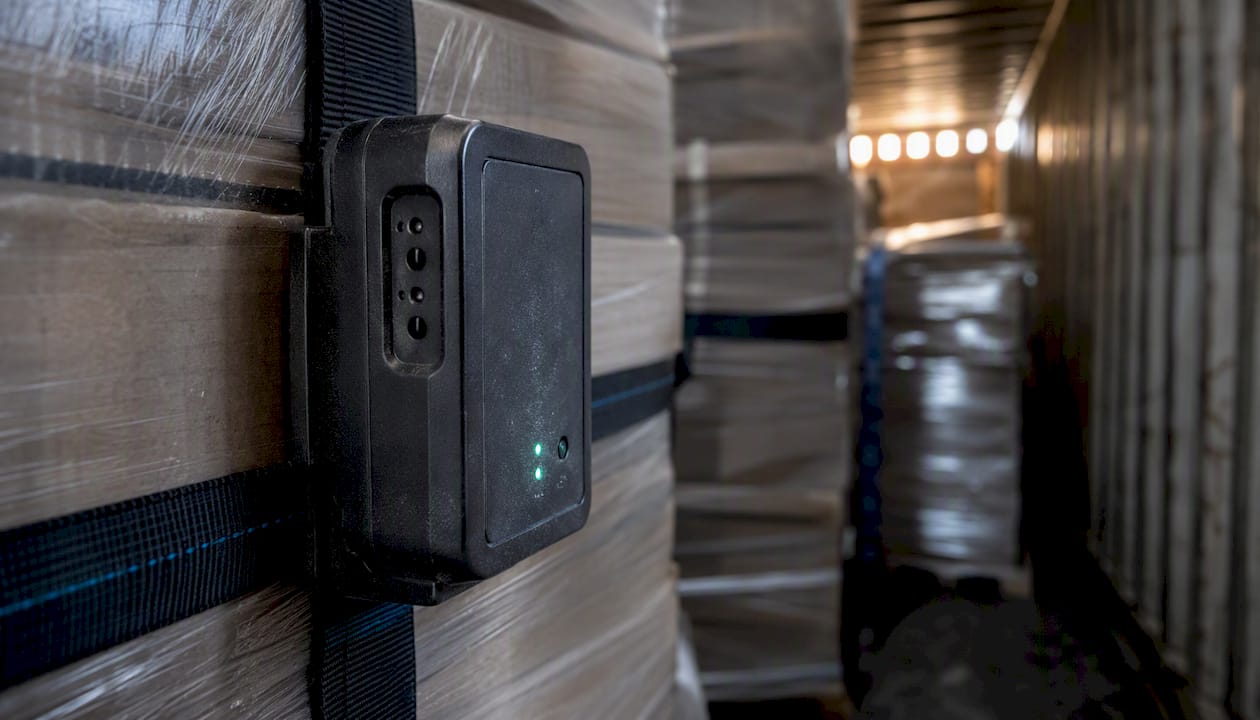
The honest take on automation: operators earn trust before they automate. Reliability scoring by carrier and lane is the mechanism. Start with alerts, validate accuracy over 60–90 days, then graduate to automated exception routing. Skipping that sequence is how false positives erode team confidence in the platform.
Or-ner’s pilot program for high-risk lanes
Cross-border visibility gaps are expensive to discover after the fact. Or-ner’s global logistics platform gives ecommerce teams a direct path from zero visibility to a live, instrumented pilot on their highest-risk lane, with carrier coverage checks, API and webhook setup, and SLA commitments included.
The pilot runs 30–90 days on a single lane. Or-ner handles carrier onboarding, normalization, and exception alerting configuration. You get a defined success metric set before day one and a scale plan ready when the pilot clears its gating criteria. For teams evaluating cross-border logistics options alongside tracking, Or-ner covers both under one engagement. Request a pilot scoping call at Or-ner.
Sources
For teams briefing engineering or procurement, these resources cover the technical and compliance dimensions of international package tracking and control-tower implementation:
- Carrier-Agnostic Parcel and Freight Visibility Aggregation Market to Reach USD 4.6 Billion by 2036 as API Normalization Eliminates Multi-Carrier Data Fragmentation
- Transport Control Tower vs TMS Explained
- Control Tower vs. Visibility Platform
- Multimodal Shipment Visibility: Tracking Cargo Across Carriers, Modes, and Handoffs | Tive
- Unified Visibility Platforms Push Past Dashboards
US cross-border compliance checklist:
FAQ
What is world parcel tracking in an enterprise context?
Enterprise world parcel tracking is carrier-agnostic, real-time visibility across every shipment milestone, exception, and condition data point in a cross-border network, distinct from consumer package lookup tools.
How long does a tracking visibility pilot typically take?
A focused single-lane pilot runs 1–3 months, covering carrier API onboarding, normalization setup, exception alerting, and KPI validation before scaling to additional lanes.
What is the difference between a visibility platform and a control tower?
A visibility platform aggregates and displays shipment data; a control tower adds analytics, workflows, and decision support so teams can act on that data, not just observe it.
What KPIs should I set before launching a pilot?
Set four baseline KPIs before go-live: on-time delivery rate, exceptions per 1,000 shipments, time-to-resolution for exceptions, and dwell time at key nodes.
Can Or-ner support multi-mode cross-border tracking?
Or-ner covers ocean, air, and land modes with real-time tracking, customs clearance, and warehousing, making it a single-platform option for ecommerce sellers running cross-border shipments.