Supply chain visibility sounds like an ordinary business term but it actually holds massive power. Most people overlook how it can transform entire operations yet companies with advanced supply chain visibility can cut operational risks by up to 60 percent. Instead of just tracking shipments this shifts businesses into a whole new world of real-time intelligence where quick decisions and strategic moves unlock a serious edge.
Table of Contents
- Defining Supply Chain Visibility: An Essential Concept
- The Importance of Supply Chain Visibility in Business
- Key Elements That Influence Supply Chain Visibility
- How Technology Enhances Supply Chain Visibility
- The Impact of Supply Chain Visibility on Decision Making
Quick Summary
| Takeaway | Explanation |
|---|---|
| Supply chain visibility is crucial for tracking. | It allows businesses to observe product and information flow in real-time across the supply network, aiding management. |
| Improved customer experiences through transparency. | Accurate tracking and proactive communication enhance customer satisfaction and differentiate businesses in competitive markets. |
| Data-driven decision making minimizes risks. | Organizations can identify potential disruptions and respond swiftly, transforming risk management and operational effectiveness. |
| Invest in technology for integration. | Robust digital platforms and automation are essential for seamless information exchange, enabling effective supply chain visibility. |
| Collaboration enhances supply chain resilience. | Establishing trust-based partnerships with stakeholders boosts operational transparency and allows adaptive responses to market changes. |
Defining Supply Chain Visibility: An Essential Concept
Supply chain visibility represents a critical strategic capability that enables businesses to track and understand the intricate movement of products, components, and information across their entire supply network. At its core, supply chain visibility transforms complex logistics processes into transparent, manageable systems that provide real-time insights and actionable intelligence.
The Fundamental Components of Supply Chain Visibility
Supply chain visibility encompasses several interconnected dimensions that collectively create a comprehensive view of product and information flows. The primary components include:
- Tracking and Monitoring: Continuous observation of product location, status, and movement throughout the supply chain
- Data Integration: Seamless collection and synchronization of information from multiple supply chain partners
- Real-Time Reporting: Instant access to current logistics and inventory status
According to the Global Supply Chain Institute at the University of Tennessee, supply chain visibility represents the ability to track order status and product flows from initial supplier interactions through final customer delivery. This comprehensive perspective allows organizations to anticipate potential disruptions, optimize inventory management, and enhance overall operational efficiency.
The table below summarizes the fundamental components of supply chain visibility, providing a concise definition and outlining the benefit each component delivers to supply chain operations.
| Component | Definition | Benefit |
|---|---|---|
| Tracking and Monitoring | Continuous observation of product location, status, and movement | Enables real-time alerts and quick problem response |
| Data Integration | Seamless collection and synchronization of information from multiple partners | Facilitates holistic decision making across the network |
| Real-Time Reporting | Instant access to current logistics and inventory status | Allows for agile management and proactive adjustments |
Why Visibility Matters in Modern Supply Chains
In today’s complex global marketplace, supply chain visibility has transformed from a competitive advantage to an operational necessity. Businesses face unprecedented challenges including geopolitical uncertainties, rapid technological changes, and increasingly sophisticated customer expectations. Effective supply chain visibility provides organizations with the strategic intelligence needed to navigate these complexities.
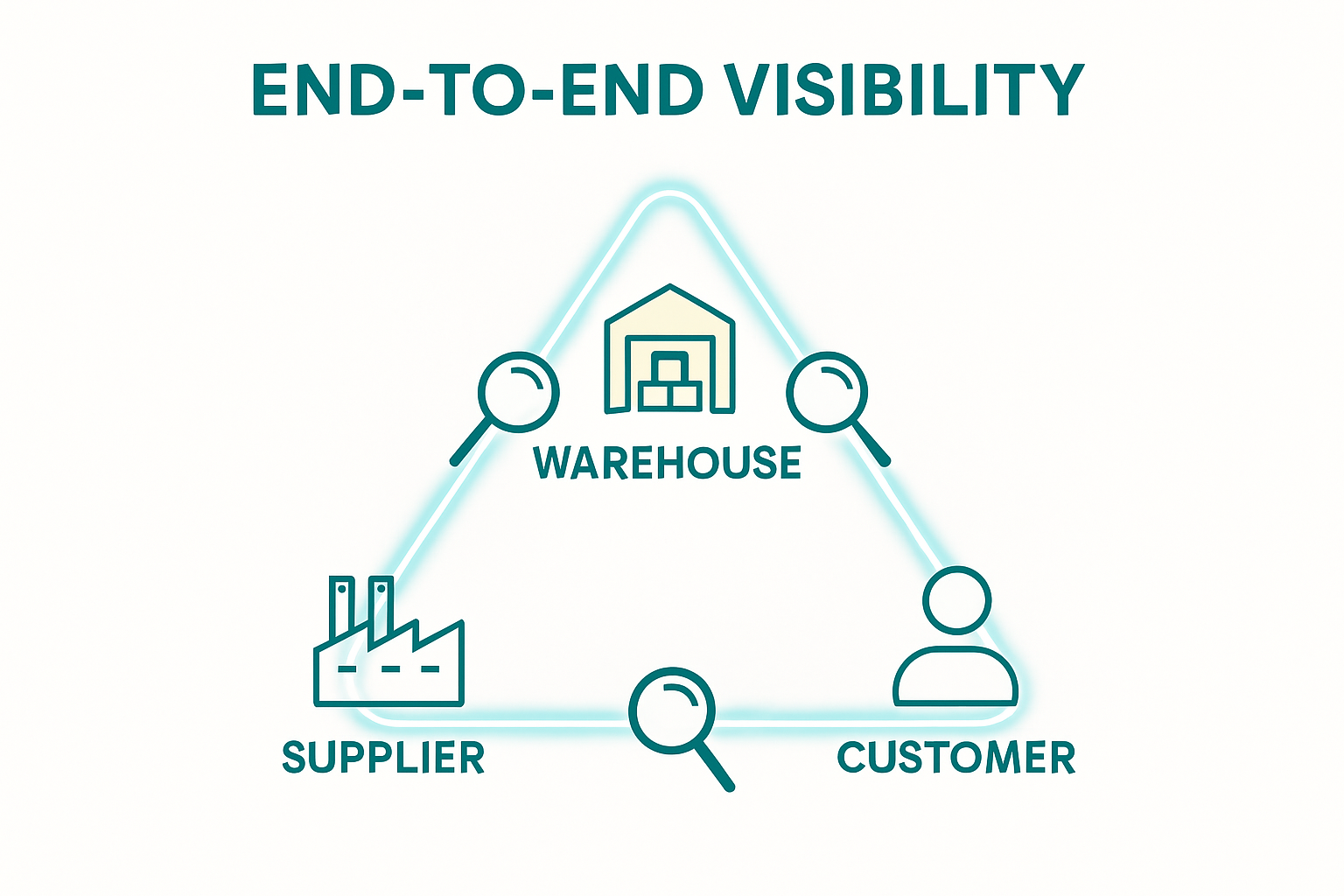
Key benefits of robust supply chain visibility include improved risk management, enhanced customer satisfaction, reduced operational costs, and the ability to make data-driven decisions quickly. By creating a transparent ecosystem where information flows seamlessly between suppliers, manufacturers, logistics providers, and end customers, companies can build more resilient and responsive supply networks.
This table compares how supply chain visibility impacts key areas of business, illustrating the differences between operations with limited versus advanced visibility.
| Area | Limited Visibility | Advanced Visibility |
|---|---|---|
| Risk Management | Slow response to disruptions | Rapid risk identification and mitigation |
| Customer Experience | Inaccurate or delayed information | Real-time, accurate updates and delivery estimates |
| Operational Efficiency | Higher costs due to inefficiencies | Streamlined processes and cost reduction |
| Decision Making | Reliant on incomplete or outdated data | Data-driven, proactive decision making |
| Competitive Advantage | Minimal differentiation in the marketplace | Enhanced brand trust and market leadership |

Ultimately, supply chain visibility is not just about tracking products but about creating an interconnected, intelligent system that transforms raw data into strategic insights, enabling businesses to stay agile and competitive in a rapidly evolving global marketplace.
The Importance of Supply Chain Visibility in Business
Supply chain visibility has emerged as a critical strategic differentiator for businesses seeking to navigate increasingly complex global markets. By providing unprecedented transparency and real-time insights, organizations can transform potential operational challenges into opportunities for innovation and efficiency.
Strategic Decision Making and Risk Management
In an era of unprecedented economic uncertainty, supply chain visibility enables businesses to make proactive, data-driven decisions. Companies with robust visibility systems can quickly identify and mitigate potential disruptions before they escalate. This strategic approach allows organizations to:
- Anticipate potential supply chain interruptions
- Rapidly respond to changing market conditions
- Optimize inventory management and resource allocation
- Reduce financial risks associated with unexpected logistics challenges
According to Seattle University’s Albers School of Business, enhanced supply chain visibility dramatically improves risk management capabilities and operational efficiency across multiple business dimensions.
Customer Experience and Competitive Advantage
Modern consumers demand transparency and real-time information about their products. Supply chain visibility directly translates into enhanced customer experiences by providing accurate tracking, reliable delivery estimates, and proactive communication. By implementing comprehensive freight forwarding solutions, businesses can create a competitive edge that distinguishes them in crowded marketplaces.
Businesses with superior supply chain visibility can offer:
- Precise delivery time predictions
- Immediate issue resolution
- Transparent product tracking
- Enhanced customer communication channels
The ability to provide instantaneous, accurate information represents more than a technical capability. It is a fundamental trust-building mechanism that connects businesses with their customers through transparency and reliability.
Ultimately, supply chain visibility is not merely a technological upgrade but a strategic imperative. It empowers businesses to transform complex logistics networks into streamlined, intelligent systems that adapt quickly, minimize risks, and consistently deliver exceptional value to customers.
Key Elements That Influence Supply Chain Visibility
Supply chain visibility is a multifaceted concept requiring strategic integration of technological, organizational, and collaborative elements. Successful implementation demands a holistic approach that addresses complex interconnections between different operational components.
Technological Infrastructure and Data Integration
Technological capabilities form the foundation of effective supply chain visibility. Modern businesses must invest in robust digital platforms that enable seamless information exchange and real-time tracking. Critical technological elements include:
- Advanced data management systems
- Cloud-based integration platforms
- Automated tracking and reporting tools
- Interoperable software solutions
According to Seattle University’s Albers School of Business, organizations must address data integration challenges to create truly transparent supply networks. This requires breaking down technological silos and implementing comprehensive just in time delivery strategies that support continuous information flow.
Collaborative Partnerships and Communication Protocols
Supply chain visibility extends beyond individual organizational boundaries. Successful implementation requires establishing trust-based partnerships with suppliers, logistics providers, and stakeholders. Key collaborative considerations include:
- Standardized communication protocols
- Shared performance metrics
- Transparent information sharing mechanisms
- Mutual technological compatibility
Effective collaboration transforms supply chains from transactional networks into intelligent, responsive ecosystems. By creating aligned incentives and establishing clear communication frameworks, businesses can dramatically enhance their operational transparency and efficiency.
This table outlines the main technological and collaborative elements that influence supply chain visibility, providing a quick reference to the roles each plays in supporting transparency.
| Element | Description | Role in Visibility |
|---|---|---|
| Technological Infrastructure | Robust digital platforms, data management, and automation tools | Enables efficient tracking and information exchange |
| Data Integration | Breaking down technological silos and synchronizing information | Promotes seamless communication across partners |
| Collaborative Partnerships | Trust-based relationships with suppliers and stakeholders | Facilitates transparency and joint problem solving |
| Communication Protocols | Standardized frameworks for information sharing | Ensures clear, timely, and accurate data transfer |
Ultimately, supply chain visibility represents a dynamic interplay between technological capabilities, organizational strategies, and human relationships. Companies that successfully integrate these elements can create adaptive, resilient supply networks capable of navigating complex global business landscapes.
How Technology Enhances Supply Chain Visibility
Technology serves as a transformative force in modern supply chain management, providing unprecedented capabilities to track, analyze, and optimize complex logistics networks. By leveraging advanced digital tools, businesses can create intelligent, responsive systems that transcend traditional operational limitations.
Digital Tracking and Real-Time Monitoring
Advanced technological solutions enable granular, instantaneous tracking of products throughout their entire journey. Modern supply chain technologies provide comprehensive visibility that goes far beyond traditional tracking methods.
Key technological innovations include:
- GPS and geolocation tracking systems
- Internet of Things (IoT) sensors
- RFID and QR code technologies
- Blockchain-based verification platforms
According to the University of the Cumberlands, emerging technologies like AI, IoT, and big data analytics are revolutionizing supply chain management by optimizing demand forecasting and enabling real-time operational insights.
The following table highlights key modern technologies that enhance supply chain visibility, summarizing each technology and its main contribution to supply chain operations.
| Technology | Main Contribution |
|---|---|
| GPS/Geolocation Tracking | Real-time location and movement updates for shipments |
| IoT Sensors | Automated data collection for condition and position monitoring |
| RFID/QR Code Systems | Instant inventory identification and movement documentation |
| Blockchain Verification | Secure, transparent transaction and shipment history |
| Advanced Data Analytics | Predictive insights and proactive disruption management |
Data Analytics and Predictive Intelligence
Technology transforms raw logistics data into strategic intelligence through sophisticated analytics platforms. Predictive algorithms can now anticipate potential disruptions, optimize routing, and recommend proactive interventions. By implementing comprehensive freight forwarding solutions, businesses gain powerful tools for strategic decision making.
Advanced data analytics platforms enable organizations to:
- Forecast potential supply chain disruptions
- Optimize inventory management
- Identify cost-saving opportunities
- Enhance overall operational efficiency
Ultimately, technological innovations are redefining supply chain visibility from a passive tracking mechanism into an active, intelligent system of continuous improvement and strategic insight. By embracing these digital transformations, businesses can create more resilient, efficient, and responsive supply networks that adapt quickly to changing market dynamics.
The Impact of Supply Chain Visibility on Decision Making
Supply chain visibility transforms decision making from reactive guesswork into proactive, data-driven strategy. By providing comprehensive insights into complex logistics networks, organizations can make more informed, timely, and strategic choices that directly impact operational efficiency and competitive positioning.
Strategic Risk Management and Mitigation
Comprehensive supply chain visibility enables leadership to anticipate and neutralize potential risks before they escalate into critical challenges. Decision makers gain unprecedented capabilities to analyze complex scenarios and develop preemptive strategies. The ability to rapidly assess and respond to emerging situations becomes a critical competitive advantage.
Key risk management capabilities include:
- Early detection of potential supply disruptions
- Real-time inventory and demand forecasting
- Comprehensive scenario planning
- Rapid intervention mechanisms
According to the MIT Sloan School of Management, organizations with robust supply chain visibility can reduce operational risks by up to 60%, creating more resilient and adaptable business models.
Financial Performance and Resource Allocation
Supply chain visibility directly influences financial decision making by providing granular insights into operational costs, resource utilization, and potential optimization opportunities. Executives can make precise, data-driven decisions about inventory management, supplier relationships, and strategic investments.
By implementing comprehensive freight forwarding solutions, businesses unlock critical financial decision-making capabilities such as:
- Identifying cost reduction opportunities
- Optimizing inventory investment
- Evaluating supplier performance
- Streamlining logistical expenditures
Ultimately, supply chain visibility transforms decision making from a process of limited information and speculation into a strategic discipline powered by real-time, actionable intelligence. Organizations that embrace this approach can create more agile, responsive, and competitive business models that adapt quickly to evolving market dynamics.
Gain Supply Chain Visibility That Powers Your Ecommerce Success
Are you struggling to achieve real-time clarity and control over your supply chain? The article highlighted how a lack of transparency can lead to unnecessary stockouts, delays, and risk, while superior visibility turns logistics complexity into a competitive advantage. If unpredictable shipments, scattered data, or unreliable partners are slowing your ecommerce or wholesale operations, you need a proactive solution you can trust.
Experience the peace of mind that only true reliable courier services deliver. At or-ner.com, we make modern supply chain visibility a reality for every ecommerce seller and brand. Our platform brings together freight booking, end-to-end tracking, warehouse management, and automated real-time updates across air, ocean, and land—with powerful analytics to inform your daily decisions. Stop missing opportunities and start building a smarter, more agile business today. Visit or-ner.com to unlock logistics clarity and growth. Your customers are counting on your next move.
Frequently Asked Questions
What is supply chain visibility?
Supply chain visibility is the ability to track and understand the movement of products, components, and information across the entire supply network, providing real-time insights and actionable intelligence.
Why is supply chain visibility important for businesses?
Supply chain visibility helps businesses improve risk management, enhance customer satisfaction, reduce operational costs, and enables data-driven decision-making, making it a necessary capability in today’s complex global marketplace.
How does technology enhance supply chain visibility?
Technology enhances supply chain visibility through digital tracking, real-time monitoring, and advanced data analytics, enabling organizations to optimize logistics operations and anticipate disruptions effectively.
What are the key components of supply chain visibility?
The key components of supply chain visibility include tracking and monitoring, data integration, and real-time reporting, all of which contribute to an organization’s ability to manage its supply network efficiently.