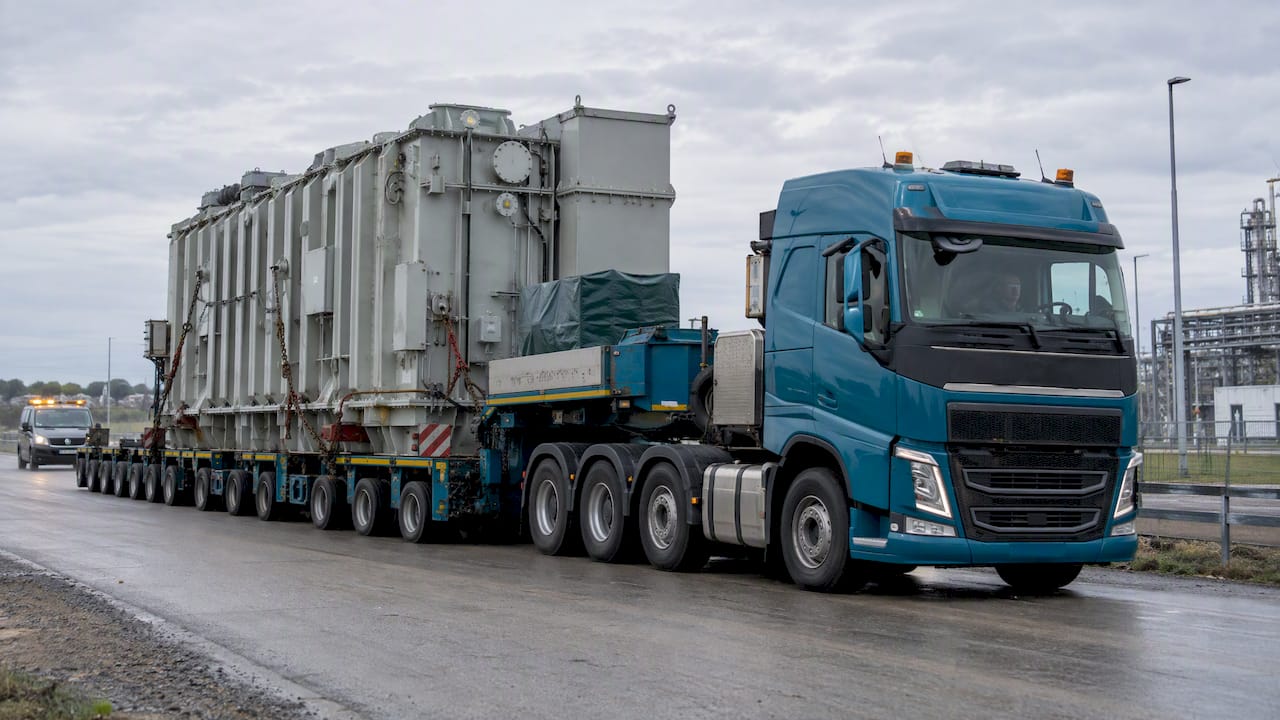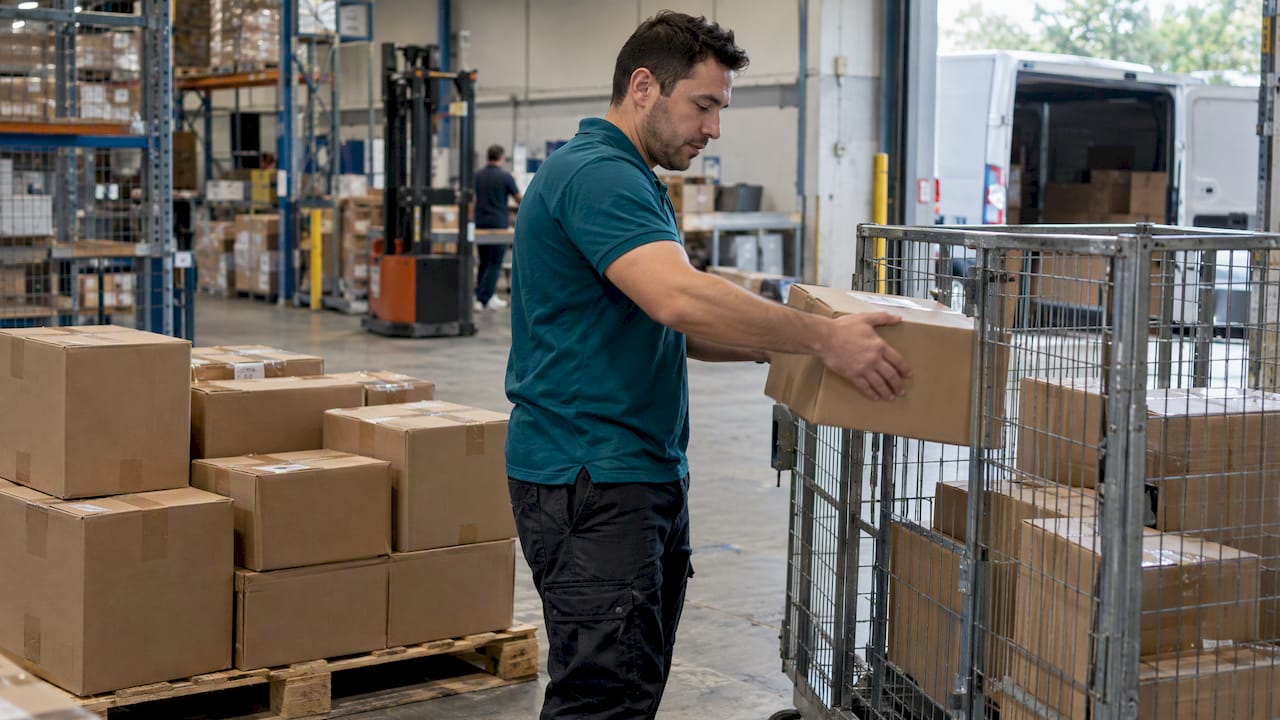
Freight forwarding shapes the backbone of almost every global supply chain and yet it often happens quietly in the background. You might think it is just about shipping boxes across oceans but hold on. Freight forwarders now manage about 90 percent of world trade shipments and their influence stretches far beyond paperwork and trucks. The real surprise is how these experts can slash shipping costs by up to 25 percent for businesses which completely reshapes what’s possible in international trade.
Table of Contents
- Understanding What Is Freight Forwarding
- How Freight Forwarding Works In Global Trade
- Key Benefits For Ecommerce And Manufacturers
- Choosing The Right Freight Forwarder In 2025
Quick Summary
| Takeaway | Explanation |
|---|---|
| The Role of Freight Forwarders | Freight forwarders act as intermediaries in global logistics, managing complex aspects of shipping, such as route selection, documentation, and customs clearance, enabling businesses to focus on their core operations. |
| Cost Benefits | Utilizing freight forwarding services can lead to cost savings of up to 25% through strategic negotiations and optimized routing, transforming unpredictable shipping costs into manageable expenses. |
| Regulatory Compliance | Freight forwarders ensure that businesses navigate complex international trade regulations and documentation requirements, minimizing legal complications and costly delays. |
| Scalability for Growth | Partnering with freight forwarders allows businesses to scale operations and explore new markets confidently, as they handle logistics complexities and provide insights into regional shipping challenges. |
| Selecting the Right Partner | Choosing a freight forwarder requires evaluating technological capabilities, compliance credentials, and specialized industry expertise to ensure effective and relevant logistics support. |
Understanding What Is Freight Forwarding
Freight forwarding is a critical logistics service that enables businesses to transport goods across international and domestic borders efficiently. At its core, freight forwarding acts as an intermediary between companies shipping products and various transportation services, managing the complex process of moving cargo from one point to another.
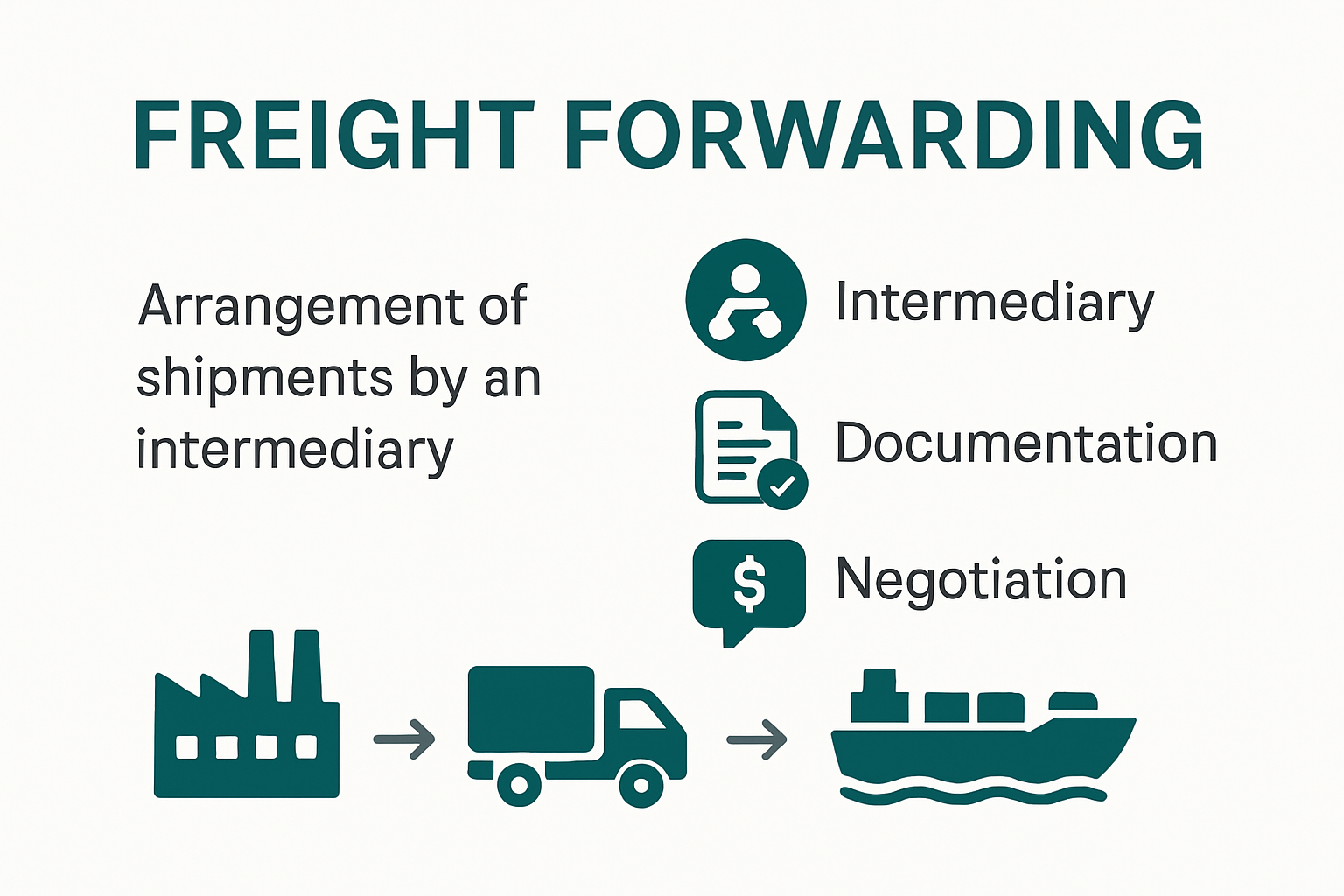
The Fundamental Role of Freight Forwarders
Freight forwarders are logistics experts who specialize in organizing shipments for businesses across multiple transportation modes. Their primary function involves coordinating the intricate details of international shipping, which includes selecting optimal transportation routes, negotiating rates with carriers, and managing documentation requirements. World Shipping Council reports that freight forwarders handle approximately 90% of global trade shipments, demonstrating their essential role in international commerce.
These professionals handle a wide range of critical tasks that go beyond simple transportation. They prepare and process shipping documentation, track inventory, provide customs clearance assistance, and recommend the most cost effective shipping strategies. By leveraging their extensive network of carriers and transportation providers, freight forwarders help businesses navigate the complex landscape of global logistics.
Complex Logistics Management
The complexity of freight forwarding extends far beyond basic transportation. Modern freight forwarders utilize advanced technology and strategic planning to optimize shipping routes, minimize transportation costs, and ensure cargo safety. International Air Transport Association indicates that successful freight forwarding requires expertise in multiple domains including international trade regulations, customs procedures, and multimodal transportation strategies.
Effective freight forwarding involves managing potential challenges such as customs clearance, import/export regulations, insurance requirements, and potential transportation disruptions. Freight forwarders must constantly adapt to changing global trade environments, technological advancements, and shifting geopolitical landscapes. They serve as critical problem solvers who can quickly adjust shipping strategies to accommodate unexpected challenges.
For businesses engaged in international trade, understanding what freight forwarding entails is crucial. It represents a sophisticated service that transforms complex global shipping challenges into streamlined, manageable processes. By partnering with experienced freight forwarders, companies can focus on their core business operations while trusting logistics experts to handle the intricate details of international cargo transportation.
The strategic value of freight forwarding cannot be overstated. It enables businesses of all sizes to expand their market reach, reduce shipping complexities, and optimize their global supply chain operations. From small ecommerce retailers to large multinational corporations, freight forwarding provides the critical infrastructure needed to move goods efficiently and reliably across international boundaries.
How Freight Forwarding Works in Global Trade
Freight forwarding is a sophisticated process that transforms complex international shipping challenges into seamless logistics operations. The workflow involves multiple intricate stages that require precision, expertise, and strategic coordination across global transportation networks.
Documentation and Regulatory Compliance
The initial phase of freight forwarding centers on comprehensive documentation management. Freight forwarders must meticulously prepare and process various critical documents required for international shipping. U.S. Department of Commerce emphasizes that forwarders act as representatives of exporters, ensuring accurate transaction information and maintaining strict regulatory compliance.
Key documentation includes commercial invoices, bills of lading, certificates of origin, export licenses, and customs declaration forms. Each document serves a specific purpose in validating the shipment’s contents, value, and legal compliance. Freight forwarders leverage their deep understanding of international trade regulations to navigate complex bureaucratic requirements, reducing potential delays or legal complications for businesses.
Below is a table outlining the essential documents managed by freight forwarders and their main purposes in international shipping:
| Document Type | Purpose |
|---|---|
| Commercial Invoice | Details the value, contents, and terms of the sale |
| Bill of Lading | Acts as a contract and receipt between shipper and carrier |
| Certificate of Origin | Specifies the country where the goods were produced |
| Export License | Authorizes export of restricted goods |
| Customs Declaration | Provides required info for customs clearance |
Transportation Route Optimization

Selecting the most efficient transportation route is a critical aspect of freight forwarding. Forwarders analyze multiple factors including cost, transit time, cargo type, and potential geopolitical risks. International Logistics Association reports that modern freight forwarders utilize advanced algorithmic tools to determine optimal shipping strategies across ocean, air, and land transportation modes.
The route selection process involves detailed analysis of carrier capabilities, transit times, potential bottlenecks, and cost effectiveness. Freight forwarders negotiate rates with multiple carriers, creating flexible shipping solutions that balance speed, reliability, and economic efficiency. They also provide real time tracking and proactive problem solving to manage potential disruptions.
Risk Management and Insurance
Risk management represents another crucial component of freight forwarding in global trade. Forwarders help businesses mitigate potential financial and logistical risks associated with international shipping. This includes recommending appropriate insurance coverage, implementing robust cargo protection strategies, and developing contingency plans for unexpected transportation challenges.
The comprehensive risk management approach involves evaluating potential scenarios such as cargo damage, transportation delays, customs complications, and geopolitical uncertainties. Freight forwarders work closely with insurance providers to develop tailored protection strategies that safeguard businesses financial interests. Learn more about our specialized international shipping solutions that address these complex logistical challenges.
Ultimately, freight forwarding transforms the complex world of global trade into a manageable, strategic process. By combining technological expertise, regulatory knowledge, and extensive transportation networks, freight forwarders enable businesses to expand their market reach and operate with confidence in the international marketplace. Their role extends far beyond simple transportation logistics, serving as critical partners in global economic connectivity.
Key Benefits for Ecommerce and Manufacturers
Freight forwarding offers transformative advantages for ecommerce sellers and manufacturers seeking to expand their global market reach and optimize complex logistics operations. By leveraging professional freight forwarding services, businesses can unlock strategic capabilities that dramatically enhance their international trade performance.
Cost Optimization and Financial Efficiency
One of the most significant benefits of freight forwarding is the potential for substantial cost savings. World Trade Organization reports that businesses utilizing professional freight forwarding services can reduce shipping expenses by up to 25% through strategic carrier negotiations and optimized routing. Freight forwarders possess extensive networks and negotiating power that individual businesses cannot typically access independently.
These cost efficiencies emerge from multiple channels. Freight forwarders consolidate shipments, negotiate bulk shipping rates, select the most economical transportation modes, and minimize unnecessary logistical expenses. Their expertise allows businesses to transform unpredictable shipping costs into more manageable and strategic financial investments. Wikipedia confirms that forwarders coordinate shipments across multiple transportation modes, enabling flexible and cost effective logistics solutions.
To provide a clearer overview, the following table summarizes the key benefits of freight forwarding for ecommerce and manufacturers:
| Key Benefit | Description |
|---|---|
| Cost Savings | Up to 25% reduction in shipping expenses via negotiations and optimized routing |
| Regulatory Compliance | Ensures adherence to international trade laws and documentation |
| Risk Management | Minimizes financial loss from delays, damage, or regulatory complications |
| Scalability | Enables seamless expansion into new international markets |
| Logistics Expertise | Access to networks, carrier negotiations, and seamless end-to-end process management |
Regulatory Compliance and Risk Management
Navigating international trade regulations represents a complex challenge for ecommerce sellers and manufacturers. Freight forwarders provide critical expertise in managing regulatory requirements, customs documentation, and potential legal complexities. They ensure businesses remain compliant with intricate international shipping regulations, reducing the risk of costly delays or legal complications.
By maintaining comprehensive knowledge of changing global trade policies, freight forwarders help businesses mitigate potential risks. This includes managing import/export restrictions, understanding tariff classifications, preparing accurate documentation, and anticipating potential regulatory challenges. Their proactive approach transforms potential regulatory obstacles into smooth, manageable logistics processes.
Scalability and Global Market Expansion
Freight forwarding enables businesses to scale their operations and explore new international markets with confidence. By handling complex logistics infrastructure, forwarders remove significant barriers to global trade. Ecommerce sellers can focus on product development and marketing while trusting logistics experts to manage transportation complexities.
The strategic support provided by freight forwarders allows businesses to experiment with new market entry strategies. They offer insights into regional shipping challenges, recommend optimal transportation routes, and provide end to end logistics solutions that support sustainable growth. Check out our comprehensive courier services for small businesses to understand how professional logistics support can transform your international trade capabilities.
For manufacturers and ecommerce sellers, freight forwarding represents more than a logistical service. It is a strategic partnership that enables businesses to navigate the complexities of global trade, reduce operational risks, and unlock new opportunities for international growth. By leveraging professional freight forwarding expertise, companies can transform shipping from a potential challenge into a competitive advantage.
Choosing the Right Freight Forwarder in 2025
Selecting the right freight forwarder is a critical strategic decision that can significantly impact a business’s global logistics performance. In 2025, the freight forwarding landscape continues to evolve, demanding more sophisticated selection criteria beyond traditional considerations.
Technological Capabilities and Digital Integration
Modern freight forwarders must demonstrate advanced technological capabilities that go beyond basic logistics management. Supply & Demand Chain Executive emphasizes the importance of assessing a forwarder’s technological infrastructure and digital integration capabilities.
Businesses should prioritize freight forwarders offering real time tracking, transparent communication platforms, and seamless digital documentation processes. Key technological indicators include advanced shipment monitoring systems, AI driven route optimization, automated customs clearance tools, and comprehensive digital dashboards that provide end to end visibility. These technological features enable businesses to have precise control and insights into their global shipping operations.
Compliance and Network Credentials
Credentials and compliance represent crucial selection criteria in 2025’s complex global trade environment. International Freight Forwarders Association recommends thoroughly verifying a forwarder’s professional credentials, including international certifications, regulatory compliance records, and established global network partnerships.
Essential verification points include checking the forwarder’s proper bonding, insurance coverage, industry certifications, and proven track record of handling shipments in specific industries or regions. Businesses should request comprehensive documentation demonstrating the forwarder’s ability to navigate complex international regulations, manage potential shipping risks, and provide consistent reliable service across different transportation modes.
Below is a table outlining important criteria to use when evaluating and selecting a freight forwarder in 2025:
| Selection Criteria | What to Look For |
|---|---|
| Technological Capabilities | Real-time tracking, digital integration, shipment monitoring systems |
| Compliance Credentials | Certifications, regulatory track record, industry-specific compliance |
| Global Network | Established international partnerships, broad carrier network |
| Insurance and Bonding | Comprehensive coverage, properly bonded |
| Specialized Industry Expertise | Deep knowledge in your sector’s shipping needs (e.g., pharma, ecommerce) |
| Proven Track Record | Positive references, history managing similar shipments |
Specialized Industry Expertise
In 2025, businesses require freight forwarders with deep specialized knowledge tailored to their specific industry requirements. Different sectors like technology, pharmaceuticals, automotive, and ecommerce have unique shipping challenges that demand targeted logistics expertise.
Effective freight forwarders should demonstrate a nuanced understanding of industry specific regulations, packaging requirements, temperature control standards, and potential geopolitical shipping complexities. Learn more about our specialized courier services for small businesses to understand how targeted logistics support can transform your shipping strategy.
The ideal freight forwarder acts as a strategic partner, not just a service provider. They should offer proactive consulting, anticipate potential shipping challenges, and provide innovative solutions that align with your business growth objectives. By carefully evaluating technological capabilities, compliance credentials, and industry specific expertise, businesses can select a freight forwarding partner that transforms logistics from a potential challenge into a competitive advantage.
As global trade continues to become more interconnected and complex, the role of a strategic freight forwarder becomes increasingly critical. The right partnership can mean the difference between navigating global markets smoothly or encountering costly logistical obstacles.
Frequently Asked Questions
What is freight forwarding?
Freight forwarding is a logistics service that facilitates the transportation of goods across international and domestic borders. It acts as an intermediary between shippers and various transportation services, managing the complexities of shipping logistics.
How do freight forwarders save costs for businesses?
Freight forwarders can reduce shipping expenses by up to 25% through strategic negotiations with carriers and optimized transportation routes. They leverage their extensive networks and expertise to secure better rates and reduce logistical expenditures.
What documents do freight forwarders manage for international shipping?
Freight forwarders handle essential documentation, including commercial invoices, bills of lading, certificates of origin, export licenses, and customs declaration forms, ensuring compliance with international trade regulations and legal requirements.
Why is it important to choose the right freight forwarder?
Selecting the right freight forwarder is crucial because they play a vital role in managing logistics complexities, ensuring regulatory compliance, and enabling businesses to scale operations effectively while minimizing risks in global trade.
Ready to Simplify Freight Forwarding and Boost Your Bottom Line?
Managing international shipping, customs, and route optimization can feel overwhelming—especially when every mistake leads to costly delays or missed opportunities. If you are looking to turn unpredictable global trade challenges into opportunities for growth, our platform provides exactly what the article highlights: end-to-end transparency, cost control, and scalable logistics for modern ecommerce and manufacturing operations.
Discover how or-ner.com combines reliable courier services, real-time shipment tracking, and industry-specific solutions so you never lose sight of your inventory or risk falling out of compliance. Join now to access automated shipping workflows and a robust global network. Want to see how our platform transforms the complex freight forwarding process into a growth engine for your business? Visit our homepage and experience fulfillment that matches your ambitions. Act today to scale smarter and deliver worldwide with confidence.
Recommended
- Essential courier services for small businesses – ORNER
- Reliable Courier Services in the UK: Your Guide to Parcel Delivery – ORNER
- Reliable Courier Services in the USA – ORNER
- International Parcel Shipping – Custom Solutions & Affordable Rates
- What Is International Shipping? Guide for UK Movers 2025 | Schott Removals