TL;DR:
- Choosing the right logistics model is crucial for customer satisfaction and competitive advantage.
- Continuous evaluation and adaptation of logistics strategies are essential as ecommerce business scales.
- Technology integration, including WMS and TMS, is vital for scalable, KPI-driven logistics operations.
Getting logistics wrong costs ecommerce businesses more than money. It costs them customers. A single delayed shipment or a botched return can push a buyer to a competitor permanently. With cross-border ecommerce growing rapidly and customer expectations for two-day delivery now standard, the pressure to choose the right logistics solution has never been higher. This article breaks down the major logistics models available to ecommerce operators, the technology that supports them, and the practical criteria you need to pick the right fit. Whether you are scaling a DTC brand or managing a global wholesale operation, the right logistics stack is your competitive edge.
Table of Contents
- How to evaluate logistics solutions for ecommerce success
- Third-party logistics (3PL): execution and cost efficiency
- Fourth-party logistics (4PL): end-to-end orchestration for advanced needs
- Cross-border and specialized logistics: micro-hubs, DDP, and multimodal solutions
- The role of technology: WMS, TMS, and the KPI-driven supply chain
- Why ‘perfect fit’ logistics is a moving target: our expert take
- optimize your logistics for ecommerce growth
- frequently asked questions
Key Takeaways
| Point | Details |
|---|---|
| Evaluate based on needs | Assess your volume, regions, and tech stack before choosing a logistics model. |
| 3PL vs 4PL strengths | 3PL excels at cost-effective execution, while 4PL enables cross-border orchestration and advanced visibility. |
| Cross-border requires strategy | Micro-hubs, global warehouses, and DDP Incoterms cut time and costs for international fulfillment. |
| Tech and KPIs make the difference | Invest in WMS/TMS, use key metrics, and adapt your logistics setup as your business grows. |
How to evaluate logistics solutions for ecommerce success
Before you compare vendors or sign contracts, you need a clear picture of what your business actually requires. Too many ecommerce managers jump to a solution before they have defined the problem.
Start with your core KPIs (Key Performance indicators). These are the measurable targets that tell you whether your logistics is working. The most important ones include:
- On-time delivery rate: Industry standard benchmarks set the bar at 95% or better for OTIf (On-Time-In-Full)
- Cost per order: Know your baseline before evaluating any provider
- fulfillment speed: Time from order receipt to shipment
- Pick accuracy: The percentage of orders packed correctly the first time
Next, map your business complexity. Are you selling in one country or ten? Do you carry large, fragile, or temperature-sensitive products? Do you experience seasonal volume spikes? A business shipping 500 orders per month has radically different needs from one shipping 50,000.
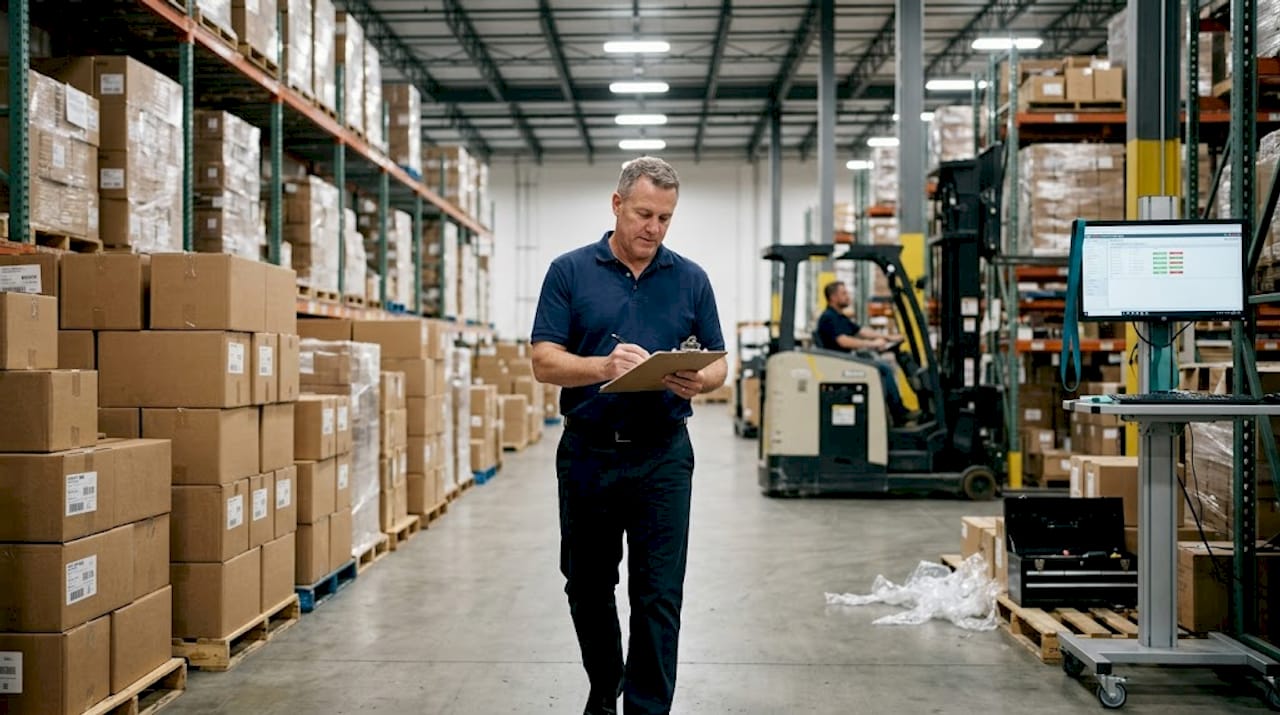
Technology integration is a non-negotiable checkpoint. A WMS (warehouse Management System) controls everything inside your warehouse: inventory, pick lists, and returns. A TMS (Transportation Management System) handles routing, carrier selection, and freight spend. Global logistics solutions built on modern cloud-native WMS and TMS platforms give you real-time visibility and the scalability to grow without switching systems. A TMS alone saves 5 to 10% on freight spend, and AI-powered WMS systems improve pick productivity by 15%.
“The right logistics partner is not the cheapest one. It is the one whose tech stack, service scope, and communication style match where your business is going, not just where it is today.”
Finally, evaluate cross-border and return logistics capability. If you plan to sell internationally, you need a provider with customs knowledge, regional warehouse access, and reverse logistics support. Check out end-to-end logistics solutions if you want a single provider covering multiple logistics layers.
Pro tip: Build a one-page logistics scorecard before talking to any vendor. Rate each provider on your top 5 KPIs and weighted complexity factors. It removes emotion from a decision that can define your business for years.
Third-party logistics (3PL): execution and cost efficiency
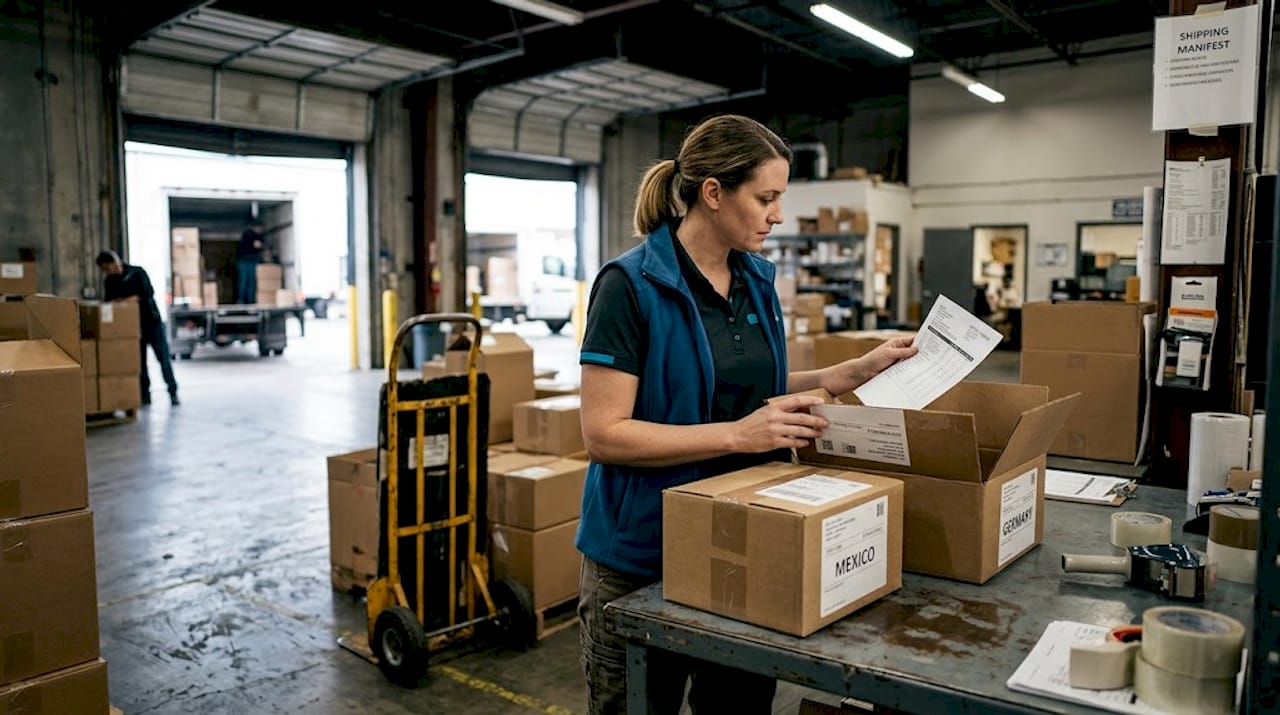
A 3PL (third-party logistics) provider takes over the physical execution of your fulfillment. That means receiving inventory, storing it in their warehouse, picking and packing orders, shipping them out, and handling returns.
For most growing ecommerce businesses, 3PL is the first serious upgrade from self-fulfillment. It frees up your team to focus on marketing, product development, and customer experience instead of packing boxes.
Here is what a 3PL typically handles:
- Storage and inventory management
- Pick, pack, and ship operations
- Return processing and reverse logistics challenges
- WMS integration with your ecommerce platform
- Multi-channel order routing for marketplaces like Amazon
3PL providers handle execution tasks including pick and pack, reverse logistics, and WMS integration, making them ideal for ecommerce businesses in their scaling phase. Cost per order typically falls in the $2.50 to $5.00 range depending on product size, volume, and service level.
The advantages are clear. 3PLs are flexible, scalable, and increasingly tech-forward. Most will integrate directly with your ecommerce platform via API. During seasonal surges like Q4, your 3PL absorbs the volume without you hiring temporary staff.
But 3PL has its limits. You lose some direct control over your inventory environment and customer unboxing experience. For businesses operating across multiple regions simultaneously, a single 3PL often struggles to provide consistent orchestration. Review your logistics services guide to understand where 3PL fits versus more advanced options.
For businesses under $10 million in annual revenue, 3PL is typically the right model. You get professional execution without the overhead of owning a warehouse.
Statistic callout: 3PL cost per order typically runs $2.50 to $5.00. At scale, even a $0.50 reduction per order saves $25,000 for every 50,000 shipments.
Pro tip: When vetting a 3PL, ask for their average pick accuracy rate and their process for handling damaged inbound inventory. These two details reveal operational discipline better than any sales deck can.
For a deeper look at how 3PL compares to the next level, the 3PL vs 4PL comparison is worth reviewing before you commit.
Fourth-party logistics (4PL): end-to-end orchestration for advanced needs
A 4PL (fourth-party logistics) provider does not own warehouse space or trucks. Instead, it manages and orchestrates multiple 3PL providers and carriers on your behalf. Think of it as a logistics control tower for your entire supply chain.
4PL provides strategic orchestration across non-asset-based operations, managing 3PLs for complex cross-border logistics with full end-to-end visibility. Cost per order runs between $5.00 and $7.00, reflecting the higher level of oversight and coordination.
Here is what makes 4PL worth the extra cost for the right business:
- Single point of accountability across all providers and carriers
- Real-time data visibility across the entire network
- Strategic routing between regions, modes, and partners
- Technology layer that integrates all 3PL and carrier systems
- Exception management and proactive disruption response
The contrast with 3PL is significant:
| Feature | 3PL | 4PL |
|---|---|---|
| Assets owned | Yes (warehouses, equipment) | No (manages others) |
| Primary role | Physical execution | Strategic orchestration |
| Cost per order | $2.50 to $5.00 | $5.00 to $7.00 |
| Best for | Growing sellers under $10M | Multi-region, complex ops |
| Data visibility | Limited to their network | Full cross-partner view |
| Control level | Medium | High |
“4PL makes sense when your supply chain is too complex for one 3PL to handle well, and too strategic to manage yourself.”
If you are managing logistics partners across multiple countries or working with different carriers for different product lines, 4PL consolidates that chaos into one governed system. For businesses that have outgrown a single 3PL relationship, the end-to-end logistics overview outlines how this model creates measurable gains in efficiency and cost control.
Cross-border and specialized logistics: micro-hubs, DDP, and multimodal solutions
International growth introduces a layer of logistics complexity that basic 3PL setups rarely handle well. Cross-border ecommerce requires a different toolkit entirely.

Regional micro-hubs are one of the most impactful strategies available. Instead of shipping every order directly from your home country, you pre-position inventory in smaller regional warehouses closer to your buyers. This reduces delivery times by up to 60% and cuts costs significantly compared to direct international shipping. A buyer in Germany receiving an order from a Frankfurt micro-hub gets a faster, cheaper experience than one shipped from a U.S. warehouse.
Here is a quick comparison of cross-border delivery approaches:
| Strategy | Average delivery time | Cost efficiency | Best use case |
|---|---|---|---|
| Direct international shipping | 7 to 21 days | Low | Low volume, unique items |
| Regional micro-hub | 2 to 5 days | High | High-volume markets |
| DDP (delivery duty paid) | 2 to 7 days | Medium-high | smooth import experience |
| multimodal transport | 3 to 10 days | High | Speed and cost balance |
DDP (delivery duty paid) is an incoterm that means all customs duties and taxes are paid before the shipment reaches the buyer. This removes nasty surprises at the door and dramatically improves the customer experience for international orders.
Multimodal transport combines sea, air, and ground shipping to balance cost and speed. Air freight gets products to regional hubs fast. Sea freight handles high-volume restocking affordably. Ground carriers complete the last mile.
For returns and remote delivery, specialized partners with regional expertise are worth the investment. The right reverse logistics strategies can recover significant margin from returned goods. And if sustainability matters to your brand, green logistics strategies are increasingly viable even for cross-border operations.
Pro tip: Use DDP terms for all cross-border shipments to high-tariff markets. The reduction in customer service contacts alone pays for the administrative overhead within weeks.
The role of technology: WMS, TMS, and the KPI-driven supply chain
Every logistics model, whether 3PL, 4PL, or hybrid, depends on technology to function at scale. Without the right systems, even the best operations become invisible and uncontrollable.
Here are the key technology layers every ecommerce logistics operation needs:
- WMS (warehouse Management System): Controls inventory positioning, pick paths, receiving, and returns processing inside the warehouse
- TMS (Transportation Management System): manages carrier selection, routing, rate comparison, and freight audit
- Real-time tracking dashboard: gives both you and your customers live shipment visibility
- API integrations: Connect your ecommerce platform, marketplace, and logistics systems in real time
- Analytics and reporting: Power KPI dashboards for continuous performance monitoring
Cloud-native WMS and TMS platforms are essential for scalability, and 76% of logistics transformations fail without proper technology and talent investment. That is not a small risk. It means the majority of businesses that try to modernize their logistics fail because they underestimate the tools and people required.
AI-driven automation improves pick and pack speed by 15%, reduces errors, and enables predictive restocking. At end-to-end logistics solutions, these capabilities are built into the platform rather than bolted on as an afterthought.
The KPIs you should track weekly include on-time delivery rate, cost per order, pick accuracy, and the transportation mode selection decisions that affect your freight spend.
Statistic callout: 76% of logistics transformations fail without the right tech and talent. Before upgrading your logistics model, audit your systems first.
Pro tip: Do not buy technology you cannot staff. A powerful WMS is only valuable if someone on your team knows how to configure exception rules and read the reports it generates.
Why ‘perfect fit’ logistics is a moving target: our expert take
After reviewing every major logistics model, here is the honest truth: the best solution for your business today will probably not be the best solution in 18 months.
Growth changes everything. A brand doing $2M in sales may thrive with a single 3PL. The same brand at $15M, selling into four new countries and managing $500K in annual returns, will hit the ceiling of that model hard and fast. The shift to 4PL or a hybrid approach is not a failure. It is a sign that your logistics services need to evolve with your ambition.
External disruptions make this even more complex. Port congestion, carrier capacity crunches, new customs regulations, and regional demand surges can all invalidate a logistics setup that was working perfectly six months ago. Static logistics models do not survive dynamic markets.
Watch for these signals that it is time to re-evaluate: rising cost per order, declining on-time delivery, increasing customer complaints about shipment visibility, or the inability to expand into a new market without a major rebuild. These are not just operational problems. They are strategic warnings.
The businesses that win in ecommerce logistics are the ones that treat it as a continuous optimization process, not a one-time decision.
optimize your logistics for ecommerce growth
Choosing the right logistics solution is one of the highest-leverage decisions an ecommerce business can make. It shapes your delivery speed, your cost structure, and your customer experience simultaneously.
At OR-NER, we have built a library of practical resources to help you navigate every layer of this decision. From freight mode selection to warehouse operations, the guides available cover the exact challenges you face at each stage of growth. Whether you are just beginning to evaluate providers or ready to optimize a complex multi-region setup, explore the ecommerce freight booking guide and the warehousing best practices resource to take your next step with confidence.
frequently asked questions
What is the difference between 3PL and 4PL logistics?
3PL handles fulfillment tasks like pick, pack, and ship, while 4PL orchestrates multiple 3PL providers for end-to-end supply chain coordination and strategic oversight.
How can micro-hubs improve cross-border ecommerce shipping?
Micro-hubs reduce delivery times by up to 60% by pre-positioning inventory closer to your buyers, cutting both transit times and shipping costs versus direct international shipping.
What KPIs matter most for logistics performance?
The essential KPIs are on-time delivery rate, cost per order, pick accuracy, and OTIf (On-Time-In-Full), with a 95% on-time benchmark considered the industry standard.
When should an ecommerce business upgrade from 3PL to 4PL?
Upgrade when you need multi-region orchestration across multiple providers, greater cross-border visibility, and a strategic layer that a single 3PL cannot deliver.