TL;DR:
- Choosing the right international air freight company is essential for maintaining customer satisfaction and avoiding delays, especially for high-value or time-sensitive shipments.
- Top providers like Kuehne + Nagel, DSV, DHL, and Flexport combine extensive global networks with experienced human support to ensure reliable, efficient logistics.
Choosing the wrong international air freight company doesn’t just cost you money. It costs you customers. For ecommerce businesses shipping electronics from Shenzhen and manufacturers moving automotive parts to Frankfurt, the gap between a reliable and an unreliable carrier can mean missed launch windows, customs holds, and supply chain meltdowns. The market for international air freight services is crowded with options ranging from global integrators to regional specialists, and the differences between them are not always obvious. This guide cuts through that noise with a structured look at the top providers and exactly how to choose among them.
Table of Contents
- Key takeaways
- Key criteria for evaluating international air freight companies
- Profiles of the top 10 international air freight companies
- 1. Kuehne + Nagel
- 2. DSV
- 3. DHL Express
- 4. Nippon Express
- 5. Expeditors International
- 6. Sinotrans
- 7. UPS Supply Chain Solutions
- 8. CEVA Logistics
- 9. Maersk Logistics (Maersk Air Cargo)
- 10. Flexport
- Comparison table of top 10 air freight providers
- Decision guide: matching your needs to the right provider
- My take: what most businesses get wrong when choosing air freight partners
- How Or-ner helps you manage international air freight with confidence
- FAQ
Key takeaways
| Point | Details |
|---|---|
| Capacity shapes reliability | The largest forwarders move over 2 million metric tons annually, giving them more routing flexibility during disruptions. |
| Tech alone is not enough | Human expertise in rerouting and customs resolution remains critical alongside digital tracking tools. |
| Pricing is calculated by chargeable weight | Bulky but light cargo often costs more than expected because volumetric weight may exceed actual weight. |
| Specialized services matter | Services like DHL’s Heavy Weight Express fill critical gaps for industries shipping oversized or high-value cargo. |
| Match provider to cargo type | Air freight excels for time-sensitive, high-value goods; matching your cargo profile to the right carrier saves cost and time. |
Key criteria for evaluating international air freight companies
Before looking at specific providers, you need a clear framework. Not all air cargo companies are built for the same cargo, and not all of them will fit your operation.
Here are the criteria that matter most:
- Global network coverage. A carrier with routes to 220 countries handles disruptions better than one serving 80. More nodes mean more rerouting options when weather or customs delays hit.
- Transit time reliability. Look at on-time delivery rates, not just quoted transit windows. Ask for historical performance data if you can get it.
- Technology and shipment visibility. Real-time tracking, exception alerts, and API integrations with your warehouse or ERP system reduce manual follow-up and speed up response time.
- Customer support depth. Experienced freight forwarders provide manual intervention during disruptions that digital platforms alone cannot handle. A person who can call a customs broker at midnight matters.
- Specialized services. If you ship heavy machinery, pharmaceuticals, or perishables, you need a carrier with dedicated handling programs for those categories.
- Pricing transparency. Air freight pricing is based on chargeable weight, the greater of actual weight or volumetric weight. Carriers that explain this upfront in their quotes are the ones you want to work with.
- Sustainability and compliance credentials. Especially relevant for brands with ESG commitments or shipments entering markets with strict import regulations.
Pro Tip: Don’t let a slick digital platform be the deciding factor. The best international air freight shipping companies combine strong technology with experienced freight managers who can intervene when systems fail. Freight still runs on people, not platforms alone.
Profiles of the top 10 international air freight companies
The top 10 air freight forwarders by annual tonnage include global integrators and regional specialists across North America, Europe, and Asia. Here is a detailed look at each.
1. Kuehne + Nagel
Kuehne + Nagel leads global rankings with 2,030,280 annual air metric tons, making it the largest air freight forwarder in the world.
- Strong presence across more than 100 countries
- KN FreightNet digital booking platform with instant quotes and shipment tracking
- Specialized programs for pharma, perishables, and high-tech cargo
- Known for consistent transit times and proactive exception management
- Best for: ecommerce brands with high-volume, time-sensitive international lanes
2. DSV
DSV has rapidly scaled through acquisitions and now moves 2,013,127 metric tons of air cargo annually.
- Global network spanning over 90 countries with strong Asia-Europe-Americas coverage
- DSV Air platform offers digital booking, real-time tracking, and carbon reporting
- Competitive on pricing for mid-to-large volume shippers
- Strong customs clearance capabilities across key trade corridors
- Best for: manufacturers needing predictable, high-volume freight lanes with digital visibility
3. DHL Express
DHL operates at 1,767,000 annual air metric tons and offers one of the most recognized express networks globally.
- Covers 220+ countries and territories with time-definite delivery
- DHL’s Heavy Weight Express (HWX) service handles shipments up to 1,000 kg per piece and 3,000 kg per shipment
- HWX includes dedicated priority desks for real-time tracking and proactive issue resolution
- Industry-leading technology integration with ecommerce platforms
- Best for: ecommerce sellers and manufacturers shipping high-value or oversized cargo requiring predictable, premium service
4. Nippon Express
Nippon Express brings deep Asia-Pacific expertise and strong manufacturing sector relationships to international air freight.
- Extensive coverage across Japan, Southeast Asia, and transpacific routes
- Specialized in automotive, semiconductor, and electronics cargo
- Strong ground network integration with air services for door-to-door reliability
- Multilingual support across key Asian markets
- Best for: manufacturers sourcing from Asia with complex last-mile requirements
5. Expeditors International
Expeditors is a U.S.-based forwarder known for data transparency and a customer-first operating model.
- Operates in 60+ countries with a fully owned global network
- Proprietary technology platform with deep analytics and supply chain visibility
- Exceptional customs brokerage and compliance services
- Known for high customer retention and relationship-driven account management
- Best for: logistics managers who prioritize data access and compliance rigor
6. Sinotrans
Sinotrans is China’s largest state-owned freight forwarder and a dominant force on China-Europe and China-Americas lanes.
- Unmatched access to Chinese manufacturing hubs and export infrastructure
- Strong relationships with Chinese customs authorities
- Competitive pricing for Asia-origin shipments
- Growing digital capabilities for shipment tracking and documentation
- Best for: ecommerce businesses and manufacturers heavily sourcing from China
7. UPS Supply Chain Solutions
UPS brings its parcel network strength into full-scale freight forwarding with integrated air cargo services.
- Global reach across 220 countries with deep domestic ground network integration
- Strong reverse logistics and returns management for ecommerce
- UPS Quantum View provides detailed shipment event notifications
- Competitive for mid-size ecommerce businesses needing end-to-end visibility
- Best for: ecommerce brands that also need efficient returns infrastructure
8. CEVA Logistics
CEVA is a CMA CGM subsidiary with growing air freight capabilities and a strong multimodal network.
- Operations across 160 countries with expanding air freight charter capacity
- Specialized in automotive, healthcare, and consumer goods sectors
- CEVA Freight Management platform provides digital booking and tracking
- Strong at managing complex, multi-leg international air shipments
- Best for: manufacturers in automotive and healthcare needing specialized handling
9. Maersk Logistics (Maersk Air Cargo)
Maersk has moved aggressively into air freight as part of its integrated logistics strategy.
- Own-operated freighter fleet supplementing ocean-air multimodal options
- Strong on Europe-Asia lanes with competitive capacity
- End-to-end visibility across ocean and air legs through the Maersk digital platform
- Growing cold chain and pharmaceutical handling capabilities
- Best for: shippers already using Maersk for ocean freight who want a single provider for multimodal solutions
10. Flexport
Flexport is the most technology-forward option on this list and has reshaped how shippers interact with international air freight.
- Real-time shipment visibility with granular event data and exception management
- Strong on Transpacific and Asia-Europe corridors
- Combines freight forwarding with customs brokerage, financing, and insurance
- Particularly popular with ecommerce and direct-to-consumer brands
- Best for: digitally native ecommerce brands that want software-level control over their freight
Comparison table of top 10 air freight providers
| Company | Annual Air Tons | Countries Served | Specialty | Tech Platform | Best For |
|---|---|---|---|---|---|
| Kuehne + Nagel | 2,030,280 | 100+ | Pharma, perishables | KN FreightNet | High-volume ecommerce |
| DSV | 2,013,127 | 90+ | Manufacturing freight | DSV Air | Mid-to-large manufacturers |
| DHL Express | 1,767,000 | 220+ | HWX, express delivery | MyDHL+ | Premium, oversized cargo |
| Nippon Express | ~800,000 | 45+ | Electronics, automotive | NX Portal | Asia-Pacific manufacturing |
| Expeditors | ~650,000 | 60+ | Customs, compliance | Tradeflow | Data-driven logistics managers |
| Sinotrans | ~600,000 | 50+ | China-origin freight | Sinotrans Digital | China-sourcing ecommerce |
| UPS Supply Chain | ~550,000 | 220+ | Returns, ecommerce | Quantum View | Ecommerce with returns needs |
| CEVA Logistics | ~500,000 | 160+ | Healthcare, automotive | CEVA Freight Mgmt | Regulated industries |
| Maersk Logistics | ~400,000 | 130+ | Multimodal, cold chain | Maersk Platform | Ocean-to-air shippers |
| Flexport | ~300,000 | 100+ | Full digital visibility | Flexport Platform | Digital-first brands |
Decision guide: matching your needs to the right provider
Picking from this list comes down to three variables: what you ship, how fast it must move, and how much complexity your supply chain carries.
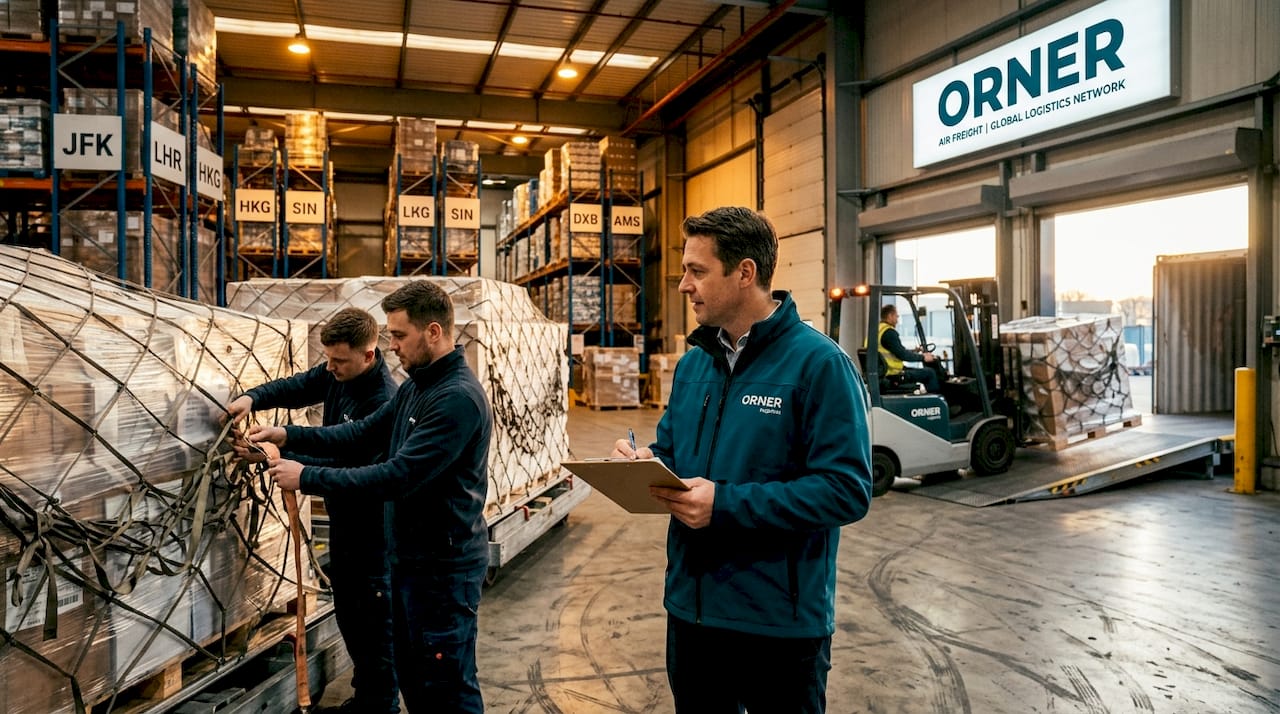
For ecommerce businesses shipping consumer goods under 150 kg with high frequency, carriers like DHL Express, UPS, or Flexport offer the combination of speed, visibility, and ecommerce platform integration you need. If you are sourcing heavily from China, Sinotrans gives you ground-level access to manufacturing hubs that Western forwarders simply cannot match on pricing. Manufacturers shipping heavy industrial equipment should look seriously at DHL’s HWX service or CEVA for their specialized handling capabilities.
Use these decision factors as your checklist:
- Shipment weight and dimensions. Confirm whether your cargo falls under general freight or requires specialized heavy freight programs.
- Urgency and transit time. Air freight is the standard for high-value, time-sensitive goods. If your cargo is bulky and non-urgent, review the air vs. sea freight trade-off carefully before committing to air.
- Route coverage. Verify that your provider operates regularly on your specific trade lane, not just theoretically serves those countries.
- Customs expertise. Cross-border shipping means customs risk. Providers with in-house customs brokerage reduce delays significantly.
- Contract flexibility. Spot rates work for occasional shipments. If you ship consistently, negotiate volume-based rates and service level commitments.
- Supply chain integration. The best partnerships extend beyond booking. Carriers that integrate with your WMS or ERP give you full visibility without manual data entry.
Pro Tip: When negotiating with overseas freight carriers, ask specifically about their disruption protocols. What happens when your flight is cancelled? Who calls you, and how fast? The answer tells you more about a provider than any rate sheet.
Businesses that combine technology with operational expertise consistently outperform those that choose based on price alone. Factor supply chain disruption management into your evaluation from the start, not after a crisis forces your hand.
My take: what most businesses get wrong when choosing air freight partners
I’ve watched logistics managers go through RFP processes, compare rate sheets, and then choose the lowest bidder. Then six months later they’re on the phone explaining to a furious client why a critical shipment sat in Frankfurt for four days because nobody at the carrier knew how to escalate a customs hold.
In my experience, the single biggest mistake is treating international air freight shipping companies as interchangeable commodities. They are not. The difference between a carrier with a dedicated account manager who knows your cargo profile and one that routes you through a general support queue is the difference between a two-day delay and a fourteen-day disaster.
I’m also skeptical of platforms that market themselves purely on technology. Yes, real-time tracking matters. Yes, automated booking saves time. But experienced forwarders proactively reroute cargo and resolve customs challenges manually when systems fail. I’ve seen fully automated freight bookings collapse spectacularly when a flight was cancelled and the platform had no protocol for manual intervention. No algorithm replaces a freight manager who has dealt with that airport before.
My advice: choose providers that demonstrate both. Ask to speak with the operational team during the sales process. If you can’t reach a human before the contract is signed, you definitely won’t reach one when your shipment is delayed.
— Maayan
How Or-ner helps you manage international air freight with confidence
Or-ner’s global logistics platform is built specifically for ecommerce businesses and manufacturers who need more than just a freight booking tool. The platform integrates air freight management with real-time shipment tracking, customs clearance support, and automated exception alerts across every shipment. Whether you’re coordinating high-frequency consumer goods shipments or managing complex cross-border manufacturing supply chains, Or-ner gives you the visibility and control that fragmented logistics providers cannot. Explore how Or-ner’s platform can serve as your end-to-end international air freight partner and start making freight decisions backed by data, not guesswork.
FAQ
What are the largest international air freight companies in 2026?
Kuehne + Nagel, DSV, and DHL are the three largest by annual air metric tonnage, moving over 1.7 million metric tons each year. These companies offer the broadest global networks and most routing flexibility.
How do I choose an air freight company for ecommerce?
Prioritize route coverage on your trade lanes, real-time tracking capability, customs brokerage support, and integration with your ecommerce or warehouse platform. Pricing should reflect chargeable weight, not just actual weight.
What is chargeable weight in air freight?
Chargeable weight is the greater of your shipment’s actual weight or its volumetric weight. Bulky but light cargo often costs more than its physical weight suggests because airlines price based on the space it occupies.
When should I use air freight instead of sea freight?
Air freight is the right choice for high-value, perishable, or time-sensitive goods such as electronics, pharmaceuticals, and fashion. Sea freight is better suited to heavy, non-urgent bulk cargo where cost efficiency outweighs speed.
Does DHL offer services for heavy or oversized cargo?
Yes. DHL Express launched its Heavy Weight Express service supporting shipments up to 1,000 kg per piece and 3,000 kg per shipment, with dedicated priority desks and real-time tracking across 220+ countries.