You’re paying premium rates for air freight, yet your shipments still arrive late. The problem isn’t your budget; it’s understanding how air freight forwarding actually works. Speed depends on coordinated booking, customs clearance, and technology integration, not just carrier costs. This guide breaks down the complete air freight forwarding process, revealing optimization strategies that cut transit times and boost reliability for cross-border ecommerce shipments.
Table of Contents
- Introduction To Air Freight Forwarding
- Step-By-Step Air Freight Forwarding Process
- Technology And Digital Transformation In Air Freight Forwarding
- Customs Clearance And Regulatory Compliance
- Common Misconceptions And Realities Of Air Freight Forwarding
- Optimizing Air Freight Forwarding For Ecommerce Success
- Conclusion And Next Steps
- Explore Top Freight Forwarding Solutions For Your Ecommerce Business
- Air Freight Forwarding Process Frequently Asked Questions
Key takeaways
| Point | Details |
|---|---|
| Process complexity | Air freight forwarding involves multiple coordinated steps beyond carrier selection, including booking timing, customs clearance, and last-mile coordination. |
| Technology impact | AI route optimization, IoT tracking, and blockchain documentation improve efficiency by 45-60%. |
| Customs automation | Automated document verification and real-time data sharing reduce clearance delays by 30%. |
| Booking strategy | Early booking (4-6 weeks ahead during peak seasons) secures capacity and better rates. |
| Cost misconception | Premium pricing doesn’t guarantee fastest delivery; booking timing and carrier reliability matter more. |
Introduction to air freight forwarding
Air freight forwarding manages the entire journey of cargo shipped by air, coordinating airlines, customs brokers, ground handlers, and last-mile carriers. For ecommerce sellers shipping cross-border, this service transforms complex international logistics into streamlined delivery.
Understanding what is freight forwarding helps you recognize that forwarders don’t own aircraft. Instead, they negotiate capacity, handle documentation, navigate customs regulations, and orchestrate handoffs between transport modes. This coordination enables fast, predictable delivery that meets customer expectations.
The North American market is growing rapidly, driven by ecommerce demands for faster cross-border shipping. Consumers expect quick delivery regardless of origin, pushing sellers to master air freight processes.
Key players in this ecosystem include:
- Freight forwarders who manage end-to-end shipment coordination
- Airlines providing cargo capacity and transport
- Customs brokers ensuring regulatory compliance
- Ground handlers managing airport cargo operations
- Last-mile carriers completing final delivery
For ecommerce businesses, reliable air freight forwarding directly impacts customer satisfaction and repeat purchases. Delayed shipments damage reputation and sales. Mastering this process gives you competitive advantage through faster, more predictable delivery windows.
Step-by-step air freight forwarding process
Understanding each phase of the freight forwarding process helps you identify where delays occur and how to prevent them. Here’s how shipments move from your warehouse to customer doorsteps.
-
Cargo booking and carrier selection: You request capacity with freight forwarders who secure space on flights. Early booking matters because air cargo capacity fills quickly, especially during peak retail seasons. Forwarders with strong airline relationships access better rates and priority boarding.
-
Cargo consolidation and documentation: Forwarders combine multiple small shipments into larger loads to optimize costs. Simultaneously, they prepare commercial invoices, packing lists, and air waybills. Accurate documentation prevents customs delays that can add days to transit.
-
Customs clearance and compliance: Before departure or upon arrival, customs authorities verify documentation and cargo details. This step causes most delays when paperwork is incomplete or incorrect. Pre-clearance programs and digital submissions speed this phase significantly.
-
Airport handling and transfer coordination: Ground crews load cargo, and airlines transport it to destination airports. Transfer coordination between connecting flights requires precise timing. Missed connections extend delivery windows by 12-48 hours.
-
Last-mile delivery completion: Local carriers pick up cleared cargo and deliver to final addresses. This final leg often takes longer than the flight itself in remote or congested areas.
| Process Aspect | Manual Approach | Digital Platform Approach |
|---|---|---|
| Booking | Phone/email requests, slow confirmation | Real-time capacity search and instant booking |
| Documentation | Paper forms, manual data entry | Automated form generation, digital signatures |
| Tracking | Periodic status calls | Live GPS and milestone updates |
| Issue Resolution | Reactive problem discovery | Proactive alerts and exception management |
Pro Tip: Book shipments 4-6 weeks in advance during November through January to avoid capacity crunches and rate spikes during holiday seasons.
Booking timing impacts delivery speed more than premium service levels. Late bookings force you onto less optimal routes with multiple connections, while early reservations secure direct flights and priority handling. Understanding this reality helps ecommerce freight forwarding strategies focus on planning rather than just spending.
Technology and digital transformation in air freight forwarding
Digital tools have revolutionized air freight forwarding, transforming opaque processes into transparent, optimized operations. Modern global logistics platforms integrate technologies that give ecommerce sellers unprecedented control.
AI-powered route optimization analyzes thousands of flight combinations, connection times, and capacity availability to recommend fastest, most cost-effective paths. These systems factor in weather patterns, airport congestion, and historical delay data that human planners can’t process at scale.
IoT devices attached to shipments transmit real-time location and condition data. Temperature-sensitive goods benefit from continuous monitoring that triggers alerts if thresholds are breached. You know exactly where cargo sits at any moment, enabling proactive customer communication.
Blockchain applications create immutable documentation records that all parties can access instantly. This eliminates the document verification delays that traditionally slow customs clearance. Smart contracts automatically trigger payments and handoffs when shipment milestones are reached.
Digital booking and tracking platforms replace phone calls and email chains with self-service portals. You compare rates, book capacity, upload documents, and monitor shipments from one dashboard. Integration with your ecommerce platform automates tracking number updates to customers.
Companies adopting advanced technologies see efficiency gains of 45-60% through improved route planning, transparent documentation, and real-time cargo monitoring.
Key technology benefits include:
- Reduced manual errors in documentation and booking
- Faster exception identification and resolution
- Better capacity forecasting and rate negotiation
- Enhanced customer experience through proactive updates
- Data analytics revealing optimization opportunities
Pro Tip: Choose freight forwarders offering integrated digital platforms rather than those relying on legacy systems. Technology access gives you end-to-end visibility and control that manual processes can’t match.
The technology gap between forward-thinking forwarders and traditional operators is widening. Sellers using modern platforms gain competitive advantages through faster transit times, fewer delays, and lower costs per shipment.
Customs clearance and regulatory compliance
Customs clearance represents the biggest controllable delay factor in air freight forwarding. Understanding customs processes helps you minimize this bottleneck that can extend delivery windows by days.
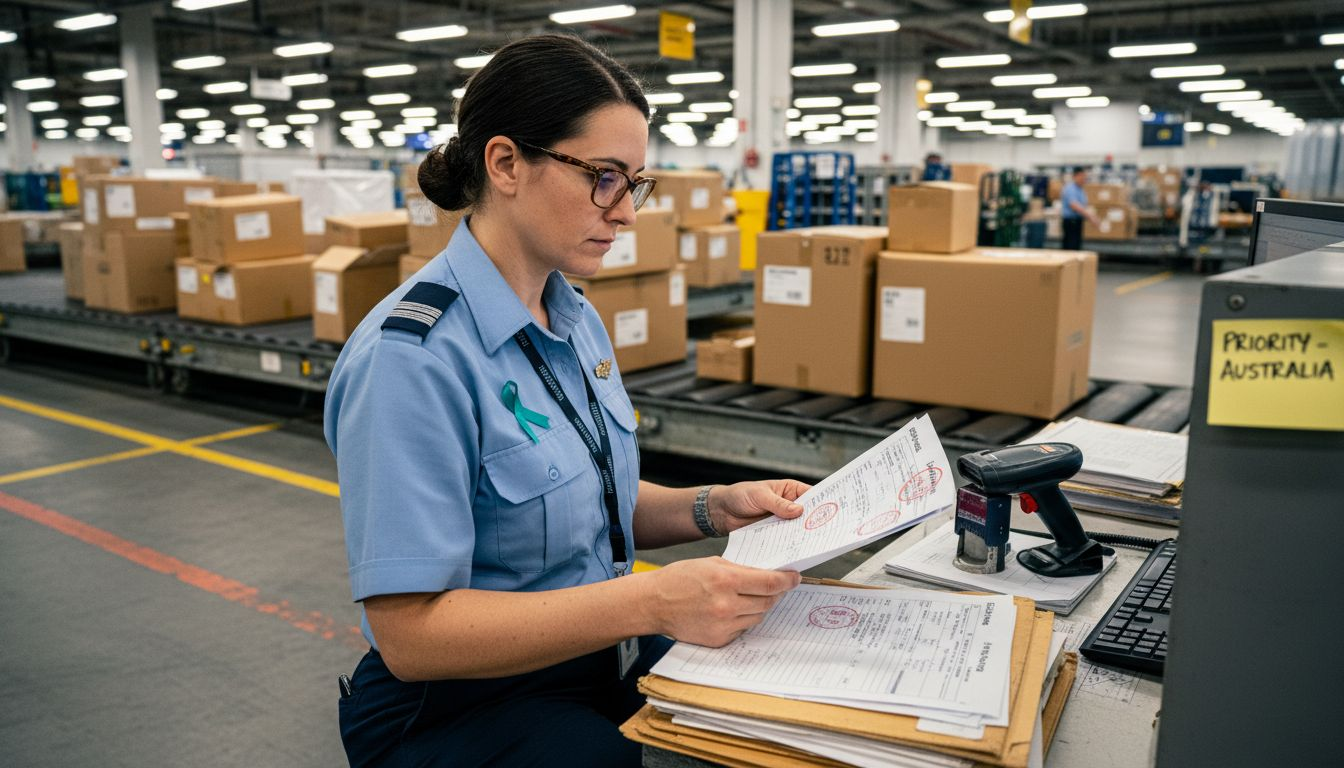
Customs authorities verify that shipments comply with import regulations, proper duties are paid, and restricted items aren’t entering the country. They examine commercial invoices, certificates of origin, packing lists, and product classifications. Incomplete or incorrect documentation triggers holds for manual review.
Common regulatory requirements for cross-border air shipments include:
- Accurate product descriptions and Harmonized System codes
- Proper valuation for duty calculation
- Country-of-origin certification
- Safety and quality compliance certificates for regulated products
- Import licenses for restricted categories
Automated systems dramatically improve clearance speed. Real-time data sharing cuts delays by 30% by allowing customs to pre-clear shipments before arrival. Digital document submission eliminates paper processing time.
Environmental and safety compliance adds complexity for certain product categories. Batteries, chemicals, and food products face stricter scrutiny. Proactive documentation and proper classification prevent unexpected holds.
Tactics to streamline customs clearance:
- Use experienced customs brokers who understand specific country requirements
- Submit documentation 24-48 hours before cargo arrival
- Maintain detailed product databases with proper HS codes
- Leverage trusted trader programs that expedite clearance
- Implement pre-clearance when available in destination markets
Working with forwarders who understand customs documentation requirements prevents the amateur mistakes that cause delays. They know which certificates are required, how to value goods correctly, and when to engage specialized brokers.
Many ecommerce sellers underestimate customs complexity until their first shipment sits in a bonded warehouse for a week. Investing time upfront to master documentation requirements pays dividends through faster, more predictable delivery.
Common misconceptions and realities of air freight forwarding
Misunderstandings about air freight forwarding lead ecommerce sellers to make costly decisions. Correcting these myths helps you focus on factors that actually improve delivery speed and reliability.
Myth 1: Premium air freight always means fastest delivery
Many believe paying top rates guarantees quickest arrival. Reality is more nuanced. Booking timing and customs readiness impact speed more than service tier. A standard service booked early with perfect documentation often beats premium service booked last-minute with paperwork issues. Premium pricing buys priority boarding and dedicated handling, but can’t overcome capacity constraints or customs holds.
Myth 2: Technology is just about GPS tracking
Tracking is the most visible tech feature, but AI route optimization, blockchain documentation, and predictive analytics deliver greater value. These tools prevent problems rather than just reporting them. Route optimization finds faster paths. Blockchain eliminates document delays. Predictive systems alert you to potential issues before they cause delays.
Myth 3: Customs delays cannot be reduced
Sellers accept customs delays as inevitable. Yet automation and proper preparation dramatically reduce clearance time. Pre-submission of digital documents, accurate HS coding, and working with experienced brokers transform customs from a multi-day bottleneck into a same-day formality.
Saving transit time requires optimizing booking timing and customs processes more than simply selecting premium carrier rates.
The key to air freight success isn’t spending more; it’s understanding what actually drives speed. Early booking secures optimal routes. Perfect documentation prevents holds. Strong forwarder relationships provide priority handling. These factors matter more than service tier selection.
Recognizing these realities helps you make smarter logistics decisions. Focus your energy on controllable factors like booking lead time and documentation accuracy rather than just buying premium services and hoping for the best.
Optimizing air freight forwarding for ecommerce success
Applying strategic optimizations transforms air freight from an operational expense into a competitive advantage. These actionable strategies reduce transit times, improve reliability, and control costs for ecommerce operations.
Book shipments early to secure capacity and favorable rates
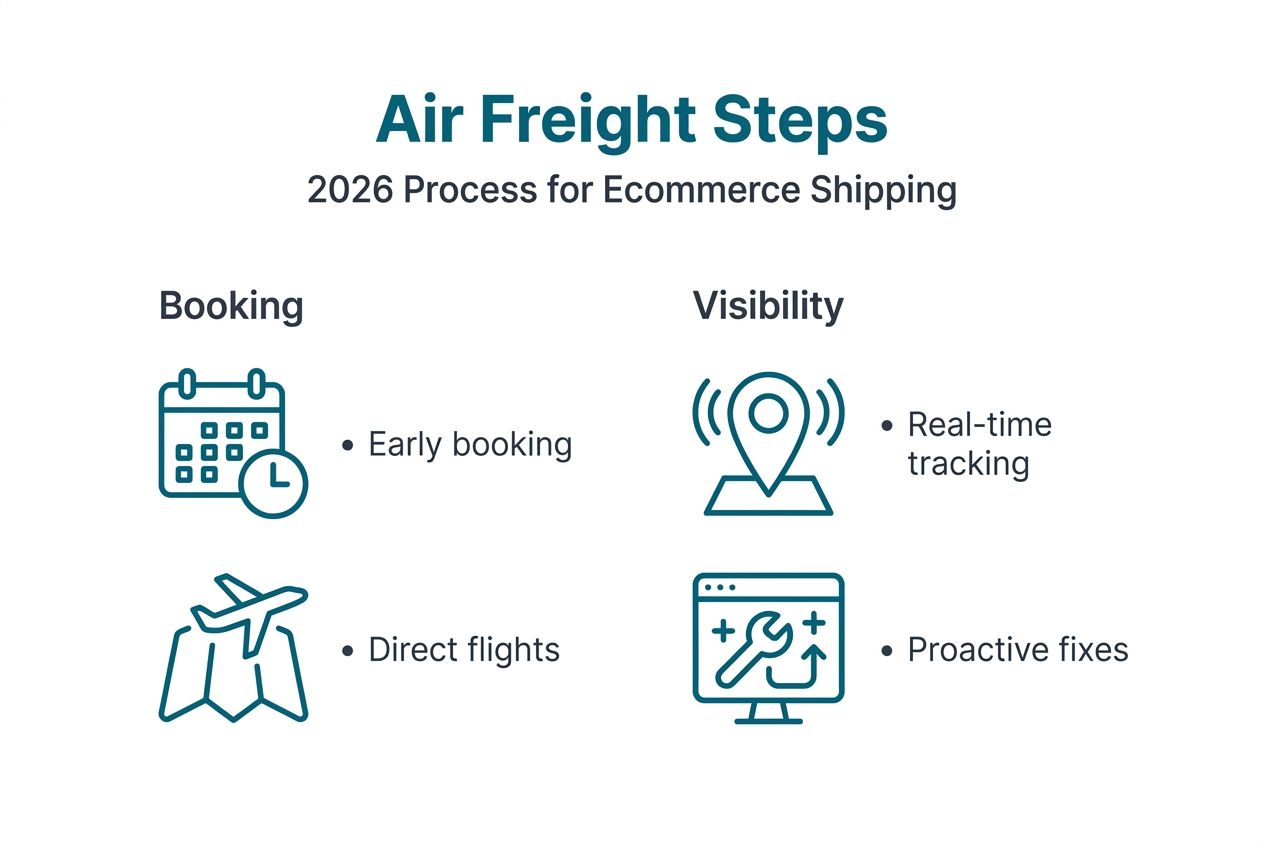
Air cargo space is finite and fills quickly during peak seasons. Booking 4-6 weeks ahead gives you access to direct flights and better rates. Last-minute bookings force you onto less optimal routes with connections that add 1-2 days to transit times.
Develop strong relationships with reliable carriers
Forwarders with established airline relationships secure priority boarding during capacity crunches. These partnerships translate to more consistent transit times and fewer bumped shipments. Choose forwarders based on carrier network strength, not just quoted rates.
Leverage integrated digital platforms for visibility
Digital tools provide real-time tracking and proactive exception management. You spot potential delays early and take corrective action before they impact delivery promises. Integration with your ecommerce platform automates customer updates, reducing support inquiries.
Specialize logistics for ecommerce needs
Ecommerce cargo has unique characteristics: smaller shipment sizes, frequent changes, and tight delivery windows. Work with forwarders who understand these demands rather than generalists focused on large industrial shipments. Specialized providers offer flexible consolidation, faster documentation processing, and ecommerce-optimized last-mile networks.
Implement end-to-end visibility
Monitoring shipments from warehouse pickup through final delivery reveals optimization opportunities. Analytics show which routes perform best, where delays occur most often, and which carriers deliver most reliably. This data guides continuous improvement.
Additional optimization tactics include:
- Batch similar destinations to leverage consolidation discounts
- Negotiate volume commitments for better rates
- Use predictive analytics to forecast capacity needs
- Maintain safety stock at strategic locations to reduce air freight dependency
- Test multiple forwarders to identify best performers
Pro Tip: Analyze your shipping data quarterly to identify patterns in delays, costs, and performance. Use these insights to refine forwarder selection, adjust booking timing, and optimize route choices for continuous improvement.
Proactive carrier management and digital visibility create faster, more predictable cross-border deliveries. These capabilities separate high-performing ecommerce operations from competitors struggling with logistics challenges. Learn more international freight tips to further optimize your shipping strategy.
Conclusion and next steps
Mastering air freight forwarding gives ecommerce sellers the reliable, fast cross-border shipping that customers demand. Success requires understanding the complete process from booking through delivery, leveraging technology for visibility and optimization, and maintaining documentation excellence to prevent customs delays.
The competitive advantage goes to sellers who book strategically, work with tech-enabled forwarders, and focus on factors that actually drive speed rather than just premium pricing. These practices translate directly into faster delivery, lower costs, and better customer satisfaction.
Technology adoption and regulatory compliance awareness separate high-performing logistics operations from those struggling with delays and unpredictable transit times. The strategies outlined in this guide provide a roadmap for optimization.
Ready to streamline your air freight operations? Explore or-ner.com for comprehensive logistics solutions that integrate booking, tracking, customs clearance, and last-mile delivery into one platform. Our tools give you the visibility and control needed to master cross-border ecommerce shipping.
Explore top freight forwarding solutions for your ecommerce business
Choosing the right freight forwarding partner transforms your logistics from a pain point into a competitive advantage. ORNER provides expert comparisons of freight forwarding services and booking platforms to help you identify solutions matching your specific needs.
Our platform simplifies the documentation process while providing real-time visibility across your entire supply chain. Stop wasting time researching options. Let ORNER’s curated comparisons guide you to forwarders offering the technology, carrier relationships, and expertise your ecommerce business needs for reliable, fast air freight forwarding.
Air freight forwarding process frequently asked questions
How does early booking affect air freight capacity and pricing?
Booking 4-6 weeks ahead secures space on direct flights at standard rates before capacity fills. Last-minute bookings face premium pricing and often require indirect routes with connections that add 1-2 days to transit. Airlines allocate cargo space months in advance, so early reservations give you priority access and route choice.
Which technologies offer the best visibility improvements for air freight?
IoT tracking devices provide real-time location and condition monitoring, while AI-powered platforms offer predictive alerts for potential delays. Blockchain documentation systems enable instant verification that speeds customs clearance. The combination of these technologies delivers end-to-end visibility from warehouse to final delivery.
What key customs documents are required for smooth air freight clearance?
Commercial invoices with accurate product valuations, packing lists detailing contents, air waybills as transport contracts, and certificates of origin are essential. Regulated products need additional safety or quality certifications. Proper Harmonized System codes on all documents prevent classification disputes that trigger holds.
How can technology reduce customs clearance delays?
Automated document submission systems send paperwork to customs before cargo arrival, enabling pre-clearance. Real-time data sharing between forwarders and customs authorities eliminates manual verification delays. Digital systems catch errors before submission, preventing the incomplete documentation that causes most holds.
What are the biggest challenges in managing last-mile delivery for air freight?
Coordinating handoffs between airports and local carriers creates timing gaps where cargo sits waiting for pickup. Remote or congested delivery areas extend transit times beyond the flight duration itself. Proactive carrier scheduling and real-time tracking help minimize these delays by ensuring drivers arrive promptly when cargo clears customs.
How do I choose between different air freight service tiers?
Evaluate based on your delivery promise rather than speed alone. If your customer commitment allows 5-7 days, standard service booked early often suffices. Premium tiers make sense for time-sensitive launches or service recovery situations. Consider total cost including potential revenue loss from delays versus premium pricing.