

Sustainable logistics is on the verge of changing everything for retailers and brands who want to keep up with 2025 demands. Most people expect going green to cost more and slow things down. But here is the surprise. Companies investing in sustainability have seen revenue gains of at least 2 percent, with one in five reporting gains over 5 percent. This is turning logistics from an environmental checkbox into a smart financial play that sets businesses apart.
Table of Contents
- Key Benefits Of Sustainable Logistics Solutions
- Innovative Green Practices Transforming Logistics
- Implementing Sustainable Solutions Across Your Supply Chain
- Measuring Impact And Roi Of Sustainable Logistics
Quick Summary
| Takeaway | Explanation |
|---|---|
| Sustainable logistics enhance economic performance. | Implementing green logistics leads to reduced operational costs and increased brand equity through efficiency gains. |
| Advanced technologies drive logistics innovation. | AI and alternative fuel vehicles are transforming logistics, improving efficiency while reducing carbon footprints significantly. |
| Supplier engagement is essential for sustainability. | Companies must develop strict sustainability criteria for suppliers to lower their carbon footprints effectively. |
| Quantify environmental impact to measure success. | Tracking metrics related to carbon emissions and resource use provides actionable insights for improving sustainable practices. |
| Holistic integration of sustainability is vital. | Sustainability should be embedded in all operations, from packaging to transportation, ensuring long-term competitiveness and efficiency. |
Key Benefits of Sustainable Logistics Solutions
Sustainable logistics solutions are transforming how businesses approach transportation and supply chain management. These innovative strategies offer far more than environmental advantages – they provide substantial economic and operational benefits that directly impact a company’s bottom line and competitive positioning.
Economic Advantages of Green Logistics
Implementing sustainable logistics solutions delivers significant financial benefits for forward-thinking retailers and brands. According to research from the University of San Francisco, companies investing in sustainability not only improve their Environmental, Social, and Governance (ESG) scores but also enhance brand equity. The financial implications are profound: more efficient route planning and vehicle loading can dramatically reduce operational costs.
Companies adopting green logistics strategies typically experience multiple economic advantages. Fuel consumption decreases through optimized routing, transportation expenses get minimized, and overall operational efficiency improves. Our comprehensive guide on freight forwarding provides additional insights into streamlining logistics operations.
Environmental Impact and Resource Conservation
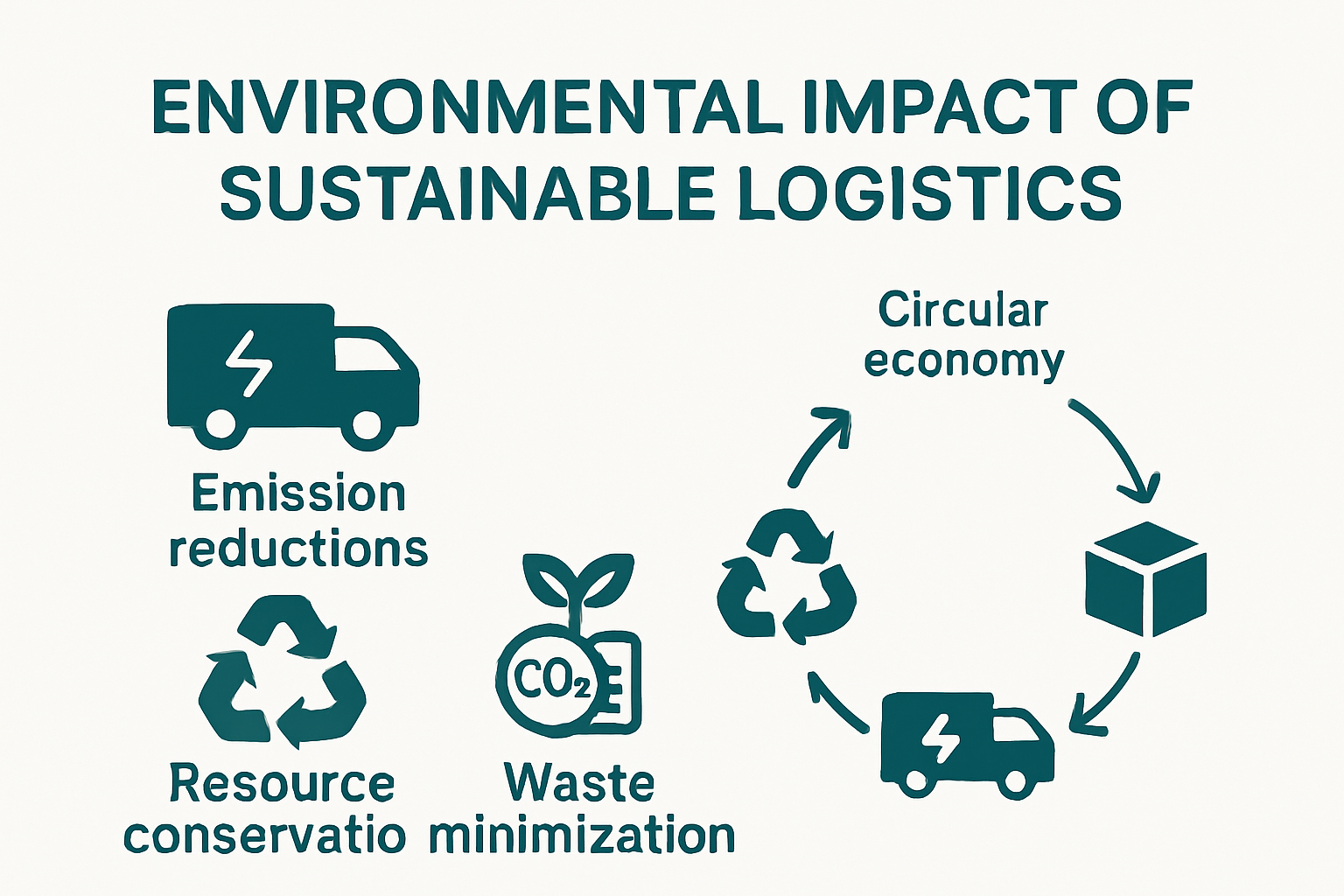
Sustainable logistics solutions play a critical role in mitigating environmental degradation. Research from Galaxy Freight highlights that eco-friendly transportation modes and energy-efficient technologies can significantly reduce greenhouse gas emissions. By selecting alternative transportation methods, businesses can preserve natural resources and contribute to global climate change mitigation efforts.
The environmental benefits extend beyond immediate carbon reduction. Sustainable logistics approaches encourage more responsible resource utilization, promoting circular economy principles where waste is minimized and materials are reused or recycled whenever possible. This approach not only reduces environmental impact but also creates long-term value for businesses committed to responsible practices.
Strategic Competitive Advantage
Businesses that prioritize sustainable logistics solutions gain a significant competitive edge in the marketplace. Modern consumers and investors increasingly value environmental responsibility, making green logistics a powerful differentiator. According to AutoStore’s sustainability research, companies demonstrating genuine commitment to sustainable practices attract more environmentally conscious customers and investors.
Moreover, sustainable logistics solutions drive innovation. Companies investing in green technologies often discover more efficient operational processes, creating opportunities for continuous improvement. These strategic investments position businesses as industry leaders, capable of adapting to evolving environmental regulations and market expectations.
By embracing sustainable logistics solutions, retailers and brands can simultaneously address environmental concerns, reduce operational costs, and create compelling value propositions that resonate with modern consumers and stakeholders.
Innovative Green Practices Transforming Logistics
The logistics industry is undergoing a radical transformation driven by innovative green practices that are reshaping how businesses approach transportation and supply chain management. These cutting-edge approaches go beyond traditional sustainability methods, introducing technological and operational innovations that fundamentally change logistics operations.
Advanced Electric and Alternative Fuel Vehicles
Electric and alternative fuel vehicles represent a cornerstone of sustainable logistics transformation. Research from the International Transportation Forum indicates that electric and hydrogen-powered vehicles can reduce carbon emissions by up to 70% compared to traditional diesel transportation. Companies are rapidly investing in electric truck fleets and developing charging infrastructure to support these green transportation solutions.
Modern logistics companies are not just replacing vehicles but reimagining entire transportation ecosystems. Hybrid electric-hydrogen trucks, solar-powered refrigeration units, and advanced battery technologies are creating new possibilities for zero-emission transportation. Our comprehensive guide on freight forwarding offers deeper insights into these technological transitions.
Smart Routing and AI-Powered Optimization
Artificial intelligence and machine learning are revolutionizing logistics efficiency through intelligent routing and optimization strategies. According to McKinsey’s logistics research, AI-driven route optimization can reduce fuel consumption by 20-30% by minimizing unnecessary travel distances and improving vehicle loading capacities.
These smart systems analyze multiple variables simultaneously, including traffic patterns, weather conditions, delivery windows, and vehicle capabilities. By dynamically adjusting routes in real-time, logistics providers can significantly reduce carbon footprints while simultaneously improving delivery speed and reliability.
Circular Economy and Reverse Logistics
Circular economy principles are transforming traditional linear supply chain models. Modern logistics practices now emphasize product recovery, recycling, and reuse. According to the Ellen MacArthur Foundation, implementing circular economy strategies can reduce waste by up to 45% and create new revenue streams through product refurbishment and material recovery.
Reverse logistics has become a critical component of sustainable supply chains. Companies are developing sophisticated systems to collect, process, and reintegrate used products into new production cycles. This approach not only reduces environmental impact but also creates economic value by extracting maximum utility from existing resources.
Innovative green practices are not just environmental imperatives but strategic business transformations. By embracing these technologies and approaches, logistics providers can create more resilient, efficient, and environmentally responsible supply chains that deliver value to businesses and society.
Implementing Sustainable Solutions Across Your Supply Chain
Transforming a supply chain into a sustainable ecosystem requires strategic planning, technological innovation, and a holistic approach that addresses environmental impact at every stage of operations. Successful implementation demands comprehensive strategies that go beyond isolated efforts and create meaningful, systemic change.
Supplier Engagement and Sustainability Criteria
Building a sustainable supply chain starts with comprehensive supplier selection and management. Research from the MIT Sloan Management Review demonstrates that companies implementing rigorous sustainability criteria for suppliers can reduce their overall carbon footprint by up to 30%. This approach involves developing clear environmental standards, conducting thorough supplier assessments, and creating collaborative frameworks that incentivize green practices.
Effective supplier engagement requires transparent communication and shared sustainability goals. Companies must develop robust evaluation mechanisms that measure suppliers not just on cost and quality, but on their environmental performance, carbon emissions, waste reduction, and commitment to sustainable practices. Our guide on freight forwarding provides additional insights into creating integrated supply chain strategies.
Technology and Data-Driven Sustainability Monitoring
Advanced technologies are crucial for implementing and tracking sustainable solutions across supply chains. According to Gartner’s supply chain research, companies utilizing real-time monitoring technologies can improve their sustainability performance by 40% through precise data collection and analysis. These technologies include IoT sensors, blockchain tracking, and advanced analytics platforms that provide granular insights into environmental impact.
Implementing these technologies allows businesses to:
- Track carbon emissions in real-time across transportation and production
- Monitor resource utilization with unprecedented accuracy
- Identify inefficiencies that contribute to unnecessary environmental waste
- Create data-driven sustainability strategies based on comprehensive insights
Holistic Sustainability Integration
Sustainability cannot be an afterthought or a standalone initiative. It must be deeply integrated into every aspect of supply chain design and operations. The World Economic Forum highlights that companies treating sustainability as a core business strategy achieve significantly better environmental and economic outcomes.
This holistic approach involves:
- Redesigning packaging to minimize waste and use recyclable materials
- Optimizing transportation routes to reduce fuel consumption
- Implementing circular economy principles that prioritize reuse and recycling
- Investing in renewable energy for warehouses and transportation infrastructure
Successful sustainable supply chain implementation requires commitment from leadership, continuous innovation, and a willingness to challenge traditional operational models. By adopting comprehensive strategies that integrate technological solutions, supplier collaboration, and systemic thinking, businesses can create supply chains that are not just environmentally responsible but also more efficient and competitive.
The journey toward sustainable logistics is ongoing. Companies that view this transformation as a strategic opportunity rather than a compliance requirement will be best positioned to lead in the evolving global marketplace.
Measuring Impact and ROI of Sustainable Logistics
Measuring the return on investment (ROI) for sustainable logistics requires a comprehensive approach that goes beyond traditional financial metrics. Businesses must develop sophisticated frameworks that capture both tangible economic benefits and intangible environmental value creation.
Economic Performance Metrics
Research from Deloitte and NYU Stern Center for Sustainable Business reveals compelling economic insights into sustainability investments. Their study found that 82% of retailers reported revenue gains of at least 2%, with 20% experiencing gains exceeding 5%. These findings demonstrate that sustainable logistics are not just an environmental imperative but a strategic financial opportunity.
Key economic metrics for evaluating sustainable logistics include:
- Direct cost savings from reduced fuel consumption
- Operational efficiency improvements
- Potential revenue gains from sustainability-conscious consumers
- Reduced waste management expenses
Our guide on freight forwarding can provide additional context for understanding these financial transformations.
Environmental Impact Quantification
The European Transport Research Review developed a comprehensive sustainability framework that evaluates logistics solutions across multiple dimensions. This approach considers economic, environmental, social, and transport pillars, providing a holistic view of sustainability performance.
Critical environmental metrics include:
- Carbon emissions reduction
- Energy consumption levels
- Waste generation and management
- Resource utilization efficiency
Advanced tracking technologies now enable businesses to measure these impacts with unprecedented precision, transforming sustainability from a qualitative concept to a quantifiable strategic advantage.
Strategic Value and Long-Term Sustainability
Research published in the journal Sustainability emphasizes that sustainable logistics metrics extend beyond immediate cost control. The study suggests that environmental benefits are intrinsically linked to operational efficiency, meaning that improved sustainability often correlates directly with enhanced business performance.
Strategic measurement approaches should consider:
- Brand reputation enhancement
- Compliance with emerging environmental regulations
- Investor and stakeholder perception
- Long-term resilience and adaptability
Businesses that develop robust measurement frameworks can transform sustainability from a compliance requirement into a genuine competitive advantage. By quantifying both financial and environmental impacts, companies can make informed decisions that drive innovation, efficiency, and responsible growth.
The future of logistics lies in understanding that sustainability is not an expense but an investment in operational excellence and long-term business success.
Here is a summary table to organize the core innovative green logistics practices discussed, highlighting their key benefits for readers:
| Innovative Green Practice | Key Benefit |
|---|---|
| Electric & Alternative Fuel Vehicles | Up to 70% reduction in carbon emissions |
| AI-Powered Optimization | 20-30% reduction in fuel usage, faster deliveries |
| Circular Economy & Reverse Logistics | Up to 45% waste reduction, new revenue streams |
Below is a statistics table summarizing key numerical findings and metrics mentioned for economic and environmental impact:
| Metric | Value/Impact |
|---|---|
| Retailers reporting at least 2% revenue gain | 82% |
| Retailers reporting revenue gains over 5% | 20% |
| Carbon emission reduction (electric vehicles) | Up to 70% |
| Fuel consumption reduction (AI optimization) | 20-30% |
| Carbon footprint reduction (supplier criteria) | Up to 30% |
| Waste reduction (circular economy strategies) | Up to 45% |
Frequently Asked Questions
What are sustainable logistics solutions?
Sustainable logistics solutions refer to practices and strategies that reduce the environmental impact of transportation and supply chain management while enhancing efficiency and cost-effectiveness.
How do sustainable logistics benefit retailers?
Sustainable logistics benefit retailers by reducing operational costs, improving brand equity, enhancing competitiveness, and attracting environmentally conscious consumers, ultimately leading to revenue gains.
What technologies are driving sustainable logistics?
Technologies such as electric and alternative fuel vehicles, AI-powered optimization for routing, and data-driven sustainability monitoring are key innovations driving the transformation of sustainable logistics practices.
How can businesses measure the ROI of sustainable logistics?
Businesses can measure the ROI of sustainable logistics by evaluating economic performance metrics (like cost savings and revenue growth), environmental impact quantification (like carbon emissions reduction), and strategic value through brand reputation and stakeholder perception.
Ready to Make Your Logistics Greener and More Reliable?
The article highlights how important it is for retailers and brands to embrace sustainable logistics solutions in 2025. Are you struggling with rising transportation costs, inefficient supply chains, or uncertainty about meeting customer expectations for faster and eco-friendly deliveries? Many businesses worry that going green will slow things down or make operations more complex. You should not have to choose between sustainability and efficiency. With demand for reliability and innovation at its highest, companies like yours need real solutions that deliver both.
At or-ner.com, we help ecommerce sellers and brands transition to sustainable, future-ready logistics without sacrificing quality. Our platform integrates real-time shipment tracking, optimized freight booking, and a global warehousing network to simplify your green logistics journey. See how our reliable courier services can streamline your operations and support your environmental goals. Take action now to future-proof your supply chain using intelligent technology and sustainable practices. Visit or-ner.com to start building a smarter logistics strategy today.
Recommended
- Just in Time Delivery: Essential Guide for 2025 Success – ORNER
- What Is Same Day Delivery? 2025 Guide for Online Retailers – ORNER
- What Is Freight Forwarding? Guide for Modern Supply Chains 2025 – ORNER
- Top Benefits of Freight Forwarding for Growing Businesses 2025 – ORNER
- Tendencias de ecommerce 2025 para impulsar tu crecimiento online