The sea import freight forwarding process runs through seven linked stages: booking and documentation, container stuffing and export haulage, advance filings such as CBP’s Importer Security Filing (ISF) and manifest data through ACE/ABI, vessel arrival and arrival notice, customs entry and cargo release, terminal pickup and inland delivery, and finally equipment return with any demurrage or detention disputes resolved. Teams working these stages daily recognize that missing any single step is the most common cause of a delayed container.
TL;DR:
- Accurate early data collection of HS codes, container stuffing details, and supplier information reduces delays and penalty risks at import clearance.
- Negotiating and tracking free time limits for demurrage and detention can significantly lower unexpected charges, which totaled over $15.4 billion industry-wide from 2020 to 2026.
- Precise coordination of vessel cut-offs, booking, and appointment scheduling is essential, as missing any stage causes delays and often triggers detention or hold issues.
- Correct filing of the Importer Security Filing (ISF) 24 hours before vessel loading is vital, with late or inaccurate submissions leading to penalties and cargo holds.
- Using integrated tools for booking, documentation, customs, and tracking can streamline the process and minimize handoff errors across the seven linked stages.
Table of Contents
- Process overview: the end-to-end sea import freight forwarding workflow
- Pre-shipment: booking, commercial documents, and preparing the container
- Container stuffing, export haulage and handover to the carrier
- Advance filings: ISF (10+2), manifest, and unified filing options (ACE).
- Vessel arrival, arrival notice, and container availability at the terminal
- Customs entry and cargo release: filing entry, duties, inspections, and ACE/ABI procedures
- Inland delivery, container return, and intermodal handoffs
- Charges, timelines and dispute handling: demurrage, detention, free time, and billing disputes
- Common exceptions, delays, and mitigation: practical troubleshooting for importers
- How ORNER helps operationalize the sea import freight forwarding process
- Author perspective: practical checklist and recommended operating rhythms
- How ORNER supports sea import forwarding
- Sources
- FAQ
Process overview: the end-to-end sea import freight forwarding workflow
Each stage in sea import forwarding has a clear owner. The shipper or their agent books the container and produces commercial documents. The freight forwarder coordinates transport and files or reviews the ISF. The ocean carrier hauls the cargo and issues the master bill of lading. The customs broker (sometimes the same company as the forwarder) files the entry with CBP. The importer, as Importer of Record, carries legal responsibility for accuracy and duty payment throughout.
Several timing anchors govern whether a shipment moves smoothly or stalls:
- Booking cut-off: the deadline for confirming space and submitting shipping instructions to the carrier.
- Stuffing window: the period when cargo is loaded and sealed into the container before gate-in.
- ISF 24-hour rule: advance security data must reach CBP at least 24 hours before the vessel loads the cargo at the foreign port.
- Vessel transit: departure to arrival, followed by discharge at the destination terminal.
- Entry filing window: the period during which the importer or broker files entry documentation with customs.
The documents referenced throughout this guide, commercial invoice, packing list, bill of lading, and ISF data, all originate in the earliest stage and follow the shipment to final release.
Pre-shipment: booking, commercial documents, and preparing the container
A booking confirmation locks in the vessel, voyage number, and cut-off dates, and it becomes the reference point for everything downstream. Once booked, the shipper and forwarder assemble the commercial paperwork that customs and the carrier both need.
- Confirm the booking details (vessel, voyage, port pair, cut-off dates) with the carrier or NVOCC.
- Prepare the commercial invoice with a full commodity description, unit values, and HS/HTS codes where possible, since adding HS codes to a commercial invoice speeds duty assessment at entry.
- Prepare the packing list, matching weights, dimensions, and carton counts to the invoice line by line.
- Confirm the certificate of origin or any trade-agreement paperwork the destination country requires.
- Assign responsibilities under the agreed Incoterm, since common export documentation requirements shift depending on who controls export clearance and who arranges main transport.
Under an FOB sale, the buyer typically arranges ocean transport and files the ISF; under a CIF or DAP sale, the seller’s forwarder often handles more of that work. Either way, someone has to own the ISF filing, and that assignment should be settled at booking, not discovered later.
Pro Tip: Request supplier weights, dimensions, and HS codes at the purchase order stage rather than the booking stage; it removes the single biggest source of last-minute ISF errors.
Container stuffing, export haulage and handover to the carrier
Once cargo is packed, the container is sealed and a verified gross mass (VGM) is submitted where the trade lane requires it. The stuffing location, seal number, and VGM all need to match the documents filed later, since discrepancies here surface as holds at destination.
- The trucker or drayage provider moves the container to the origin terminal ahead of the export cut-off.
- Terminals allot a fixed export free time window before storage charges apply, so late gate-in risks missing the vessel entirely.
- The ocean carrier issues a master bill of lading; if a consolidator or NVOCC is involved, a house bill of lading covers the individual shipper’s cargo within that master booking.
- Arrival notices flow from the carrier to whoever is named as consignee or notify party on the bill of lading, so accurate contact data at booking prevents missed notifications later.
Getting the bill of lading right at this stage matters because it becomes the reference document for the arrival notice, the delivery order, and the entry filing that follow.
Advance filings: ISF (10+2), manifest, and unified filing options (ACE).
For ocean cargo bound for the United States, CBP requires the Importer Security Filing to reach the agency electronically at least 24 hours before the cargo is loaded onto the vessel at the foreign port. The filing covers ten data elements, commonly called “10+2” because the carrier supplies two additional items, and missing or inaccurate data can trigger penalties, cargo holds, or both.
Some cargo types carry different rules: bulk cargo is exempt from ISF, and break-bulk shipments follow separate timing provisions rather than the standard 24-hour window.
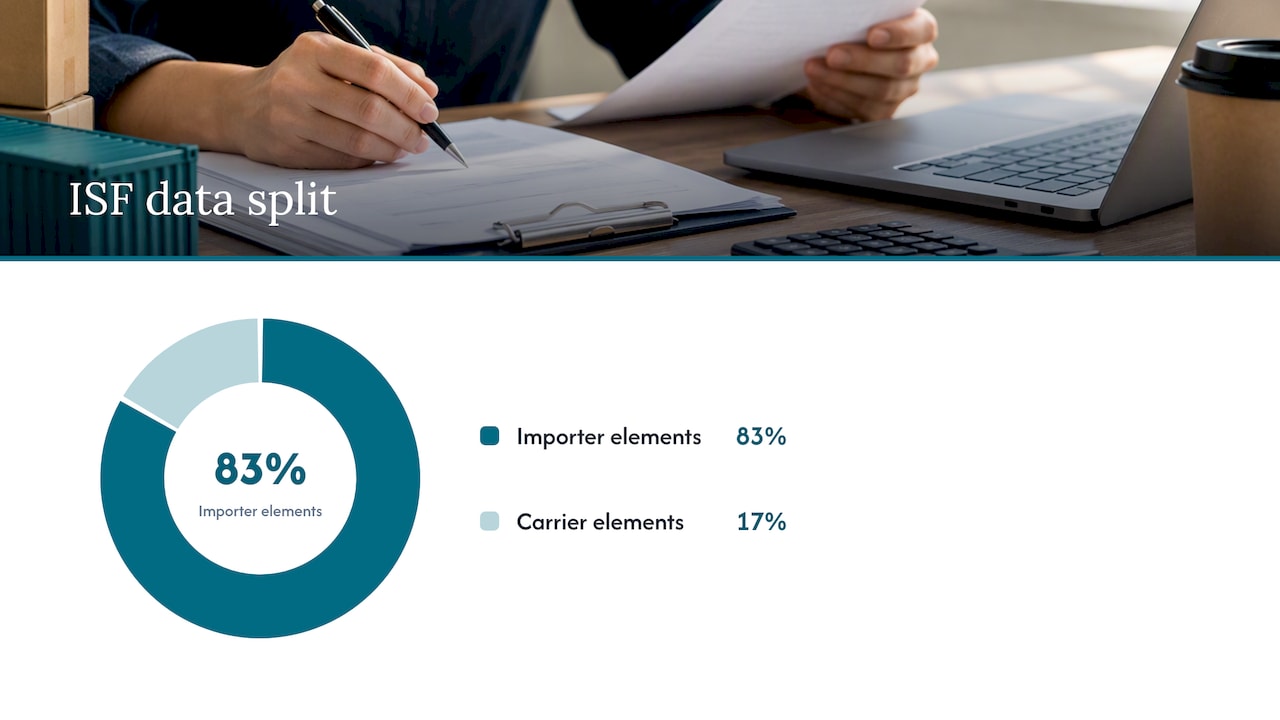
One in a persistent set of penalties tied to late or missing ISF filings makes early data collection the cheapest fix available. Collecting supplier names, container stuffing location, consignee details, and HTS numbers during the purchase order stage, not at booking, closes most of the gaps that cause ISF errors.
Once the ISF is filed, later corrections run through ACE. The system distinguishes two update types:
- Update (U): minor corrections allowed up to 15 calendar days after cargo release.
- Replace ®: a full replacement filing, but only before cargo release; once released, only updates are permitted, which is why accurate data before arrival matters more than the ability to fix it after.
Forwarders typically file the ISF on the importer’s behalf as part of the booking package, though larger importers with in-house compliance teams sometimes self-file through a licensed ABI provider.
Vessel arrival, arrival notice, and container availability at the terminal
When the vessel discharges, the carrier or forwarder issues an arrival notice listing the bill of lading number, container number, discharge terminal, and the earliest available pickup date. This document is the trigger for scheduling drayage and confirming customs status.
- Match the arrival notice against the original booking and bill of lading to confirm container numbers and quantities line up.
- Check the terminal or marine terminal operator’s online tool for real-time container status before dispatching a truck.
- A “container not available” message usually means the box has not been discharged yet, customs has placed a hold, or a chassis is not assigned; each has a different fix.
- When a hold appears, confirm first whether it is a customs hold (entry not filed or PGA review pending) or a carrier hold (freight charges unpaid), since the contact and resolution path differ.
Getting a delivery order released, the document that authorizes the trucker to take the container from the terminal, depends on both freight charges being settled and customs clearance being complete.
Customs entry and cargo release: filing entry, duties, inspections, and ACE/ABI procedures
The Importer of Record carries legal responsibility for the accuracy of the entry, the duties owed, and compliance with any agency requirements, even when a broker handles the paperwork. CBP’s importing guidance describes entry as a two-part process: the cargo is released first, and the entry summary with duty payment follows.
- File entry documentation, typically through a licensed customs broker using ABI, presenting the commercial invoice, packing list, and bill of lading as evidence of the transaction and the right to make entry.
- Reference the ISF data already on file; the ACE Cargo Release guidance ties entry filings to the same bill of lading and container data submitted earlier, so consistency between the two avoids flags.
- Submit the entry summary and pay estimated duties, generally within 15 calendar days of release, per CBP’s handbook on entry documentation.
- If a Partner Government Agency (PGA) flags the shipment, whether FDA, USDA, or another agency, respond promptly with the requested certificates or lab results, since PGA holds routinely outlast the standard customs process.
- If CBP selects the container for a physical exam, keep packing lists and invoices ready to hand to the examining officer, since a poorly documented shipment extends exam time.
A broker earns their fee mainly in this stage: knowing which PGA rules apply to a given commodity and having the right documents queued up before an exam is called.
Inland delivery, container return, and intermodal handoffs
Once released, the container moves inland under either carrier haulage, where the ocean carrier’s contracted trucker handles delivery, or merchant haulage, where the importer arranges its own trucking. That choice determines who books the appointment and who absorbs delays at the ramp or terminal.
- Confirm chassis availability before scheduling; a booked truck with no chassis is a common cause of missed appointments.
- Book delivery appointments as early as the arrival notice allows, since congested terminals fill appointment slots fast.
- Unload the container promptly at destination to keep the empty return on schedule.
- Photograph and log the container’s condition and the exact return date at the empty depot, since that record is the strongest evidence in any later detention dispute.
Charges, timelines and dispute handling: demurrage, detention, free time, and billing disputes
Demurrage is the fee a carrier or terminal charges for a container sitting at the port beyond its free time. Detention is the fee for a container sitting outside the terminal, at the importer’s facility or elsewhere, beyond the equipment’s free time. Free time itself is usually counted in calendar days from discharge or pickup, though some contracts specify working days, and that distinction alone can decide whether a charge applies.
Ocean carriers collected approximately $15.4 billion in demurrage and detention charges from April 2020 through March 2026, a figure that shows how much financial exposure sits inside a process most importers treat as an afterthought.
- Negotiate free time windows into the carrier contract before cargo moves, not after a charge appears.
- Keep timestamped records of container availability, appointment requests, and terminal congestion notices.
- Dispute a bill in writing promptly, citing the specific dates and documents that contradict the charge.
- Escalate unresolved disputes through the Federal Maritime Commission’s complaint process when direct negotiation stalls.
Billing transparency remains uneven industry-wide, and importers often cannot see the underlying carrier contracts that set the charges against them, which is why documentation discipline matters more here than in almost any other stage.
Common exceptions, delays, and mitigation: practical troubleshooting for importers
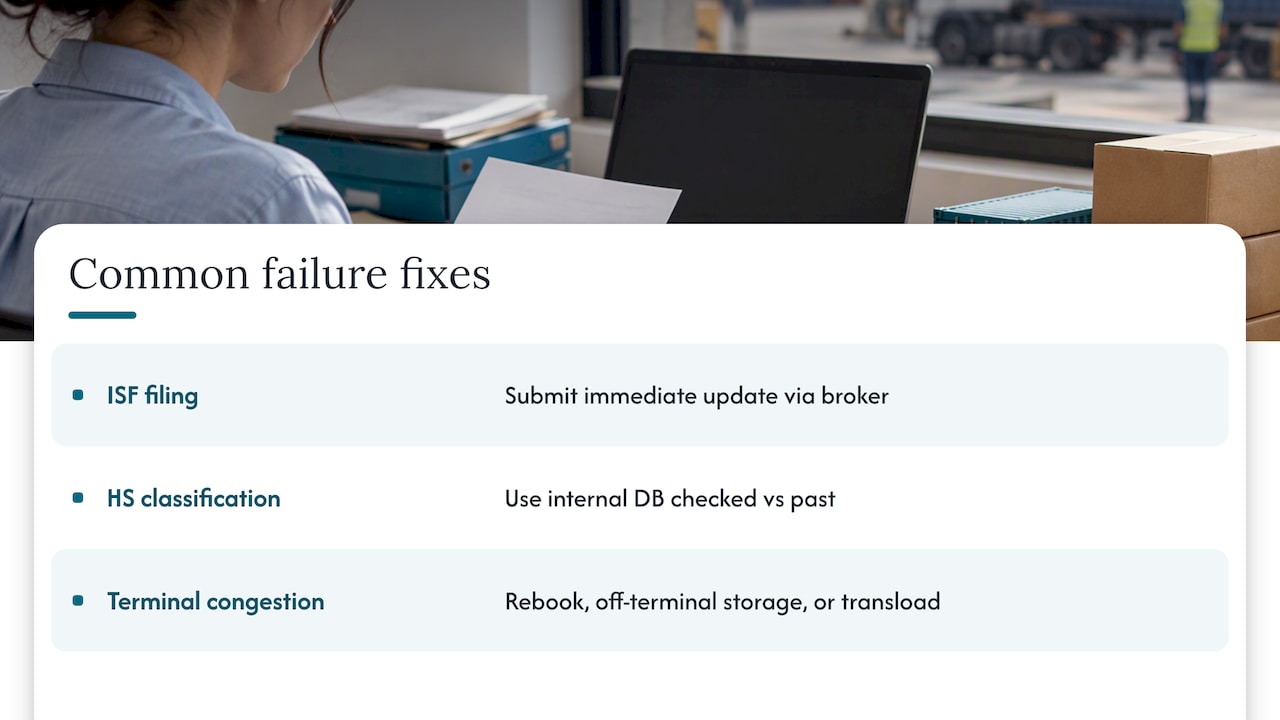
Most delays trace back to the same handful of failure points, and each has a fast fix. A late or inaccurate ISF filing needs an immediate update submitted through the broker or forwarder rather than a wait-and-see approach, since penalties accrue the longer an error sits uncorrected. Misclassified HS codes cause duty disputes and exam referrals, so building an internal classification database, checked against past entries, catches errors before filing rather than after a hold.
Terminal congestion is harder to control directly, but importers still have options: rebook the drayage appointment for the next available slot, arrange short-term off-terminal storage to stop the demurrage clock, or transload the cargo onto a different chassis or trailer if the original equipment is unavailable.
Pro Tip: Build a shared tracker between your purchasing, forwarding, and customs teams so an HS code, once validated, never gets re-keyed differently on a later shipment.
How ORNER helps operationalize the sea import freight forwarding process
ORNER supports each stage described above through its own operational tools rather than generic advice. Its freight booking service coordinates vessel space and cut-off tracking, and its freight forwarding documentation guidance walks through the commercial invoice, packing list, and bill of lading requirements covered in the earlier sections.
- Freight booking and estimate tools for locking in vessel space and cut-off dates.
- Documentation resources, including an ocean bill of lading guide, for getting shipping papers right the first time.
- Customs clearance and warehousing support for coordinating entry filing and inland storage.
- Shipment tracking and exception alerts that flag holds before they become missed appointments.
These resources are built to be used together, from the first booking confirmation through the final delivery order, so an importer’s team is not stitching disconnected tools across the seven stages.
Author perspective: practical checklist and recommended operating rhythms
The importers who avoid demurrage rarely have better luck. They run a tighter weekly rhythm: confirm ISF status early in the week, verify booking cut-offs against actual cargo readiness, and check terminal appointment slots before congestion locks them out.
Three actions matter more than the rest: get HS codes and stuffing data locked before booking, assign ISF ownership explicitly, and document every container touchpoint from discharge to empty return. ORNER’s SOP resources exist to make that rhythm repeatable rather than something rebuilt from scratch on every shipment.
— Maayan
How ORNER supports sea import forwarding
Importers juggling booking, documentation, ISF filing, and customs entry across multiple carriers usually lose time to handoffs, not to any single step. Some platforms run freight booking, customs clearance, and warehousing under one system, so arrival notice, delivery order, and entry status appear together instead of separately.
- Start a shipment with ORNER’s freight booking and estimate tool to lock in vessel space and cut-off dates.
- Route customs clearance and warehousing needs through ORNER’s global ecommerce fulfillment services.
- Review ORNER’s ocean freight forwarding guide for a fuller picture of how booking through delivery fits together.
Request a freight quote directly through Or-ner to see how the booking, documentation, and clearance stages line up for your next shipment.
Sources
- Importer Security Filing (ISF) guidance — CBP help
- Detention and demurrage — Federal Maritime Commission
FAQ
When does ISF need to be filed for ocean imports?
CBP requires the Importer Security Filing to be submitted electronically at least 24 hours before cargo is loaded onto the vessel at the foreign port. Bulk cargo is exempt, and break-bulk shipments follow separate timing rules.
Who is legally responsible as Importer of Record?
The Importer of Record is the party legally responsible for the accuracy of the customs entry, the duties owed, and compliance with any agency requirements, per CBP’s importing guidance. A customs broker can file the paperwork, but the legal obligation stays with the importer.
How can importers reduce demurrage and detention charges?
Negotiating free time into carrier contracts before cargo moves, tracking container status daily, and keeping timestamped records of appointments and terminal notices are the most practical defenses. Ocean carriers collected about $15.4 billion in demurrage and detention charges from April 2020 through March 2026, which is why documentation discipline matters at every stage.
What documents are required for customs release?
A complete customs entry generally requires the commercial invoice, packing list, and bill of lading as evidence of the transaction, along with the ISF data already on file with CBP. Partner Government Agency holds may require additional certificates depending on the commodity.
What is the difference between a freight forwarder and a customs broker?
A freight forwarder coordinates booking, transport, and documentation between the shipper and the carrier, while a customs broker is licensed specifically to file entry paperwork with customs on the importer’s behalf. Many companies offer both functions together to avoid handoff gaps between booking and clearance.