Artificial Intelligence is redefining logistics in ways nobody expected. Most people think AI just means robots taking over simple tasks, but the shift is much bigger. AI-driven logistics can cut operational costs by up to 40 percent while increasing delivery speed and precision. And the real surprise? The more these systems learn, the smarter and more efficient your entire supply chain becomes.
Table of Contents
- Defining Artificial Intelligence And Its Importance In Logistics
- How Artificial Intelligence Enhances Logistics Operations
- The Impact Of Artificial Intelligence On Supply Chain Management
- Key Technologies And Concepts In AI-Driven Logistics
- Real-World Examples Of AI In Logistics
Quick Summary
| Takeaway | Explanation |
|---|---|
| AI enhances logistics efficiency. | AI reduces costs and improves response times by optimizing supply chain processes through data analysis and decision-making. |
| Intelligent routing improves delivery. | AI applications analyze traffic and conditions in real-time to optimize delivery paths and timing, minimizing delays. |
| Predictive capabilities transform operations. | AI uses historical data to forecast demand, manage inventory, and prevent potential disruptions proactively, enhancing strategic planning. |
| Automated systems minimize human error. | AI reduces reliance on manual processes, allowing for more accurate data handling and quicker decision-making in logistics. |
Defining Artificial Intelligence and Its Importance in Logistics
Artificial Intelligence (AI) represents a groundbreaking technological advancement transforming how businesses approach complex operational challenges. In logistics, AI goes beyond simple automation, offering sophisticated systems capable of learning, adapting, and making intelligent decisions across supply chain processes.
What Exactly is Artificial Intelligence?
At its core, artificial intelligence involves computer systems designed to mimic human cognitive functions like learning, problem solving, and decision making. Unlike traditional software that follows rigid programmed instructions, AI systems can analyze massive datasets, recognize patterns, and generate insights with remarkable precision. In logistics, this means AI can process complex variables such as shipping routes, inventory levels, transportation costs, and delivery timelines far more efficiently than human analysts.
Strategic Significance in Logistics Operations
According to research from the Global Supply Chain Institute at the University of Tennessee, AI enhances supply chain efficiency through several critical capabilities:
- Real-time data processing and analysis
- Predictive demand forecasting
- Dynamic route optimization
- Inventory management precision
- Automated exception handling
Businesses leveraging AI can dramatically reduce operational costs, minimize human error, and create more responsive logistics networks. The technology enables companies to anticipate challenges before they emerge, transforming reactive logistics management into proactive strategic planning.
Moreover, AI’s adaptive learning capabilities mean logistics systems continuously improve. Each transaction, shipment, and operational interaction becomes an opportunity for the system to refine its understanding and performance. Read more about how advanced logistics technologies are reshaping supply chains.
How Artificial Intelligence Enhances Logistics Operations
Artificial Intelligence represents a transformative technology that revolutionizes logistics operations by introducing unprecedented levels of efficiency, accuracy, and predictive capability. By integrating advanced machine learning algorithms and sophisticated data analysis techniques, AI enables logistics companies to reimagine traditional operational frameworks.
Intelligent Process Optimization
AI drives logistics transformation through intelligent process optimization, enabling businesses to streamline complex supply chain activities. By analyzing historical performance data, AI systems can predict potential bottlenecks, recommend alternative routing strategies, and automatically adjust operational parameters in real time. These capabilities allow logistics managers to make data-driven decisions with remarkable speed and precision.
Advanced Predictive Capabilities
According to research from the National Renewable Energy Laboratory, AI applications in logistics provide extraordinary predictive capabilities across multiple operational domains:
- Precise demand forecasting
- Dynamic inventory management
- Intelligent route planning
- Proactive maintenance scheduling
- Risk mitigation strategies
By leveraging machine learning algorithms, logistics companies can transform reactive approaches into proactive strategies. These systems continuously analyze complex datasets, identifying patterns and trends that human analysts might overlook. The result is a more responsive, adaptive logistics infrastructure that can quickly adjust to changing market conditions.
Moreover, AI technologies enable unprecedented levels of operational transparency. Real-time tracking, automated exception handling, and predictive analytics create a comprehensive view of supply chain performance. Learn more about advanced logistics technologies that are reshaping how businesses manage their supply chains.
The integration of AI into logistics operations represents more than technological advancement. It signifies a fundamental reimagining of how businesses approach supply chain management, emphasizing agility, efficiency, and continuous improvement.
The Impact of Artificial Intelligence on Supply Chain Management
Artificial Intelligence is fundamentally transforming supply chain management by introducing unprecedented levels of intelligence, adaptability, and strategic decision making. Beyond traditional automation, AI enables organizations to create responsive, predictive, and highly efficient supply chain ecosystems that can anticipate and address complex operational challenges.
Transformative Operational Intelligence
AI technologies provide supply chain managers with sophisticated tools for analyzing massive datasets, uncovering hidden patterns, and generating actionable insights. These advanced systems go beyond simple data processing, offering nuanced understanding of complex interconnections within supply networks. By integrating machine learning algorithms, businesses can develop more accurate forecasting models, optimize resource allocation, and make data-driven strategic decisions with remarkable precision.
Strategic Capabilities and Performance Enhancement
According to a systematic review from the Global Supply Chain Institute, AI introduces several critical capabilities in supply chain management:
- Enhanced demand prediction accuracy
- Real-time risk assessment and mitigation
- Dynamic inventory optimization
- Automated supplier performance tracking
- Intelligent logistics route planning
These capabilities enable organizations to transition from reactive operational models to proactive, anticipatory supply chain strategies.
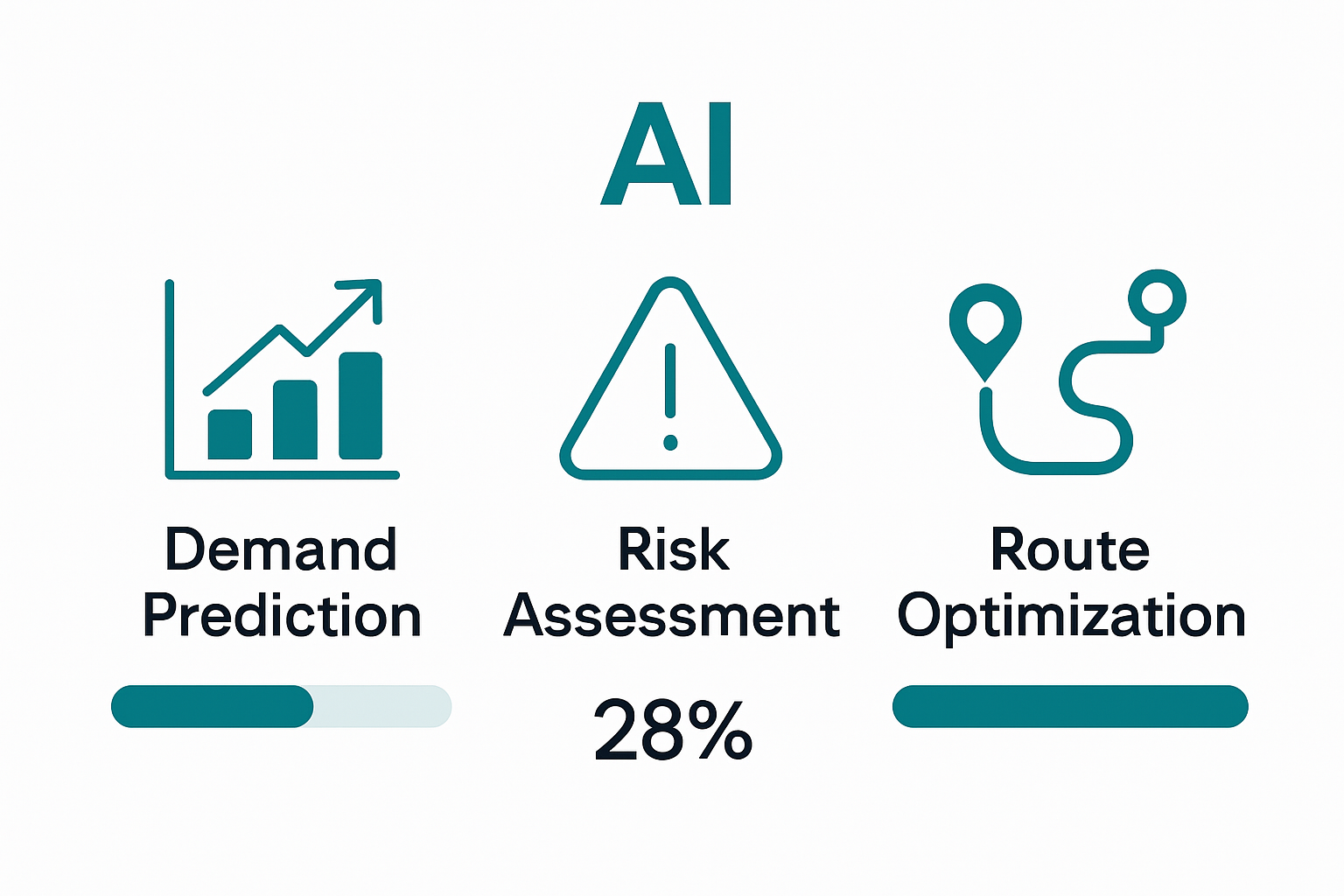 AI systems continuously learn and adapt, creating increasingly sophisticated models that can predict potential disruptions, recommend alternative approaches, and minimize operational inefficiencies.
Moreover, AI-driven supply chain management represents a significant competitive advantage. By leveraging intelligent technologies, companies can reduce operational costs, improve resource utilization, and create more resilient, flexible supply networks.
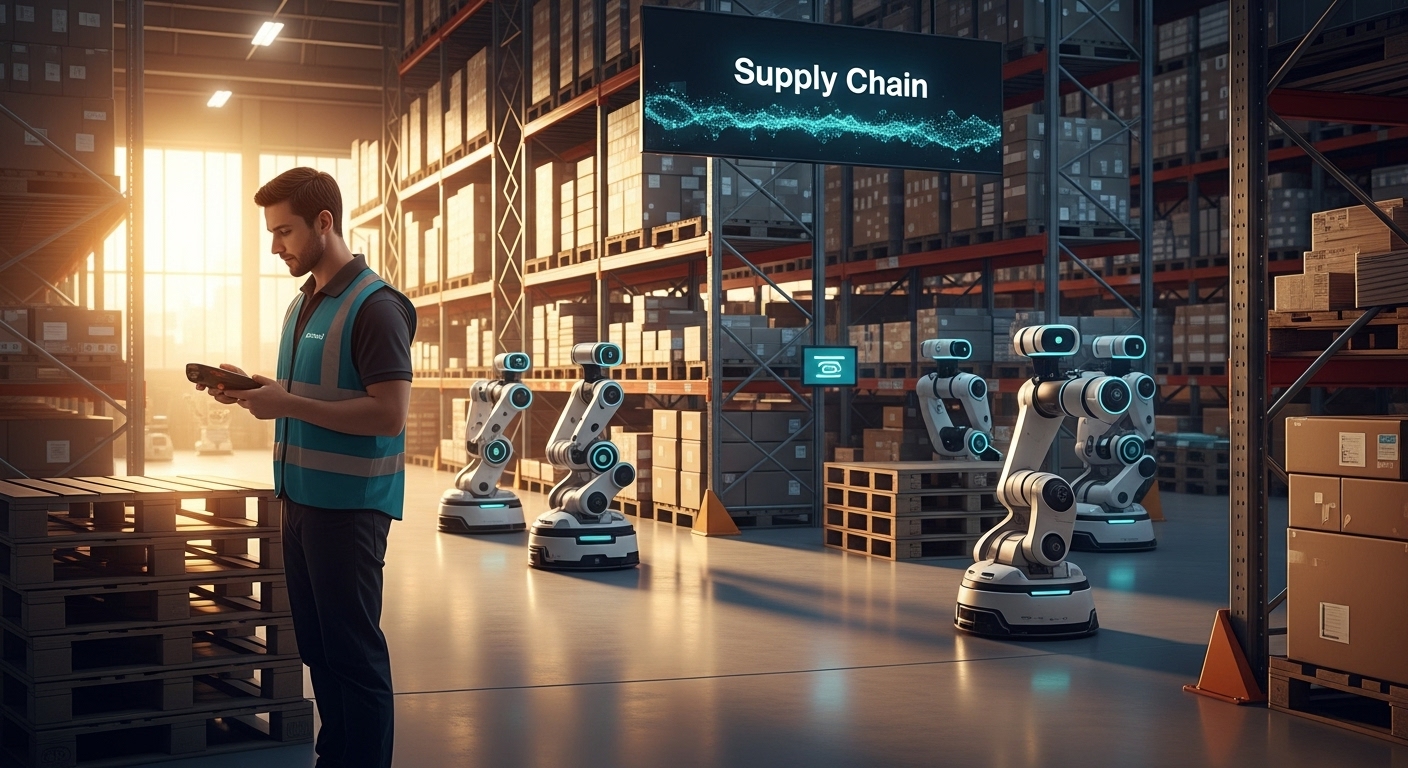 Explore advanced logistics technologies that are reshaping modern supply chains and understand how intelligent systems are revolutionizing business operations.
The integration of AI into supply chain management is not merely a technological upgrade. It represents a fundamental reimagining of how businesses understand, manage, and optimize their complex global networks.
Key Technologies and Concepts in AI-Driven Logistics
AI-driven logistics encompasses a complex ecosystem of advanced technologies that work synergistically to transform traditional supply chain operations. These innovative technologies combine computational power, sophisticated algorithms, and intelligent data processing to create more responsive, efficient, and adaptive logistics networks.
Machine Learning and Predictive Analytics
Machine learning represents the foundational technology enabling AI logistics solutions. These intelligent systems can analyze massive historical datasets, identify intricate patterns, and generate predictive models that anticipate future logistics challenges. Unlike traditional statistical approaches, machine learning algorithms continuously adapt and improve their predictions based on new incoming data, creating increasingly accurate forecasting mechanisms.
Advanced Technological Components
According to research from MIT’s Center for Transportation and Logistics, AI-driven logistics integrates several critical technological components:
- Neural network algorithms
- Deep learning systems
- Computer vision technologies
- Natural language processing
- Robotic process automation
- Sensor-based intelligent tracking
These technologies work together to create comprehensive logistics intelligence platforms. Computer vision systems can inspect packaging and detect defects, while natural language processing enables automated communication and documentation management. Robotic process automation streamlines repetitive administrative tasks, freeing human resources for more strategic decision making.
Moreover, the convergence of these technologies enables unprecedented levels of operational transparency and efficiency.
The following table summarizes the primary AI technologies and components transforming logistics, helping readers clearly see each technology and its core function in supply chain processes.
| Technology / Component | Primary Function in Logistics |
|---|---|
| Machine Learning | Analyzes historical data to predict trends and optimize operations |
| Neural Network Algorithms | Recognizes complex patterns for precise forecasting |
| Deep Learning Systems | Processes large, unstructured datasets for advanced decision making |
| Computer Vision | Inspects packaging and detects defects using image data |
| Natural Language Processing | Automates communication and documentation management |
| Robotic Process Automation | Handles repetitive administrative tasks automatically |
| Sensor-Based Intelligent Tracking | Provides real-time asset and shipment visibility |
The integration of these technologies represents more than incremental improvement. It signifies a fundamental transformation in how businesses conceptualize, manage, and execute logistics strategies.
Real-World Examples of AI in Logistics
Artificial Intelligence is transforming logistics through practical, innovative applications that solve complex operational challenges. These real-world implementations demonstrate how AI technologies move beyond theoretical concepts to deliver tangible business value across various logistics domains.
Intelligent Inventory Management
AI-powered inventory management systems represent a breakthrough in supply chain optimization. These intelligent platforms utilize advanced machine learning algorithms to predict demand, optimize stock levels, and minimize warehousing costs. By analyzing historical sales data, seasonal trends, and external market factors, AI systems can generate precise inventory recommendations that reduce overstock and stockout scenarios.
Automated Routing and Delivery Optimization
According to research from the National Renewable Energy Laboratory, AI technologies are revolutionizing logistics routing and delivery strategies through several key applications:
- Dynamic route planning
- Real-time traffic prediction
- Fuel efficiency optimization
- Predictive maintenance scheduling
- Automated load balancing
These AI-driven routing systems can calculate the most efficient delivery paths, considering multiple variables such as traffic conditions, vehicle capacity, delivery windows, and fuel consumption. By continuously learning and adapting, these systems significantly reduce transportation costs and improve overall delivery performance.
Moreover, AI enables unprecedented levels of delivery precision. Advanced computer vision and machine learning technologies can now track packages, predict potential delays, and automatically reroute shipments to ensure timely delivery. Learn more about advanced logistics technologies that are transforming supply chain management.
The practical implementation of AI in logistics demonstrates how intelligent technologies can solve complex operational challenges, creating more efficient, responsive, and cost-effective supply chain ecosystems.
This table presents key real-world examples of how artificial intelligence is practically applied in logistics operations, highlighting the core function and expected business value of each use case.
| AI Application | Core Function | Expected Business Value |
|---|---|---|
| Intelligent Inventory Management | Optimizes stock levels and predicts demand | Reduces overstock and stockout, lowers costs |
| Automated Routing and Delivery | Dynamic route planning and real-time traffic analysis | Minimizes delays, increases delivery precision |
| Predictive Maintenance Scheduling | Anticipates equipment maintenance needs | Reduces downtime, lowers repair costs |
| Real-time Shipment Tracking | Monitors packages and forecasts delays | Ensures delivery transparency, higher reliability |
| Automated Load Balancing | Distributes shipments for optimal efficiency | Improves resource utilization, reduces waste |
Unlock the Power of Reliable AI-Driven Logistics for Your Business
From the challenges of keeping up with demand forecasting to the stress of last-minute delivery issues, the article shows how modern logistics is more complex than ever. You know that traditional systems cannot handle today’s fast-changing shipping routes, unpredictable inventory, or the need for real-time visibility. Artificial Intelligence, as discussed, addresses these pain points by making decisions instantly, optimizing every mile, and turning chaos into clarity.
Why wait to transform your shipping and fulfillment when you can have access to reliable courier services and intelligent logistics tools right now? Streamline your entire supply chain with our all-in-one tech platform. Benefit from fast booking, real-time tracking, and adaptive automation for every step of your ecommerce operations. Take control of your inventory, shipments, and customer experience with full transparency and dedicated support. Start your journey toward frictionless logistics at or-ner.com or learn more about how we can optimize your inventory management and just-in-time delivery. Now is the best time to experience AI-enhanced efficiency for your business.
Frequently Asked Questions
What is artificial intelligence in logistics?
Artificial intelligence in logistics refers to the use of advanced technologies that mimic human cognitive functions such as learning, problem solving, and decision making to optimize supply chain operations and enhance overall efficiency.
How does AI improve inventory management in logistics?
AI improves inventory management by utilizing machine learning algorithms to predict demand, optimize stock levels, and minimize warehousing costs, leading to reduced overstock and stockout scenarios.
What are the key benefits of using AI in logistics operations?
The key benefits of using AI in logistics include enhanced operational efficiency, reduced costs, improved accuracy in demand forecasting, dynamic route optimization, and real-time tracking of shipments.
Can AI help with real-time decision making in logistics?
Yes, AI helps with real-time decision making by analyzing massive datasets to provide actionable insights, predict potential disruptions, and recommend proactive strategies to enhance supply chain responsiveness.