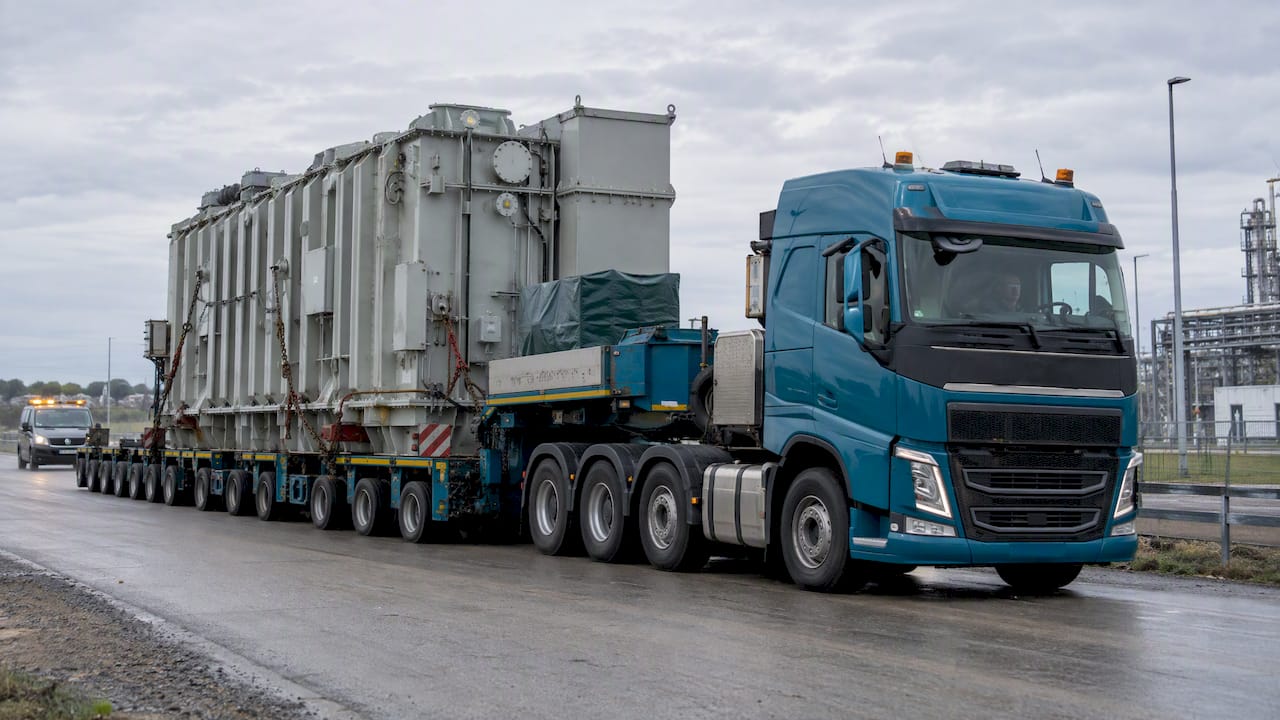
For an ecommerce operation shipping more than a few hundred orders a month, the reliable courier services worth your contract are the ones bundling last-mile delivery with warehousing, real-time inventory visibility, and native platform integration into a single accountable system. Or-ner fits that profile because it ties carrier execution, fulfillment nodes, and order data into one operational layer instead of forcing you to stitch together separate vendors. Before you sign anything, pull six months of shipping invoices and your order-volume history by SKU. Send that data, along with your peak-month order spikes and current SLA complaints, to any vendor you’re evaluating as a request-for-proposal package. That single step exposes whether a courier’s quoted rate matches what you’ll actually pay.
Table of Contents
- Returns Handling and Returns Processing Costs
- Insurance and Liability Policies Coverage Analysis
- Practitioner Perspective: What High-Performing Operations Do Right Now
- Why Or-ner Fits the Evaluation Criteria and How to Start
- Action Checklist: The Next 7 Days and Before Peak Season
- Curated Reading and Tools to Support Audits and RFPs
- Sources
- FAQ
Returns Handling and Returns Processing Costs
Returns are where courier contracts quietly bleed margin. A return that isn’t inspected, restocked, or graded within a defined window turns into dead inventory sitting in a warehouse you’re still paying rent on. Ask any prospective partner for their average receiving-to-restock turnaround in days, not a vague “fast” promise, and get it written into the contract as a measurable target.

Grading matters just as much as speed. A returned item that comes back sellable, damaged, or open-box needs a documented workflow, because a courier that dumps everything into one bin creates inventory discrepancies that surface weeks later during a stock count. Ask what percentage of returns get restocked within 48 hours versus sitting in a queue. If a vendor can’t answer with a number, that’s your answer.
Return shipping costs also deserve their own line item in your cost-per-order math. A generous return policy drives conversion, but if your courier charges full outbound rates for reverse logistics, that “free returns” promise on your storefront is eating into margin you never accounted for.
Insurance and Liability Policies Coverage Analysis
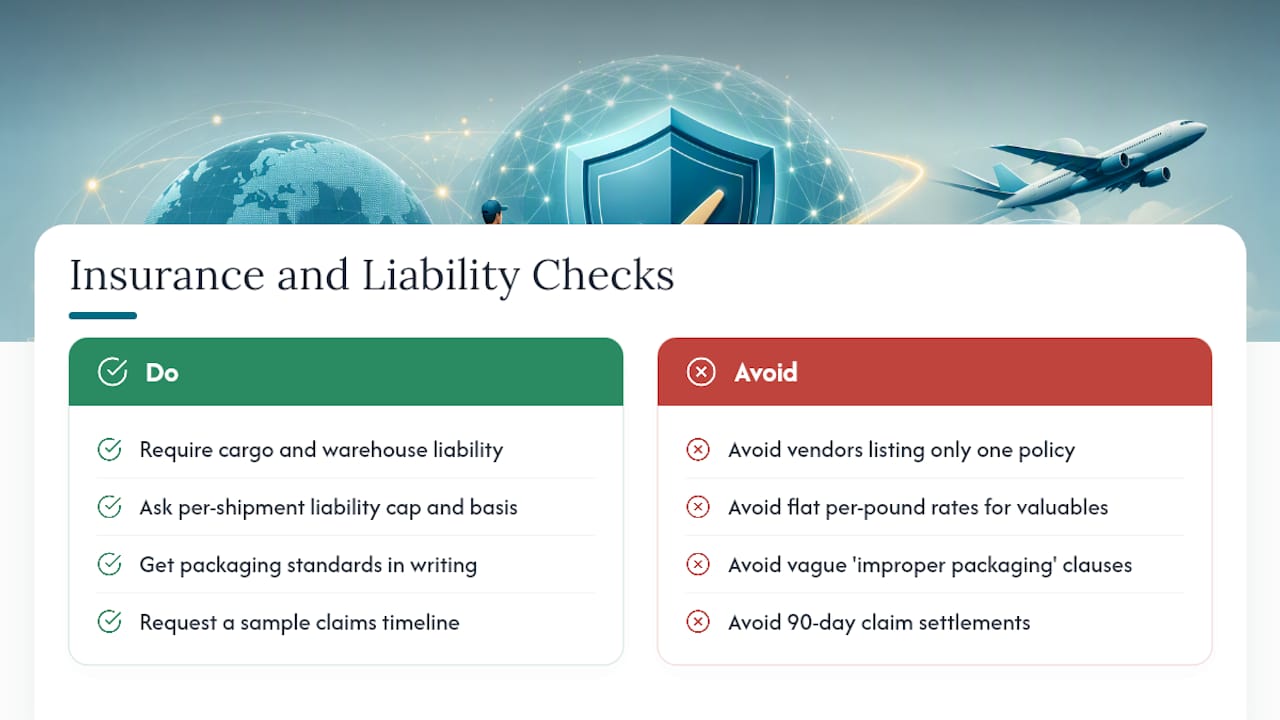
Every reliable courier partner should carry cargo liability insurance that covers loss and damage in transit, plus warehouse legal liability for goods sitting in storage. These are two different policies, and a vendor who only mentions one is leaving a gap. Ask specifically what the per-shipment liability cap is and whether it’s based on declared value or a flat per-pound rate, because the latter can leave you badly undercompensated on high-value goods like electronics or musical instruments.
Also confirm who eats the cost when a claim gets denied. Some contracts push liability back onto the merchant for “improper packaging,” a clause vague enough to deny almost any claim. Get the exact packaging standards in writing, and ask for a sample claims-resolution timeline from an existing client. A courier that takes 90 days to settle a damaged-shipment claim is a cash-flow problem waiting to happen during your busiest quarter.
Practitioner Perspective: What High-Performing Operations Do Right Now
Watching how the strongest ecommerce operators run their logistics stack heading into peak season, one pattern stands out: they stopped treating their 3PL as a black box years ago. They demand visibility into every layer of the operation, and they build redundancy before they need it, not after a stockout costs them a holiday weekend of sales.
A few practices separate operators who sail through peak from those who scramble:
- They set up a real-time OMS or WMS as the single source of truth for inventory and orders, then let the courier plug into it rather than the reverse, a sequencing Shopify’s own enterprise logistics guidance backs directly.
- They run on at least two fulfillment nodes once volume clears roughly 300 to 400 orders a month, a threshold industry research on distributed inventory identifies as the practical minimum for the strategy to pay off.
- They audit carrier invoices against a rate checker like EasyPost or Shipware on a rolling basis, not once a year.
- They insist on named SLA remedies, meaning credits or penalties spelled out in the contract, not a handshake promise of “we’ll make it right.”
- They test any new vendor relationship with a batch of live orders before flipping the switch on full volume.
In vendor conversations, the tell is whether a rep can describe their webhook structure for order and tracking sync without pulling up a script. Real-time integration either exists as documented API infrastructure or it doesn’t, and native fulfillment automation is what separates a modern courier partner from one still emailing you tracking spreadsheets.
Why Or-ner Fits the Evaluation Criteria and How to Start
Or-ner was built around the exact dimensions serious ecommerce operators score vendors on: operational fit for complex SKU catalogs, native technology integration instead of bolted-on middleware, transparent cost-per-order pricing, multi-node geographic coverage, and SLA terms with actual remedies attached.
On operational fit, Or-ner handles catalog complexity across categories like apparel, footwear, and home goods without forcing you into a one-size-fits-all workflow. On technology, its platform connects directly to Amazon and major ecommerce storefronts, giving you the real-time inventory visibility that a manual reconciliation process can’t match. On cost, you get a true all-in quote instead of a base rate followed by a wave of accessorial surcharges.
| Metric | Target to negotiate for |
|---|---|
| Pick accuracy | very high, with strong accuracy guarantees |
| On-time ship rate | very high, with strong timeliness guarantees |
| Single-item DTC cost-per-order | within a low to moderate range depending on regional versus national coverage |
| Pallet storage per month | within a moderate range depending on market |
Those benchmark ranges come from a 2026 3PL contract audit report, and they exist so you have a number to hold any quote against.
To request a quote, send your last six months of invoices, your monthly order volume by SKU, your peak-season multiplier, and a list of every accessorial fee you’re currently being charged. Ask explicitly for the all-in cost-per-order, not a base rate, and ask the vendor to disclose their carrier markup percentage in writing. Then negotiate ramp and ramp-down terms so your contract flexes with seasonal volume instead of locking you into a flat minimum year-round, a point covered in more depth in Or-ner’s contract negotiation guide.
For onboarding, run a pilot of 50 to 100 test orders in parallel with your current fulfillment setup before full cutover. This exposes integration bugs and kitting errors while your existing operation still has the safety net running.
Pro Tip: The most common onboarding failure isn’t a bad courier, it’s a rushed cutover. Keep your old system live for at least two full weeks alongside the new one and reconcile inventory counts daily during that window.
Explore Or-ner’s global courier and fulfillment platform or check cross-border logistics options if part of your volume ships internationally, and request a quote today.
Action Checklist: The Next 7 Days and Before Peak Season
The single most important move you can make right now is running a true cost-per-order audit, because effective courier costs often turn out to be significantly higher than the quoted rate once accessorials and carrier markups get factored in(https://ecommerce-times.com/how-to-audit-and-optimize-your-3pl-contract-before-peak-season-2026/).
- Pull six months of invoices and build a real cost-per-order spreadsheet, not an estimate.
- Request audited SLA language covering pick accuracy (99.5%+) and on-time ship rate (98%+), with credits attached to misses.
- Run a 100-shipment carrier audit through a rate checker like EasyPost or Shipware; a gap above 8% between quoted and billed rates is a red flag worth renegotiating.
- Cap carrier markups in writing, aiming for 3% to 5% disclosed rather than an unstated pass-through.
- Set node-level reorder points if you’re running distributed inventory, especially once volume clears 300 orders a month.
- Pilot any new vendor with 50 to 100 live orders before full cutover.
| Point | Details |
|---|---|
| Run the cost audit first | Six months of invoices usually reveal 15%-30% higher true costs than quoted. |
| Set hard SLA numbers | Insist on 99.5%+ pick accuracy and 98%+ on-time ship rate with credits attached. |
| Cap carrier markups | Negotiate a disclosed 3%-5% cap; anything undisclosed is a red flag. |
| Pilot before cutover | Test 50-100 orders in parallel before moving full volume to a new partner. |
| Or-ner fits the checklist | Or-ner combines native integrations, multi-node coverage, and transparent cost-per-order pricing for this exact evaluation process. |
Curated Reading and Tools to Support Audits and RFPs
A few resources are worth bookmarking as you build out your vendor evaluation process:
- Integrated logistics guidance from Shopify on sequencing your OMS before choosing physical fulfillment nodes.
- The 2026 3PL contract audit framework for building your own cost-per-order spreadsheet.
- Distributed inventory economics research on when a second fulfillment node actually pays for itself.
- Ecommerce fulfillment automation for evaluating native connectors versus fragile middleware.
- Or-ner’s integration guide for connecting Shopify, WooCommerce, and marketplace stores to a fulfillment partner via API.
- Apparel and transfer-heavy sellers can review fast custom transfer shipping practices for turnaround benchmarks specific to printed goods.
Rate-checking tools like EasyPost and auditing platforms like Shipware are worth pointing at your own invoice data before you finalize any RFP. Or-ner’s product pages, linked throughout this guide, walk through requesting a formal quote once your audit numbers are in hand.
Sources
- Integrated logistics (Shopify Enterprise blog)
- How to Audit and Optimize Your 3PL Contract Before Peak Season 2026 – Ecommerce Times
- Distributed inventory is reshaping 3PL economics in 2026 – Ecommerce Times
- Ecommerce fulfillment automation (Shopify blog)
FAQ
What Makes a Courier Partner Reliable for Ecommerce Sellers?
How Do I Calculate My True Cost-Per-Order?
Pull six months of invoices and add every accessorial fee, storage charge, and carrier markup to your base rate; this often reveals costs 15% to 30% higher than the quoted rate.
When Should I Move to a Two-Node Fulfillment Strategy?
Most ecommerce brands see distributed inventory pay off once monthly order volume reaches a few hundred orders, with clearer returns when that volume grows higher.
How Many Test Orders Should a Pilot Include Before Full Cutover?
Run several dozen test orders in parallel with your existing fulfillment setup to catch integration bugs and kitting errors before switching your full order volume.
Does Or-ner Handle Both Domestic and Cross-Border Fulfillment?
Yes, Or-ner combines courier delivery, warehousing, and customs clearance for cross-border shipments alongside domestic fulfillment, giving sellers a single integrated platform for both.