
EDI is shaking up the logistics world and nothing about it is slow or old fashioned anymore. Businesses using EDI are not just sending digital documents—they are moving transactions up to 70% faster and cutting documentation errors by more than half. You might think it is all about replacing paper, but the real story is how EDI is becoming the backbone for global supply chains, letting companies reach new markets and crush delays most thought were impossible to overcome.
Table of Contents
- Understanding EDI In Logistics Today
- Key Benefits For Ecommerce And Supply Chains
- Common EDI Transactions And Real-World Uses
- Future Trends And Best Practices For 2025
Quick Summary
| Takeaway | Explanation |
|---|---|
| Implement EDI for Competitive Advantage | Businesses that adopt EDI improve communication efficiency and processing speeds, positioning themselves as market leaders in logistics. |
| Reduce Costs with EDI Automation | Transitioning to EDI helps eliminate paper handling costs and speeds up invoicing, leading to significant savings. |
| Strengthen Partner Relationships with EDI | Enhanced visibility and real-time data sharing through EDI foster improved relationships between business partners, aiding in scalability and responsiveness. |
| Focus on Cloud-Based EDI Solutions | Cloud EDI enhances scalability and flexibility, making it essential for modern logistics operations as we approach 2025. |
| Embrace AI and Sustainability in EDI | Integrating AI capabilities with EDI not only boosts accuracy but also supports sustainable practices by reducing paper usage. |
Understanding EDI in Logistics Today
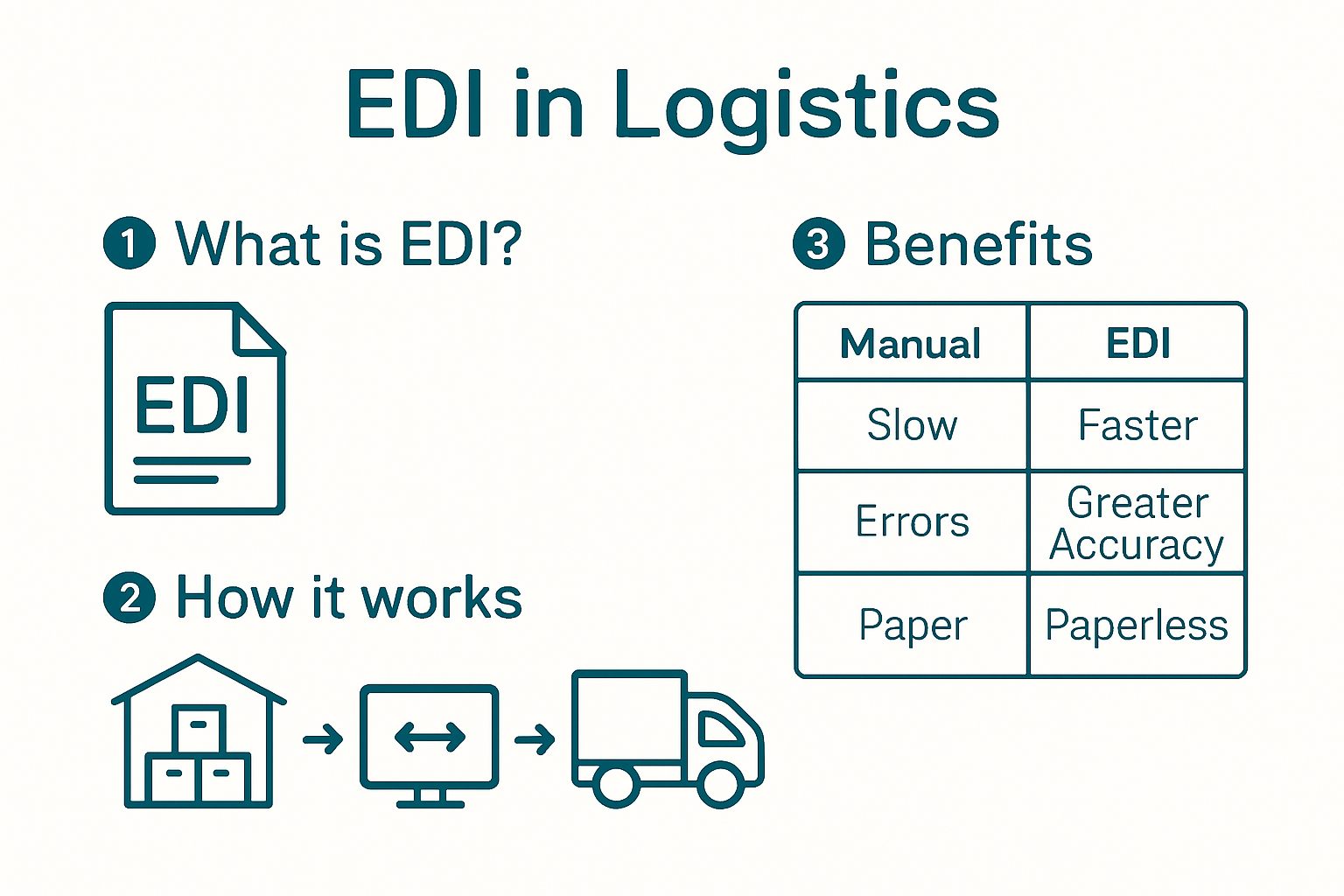
Electronic Data Interchange (EDI) represents a critical technological breakthrough in modern logistics operations. At its core, EDI enables businesses to exchange standardized electronic documents and information between different computer systems, eliminating the need for manual paperwork and dramatically improving communication efficiency across supply chains.
The Evolution of Digital Communication in Logistics
The logistics industry has undergone significant transformation with the adoption of EDI technologies. Research from market analysts indicates that the global EDI segment in digital logistics was valued at $4.37 billion in 2024 and is projected to grow at a remarkable 18.2% compound annual growth rate between 2025 and 2030. This substantial growth reflects the increasing recognition of EDI’s critical role in streamlining complex supply chain operations.
Traditional logistics communication methods relied heavily on paper documents, telefax transmissions, and manual data entry processes. These approaches were time consuming, error prone, and inefficient. EDI revolutionized this landscape by introducing standardized electronic communication protocols that enable instant, accurate data exchange between different organizational systems.
Key Benefits and Strategic Implications
Businesses implementing EDI in their logistics operations experience multiple strategic advantages. According to research published in international supply chain journals, integrating EDI with third party logistics providers using EDIFACT standards has resulted in:
- Compliance Improvement: 44% enhancement in international shipping compliance rates
- Error Reduction: 71% decrease in cross border documentation errors
- Processing Speed: Significant reduction in document processing time
The technological infrastructure supporting EDI includes various standardized communication formats like ANSI X12 in North America and EDIFACT internationally. These formats ensure that different systems can understand and process electronic documents consistently, regardless of the specific software or hardware being used.
However, EDI implementation is not without challenges. A comprehensive 2025 study exploring barriers to electronic document adoption in logistics highlighted potential obstacles such as legal constraints and lack of universal standardization. Organizations must carefully navigate these challenges while developing their digital communication strategies.
Beyond technical implementation, successful EDI integration requires a holistic approach. This involves not just technological upgrades but also organizational cultural shifts, staff training, and continuous process optimization. Companies must view EDI not as a standalone technology but as a fundamental component of their broader digital transformation strategy.
For modern businesses looking to remain competitive in 2025 and beyond, understanding and effectively implementing EDI is no longer optional—it is a strategic imperative. The ability to communicate seamlessly, process information rapidly, and minimize errors will increasingly distinguish market leaders from followers in the complex global logistics ecosystem.
To provide a concise view of major strategic outcomes from EDI implementation, here’s a table summarizing key improvement statistics cited in this section:
| Benefit Area | Improvement Metric |
|---|---|
| International Compliance | 44% increase in shipping compliance rates |
| Documentation Errors | 71% reduction in cross-border errors |
| Processing Speed | Significantly reduced document processing time |
Key Benefits for Ecommerce and Supply Chains
Electronic Data Interchange (EDI) delivers transformative advantages for ecommerce businesses and supply chain operations, fundamentally reshaping how organizations manage complex logistics and digital transactions. By enabling seamless electronic communication, EDI provides strategic capabilities that drive operational efficiency and competitive advantage.
Accelerating Transaction Processing and Accuracy
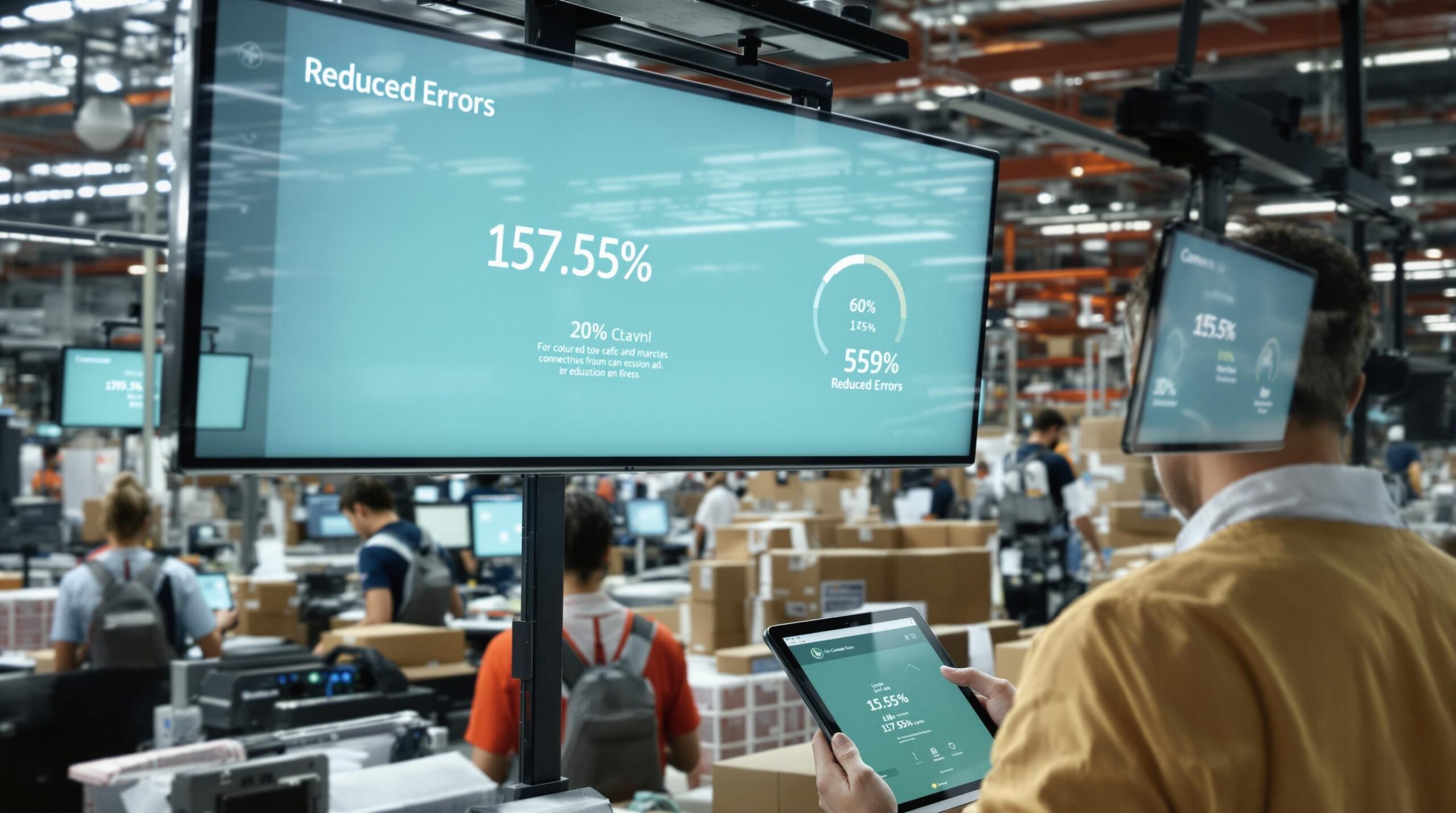
According to IBM research insights, EDI offers critical benefits that dramatically improve business performance. The technology enables instant document transmission between systems, eliminating manual data entry processes that traditionally consumed significant time and resources. Organizations implementing EDI can experience substantial reductions in processing times, with some businesses reporting up to 70% faster transaction completions compared to traditional paper based methods.
The automation inherent in EDI systems ensures remarkable accuracy. By removing human data entry, businesses minimize transcription errors that can disrupt supply chain operations. Technical analysis from enterprise research platforms reveals that EDI can reduce documentation errors by more than 50%, creating a more reliable and predictable operational environment.
Cost Reduction and Operational Efficiency
EDI delivers substantial financial benefits for businesses across multiple dimensions. The technology dramatically reduces administrative overhead by eliminating paper document processing, printing, mailing, and manual filing costs. Small to medium enterprises can save thousands of dollars annually by transitioning to electronic document exchanges.
Key cost saving mechanisms include:
- Reduced Labor Costs: Automation eliminates manual data entry and document management tasks
- Lower Administrative Expenses: Minimal paper document handling and storage requirements
- Faster Payment Cycles: Electronic invoicing and order processing accelerate financial transactions
Moreover, EDI supports more sustainable business practices by significantly reducing paper consumption. Companies can demonstrate environmental responsibility while simultaneously improving operational efficiency.
Enhanced Partner Relationships and Scalability
Beyond operational improvements, EDI facilitates stronger, more transparent relationships between business partners. The standardized communication protocols enable real time information sharing, creating unprecedented visibility across supply chain networks. Read more about advanced logistics strategies that complement EDI implementation.
Businesses utilizing EDI can quickly onboard new partners, scale operations, and adapt to changing market demands. The technology supports complex international transactions, enabling companies to expand their global reach with reduced administrative complexity. Sophisticated EDI systems integrate seamlessly with enterprise resource planning (ERP) platforms, creating a unified digital ecosystem that supports strategic decision making.
As ecommerce continues to evolve, EDI represents a critical infrastructure investment. Companies that embrace these digital communication technologies position themselves to outperform competitors, reduce operational friction, and create more agile, responsive supply chain networks. The future of logistics is digital, and EDI is the foundational technology driving this transformative shift.
For forward thinking businesses, implementing robust EDI systems is no longer optional—it is a strategic imperative for sustained growth and competitive differentiation in the rapidly changing global marketplace.
To help readers quickly identify and compare the main benefits of EDI for ecommerce and supply chains, the following table organizes these advantages alongside their specific impact areas:
| EDI Benefit | Description |
|---|---|
| Faster Transactions | Reduces processing times by up to 70% |
| Improved Accuracy | Minimizes documentation errors by over 50% |
| Cost Savings | Lowers labor, administrative, and paper handling expenses |
| Enhanced Partner Visibility | Enables real-time data sharing and relationship scaling |
| Sustainability | Reduces paper usage for greener, more efficient operations |
| Scalability & Global Reach | Supports onboarding of new partners and international business expansion |
Common EDI Transactions and Real-World Uses
Electronic Data Interchange (EDI) encompasses a wide range of standardized transaction types that enable seamless communication across different business systems and industries. Understanding these transaction codes is crucial for organizations looking to optimize their digital communication strategies and streamline operational workflows.
Core EDI Transaction Types and Their Applications
According to industry experts, several key EDI transaction codes form the backbone of electronic business communication. These standardized document exchanges facilitate critical business processes across multiple sectors:
- EDI 850 (Purchase Order): Enables businesses to electronically send detailed purchase instructions to suppliers
- EDI 810 (Invoice): Allows automatic generation and transmission of billing documents
- EDI 856 (Advance Shipping Notice): Provides detailed shipping information before product delivery
The international standardization of these transaction types ensures consistent communication across different technological platforms and geographical regions. Research from global documentation standards organizations highlights two primary EDI standards used worldwide: ANSI X12 (predominantly used in North America) and UN/EDIFACT (more common in international markets).
Industry-Specific EDI Implementation Strategies
Different industries leverage EDI transactions uniquely to address their specific operational requirements. In retail, EDI enables real time inventory tracking and automated restocking processes. Manufacturers use EDI to synchronize production schedules with supplier deliveries, creating more responsive supply chain ecosystems.
Healthcare organizations utilize specialized EDI transactions for claims processing, patient billing, and insurance verification. Pharmaceutical companies rely on these electronic exchanges to maintain strict regulatory compliance and track complex medical supply chains.
Technological Integration and Future Developments
Wikipedia’s comprehensive overview emphasizes that modern EDI goes beyond simple document exchange. Contemporary systems integrate advanced technologies like artificial intelligence and machine learning to provide predictive analytics and intelligent routing of electronic documents.
The transportation and logistics sector represents a prime example of EDI’s transformative potential. Shipping companies use EDI to:
- Track cargo movements in real time
- Automate customs documentation
- Provide instant shipment status updates
- Manage complex international shipping regulations
Read more about advanced logistics strategies that complement EDI implementation and drive operational excellence.
As global business becomes increasingly interconnected, EDI transaction standards continue evolving. The emergence of cloud based EDI solutions and API integrations promises even more flexible, scalable communication frameworks. Businesses that invest in robust EDI infrastructure position themselves to navigate complex global markets with unprecedented agility and efficiency.
The future of business communication lies in seamless, instantaneous data exchange. EDI transactions represent a critical technological foundation that enables organizations to communicate faster, more accurately, and with greater strategic insight than ever before.
Future Trends and Best Practices for 2025
As the digital landscape continues to evolve, Electronic Data Interchange (EDI) is undergoing a significant transformation, presenting businesses with unprecedented opportunities to enhance their operational efficiency and strategic capabilities.
Cloud Based EDI and Technological Integration
Research from industry experts indicates that cloud based EDI solutions are expected to become the standard by 2025. These innovative platforms offer remarkable advantages including enhanced scalability, improved flexibility, and substantial cost reductions. Organizations can now process data in real time, collaborate more effectively with partners, and significantly reduce traditional infrastructure expenses.
Cloud based EDI systems provide businesses with several critical capabilities:
- Instant Scalability: Quick adaptation to changing business requirements
- Enhanced Security: Advanced encryption and data protection mechanisms
- Global Accessibility: Seamless communication across different geographical locations
Artificial Intelligence and Machine Learning Innovations
According to technological research platforms, the integration of Artificial Intelligence (AI) and Machine Learning (ML) is revolutionizing EDI systems. These advanced technologies are transforming data processing by automating error detection, providing predictive analytics, and enhancing communication methodologies.
AI driven EDI systems can:
- Automatically detect and correct data transmission errors
- Predict potential supply chain disruptions
- Optimize routing and document processing
- Provide intelligent insights for strategic decision making
Sustainability and Green Technology Initiatives
Environmental sustainability research highlights the critical role of EDI in creating more environmentally responsible business practices. By reducing paper usage, minimizing energy consumption, and streamlining operational processes, EDI systems are becoming powerful tools for organizations committed to green technology initiatives.
Businesses can leverage EDI to:
- Reduce carbon footprint through digital document exchanges
- Minimize waste associated with traditional paper based communication
- Demonstrate corporate social responsibility
Learn more about advanced logistics strategies that support sustainable business practices.
The future of EDI extends beyond technological implementation. Successful organizations will view these systems as strategic assets that enable more agile, responsive, and intelligent business operations. Companies must invest not just in technology, but in comprehensive change management strategies that align technological capabilities with organizational goals.
As we approach 2025, EDI will no longer be a competitive advantage but a fundamental requirement for businesses seeking to thrive in an increasingly digital and interconnected global marketplace. Organizations that embrace these emerging trends will position themselves at the forefront of innovation, efficiency, and strategic excellence.
Frequently Asked Questions
What is EDI in logistics?
Electronic Data Interchange (EDI) in logistics refers to the electronic exchange of standardized documents and information between businesses, facilitating faster and more efficient communication without manual paperwork.
How does EDI improve operational efficiency for businesses?
EDI enhances operational efficiency by reducing processing times by up to 70%, minimizing documentation errors by more than 50%, and eliminating costs associated with paper handling, which ultimately leads to greater accuracy and productivity.
What are the main benefits of using EDI for eCommerce?
The main benefits of using EDI for eCommerce include faster transaction processing, improved accuracy, significant cost reduction, enhanced visibility for partner relationships, and the ability to scale operations more efficiently in a competitive market.
How will cloud-based EDI impact businesses by 2025?
By 2025, cloud-based EDI is expected to enhance scalability and flexibility for businesses, offering real-time data processing capabilities, improved security, and the ability to adapt quickly to changing market requirements.
Supercharge Your Supply Chain With Reliable Courier Services
If your business is ready to leave slow paperwork and hidden errors behind, implementing EDI is just the first step. The article proves a critical point: speed, accuracy, and real-time visibility are non-negotiable for modern logistics. Still, many companies struggle to enjoy the full benefits when their providers fall short on reliable courier services, end-to-end automation, and connection with global fulfillment networks. If these pain points sound familiar, you are not alone. Highly accurate document exchange, 24/7 shipment tracking, instant customs updates, and seamless partner onboarding are only as strong as the logistics platform driving them.
Your competition is already moving faster. Take advantage of industry-leading reliable courier services and total logistics management from or-ner.com. Whether you are scaling up with EDI, optimizing cross-border trade, or integrating with Amazon and other major ecommerce channels, our all-in-one logistics platform gives you the data-driven tools for smarter workflow and fewer exceptions. Do not let outdated shipping or fulfillment hold you back. Visit https://or-ner.com now to see how quickly you can make your entire supply chain accurate, efficient, and ready for 2025.
Recommended
- Top Benefits of Freight Forwarding for Growing Businesses 2025 – ORNER
- What Is Freight Forwarding? Guide for Modern Supply Chains 2025 – ORNER
- Just in Time Delivery: Essential Guide for 2025 Success – ORNER
- What Is Same Day Delivery? 2025 Guide for Online Retailers – ORNER
- Ecommerce Conversion Rate Optimization Strategies for 2025
- Website Maintenance Tips for Businesses: Keep Your Site Updated in 2025