Mastering ecommerce inventory can feel overwhelming when every mistake chips away at your profits. Over 43 percent of small businesses experience stockouts at least once each year, exposing them to lost sales and frustrated customers. Most owners assume problems like this stem from simple counting errors or bad luck. They rarely realize that hidden inefficiencies in inventory practices are actually the silent culprit holding back growth—and fixing them can transform your entire business.
Table of Contents
- Step 1: Assess Your Current Inventory Practices
- Step 2: Choose The Right Inventory Management Software
- Step 3: Set Up Inventory Tracking Systems
- Step 4: Implement Consistent Stock Auditing Procedures
- Step 5: Analyze Inventory Data For Effective Decision-Making
- Step 6: Optimize Inventory Levels For Increased Profitability
Quick Summary
| Key Point | Explanation |
|---|---|
| 1. Assess Current Inventory Practices | Conduct a thorough inventory audit to identify inefficiencies and opportunities for improvement in your operations. |
| 2. Choose the Right Software | Select inventory management software that meets your unique business needs and supports future growth through integration and real-time tracking. |
| 3. Implement Tracking Systems | Standardize SKU identification and ensure seamless integration for accurate real-time visibility of stock levels and movements. |
| 4. Establish Regular Stock Audits | Develop a systematic audit schedule to verify inventory accuracy and maintain operational efficiency. |
| 5. Optimize Inventory Levels | Use ABC analysis to categorize products and implement just-in-time strategies to balance stock availability and minimize costs. |
Step 1: Assess Your Current Inventory Practices
Successful ecommerce inventory management starts with a comprehensive assessment of your current practices. This critical first step allows you to understand your existing inventory systems, identify inefficiencies, and create a strategic roadmap for improvement. Conducting a thorough inventory audit reveals hidden challenges and opportunities that can dramatically transform your operational effectiveness.
Begin by gathering comprehensive data from all your existing inventory tracking systems. Pull reports from your current management platforms, sales records, and warehouse tracking tools. Examine historical data for patterns in stock levels, sales velocity, seasonal fluctuations, and product performance. Look closely at metrics like inventory turnover rate, stockout frequency, and carrying costs. These numbers will provide an objective snapshot of your current inventory health.
Learn more about advanced inventory tracking methods to enhance your assessment process. Pay special attention to discrepancies between recorded and actual inventory. Manual counting and digital record reconciliation are essential. Identify gaps where physical stock differs from digital records, as these inconsistencies can lead to significant financial and operational challenges.
Document your current workflow comprehensively. Map out each step of your inventory management process from procurement to sale. Note manual interventions, software tools used, communication channels, and potential bottlenecks. This holistic view helps pinpoint inefficiencies and areas requiring immediate attention. Consider interviewing warehouse staff, sales teams, and logistics personnel to gather qualitative insights about existing inventory challenges.
Verify your assessment’s accuracy by cross-referencing multiple data sources. A successful inventory practice review should reveal clear insights about your current operational strengths and weaknesses.
Here is an overview table summarizing the six essential steps to master ecommerce inventory management, including each step’s main purpose and its key outcome for your business.
| Step | Main Purpose | Key Outcome |
|---|---|---|
| Assess Current Inventory Practices | Identify inefficiencies and gather baseline data | Clear roadmap for improvement |
| Choose Right Software | Enable real-time tracking and integration | Improved operational efficiency |
| Set Up Tracking Systems | Standardize SKUs and integrate platforms | Accurate, real-time stock visibility |
| Implement Stock Auditing | Regularly verify inventory accuracy | Reduced errors and shrinkage |
| Analyze Inventory Data | Turn data into actionable insights | Data-driven decision making |
| Optimize Inventory Levels | Balance stock and minimize costs | Increased profitability and flexibility |
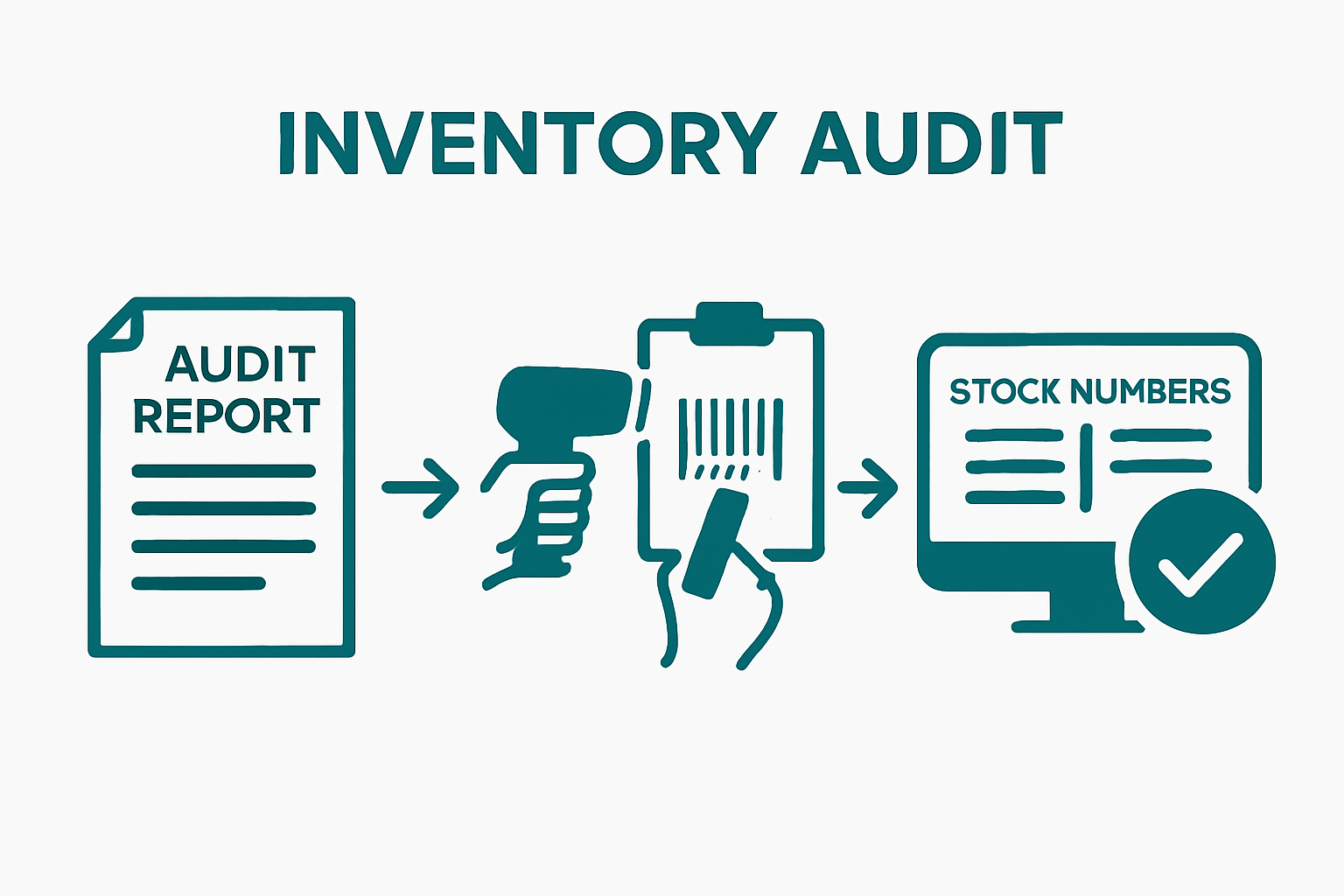 The goal is not just to identify problems but to develop a strategic framework for immediate and long-term inventory optimization.
Step 2: Choose the Right Inventory Management Software
Selecting the appropriate inventory management software represents a pivotal moment in transforming your ecommerce operations. The right software acts as a central nervous system for your entire inventory ecosystem, enabling real-time tracking, forecasting, and strategic decision making. Your choice will directly impact operational efficiency, cost management, and customer satisfaction.
Initiate your software selection process by conducting a comprehensive needs assessment. Evaluate your business’s unique requirements including sales volume, product diversity, warehouse complexity, and integration capabilities with existing platforms. Look for solutions that offer scalable features matching your current operational size and future growth potential. Critical functionalities should include automated stock level tracking, demand forecasting, multi-channel synchronization, and robust reporting mechanisms.
Explore advanced inventory optimization techniques to understand how sophisticated software can transform your inventory management. When evaluating potential software, prioritize platforms offering seamless integrations with your existing ecommerce platforms, accounting systems, and shipping providers. Cloud-based solutions provide superior flexibility, allowing real-time access across multiple devices and locations. Ensure the software supports barcode scanning, automatic reorder points, and detailed analytics to streamline your inventory tracking processes.
Demonstrate due diligence by requesting product demos and leveraging free trial periods. During these evaluations, test the software’s user interface, reporting capabilities, and customer support responsiveness. Engage your team in the selection process, gathering input from warehouse staff, sales representatives, and financial personnel. Their practical insights will help identify potential implementation challenges and ensure the chosen solution meets cross-departmental needs.
Successful software selection culminates in a solution that feels like a natural extension of your business operations. The right inventory management software should reduce manual workload, minimize human error, and provide actionable insights that drive strategic decision making. Remember, technology is most powerful when it simplifies complexity and empowers your team to focus on growth-oriented activities.
Step 3: Set Up Inventory Tracking Systems
Establishing robust inventory tracking systems transforms your ecommerce operations from reactive management to proactive strategic planning. Effective tracking is the foundation of inventory control, providing real-time visibility into your product landscape and enabling data-driven decision making. Your goal is to create a comprehensive system that offers accurate, instantaneous insights into stock levels, movement, and potential challenges.
Begin by standardizing your product identification process. Implement a consistent SKU (Stock Keeping Unit) system that uniquely identifies each product variant. These codes should incorporate critical information like product category, size, color, and other distinguishing characteristics. Invest in high-quality barcode or QR code labels that can be easily scanned across your entire inventory management ecosystem. Consistency in product identification eliminates confusion and reduces human error during tracking and processing.
Learn more about advanced inventory optimization techniques to enhance your tracking capabilities. Integrate your tracking system across multiple platforms to ensure seamless data synchronization. Connect your inventory management software with your ecommerce platform, accounting systems, and warehouse management tools. This interconnected approach provides a holistic view of your inventory, enabling real-time updates and automated alerts when stock levels approach critical thresholds.
Implement a comprehensive tracking workflow that covers every stage of product lifecycle. Document detailed procedures for receiving new inventory, updating stock levels, processing sales, and managing returns. Train your team thoroughly on these standardized processes, emphasizing the importance of immediate and accurate data entry. Regularly conduct spot checks and periodic full inventory audits to verify the accuracy of your tracking system and identify potential discrepancies.
Successful inventory tracking systems are dynamic and adaptable. Continuously refine your approach based on performance data, technological advancements, and changing business needs.
Below is a checklist table you can use to ensure your inventory tracking systems are properly set up and maintained, based on the process outlined in this guide.
| Verification Step | Description | Completion Status |
|---|---|---|
| Standardize SKU System | Ensure all products have consistent, unique identification codes | [ ] |
| Barcode/QR Labeling | Apply readable and durable labels to all stock items | [ ] |
| Integrate Platforms | Connect inventory, ecommerce, and accounting systems for real-time updates | [ ] |
| Document Workflow | Establish clear procedures for receipts, sales, returns | [ ] |
| Staff Training | Train employees on data entry and scanning protocols | [ ] |
| Regular Spot Checks | Schedule and perform random audits to validate accuracy | [ ] |
Step 4: Implement Consistent Stock Auditing Procedures
Stock auditing transforms your inventory management from passive tracking to strategic control. Regular and systematic audits are the heartbeat of accurate inventory management, providing crucial insights into your product ecosystem and financial health. This step requires developing a methodical approach that balances thoroughness with operational efficiency.
Design a comprehensive auditing schedule that matches your business complexity. Smaller operations might conduct full physical inventory counts quarterly, while larger ecommerce businesses may require monthly or even weekly spot checks. Implement a rotational auditing method where different product categories or warehouse sections are verified systematically. This approach minimizes operational disruption while ensuring comprehensive coverage. Create detailed audit checklists that include product verification, quantity reconciliation, condition assessment, and cross-referencing with digital inventory records.
Learn more about advanced inventory optimization techniques to enhance your auditing processes. Establish clear segregation of duties during audits to maintain accountability. Ensure that staff conducting physical counts are different from those managing daily inventory operations. This separation reduces the potential for errors and helps identify discrepancies that might otherwise go unnoticed. Develop a systematic approach to documenting and investigating any variances between physical and digital inventory counts.
Utilize technology to streamline your auditing procedures. Implement barcode scanning, RFID tracking, and automated reconciliation tools that minimize manual data entry and reduce human error. Train your team thoroughly on auditing protocols, emphasizing the importance of precision and consistency. Create a culture that views auditing not as a punitive process but as a collaborative effort to maintain operational excellence.
Successful stock auditing is about creating a continuous improvement cycle. Each audit should generate actionable insights that help refine your inventory management strategies. Track audit results over time to identify trends, potential shrinkage issues, and opportunities for process optimization. The ultimate goal is to develop an auditing system that provides real-time visibility, reduces financial risks, and supports strategic business growth.
Step 5: Analyze Inventory Data for Effective Decision-Making
Transforming raw inventory data into strategic insights requires a systematic and intelligent approach. Data analysis is the critical bridge between information collection and business growth, enabling you to make precise, forward-looking decisions that optimize your entire inventory ecosystem. This step moves beyond simple record-keeping to unlock the predictive power of your inventory information.
Begin by establishing a comprehensive data collection framework that captures multiple dimensions of inventory performance. Track key performance indicators including inventory turnover rate, carrying costs, stockout frequencies, and sales velocity across different product categories. Look for patterns that reveal seasonal trends, product lifecycle stages, and potential supply chain inefficiencies. Develop a dashboard that visualizes these critical metrics, allowing you to quickly identify both opportunities and potential risks in your inventory management strategy.
Learn more about advanced inventory optimization techniques to enhance your analytical capabilities. Implement advanced analytical techniques that go beyond surface-level reporting. Utilize predictive modeling to forecast demand, anticipate potential stockouts, and optimize reorder points. Machine learning algorithms can help you understand complex relationships between sales data, seasonality, marketing efforts, and inventory performance. These sophisticated tools transform historical data into actionable future strategies.
Cultivate a data-driven decision-making culture within your organization. Train your team to interpret inventory analytics critically, encouraging them to look beyond raw numbers and understand the strategic implications. Regular meetings that review inventory performance metrics can help align different departments around common goals. Establish a feedback loop where insights generated from data analysis directly inform procurement, marketing, and sales strategies.
Successful inventory data analysis is an ongoing process of continuous improvement. Your analytical approach should evolve with your business, becoming more sophisticated and nuanced over time. The ultimate goal is to create a dynamic system that not only tracks inventory but actively guides your business strategy, helping you stay ahead of market trends and customer demands.
Step 6: Optimize Inventory Levels for Increased Profitability
Inventory optimization represents the critical junction where strategic management meets financial performance. Balancing stock levels is an art of precision that directly impacts your bottom line, requiring a nuanced approach that minimizes holding costs while ensuring product availability. Your goal is to create a lean, responsive inventory system that maximizes profitability without risking potential stockouts.
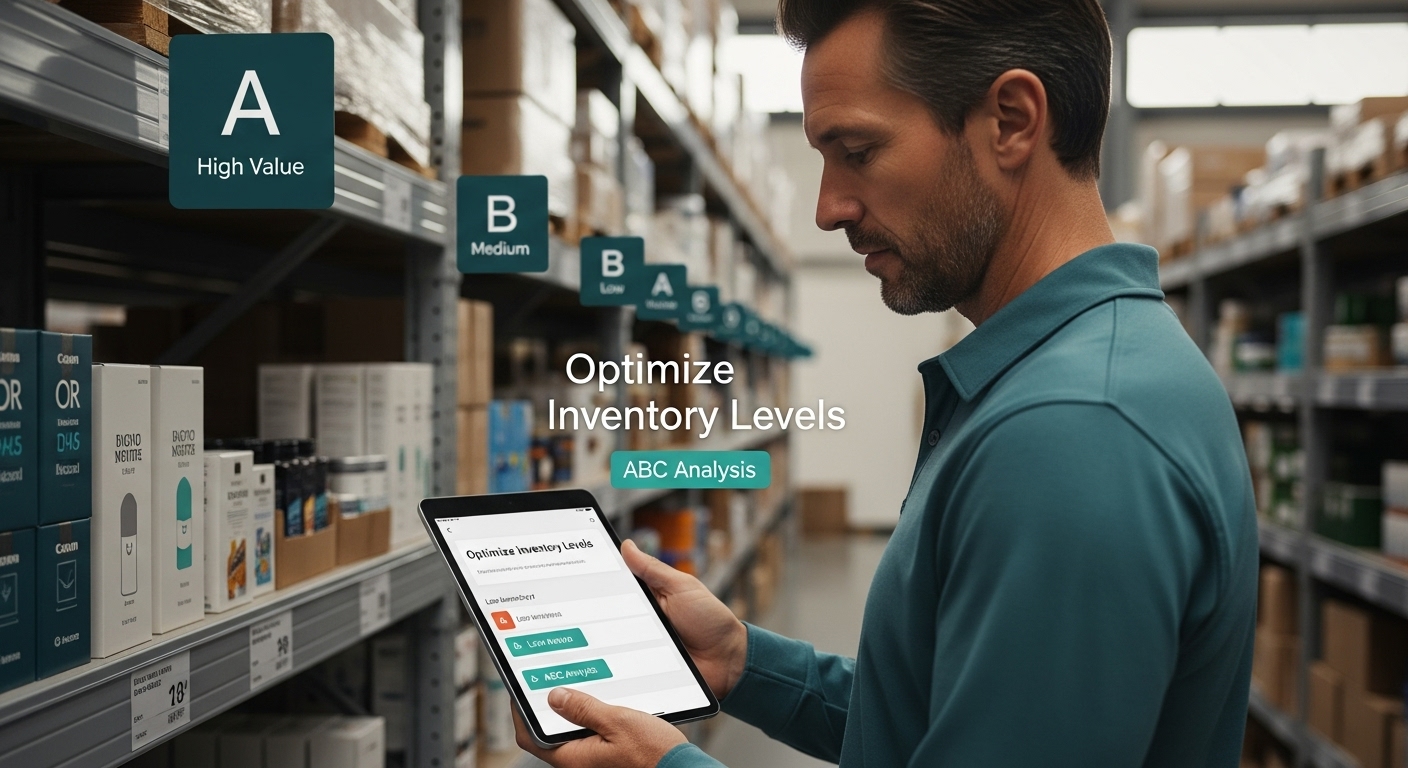
Begin by categorizing your inventory using the ABC analysis method. Segment products into high-value, medium-value, and low-value categories based on their sales volume and profit contribution. Allocate more sophisticated tracking and management resources to high-value items that significantly impact your revenue streams. This targeted approach allows you to apply different inventory management strategies for each product category, optimizing resource allocation and reducing unnecessary carrying costs.
Learn more about advanced inventory optimization techniques to enhance your profitability strategies. Implement just-in-time (JIT) inventory principles that minimize stock levels while maintaining rapid replenishment capabilities. Develop strong relationships with suppliers who can provide flexible delivery windows and quick turnaround times. Utilize demand forecasting tools that incorporate historical sales data, seasonal trends, and market fluctuations to establish precise reorder points and optimal stock levels for each product.
Continuously monitor key performance indicators that reveal inventory efficiency. Track metrics like inventory turnover ratio, days of inventory on hand, and carrying costs to identify opportunities for optimization. Create a dynamic pricing and promotion strategy that helps manage excess inventory, using targeted discounts to move slow-moving products while protecting profit margins. Regularly review and adjust your inventory strategies based on changing market conditions, consumer preferences, and business growth.
Successful inventory optimization is an ongoing process of refinement. The most profitable businesses view inventory management as a strategic function, not just an operational necessity. Your ultimate objective is to create a responsive, data-driven inventory system that generates maximum value while maintaining the flexibility to adapt to market changes.
Scale Your Inventory Strategy With Reliable Courier Services
Are you tired of inventory inaccuracies causing stockouts, high costs, or missed sales opportunities? Mastering ecommerce inventory management is tough when your business depends on precise tracking, seamless stock audits, and proactive demand forecasting. If you want to turn inventory data into profit, you need more than just theory. You need reliable execution, automation, and supply chain visibility at every touchpoint. At or-ner.com, we turn inventory pain points into operational victories for ambitious ecommerce businesses.
Experience how integrated reliable courier services, real-time shipment tracking, and smart warehousing can eliminate manual headaches and give you transparent control over all your stock. Our all-in-one solutions support everything from inventory audits to cross-border shipping, so your products stay available and your customers stay satisfied. Ready to level up your growth with expert inventory management and logistics support? Visit or-ner.com and book your custom workflow review today. Do not let slow logistics or inaccurate inventory stall your business. Start optimizing now and make every item count.
Frequently Asked Questions
What is the importance of conducting an inventory audit?
Conducting an inventory audit is crucial as it reveals hidden challenges and opportunities, helping businesses understand their current inventory systems and identify inefficiencies for improvement.
How can I choose the right inventory management software?
Start by assessing your business’s specific needs, including sales volume and product diversity. Look for software that offers essential features like automated tracking, demand forecasting, and seamless integrations with existing platforms.
What are effective methods for tracking inventory levels?
Effective inventory tracking methods include implementing a consistent SKU system, using barcode or QR code labels, and integrating your tracking systems to provide real-time updates across multiple platforms.
How often should I perform stock audits?
The frequency of stock audits depends on your business size and complexity. Smaller operations may conduct audits quarterly, while larger businesses may require monthly or weekly spot checks for effective management.