

Every ecommerce founder wants to unlock fast growth and outshine the competition. But even with endless marketing channels and shiny new tools, most businesses never fully analyze their actual market position before chasing growth. In fact, a detailed performance audit reveals key weaknesses and gaps that basic strategies always miss. What surprises most people is that your biggest breakthrough usually comes from your very first step. Not your latest ad campaign or hottest product launch. Once you see why, your whole approach to scaling a successful online business will look completely different.
Table of Contents
- Step 1: Analyze Your Current Market Position
- Step 2: Identify Target Audience And Customer Needs
- Step 3: Optimize Your Website For User Experience
- Step 4: Implement Proven Marketing Channels
- Step 5: Measure And Adjust Your Growth Strategies
Quick Summary
| Key Point | Explanation |
|---|---|
| 1. Analyze Your Market Position | Conduct a performance audit to establish baseline metrics like conversion rates and customer acquisition costs. |
| 2. Develop Customer Personas | Create detailed customer profiles that include demographics, behaviors, and motivations to guide marketing strategies. |
| 3. Optimize for User Experience | Ensure a seamless website experience with fast loading times, intuitive navigation, and responsive design to boost conversions. |
| 4. Implement a Multichannel Marketing Strategy | Leverage organic and paid channels like social media and email marketing to effectively reach and engage target audiences. |
| 5. Continuously Measure and Adjust Strategies | Regularly track key performance indicators and adjust tactics based on data insights for sustained ecommerce growth. |
Step 1: Analyze Your Current Market Position
Understanding your current market position is the strategic foundation for developing effective ecommerce growth strategies. This critical first step helps you identify strengths, weaknesses, opportunities, and potential challenges in your online business landscape.
Begin by conducting a comprehensive performance audit of your existing ecommerce operations. Review your current sales data, website analytics, and customer engagement metrics to establish a clear baseline. Key performance indicators will reveal crucial insights about your business trajectory. Look closely at metrics like conversion rates, average order value, customer acquisition cost, and repeat purchase rates.
According to Business Initiative, market segmentation plays a pivotal role in understanding your precise market positioning. Break down your customer base into distinct groups based on demographics, purchasing behaviors, and engagement patterns. This granular analysis allows you to tailor your strategies more effectively.
Digital tools can significantly streamline this analysis process. Utilize platforms like Google Analytics, Shopify Analytics, or specialized ecommerce intelligence software to gather comprehensive data. These tools provide deep insights into customer journeys, traffic sources, and conversion funnels. Pay special attention to:
- Traffic sources and channel performance
- Customer demographic breakdowns
- Product performance and sales trends
- Website user experience metrics
Carefully examine your competitive landscape by conducting a thorough competitive analysis. Identify direct and indirect competitors, analyze their strengths and weaknesses, and understand how your offerings compare. This research helps you pinpoint unique value propositions and potential market gaps you can strategically exploit.
To verify you have completed this step successfully, ensure you have generated a detailed report that includes:
- Comprehensive performance metrics
- Customer segmentation insights
- Competitive landscape overview
- Identified growth opportunities
- Potential strategic improvements
Remember, this initial analysis is not about perfection but about creating a realistic, data-driven snapshot of your current market position. The insights you gather will directly inform your subsequent growth strategies and help you make informed decisions moving forward.
Below is a checklist table summarizing key verification criteria to ensure you have thoroughly completed Step 1: Analyze Your Current Market Position.
| Verification Item | Description |
|---|---|
| Performance Metrics Report | Comprehensive data on sales, website analytics, and engagement metrics |
| Customer Segmentation Insights | Identified customer groups by demographics and behaviors |
| Competitive Landscape Overview | Detailed analysis of competitor strengths and weaknesses |
| Growth Opportunities Documented | Listed areas with potential for expansion or improvement |
| Strategic Improvement Areas | Actionable recommendations for enhancing market position |
Step 2: Identify Target Audience and Customer Needs
Successful ecommerce growth hinges on understanding precisely who your customers are and what they truly want. This step transforms generic market assumptions into actionable customer insights that will drive your strategic decision making.
According to U.S. Department of Energy, effective audience identification requires a structured approach that goes beyond basic demographics. Start by developing comprehensive customer personas that capture not just statistical data, but deeper psychological and behavioral characteristics.
Begin your research by leveraging multiple data collection methods. Customer surveys, website analytics, social media interactions, and direct customer feedback provide rich qualitative and quantitative insights. Use tools like Google Analytics, SurveyMonkey, and social listening platforms to gather nuanced information about customer preferences, pain points, and purchasing behaviors.
Create detailed customer personas that include critical dimensions:
- Demographic details (age, income, location)
- Professional background
- Online shopping habits
- Specific product preferences
- Motivations and challenges
Dive deeper than surface level characteristics by understanding the emotional and practical needs driving customer decisions. What problems do your products solve? What aspirations do they fulfill? Map out complete customer journey experiences, identifying friction points and opportunities for enhancement.
Conduct competitive research to understand how similar brands approach customer targeting. Analyze their messaging, product offerings, and customer engagement strategies. This comparative analysis helps you differentiate your approach and identify unmet market needs.
To verify you have successfully completed this step, ensure you have developed:
- 3-5 detailed customer personas
- Comprehensive customer needs assessment
- Competitive landscape analysis
- Initial customer segmentation strategy
Remember that customer understanding is an ongoing process. Regularly update your personas and research as market dynamics and customer preferences evolve. The insights you generate will become the strategic compass guiding your ecommerce growth initiatives.
Here is a tools and resources table highlighting platforms and methods mentioned for gathering customer insights and audience research.
| Tool/Resource | Purpose | Example Use Case |
|---|---|---|
| Google Analytics | Website visitor analysis | Track customer behavior and traffic sources |
| SurveyMonkey | Conducting customer surveys | Gather qualitative feedback on preferences |
| Social Listening Platforms | Monitor social interactions | Understand real-time customer sentiment |
| Social Media Interactions | Direct audience engagement | Identify product and service pain points |
| Customer Feedback | Collect direct responses | Learn motivations and challenges |
Step 3: Optimize Your Website for User Experience
User experience represents the critical bridge between your ecommerce platform and potential customers. A seamless, intuitive website design can dramatically increase conversion rates and customer satisfaction, transforming casual browsers into committed buyers.
According to EICOM Institute, effective user experience design ensures products are not just functional, but also desirable and valuable. Start by conducting a comprehensive website audit, examining every touchpoint of your customer’s online journey. Site speed, mobile responsiveness, navigation clarity, and visual design are foundational elements that directly impact user engagement.
Implement responsive design principles that guarantee a consistent experience across devices. Your website should look and function perfectly whether accessed from a desktop, tablet, or smartphone. Use tools like Google PageSpeed Insights and mobile-friendly test platforms to identify and resolve performance bottlenecks. Optimize image sizes, minimize complex scripts, and leverage browser caching to improve loading times.
Create an intuitive navigation structure that guides users effortlessly toward their desired products or information. Implement clear, descriptive menu categories, add a prominent search function, and use breadcrumb navigation to help users understand their current location within your site. Simplify the checkout process by reducing form fields, offering guest checkout options, and providing multiple payment methods.
Key optimization elements include:
- Responsive mobile design
- Fast page loading speeds
- Clear, intuitive navigation
- High-quality product images
- Streamlined checkout process
Integrate customer feedback mechanisms to continuously improve user experience. Implement live chat support, add customer review sections, and create easy-to-access help resources. Read more about emerging logistics and ecommerce trends that can inform your user experience strategy.
To verify successful website optimization, track these critical metrics:
- Bounce rate reduction
- Increased average session duration
- Improved conversion rates
- Decreased cart abandonment rates
- Positive user feedback and reviews
Remember that user experience optimization is an ongoing process.
 Regularly test, gather feedback, and be prepared to make incremental improvements that enhance your customers’ online shopping journey.
Step 4: Implement Proven Marketing Channels
Successful ecommerce growth demands a strategic approach to marketing that leverages multiple channels to reach and engage potential customers. This step transforms your marketing from scattered efforts into a cohesive, targeted strategy that drives consistent sales and brand awareness.
According to National Institutes of Health, digital and social media marketing play a crucial role in facilitating ecommerce expansion. Multichannel marketing allows you to create a comprehensive approach that meets customers where they already spend time online.
Begin by developing a balanced marketing mix that includes both organic and paid channels. Social media platforms like Facebook, Instagram, and TikTok offer powerful targeting capabilities that allow you to reach specific customer segments. Create engaging content that resonates with your identified customer personas, using a mix of product showcases, customer testimonials, and behind-the-scenes glimpses of your brand.
Email marketing remains a powerhouse for driving conversions. Build a robust email list through strategic lead magnets like exclusive discounts, free resources, or interactive content. Segment your email list based on customer behaviors and preferences, allowing for highly personalized communication that feels tailored to individual needs.
Key marketing channels to prioritize include:
- Social media advertising
- Search engine marketing (Google Ads)
- Influencer partnerships
- Content marketing
- Email marketing campaigns
Paid advertising requires careful strategy and continuous optimization. Use platforms like Google Ads and Facebook Ads to create targeted campaigns that reach potential customers based on specific demographics, interests, and online behaviors. Implement conversion tracking to measure the effectiveness of each campaign and continuously refine your approach.
Content marketing provides a long-term strategy for building brand authority and organic traffic. Develop a consistent content strategy that includes blog posts, video content, and educational resources that address your customers’ specific needs and challenges. This approach not only attracts potential customers but also establishes your brand as a trusted resource in your industry.
To verify successful marketing channel implementation, track these critical metrics:
- Customer acquisition cost
- Conversion rates per channel
- Engagement rates
- Return on ad spend
- Overall revenue growth
Remember that marketing is an iterative process. Continuously test, measure, and adjust your strategies to find the most effective mix for your specific audience and business model.
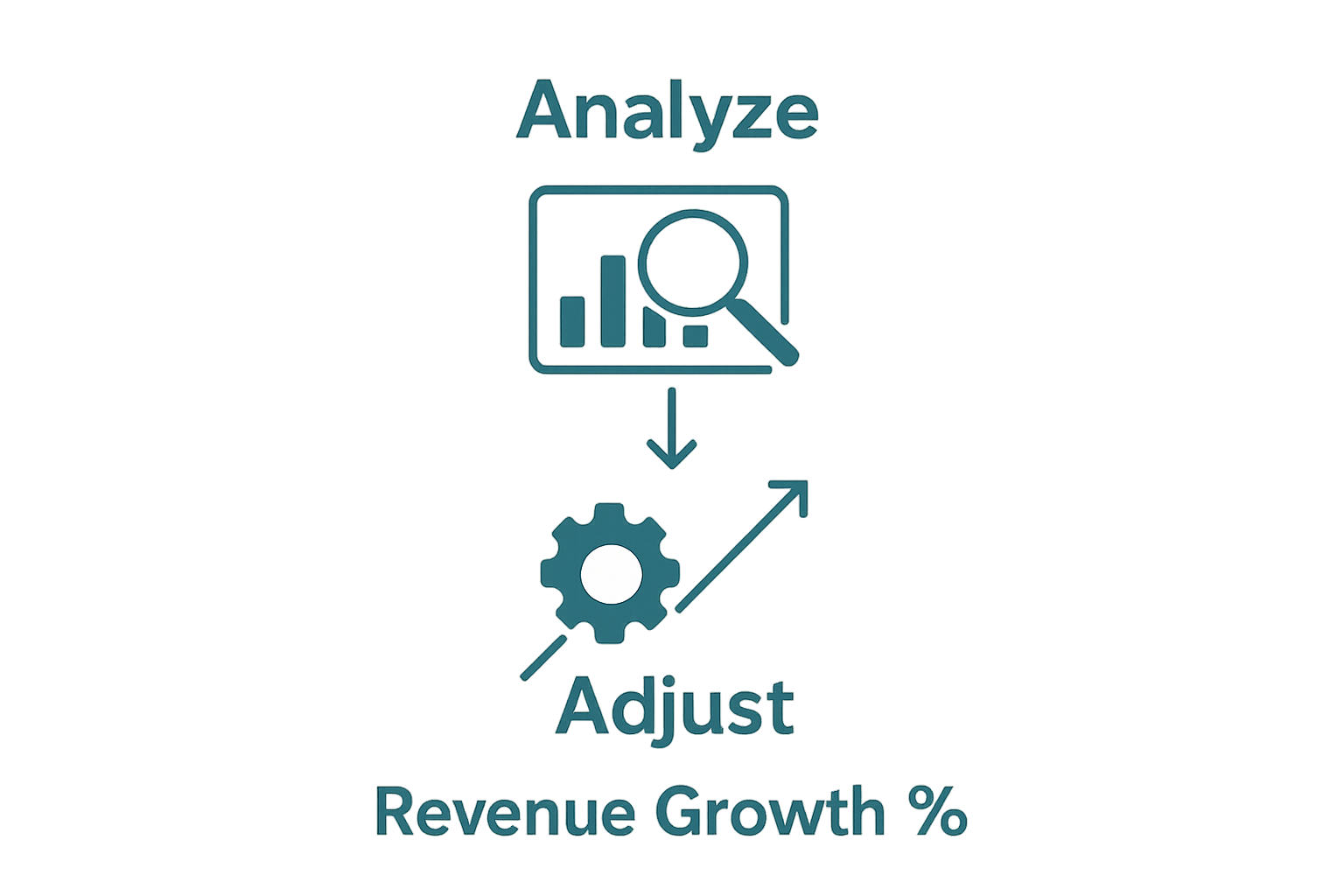
Step 5: Measure and Adjust Your Growth Strategies
Measuring and refining your ecommerce growth strategies is the critical final step that transforms initial efforts into sustainable business success. This ongoing process of analysis and adaptation ensures your business remains agile and responsive to changing market dynamics.
According to U.S. Department of Commerce, businesses must own, control, and meticulously manage key performance indicators to drive continuous improvement. Establish a comprehensive analytics framework that goes beyond surface-level metrics, diving deep into the nuanced data that reveals true business performance.
Implement a robust tracking system using advanced analytics tools like Google Analytics, Mixpanel, or specialized ecommerce analytics platforms. These tools provide granular insights into customer behavior, conversion funnels, and revenue streams. Create custom dashboards that highlight critical metrics such as customer acquisition cost, lifetime value, conversion rates, and average order value.
Conduct regular performance reviews, ideally on a monthly or quarterly basis. During these reviews, compare your current performance against established benchmarks and initial business goals. Look for patterns, identify unexpected trends, and critically examine both successful and underperforming aspects of your ecommerce strategy.
Key metrics to track consistently include:
- Conversion rate
- Customer acquisition cost
- Average order value
- Customer retention rate
- Revenue growth percentage
- Website traffic sources
Develop a systematic approach to strategy adjustment. When you identify underperforming areas, create specific, measurable action plans to address these challenges. This might involve tweaking marketing campaigns, redesigning website elements, adjusting pricing strategies, or refining product offerings.
Establish a culture of continuous experimentation through methodical A/B testing. Test different variations of product descriptions, website layouts, marketing messages, and promotional strategies. Each test provides valuable insights that can incrementally improve your overall ecommerce performance.
To verify the effectiveness of your measurement and adjustment process, ensure you have:
- Comprehensive performance tracking system
- Quarterly strategy review documentation
- Implemented improvements based on data insights
- Clear baseline and comparative performance metrics
- Documented experimental results
Remember that measurement is not about achieving perfection, but about creating a dynamic, responsive approach to business growth. Your willingness to adapt based on data will be the key differentiator in your ecommerce success journey.
Accelerate Your Ecommerce Growth With Reliable Courier Services
Are you struggling to scale your online business despite refining your market position and audience targeting as outlined in “Ecommerce Growth Strategies: Elevate Your Online Sales”? Even with the best marketing channels and website optimization, logistics hurdles like slow shipping, unreliable tracking, and inefficient fulfillment can stall your business growth and leave customers dissatisfied. Gaining full visibility and control over your supply chain is vital for turning strategic plans into real results.
Experience the difference that expert logistics can make. At or-ner.com, you gain access to reliable courier services, advanced fulfillment solutions, and real-time shipment tracking. Boost your conversions and customer retention by letting us handle freight booking, warehouse management, and cross-border delivery. Ready to make your ecommerce growth strategy work for you? Explore our comprehensive logistics solutions now and give your business the speed and flexibility it deserves. Grow faster when you act today and discover how our tools align with the objectives outlined in your ecommerce journey.
Frequently Asked Questions
What are the key performance indicators to track for ecommerce growth?
To drive ecommerce growth, focus on tracking metrics like conversion rates, average order value, customer acquisition cost, and repeat purchase rates. These KPIs provide insights into sales performance and customer engagement.
How can I effectively identify my target audience for ecommerce?
Utilize data collection methods like customer surveys, website analytics, and social media interactions. Develop detailed customer personas that include demographics, shopping habits, motivations, and challenges to understand your audience better.
What are the best practices for optimizing user experience on an ecommerce website?
Ensure your site is mobile-responsive, has fast loading speeds, and features clear navigation. Incorporate high-quality product images and streamline the checkout process to enhance user satisfaction and conversion rates.
Which marketing channels should I focus on for ecommerce growth?
Prioritize a balanced marketing mix that includes social media advertising, search engine marketing, content marketing, and email marketing. Engage potential customers through targeted, tailored campaigns that resonate with their preferences.