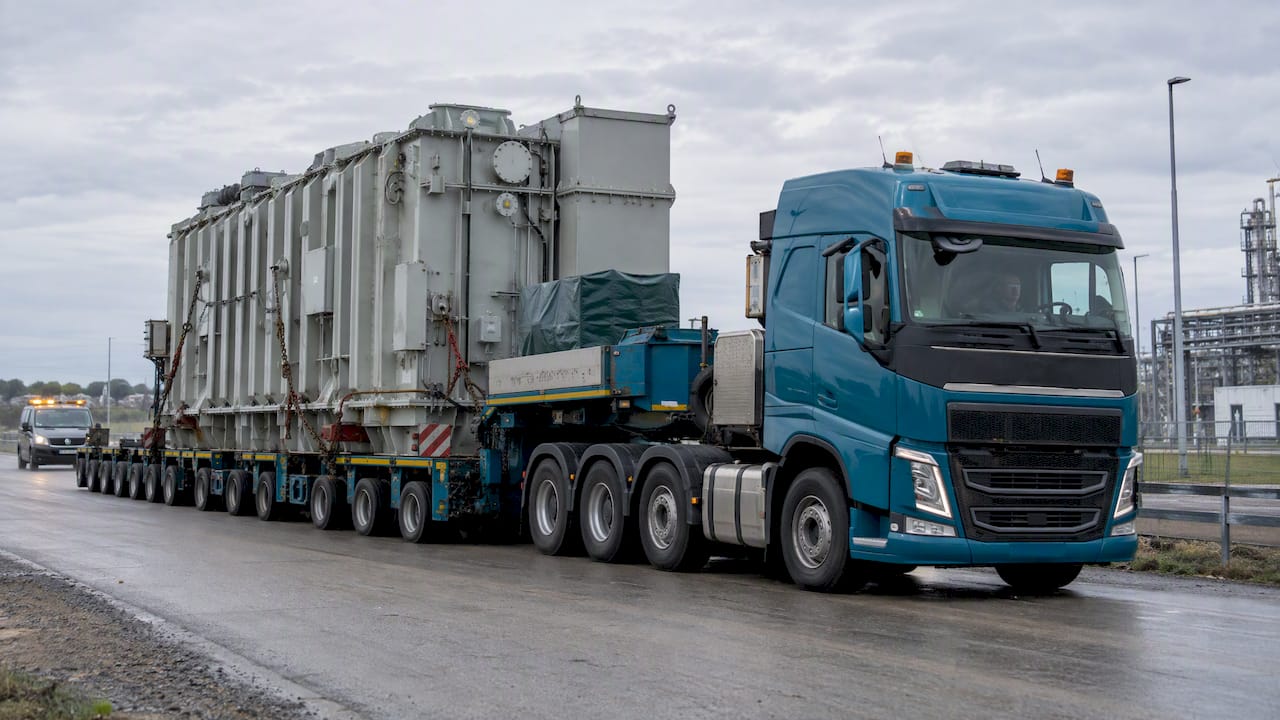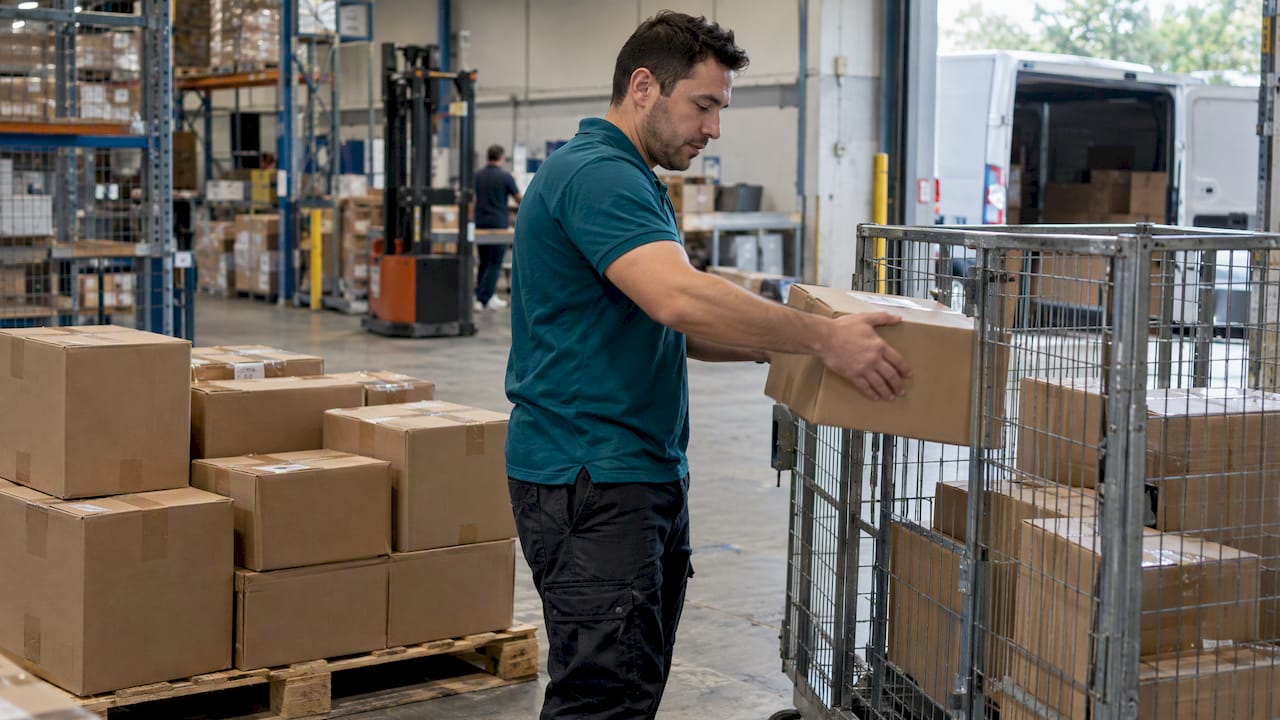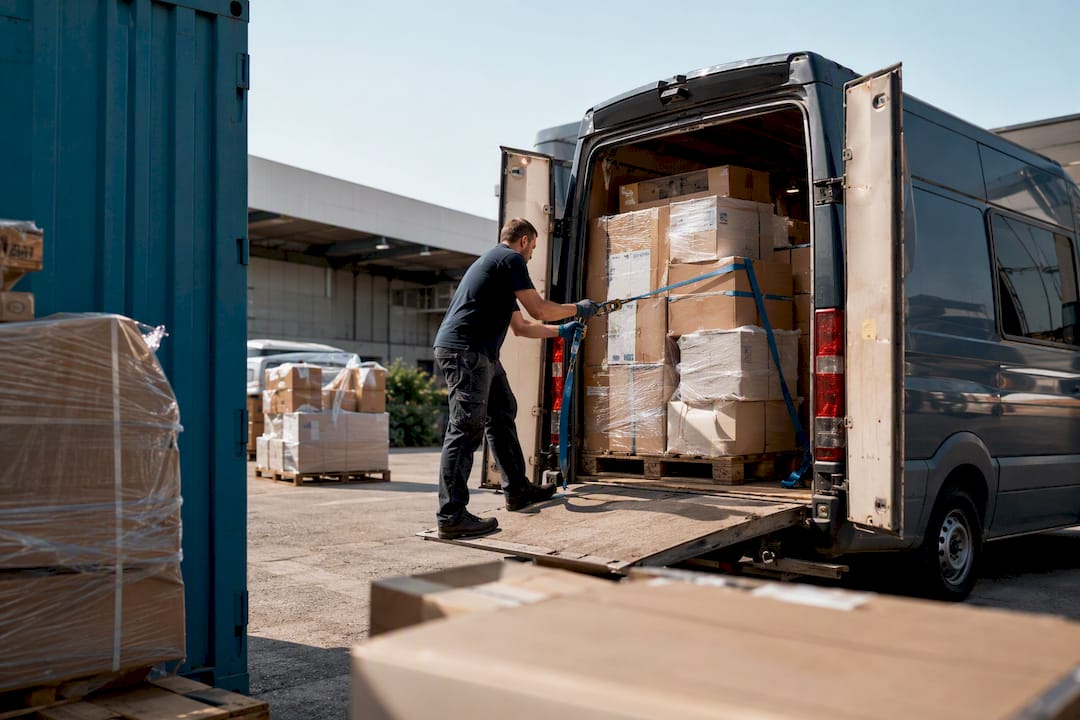
For ecommerce and wholesale shipments, the best way to ship something is a hybrid model, not a single carrier or a single mode. Use fulfillment (a 3PL) for regular order flow, smart carrier selection for one-off shipments, and freight or LTL for anything heavy or palletized. Layer platform automation on top to enforce cartonization rules and pull live rates instead of guessing.
Three variables decide which lane a shipment belongs in:
- Shipment profile — weight, dimensions, and whether it is one carton or a pallet
- Speed — same-day, two-day, or standard ground
- Destination — domestic, cross-border, or a mix of retail and wholesale accounts
Carriers commonly convert oversized or heavy parcels into dimensional weight charges and accessorial fees, which is exactly why the profile matters more than the destination in most cost decisions. Platforms like or-ner.com exist to run that triage automatically, routing each order to the cheapest compliant option instead of forcing every box through the same parcel account.
Key Takeaways
Choosing the best way to ship something for a business means matching shipment profile, speed, and destination to the right mode instead of defaulting to one carrier for everything.
| Point | Details |
|---|---|
| Use a hybrid shipping model | Combine fulfillment for regular order flow, parcel for small shipments, and LTL/freight for heavy or palletized ones. |
| Price both lanes near 150 pounds | Quote parcel and LTL side by side for shipments approaching the common freight checkpoint before defaulting. |
| Move to fulfillment at scale | Consider a 3PL once you’re shipping 50 or more orders a week or need distributed inventory. |
| Fix data before automating | Clean product and packaging measurements before switching to live carrier rates or automation. |
| Or-ner unifies the workflow | Or-ner’s platform combines freight booking, customs clearance, warehousing, carrier connectivity, and tracking in one system. |
Table of Contents
- What’s the Best Way to Ship a Box, Pallet, or Order at Scale?
- How Do You Lower Shipping Costs Without Cutting Corners?
- What Do You Need for Cross-Border Shipping Documentation?
- Which Automation Investments Actually Pay Off?
- How Should You Package Items to Prevent Damage in Transit?
- What Tracking and Insurance Options Should Shippers Use?
- Can Shipping Be More Sustainable Without Raising Cost?
- What Actually Moves the Needle in Shipping Operations?
- Get Freight Booking, Customs, and Tracking Handled in One Place
- Sources
- FAQ
What’s the Best Way to Ship a Box, Pallet, or Order at Scale?
Every shipping decision comes down to four variables: volume, weight and dimensions, required speed, and where the shipment is going. Get those four right and the carrier or mode almost picks itself.
Start with weight and packaging. A single box under roughly 70 pounds that fits standard carrier dimensions almost always moves cheapest as a parcel. Once a shipment crosses into multiple cartons or a single piece near 150 pounds, run the numbers on LTL freight before defaulting to parcel. That 150-pound mark is a widely used practical checkpoint where carriers start treating freight as the more economical mode, and LTL generally covers everything from 150 up to around 10,000 pounds.
Here’s a simple sequence for sorting an order:
- Weigh and measure first. Don’t estimate. A 4 pound difference or a 2 inch dimension error can flip a shipment into a different pricing tier.
- Check the piece count. One box, one pallet, or several loose cartons each route differently, even at the same total weight.
- Price both lanes for borderline shipments. Anything between 100 and 200 pounds deserves a parcel quote and an LTL quote side by side, not a default assumption.
- Match speed to actual need. Same-day and next-day service almost always means courier, not freight, regardless of weight.
- Confirm the destination type. A residential address, a retail loading dock, and a distribution center each carry different delivery constraints that affect price and mode.
Courier and parcel networks are built for door-to-door delivery of smaller shipments with per-shipment tracking, while freight relies on consolidation and milestone-based tracking instead of a single scan-by-scan trail. That difference matters operationally, not just financially: freight customers get fewer touchpoints and longer lead times, but far lower cost per pound at scale.
Fulfillment through a 3PL becomes the better long-term call once a business ships a moderate to high volume of orders weekly or needs inventory spread across regions, automated returns, and multi-channel sync. Below that volume, courier-only shipping usually wins on simplicity for low-frequency or urgent orders. The switch to fulfillment isn’t just about volume, either. It’s about whether your team is spending more time managing exceptions than selling product.
Pro Tip: Price parcel and LTL side by side for every order near the freight threshold for a full month before locking in a default rule. Lanes and package profiles shift enough that a “150 pounds and up goes freight” policy set once in January can quietly cost you money by summer.
Choosing between a courier partner and a broader fulfillment model is rarely a one-time decision. Revisit it every time order volume or SKU mix shifts meaningfully.
How Do You Lower Shipping Costs Without Cutting Corners?
Most surprise freight bills trace back to a handful of avoidable mistakes, and every one of them is fixable with a checklist rather than a new carrier contract.
Start with data accuracy. Record real weights and dimensions for every SKU, every case pack, and every pallet configuration, then keep that data current as packaging changes. Carriers bill by billable weight or dimensional weight, so a product catalog with stale measurements is quietly inflating your invoices every week.
Cartonization rules matter almost as much. Packing to avoid crossing an oversize threshold, even if it means a slightly larger box, often costs less than triggering a DIM weight penalty. Small operational habits pay off here:
- Standardize case packs to known carrier-friendly dimensions instead of packing whatever fits.
- Flag any SKU combination that risks tipping a shipment into freight territory before it ships.
- Capture receiver requirements, like a liftgate, an appointment window, or inside delivery, at the quoting stage rather than discovering them at delivery. Missing that step is one of the most common sources of hidden accessorial fees.
- Standardize labels and barcodes across every carton so scan exceptions and misroutes drop.
- Negotiate rates against your actual shipment profile, meaning your real zones, your real DIM exposure, and your real oversize frequency, instead of chasing a headline discount percentage.
Wholesale shipments are especially exposed here. Multi-carton and palletized orders routinely rack up liftgate, appointment, and additional-handling charges that a single-parcel retail order never touches. Before switching to live carrier rates, clean up your product and packaging data. Live rates only help if the inputs feeding them are accurate.
A tool like Or-ner can enforce cartonization rules and quote lane-based pricing automatically, which removes the guesswork from this whole process.
What Do You Need for Cross-Border Shipping Documentation?
Cross-border shipments fail for one of two reasons almost every time: incomplete paperwork or a poorly chosen importer of record. Get those two decisions right and customs delays largely disappear.
The importer of record determines who is legally responsible for duties, taxes, and compliance at the border. Choosing the seller as importer of record generally speeds clearance for the buyer but shifts cost and liability upstream; choosing the buyer keeps that liability with the receiving party but can slow delivery if their paperwork isn’t ready. Neither option is universally right. It depends on your customer base, your margins, and how much clearance speed you’re willing to pay for.
Four documents cover most shipments:
- Commercial invoice stating accurate declared value and product description
- Packing list matching the physical contents piece for piece
- Bill of lading or air waybill, depending on transport mode
- Certifications, when the product category requires them (certain textiles, electronics, or food-adjacent goods)
Classification errors are the quiet killer here. An incorrect HS code or an inconsistent declared value across shipments to the same buyer is one of the fastest ways to trigger a customs inspection, and inspections routinely add days, not hours, to a delivery timeline. Keep valuation consistent shipment to shipment and double check HS codes against the destination country’s tariff schedule rather than reusing a code from a similar product.
For lane selection, freight forwarding tends to fit better when you’re shipping regularly to the same country or region and can build a consolidated, predictable customs process. A courier service fits better for occasional, smaller cross-border shipments where speed matters more than per-unit cost. Or-ner’s customs clearance support and cross-border logistics tools are built around exactly this kind of lane-by-lane decision.
Which Automation Investments Actually Pay Off?
Manual order handling is the single biggest source of shipping errors at scale, and it’s the first thing worth automating, not the last.
Automated order processing and label generation cuts fulfillment cycle time by replacing manual data entry with programmatic triggers between your storefront and your warehouse. Fewer manual touches mean fewer typos in addresses, fewer mislabeled cartons, and fewer support tickets asking “where is my order.”
Three integration priorities deliver the most value, roughly in this order:
- Connect storefront, WMS or 3PL, and carriers so live rates, smart routing, and inventory counts stay synced without a spreadsheet in the middle.
- Automate fraud holds and returns labels so exceptions get flagged and resolved without a person manually reviewing every flagged order.
- Automate tracking notifications so customers get proactive updates instead of calling support to ask.
Scaling without this groundwork is risky. When order volume grows across multiple sales channels that each encode orders differently, the lack of a consistent order model is what breaks first, not the carrier relationship.
Pro Tip: Map your current manual bottlenecks before buying any automation tool, then automate the single highest-volume handoff first, usually order capture to label generation. Fixing the busiest broken step returns more than trying to automate everything at once.
Automating returns management tends to be the highest-leverage second move, since returns portals paired with automated tracking updates noticeably reduce inbound support volume.
How Should You Package Items to Prevent Damage in Transit?
Good packaging is cheaper than a damage claim, and most damage claims trace back to the same three mistakes: wrong box size, insufficient cushioning, and poor weight distribution.

Match the box to the product, not the other way around. Oversized boxes let contents shift during transit, which is where most in-transit damage actually happens. A box with too much empty space needs cushioning, whether that’s air pillows, corrugated inserts, or molded pulp, positioned so the product can’t move more than a fraction of an inch in any direction.
Weight distribution matters more for palletized and multi-carton shipments than most teams assume. Heavier cartons belong on the bottom of a pallet, lighter ones on top, and every layer should be shrink wrapped tightly enough that nothing shifts during loading and unloading. For fragile or high-value items, double boxing (a product box inside a slightly larger shipping box with a cushioning layer between them) meaningfully reduces breakage on longer freight lanes.
For apparel, footwear, and similar soft goods, poly bags inside a corrugated outer box protect against moisture without adding meaningful weight. For anything electronic or with moving parts, anti-static packaging and internal bracing matter more than extra padding.
Test your packaging against your actual shipping profile, not a generic standard. A box that survives a two-day parcel trip may not survive five handling points on an LTL freight route. If you’re shipping the same SKU through multiple modes, package it for the roughest lane it will travel, not the smoothest one.
What Tracking and Insurance Options Should Shippers Use?
Every shipment needs two layers of protection: visibility into where it is, and financial coverage if something goes wrong. Skipping either one turns a minor delay into a customer service crisis.
Tracking granularity differs sharply by mode. Parcel and courier shipments typically offer scan-by-scan visibility from pickup to delivery. Freight and LTL shipments generally rely on milestone tracking (origin terminal, in transit, destination terminal, delivered) rather than continuous scans, since freight moves through consolidation points that don’t scan every individual piece. Set customer expectations accordingly. A freight shipment that shows “in transit” for two days isn’t necessarily a problem; it’s how that mode reports status.
Insurance and declared value work differently, too. Most carriers include a baseline liability coverage automatically, but that baseline is often calculated per pound rather than by the item’s actual value, which leaves high-value goods underinsured by default. For anything above a few hundred dollars in declared value, purchase additional coverage explicitly rather than assuming the carrier’s default liability will cover a claim.
Build a simple internal rule: any shipment over a set dollar threshold gets additional insurance and a signature requirement, no exceptions. That threshold should reflect your margins, not an arbitrary round number.
A platform-level shipment tracking system that pulls milestone data from every carrier into one dashboard saves real time here. This is especially valuable once you’re running parcel, LTL, and cross-border lanes simultaneously and can’t reasonably check five different carrier portals for status updates.
Can Shipping Be More Sustainable Without Raising Cost?
Sustainable shipping choices and cost control usually point the same direction, not opposite ones, which is worth knowing before assuming “green” automatically means “expensive.”
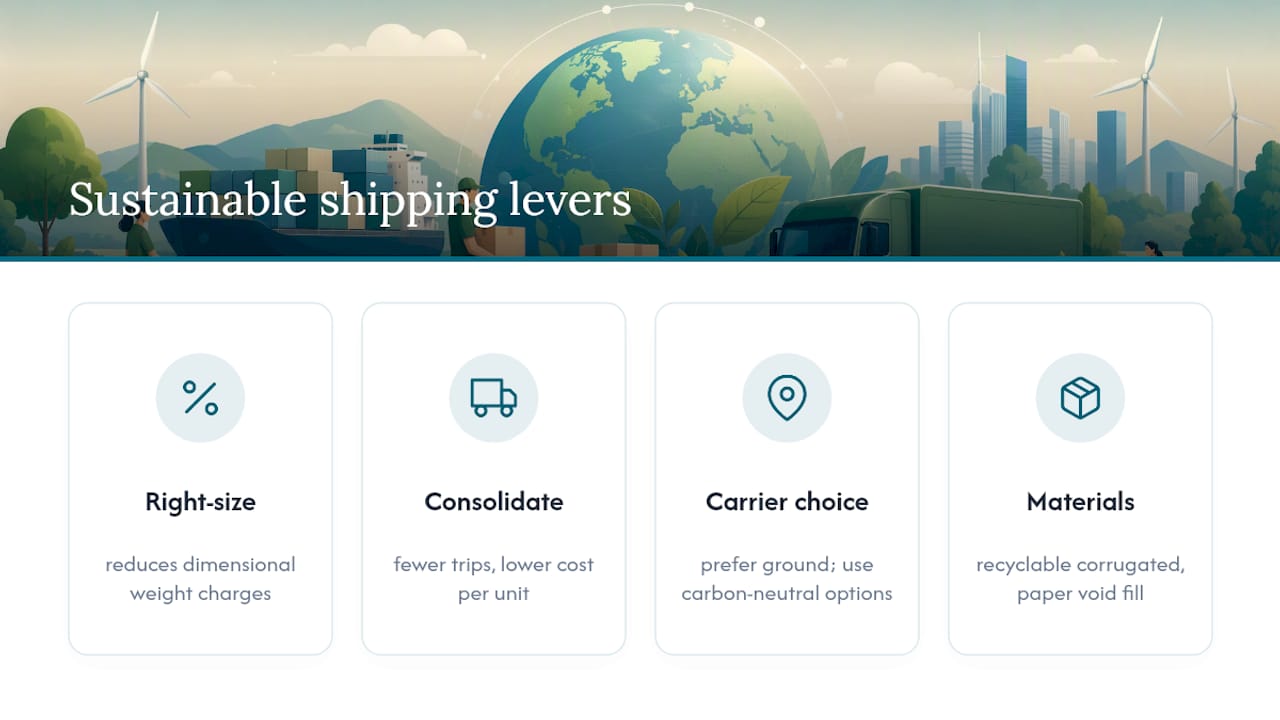
Right-sizing packaging is the clearest overlap. Smaller, better-fitted boxes cut dimensional weight charges and reduce the cardboard, void fill, and shipping fuel needed to move each order. The cost-control cartonization rules covered earlier double as an emissions reduction, since a truck or plane carrying denser, more efficiently packed freight burns less fuel per unit shipped.
Consolidation works the same way. Combining multiple orders into one pallet or one freight shipment instead of several parcel shipments cuts both cost per unit and the number of separate vehicle trips required to move the same volume of product. This is one more reason the parcel-versus-freight decision matters beyond price; freight consolidation is inherently a lower-emission way to move bulk goods compared to shipping the same volume as dozens of individual parcels.
Carrier selection plays a role too. Some carriers offer carbon-neutral shipping options or route optimization designed to reduce empty miles, and choosing ground transport over air freight for non-urgent shipments cuts emissions meaningfully on longer lanes. None of this requires abandoning speed where speed genuinely matters. It requires being deliberate about which shipments actually need air freight or next-day service and which ones don’t.
Packaging material choices matter on the margins, too: recyclable corrugated cardboard, paper-based void fill instead of plastic air pillows, and reduced use of single-use plastic tape all shave a small amount of environmental impact per shipment without adding meaningful cost.
What Actually Moves the Needle in Shipping Operations?
Most shipping breakdowns aren’t carrier problems. They’re data problems wearing a carrier costume. Bad weights, inconsistent SKU dimensions, and address fields nobody validates cause more delays and fees than any actual carrier failure.
The three highest-return moves, in order: fix your product and packaging data before touching live rates, price parcel against LTL for every borderline shipment instead of defaulting, and automate the single busiest manual handoff before buying any other tool. Skipping straight to automation without clean data just automates the errors faster.
Teams that treat shipping mode selection as a one-time setup rather than a recurring review tend to overspend the most, often without realizing it, because order profiles and lanes shift while the shipping rule stays frozen.
Get Freight Booking, Customs, and Tracking Handled in One Place
Piecing together a courier account, a separate customs broker, a warehouse contract, and a tracking spreadsheet works until volume grows, and then it becomes the exact operational drag this guide has been describing; companies like RJR Worldwide Corp. specialize in operational logistics and linehaul to help streamline these complex warehouse and shipping operations. Or-ner replaces that patchwork with one platform: freight booking, customs clearance, distributed warehousing, carrier connectivity, and shipment tracking under a single login instead of five logins and a shared spreadsheet.
That matters most the moment your business crosses the thresholds covered above, whether that’s the 150-pound freight checkpoint, the 50-orders-a-week fulfillment line, or a first cross-border customer who needs real customs documentation, not a guess. Or-ner’s platform is built to route each shipment to the right mode automatically and keep the paperwork straight when a shipment crosses a border.
Start with the freight booking step-by-step guide to see exactly how the process runs from quote to pickup, or work through the freight booking checklist if you want something your team can implement this week.
Sources
- Ecommerce fulfillment automation
- How Brands Reduce Wholesale Shipping Costs (Without Killing Margin): Packaging, Rates, Parcel vs LTL
- The Hidden Operational Risk of Scaling Wholesale eCommerce
FAQ
What is the best way to ship something for a growing ecommerce business?
The best approach is a hybrid model: fulfillment through a 3PL for regular order volume, parcel for small individual orders, and LTL or freight for heavy or palletized shipments, with automation routing each order to the right mode.
When should you switch from parcel shipping to LTL freight?
A common practical checkpoint is around 150 pounds per shipment, though multi-carton orders and oversized dimensions can trigger freight pricing earlier depending on the carrier’s dimensional weight rules.
How many orders per week justify moving to a fulfillment provider?
Fulfillment generally becomes the better long-term choice once a business ships 50 or more orders a week or needs distributed inventory and automated returns handling.
What documents do you need for cross-border shipments?
Most international shipments require a commercial invoice, a packing list, a bill of lading or air waybill, and any product-specific certifications the destination country requires.
Can a single platform handle both domestic fulfillment and cross-border freight?
Yes. Platforms like Or-ner combine freight booking, customs clearance, warehousing, and carrier connectivity so a business doesn’t need separate systems for domestic and international shipments.