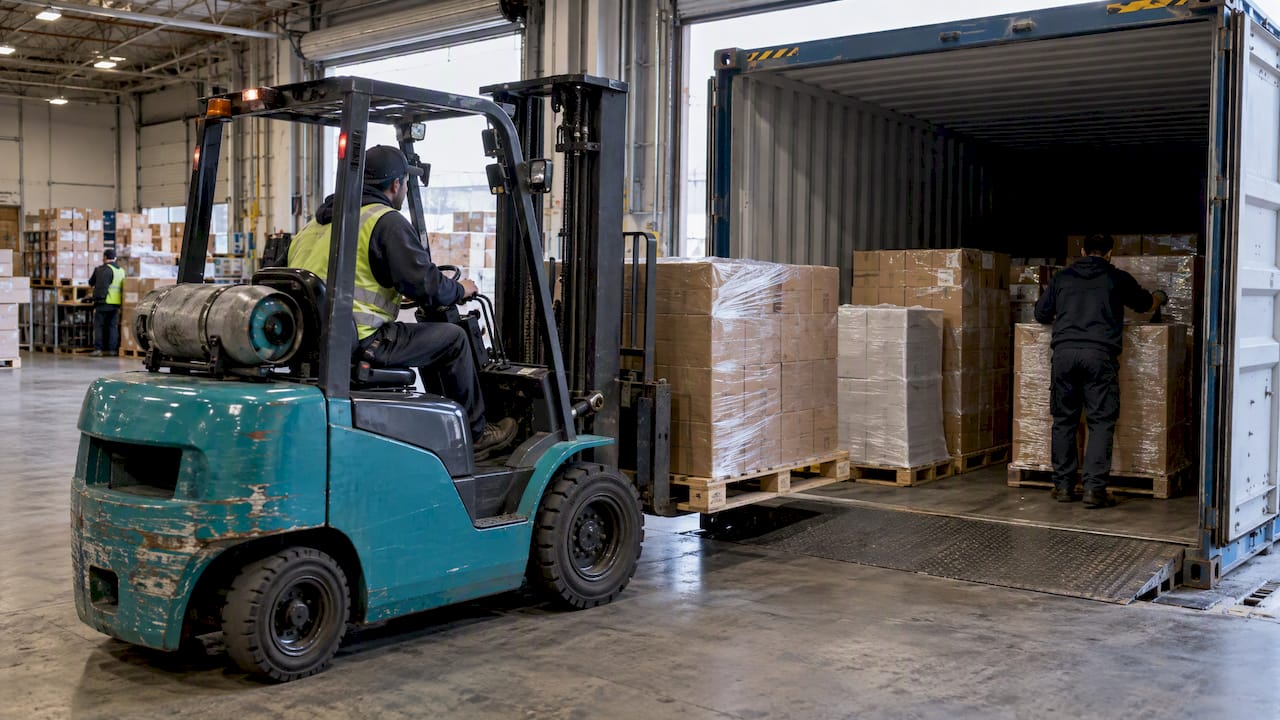
An accurate delivery service gets the right item to the right address within the promised window, every time. For U.S. businesses shipping anything time-critical, that means tracking two numbers above all else: on-time delivery rate (OTP) and customer satisfaction (CSAT). Or-ner is built for exactly this, offering same-day, next-day, and scheduled courier options with real-time tracking, proof of delivery (POD), and SLA-backed commitments across the U.S. and cross-border.
Before you commit to any provider, run three quick checks:
- OTP: Ask for lane-specific on-time rates, not a company-wide average.
- Live tracking and POD: Confirm the provider sends real-time ETAs and photo or signature confirmation on delivery.
- Insurance and SLA: Verify declared-value limits, claims response time, and what service credits apply when a window is missed.
Table of Contents
- What should an accurate delivery service actually include?
- Which vehicle or service type fits your shipment?
- How does booking, pricing, and timing work?
- How do you verify a courier’s reliability before committing?
- Which industries rely most on delivery accuracy?
- Key Takeaways
- What actually breaks delivery accuracy (and how to fix it)
- Or-ner delivers accuracy you can verify
- Useful sources
- FAQ
What should an accurate delivery service actually include?
The gap between a provider that claims accuracy and one that delivers it comes down to specific capabilities, not marketing language. Here is what a dependable courier should offer:
| Capability | What it means | When you need it |
|---|---|---|
| Same-day / hot-shot | Pickup within hours, delivery same day | Medical specimens, urgent parts, legal documents |
| Next-day / scheduled | Guaranteed window, next business day or set date | E-commerce, retail replenishment |
| Temperature-controlled | Refrigerated or frozen compartments, logged temps | Pharmaceuticals, food, biologics |
| Chain-of-custody | Documented handoffs, tamper-evident seals | Lab samples, legal evidence, controlled substances |
| Real-time tracking | Live GPS map, ETA updates, WISMO reduction | Any shipment where the recipient needs to be ready |
| Proof of delivery | Photo, signature, barcode scan, timestamp | High-value goods, regulated industries |
| Insurance / declared value | Coverage up to stated limits, claims SLA | Fragile, high-value, or irreplaceable items |
| 24/7 support | Phone, chat, or portal access around the clock | Emergency dispatches, after-hours escalations |
Live tracking with proactive notifications cuts “where is my order” contacts and measurably improves perceived accuracy. For medical shipments, HIPAA compliance and chain-of-custody documentation are non-negotiable, not optional add-ons.

A courier can report 99% OTP yet still generate poor CSAT if packages arrive damaged or drivers are unprofessional. That is why measuring both operational KPIs and satisfaction scores gives a more complete picture than either metric alone.

Which vehicle or service type fits your shipment?
Matching the vehicle to the load is where most shippers leave money on the table or create avoidable delays.
- Courier car or cargo bike: Documents, small parcels under 50 lbs, same-day urban runs. Fast, low cost, easy to dispatch on short notice.
- Cargo van (up to ~250 cubic feet): Medical equipment, catering supplies, retail stock transfers. The workhorse for most same-day business deliveries.
- Box truck (up to ~1,700 cubic feet): Multi-stop routes, furniture, large equipment, pallet-level loads without a dock.
- Flatbed or step-deck: Oversized machinery, construction materials, anything that cannot be enclosed. Requires tie-down and load-securement expertise.
- Temperature-controlled van or reefer truck: Pharmaceuticals, fresh food, biologics. Logged temperature records are standard; ask for them.
- Air charter or next-flight-out: When ground transit time is simply not fast enough. Typically used for critical spare parts or organ transport.
White-glove options (inside delivery, unpacking, installation) are available from specialty couriers and add meaningful cost, but they matter when the item is fragile or the recipient cannot handle heavy freight alone.
Pro Tip: Barcode-guided picking and outbound logistics automation reduce mis-picks before the shipment even leaves your dock. Getting the right item into the right vehicle is the first half of delivery accuracy.

How does booking, pricing, and timing work?
Understanding the flow from quote to POD helps you set realistic expectations and catch inflated fees before they appear on an invoice.
Typical booking steps:
- Submit shipment details (origin, destination, dimensions, weight, service level, any special handling).
- Receive a quote with a pickup window and estimated delivery time.
- Confirm and dispatch. The driver is assigned and a tracking link is generated.
- Pickup is completed; in-transit updates begin.
- Delivery is made; POD (photo, signature, or scan) is sent to you automatically.
What drives the price:
- Distance and zone (local, regional, long-haul)
- Dimensional weight vs. actual weight (carriers use whichever is greater)
- Service level tightness (same-day hot-shot costs more than a scheduled next-day window)
- Accessorials: residential surcharges, liftgate, inside delivery, fuel surcharges
- Declared value and insurance tier
For long-distance lanes, Or-ner’s freight booking guidance walks through how to structure quotes so you are comparing equivalent service levels across carriers.
Pro Tip: Always request an itemized quote. Fuel surcharges and residential fees can add 15–25% to a base rate. Ask for the all-in price before you confirm, not after delivery.
How do you verify a courier’s reliability before committing?
Claims are cheap. Here is the checklist that separates real performance from marketing copy.
Request before you sign:
- OTP by lane (not company-wide), for the past 90 days minimum
- Sample PODs showing photo quality, timestamp, and signature capture
- CSAT scores or three verifiable customer references in your industry
- Claims history: frequency, average resolution time, and payout rate
- Insurance limits and declared-value caps per shipment
- SLA wording: what constitutes a “miss,” what credit applies, and the escalation path
KPIs that actually matter:
Last-mile delivery accounts for roughly 50% of total shipping cost, so the KPIs you track here have the biggest impact on both budget and customer experience. Start with four: OTP, first-attempt success rate, cost per drop, and WISMO contact volume.
Reasonable benchmarks: aim for a high OTP on express lanes and above a high first-attempt success rate. Order accuracy targets that are high are realistic for well-run operations. A provider who cannot share lane-level data against those benchmarks is telling you something.
Stat to know: Industry estimates place last-mile at approximately 50% of total shipping cost. Improving OTP and first-attempt success on your highest-volume lanes is where cost and satisfaction gains compound fastest.
Verify through contract language:
| Contract element | What to look for |
|---|---|
| SLA definition | Specific time window, not vague “best effort” |
| Service credits | Automatic, not claim-dependent |
| Claims SLA | Response within 24 hours, resolution timeline stated |
| Insurance / declared value | Per-shipment cap, exclusions listed |
| Escalation path | Named contact, not just a general inbox |
Pro Tip: Run a 30–90 day pilot on your top two or three lanes before committing volume. Score the carrier on OTP, damage rate, and POD quality. Real performance data beats any sales deck.
Which industries rely most on delivery accuracy?
Accuracy is not equally critical across all shipments. These sectors feel the cost of a miss most acutely.
- Medical and laboratory: Chain-of-custody documentation, temperature logs, and HIPAA compliance are required. A delayed specimen can invalidate a test; a broken cold chain can render a drug unusable.
- E-commerce: CSAT and repeat purchase rates track directly to reliable parcel delivery. A missed window triggers a return, a negative review, and a lost customer.
- Perishable food: Temperature windows are tight. A two-hour delay on a fresh meal kit is not recoverable. Reefer vehicles with logged temps are the baseline.
- Manufacturing and spare parts: A single missing component can halt a production line. Same-day hot-shot from a regional supplier to a plant floor is a direct uptime decision.
- Legal and financial documents: Chain-of-custody and timestamped POD protect against disputes. Signature capture is standard; some shipments require notarized receipt.
Mini use cases:
A hospital lab needs a blood specimen picked up at a clinic and delivered to a reference lab 40 miles away within two hours. The right choice: temperature-controlled cargo van, chain-of-custody seal, and photo POD on arrival.
An e-commerce seller ships a $400 camera lens to a customer in a neighboring state. Next-day courier with declared-value insurance and signature POD covers the risk without the cost of air charter.
A plant manager needs a hydraulic seal delivered from a distributor to a factory floor by 6 AM to avoid a line stoppage. Hot-shot courier car, dispatched at midnight, with live tracking sent to the maintenance supervisor.
Key Takeaways
Choosing a dependable courier comes down to three verifiable facts: lane-level OTP above 95%, first-attempt success above 90%, order accuracy above 98%, and SLA terms that specify credits and escalation paths in writing.
| Point | Details |
|---|---|
| Map shipments first | Categorize by urgency, size, and compliance need before selecting a vehicle or service level. |
| Require OTP and POD proof | Ask for lane-specific on-time rates and sample PODs before signing any agreement. |
| Run a lane pilot | A 30–90 day pilot on top lanes gives real performance data against the 95% OTP, 90% first-attempt, and 98% order accuracy benchmarks. |
| Confirm insurance and SLA | Check declared-value caps, claims response time, and whether service credits are automatic. |
| Or-ner for enterprise needs | Or-ner covers same-day, next-day, temperature-controlled, and cross-border shipments with real-time tracking, POD, and SLA options. |
What actually breaks delivery accuracy (and how to fix it)
Most delivery failures do not start with the driver. They start upstream, in the warehouse.
The single most common root cause is a receiving error: an item scanned into the wrong bin, a label applied to the wrong SKU, or a PO discrepancy that nobody caught until the customer called. Verifying the PO, scanning every item on receipt, and labeling before put-away prevents the mispick that becomes a wrong delivery three days later.
The second failure point is service selection. A team ships a time-critical medical part on a standard ground service because nobody flagged it as urgent at order entry. The fix is a simple rule: any shipment with a compliance tag, a declared value above a threshold, or a customer-specified window gets routed through an express or hot-shot service automatically.
When teams start tracking the right KPIs, specifically OTP, first-attempt success, and WISMO volume, the feedback loop tightens fast. You see which lanes underperform, which carriers miss windows, and where the upstream process is feeding bad data to drivers. That visibility is what turns a reactive operation into one that catches problems before the customer does.
Pro Tip: Enforce a receiving checklist and apply labels immediately on put-away. It sounds basic, but proper packaging practices and accurate labeling at intake eliminate a disproportionate share of downstream delivery errors.
Or-ner delivers accuracy you can verify
Time-sensitive shipments need more than a promise. Or-ner’s courier and logistics platform gives U.S. businesses same-day and next-day delivery with real-time GPS tracking, photo and signature POD, and SLA options that specify credits when windows are missed. Temperature-controlled capacity, chain-of-custody documentation, and cross-border support are available for regulated and high-value shipments.
Every shipment comes with a live tracking link and automated delivery notifications, cutting WISMO contacts before they reach your support team. Or-ner’s 24/7 support means escalations get a named contact, not a ticket queue. For businesses ready to move beyond guessing at carrier performance, Or-ner’s freight booking process makes it straightforward to request a lane quote, run a pilot, or book a demo today.
Useful sources
- FMCSA SAFER System — Verify a carrier’s U.S. DOT registration, safety rating, and insurance filings.
- SmartRoutes: Delivery Performance Metrics — Nine KPIs explained, with benchmarks for OTP (~95%) and order accuracy (~98%).
- Routella: Last-Mile Delivery KPIs — Focused guide on the four KPIs that matter most for last-mile cost and accuracy.
- Spoke Dispatch: 17 Last-Mile Metrics — Broader metric set including first-attempt success and order accuracy targets.
- CTrunk: KPIs That Actually Matter — Why OTP and CSAT can diverge and how to measure both.
- Postman.live: How to Choose the Right Courier — Scoring rubric and pilot methodology for carrier selection.
- Cleverence: Stock Accuracy for Next-Day Delivery — Warehouse receiving best practices that prevent downstream delivery errors.
- Simply Parcel: What Is Proof of Delivery? — POD types, legal uses, and operational best practices.
- Or-ner: Delivery Performance Metrics — KPI framework and measurement guidance for logistics teams.
FAQ
What makes a delivery service “accurate”?
An accurate delivery service consistently delivers the right item to the right address within the promised time window, verified by POD. The core metrics are OTP above 95% on express lanes, first-attempt delivery success above 90%, and order accuracy at or above 98%.
Which delivery KPIs should I ask a courier to share?
Request lane-level OTP, first-attempt success rate, and claims frequency for the past 90 days. These three figures reveal real performance faster than any reference call.
How reliable is same-day delivery for medical shipments?
Same-day medical delivery requires a temperature-controlled vehicle, chain-of-custody documentation, and HIPAA-compliant handling. Providers who cannot supply logged temperature records and timestamped POD should not be used for clinical specimens.
How do I verify a courier’s claims before signing a contract?
Run a 30–90 day pilot on your top lanes and score the carrier on OTP, damage rate, and POD quality. Ask for sample PODs and lane-specific data upfront; a provider unwilling to share that data is a red flag.
Does Or-ner support cross-border and temperature-controlled shipments?
Yes. Or-ner handles cross-border logistics with customs documentation alongside temperature-controlled and chain-of-custody options for regulated shipments, all with real-time tracking and SLA-backed delivery windows.