
Logistics used to be something only shipping managers worried about. Now it shapes entire industries and decides who the winners and losers are. Surprised? A single one percent improvement in logistics can spark a 0.221 percent jump in e-commerce activity, according to recent research. It may sound simple, but logistics is quickly becoming the not-so-secret weapon behind the world’s fastest-growing businesses.
Table of Contents
- How Logistics Drives Ecommerce and Retail Growth
- The Role of Logistics in Manufacturing and Global Brands
- Logistics Best Practices for Supply Chain Success
- Future Trends: Why Logistics Will Matter Even More in 2025
Quick Summary
| Takeaway | Explanation |
|---|---|
| Logistics is a strategic advantage | Businesses should view logistics as a crucial component of growth, not just a cost. |
| Invest in technology for logistics | Integration of AI and advanced tools enhances efficiency and responsiveness in supply chains. |
| Focus on sustainability | Employ eco-friendly practices in logistics to meet consumer demands and reduce environmental impact. |
| Adopt data-driven performance metrics | Establish robust KPIs to monitor and improve logistics operations effectively. |
| Build resilient supply chains | Create adaptable logistics systems capable of responding to disruptions and changes in market demands. |
How Logistics Drives Ecommerce and Retail Growth
Ecommerce and retail growth are fundamentally powered by sophisticated logistics strategies that transform how businesses connect with customers. The global marketplace demands precision, speed, and reliability in delivering products across increasingly complex supply chains.
The Economic Engine of Modern Commerce
Logistics is no longer just a backend operation. It has become a critical competitive advantage for businesses seeking to thrive in the digital marketplace. Research from the United Nations Conference on Trade and Development (UNCTAD) highlights that efficient transport and logistics are essential for successful e-commerce, particularly for small and medium-sized enterprises looking to expand their market reach.
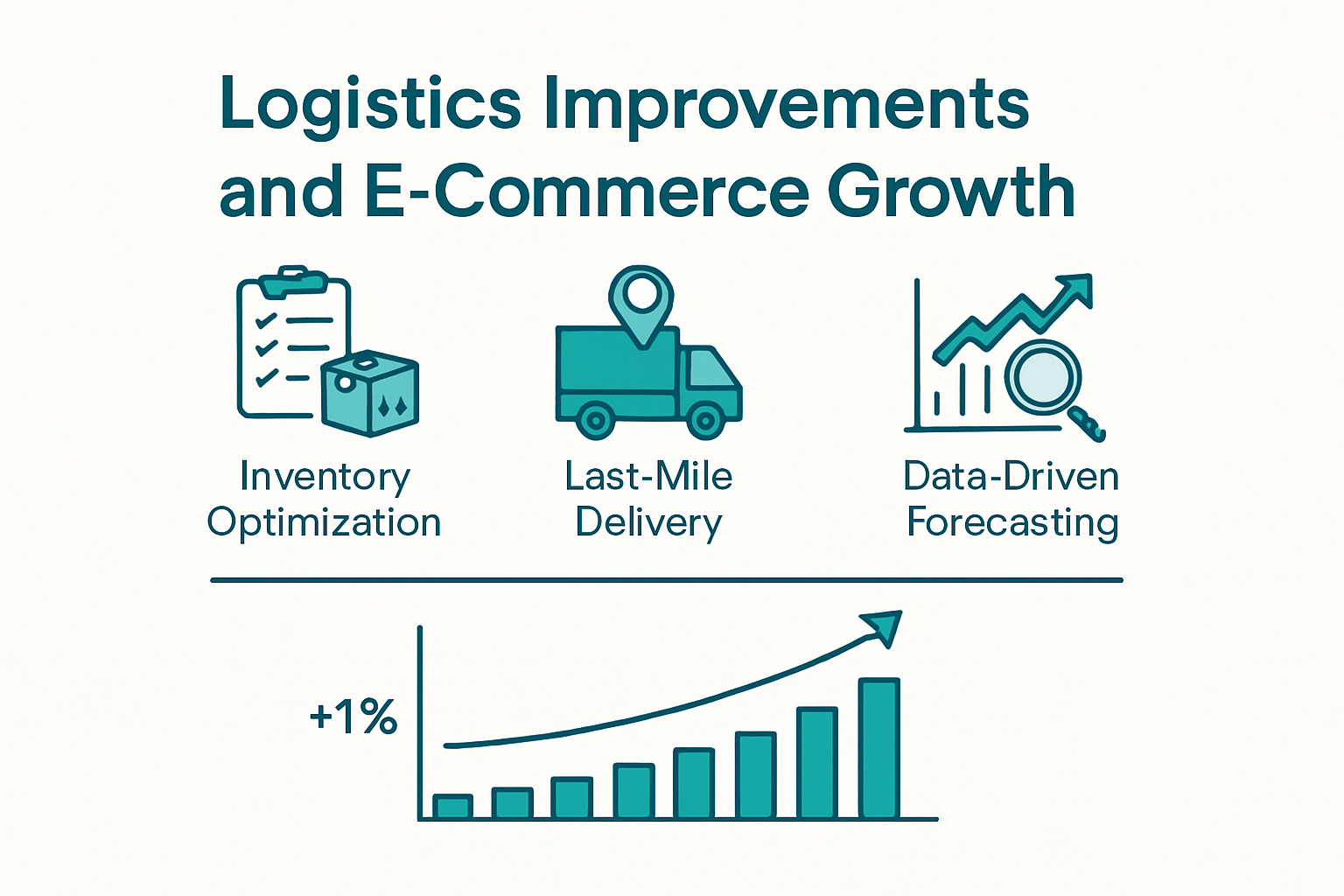
A groundbreaking study published in the journal Sustainability revealed a direct correlation between logistics development and e-commerce activity. Specifically, the research found that a 1% increase in logistics development leads to a 0.221% rise in e-commerce activity – a significant indicator of logistics’ transformative power. This statistical insight demonstrates how strategic logistics management can directly drive business growth and market expansion.
Transforming Supply Chain Dynamics
Modern logistics goes far beyond simple transportation. Learn more about advanced freight forwarding strategies that are revolutionizing how businesses manage their supply chains. The International Centre for Trade Transparency outlines several key ways logistics is reshaping retail and ecommerce:
- Inventory Optimization: Advanced warehousing techniques that reduce storage costs and improve product availability
- Last-Mile Delivery Innovation: Strategies that ensure faster, more reliable product delivery to end consumers
- Data-Driven Forecasting: Using advanced analytics to predict demand, minimize waste, and improve overall supply chain efficiency
These innovations are not just incremental improvements. They represent a fundamental reimagining of how businesses connect products with consumers. Logistics has evolved from a purely operational function to a strategic driver of business growth, customer satisfaction, and competitive advantage.
The most successful retailers and ecommerce platforms understand that logistics is not a cost center but a value creation mechanism. By investing in sophisticated logistics technologies and strategies, businesses can reduce operational expenses, improve customer experience, and create more agile and responsive supply chains.
As we move toward 2025, the businesses that will thrive are those that view logistics not as a background process, but as a critical element of their overall business strategy. The ability to move products efficiently, predict market demands, and deliver exceptional customer experiences will separate market leaders from followers.
The future of ecommerce and retail is being written by those who understand that logistics is not just about moving goods – it’s about creating seamless, intelligent connections between businesses and their customers.
The Role of Logistics in Manufacturing and Global Brands
Logistics is the critical backbone that enables manufacturing and global brands to compete effectively in an increasingly complex and interconnected global marketplace. It represents far more than a simple transportation mechanism – it is a strategic enabler of business growth, operational efficiency, and competitive advantage.
Driving Manufacturing Competitiveness
Research published in the National Center for Biotechnology Information emphasizes that logistics control is a primary factor determining the competitiveness of modern manufacturing enterprises. Global brands recognize that superior logistics performance goes beyond moving products from point A to point B – it involves creating intelligent, responsive supply chain networks that can adapt quickly to changing market demands.
Manufacturers today face unprecedented challenges. They must simultaneously manage complex global supply chains, reduce operational costs, maintain product quality, and respond rapidly to consumer expectations. Logistics provides the strategic framework that makes these competing priorities manageable. By leveraging advanced logistics technologies and methodologies, manufacturers can transform potential supply chain challenges into opportunities for innovation and growth.
Strategic Global Supply Chain Management
Explore our comprehensive guide to modern freight forwarding and understand how logistics underpins global brand strategies. According to the College of Business and Economics at Boise State University, logistics enables businesses to:
- Access Diverse Markets: Create seamless international distribution networks
- Lower Operational Costs: Optimize transportation and inventory management
- Promote Innovation: Facilitate efficient movement of products across global supply chains
The American Military University further highlights that an efficient logistics network reduces lead times, optimizes inventory management, and significantly lowers operational expenses. This translates into tangible benefits for manufacturers and global brands – increased profitability, enhanced customer satisfaction, and greater market responsiveness.
For global brands, logistics is no longer a back-office function but a critical strategic capability. It determines a company’s ability to deliver products consistently, manage inventory effectively, and meet increasingly sophisticated customer expectations. Brands that invest in advanced logistics capabilities can differentiate themselves in crowded markets, offering faster delivery, more transparent tracking, and more reliable service.
As we approach 2025, the most successful manufacturing and global brands will be those that view logistics not as a cost center, but as a dynamic, value-creating ecosystem. By integrating cutting-edge technologies, data analytics, and strategic thinking into their logistics operations, these organizations can turn complex global supply chains into powerful competitive advantages.
The future of manufacturing and global commerce will be defined by those who understand that logistics is not just about moving goods – it’s about creating intelligent, responsive, and sustainable networks that connect products with people across the world.
To help clarify the benefits and roles logistics plays in manufacturing and global brands, here is a summary table:
| Key Role of Logistics | Benefit for Manufacturers/Brands |
|---|---|
| Competitive Advantage | Helps companies outperform rivals with better supply chain execution |
| Cost Reduction | Lowers transportation and inventory management expenses |
| Faster Time-to-Market | Speeds up delivery to respond quickly to market demand |
| Enhanced Customer Satisfaction | Reliable and timely deliveries meet customer expectations |
| Supply Chain Resilience | Enables adaptation to disruptions and fluctuations |
| Access to Global Markets | Facilitates international distribution and market expansion |
Logistics Best Practices for Supply Chain Success
In the rapidly evolving landscape of global commerce, successful supply chain management requires a strategic approach that goes beyond traditional logistics methods. Businesses must adopt innovative practices that enhance efficiency, reduce costs, and create resilient operational frameworks.
Performance Measurement and Strategic Alignment
Research from the World Logistics Passport highlights the critical importance of establishing comprehensive performance metrics aligned with strategic business objectives. Performance measurement is not just about tracking numbers – it’s about creating a holistic view of supply chain effectiveness.
Companies need to develop robust key performance indicators (KPIs) that provide insights into various aspects of logistics operations. These metrics should encompass areas such as delivery speed, inventory turnover, transportation costs, and customer satisfaction. By creating a data-driven approach, businesses can make informed decisions that drive continuous improvement and operational excellence.
Technological Integration and Collaboration
Learn more about advanced delivery strategies that leverage cutting-edge technologies. A comprehensive study on collaboration in supply chains reveals that information technology plays a crucial role in enhancing coordination and integration across complex logistics networks.
Key technological best practices include:
- Inventory Sharing: Implement advanced systems that enable real-time inventory visibility between suppliers and organizations
- Demand Forecasting: Utilize AI and machine learning algorithms to predict customer demand with greater accuracy
- Information Integration: Create seamless communication channels across the entire supply chain ecosystem
Risk Mitigation and Operational Resilience
The groundbreaking AI logistics optimization study demonstrates how advanced technologies can transform risk management in supply chain operations. Modern logistics best practices must include comprehensive strategies for:
- Developing robust contingency plans
- Creating flexible supply chain architectures
- Implementing predictive analytics for proactive problem solving
Artificial intelligence and machine learning models are now being deployed to optimize routes, reduce environmental impact, and predict potential disruptions before they occur. These technologies enable businesses to create more resilient and adaptive logistics systems that can quickly respond to unexpected challenges.
Successful supply chain management in 2025 requires a holistic approach that combines strategic thinking, technological innovation, and continuous improvement. Organizations must view logistics not as a standalone function, but as an integrated system that drives overall business performance.
To better visualize the best practices discussed for supply chain success, here is a checklist table that summarizes the key actions for each area:
| Best Practice Area | Key Action | Implemented? |
|---|---|---|
| Performance Measurement | Establish robust KPIs | ☐ |
| Strategic Alignment | Align logistics with business goals | ☐ |
| Technological Integration | Adopt AI and real-time systems | ☐ |
| Collaboration | Enable information sharing across partners | ☐ |
| Risk Mitigation | Develop contingency and flexible plans | ☐ |
| Operational Resilience | Use predictive analytics for disruptions | ☐ |
Businesses that embrace these best practices will be well-positioned to navigate the complex global marketplace. By focusing on performance measurement, technological integration, and proactive risk management, companies can create supply chains that are not just efficient, but truly transformative.
The future of logistics is about creating intelligent, responsive, and sustainable networks that can adapt to the ever-changing demands of global commerce. Those who master these best practices will lead the way in the next generation of supply chain excellence.
Future Trends: Why Logistics Will Matter Even More in 2025
As we approach 2025, logistics is poised to become an even more critical driver of business success, technological innovation, and global economic resilience. The landscape of logistics is rapidly transforming, driven by technological advancements, changing consumer expectations, and the need for more sustainable and efficient supply chain solutions.
Technological Revolution in Logistics
Research from the U.S. Department of Transportation underscores the critical importance of building resilient logistics systems for future economic security. Emerging technologies are reshaping how businesses approach logistics, creating unprecedented opportunities for efficiency and innovation.
Artificial Intelligence and Machine Learning are becoming the backbone of modern logistics operations. These technologies enable predictive analytics, real-time decision-making, and unprecedented levels of supply chain optimization. Companies can now anticipate potential disruptions, optimize routing, and make data-driven decisions with remarkable precision.
Explore our comprehensive guide to modern freight forwarding to understand how cutting-edge technologies are transforming logistics strategies. Emerging trends include:
- Autonomous Vehicles and Drones: Revolutionizing last-mile delivery and transportation
- Internet of Things (IoT): Creating hyper-connected supply chains with real-time tracking
- Blockchain Technology: Enhancing transparency and security in logistics operations
Sustainability and Ethical Logistics
The future of logistics extends far beyond mere transportation. Environmental sustainability and ethical considerations are becoming paramount. Businesses are increasingly recognizing that logistics is not just about moving goods, but about creating responsible, environmentally conscious supply chains.
Key sustainability trends include:
- Green Logistics: Reducing carbon footprints through efficient routing and eco-friendly transportation
- Circular Supply Chains: Implementing circular economy principles to minimize waste
- Renewable Energy Integration: Transitioning to electric and alternative fuel vehicles
Adaptive and Resilient Supply Chains
The global disruptions of recent years have highlighted the critical importance of building adaptive and resilient logistics networks. Future logistics will be characterized by:
- Flexible Infrastructure: Ability to quickly reconfigure supply chains
- Decentralized Logistics Networks: Reducing dependency on single sources or routes
- Advanced Risk Management: Utilizing predictive technologies to anticipate and mitigate potential disruptions
Businesses that invest in these future-forward logistics strategies will gain significant competitive advantages. The ability to move goods efficiently, sustainably, and intelligently will separate market leaders from followers.
As we move into 2025, logistics is no longer a backend operational function. It has become a strategic imperative that drives innovation, sustainability, and economic growth. Organizations that embrace these emerging trends will be best positioned to thrive in an increasingly complex and interconnected global marketplace.
The future of logistics is not just about moving products – it’s about creating intelligent, responsive, and sustainable networks that connect businesses, consumers, and technologies in ways we are only beginning to imagine.
Frequently Asked Questions
What is the importance of logistics in e-commerce?
Logistics is crucial in e-commerce as it directly impacts delivery speed, inventory management, and customer satisfaction. Efficient logistics systems enable businesses to deliver products faster and more reliably, driving overall growth.
How can businesses leverage logistics for competitive advantage?
Businesses can view logistics as a strategic advantage by optimizing their supply chain operations. Investing in technology, improving last-mile delivery, and focusing on sustainability can help companies gain an edge over competitors.
What are the key trends in logistics expected by 2025?
Key trends in logistics by 2025 include the adoption of artificial intelligence and machine learning for better decision-making, increased focus on sustainability, and the development of adaptive supply chains that can respond to disruptions more effectively.
How can companies measure logistics performance effectively?
Companies can measure logistics performance by establishing key performance indicators (KPIs) that encompass metrics like delivery speed, inventory turnover, and transportation costs. This data-driven approach helps identify areas for improvement and enhances overall supply chain efficiency.
Transform Your Logistics Into a 2025 Growth Engine with Reliable Courier Services
Businesses today know that continued growth depends on much more than simply moving products from one place to another. Chances are, you have felt the pressure to keep up with rising consumer expectations, faster shipping demands, and unpredictable market changes, just as covered in this article. You have seen firsthand how logistics can create both big challenges and unique opportunities for scaling your ecommerce or retail business. If your current approach struggles with slow shipment visibility, complicated customs, or limited inventory control, the solution is closer than you think.
Discover how reliable courier services and end-to-end solutions from or-ner.com can help you move from logistics frustration to lasting supply chain success. Our platform delivers real-time tracking, global fulfillment, flexible cross-border options, and data-driven analytics so you can leap ahead of your competition. Ready to streamline your logistics, boost customer satisfaction, and prepare for the trends shaping 2025? Visit or-ner.com today and see how you can transform smart strategy into real results.
Recommended
- Top Benefits of Freight Forwarding for Growing Businesses 2025 – ORNER
- What Is Freight Forwarding? Guide for Modern Supply Chains 2025 – ORNER
- Just in Time Delivery: Essential Guide for 2025 Success – ORNER
- What Is Same Day Delivery? 2025 Guide for Online Retailers – ORNER
- Ecommerce Conversion Rate Optimization Strategies for 2025
- Why Businesses Need Websites in 2025: Key Benefits Explained