TL;DR:
- In 2026, cross-border sellers must use an automated freight and courier partner that handles customs compliance and DDP checkout. The US de minimis threshold dropped to zero for Chinese goods and to 200 dollars for other origins, requiring formal customs entry and correct HTS codes. A unified platform like Or-ner offers integrated freight booking, customs brokerage, DDP calculation, and shipment tracking to ensure compliance and protect profit margins.
If you’re selling cross-border into or out of the U.S. in 2026, a DDP-first, landed-cost–automated freight and courier partner is no longer optional. The short answer: yes, engage one now. The U.S. de minimis threshold dropped to $0 for Chinese-origin goods in February 2026 and to $200 for most other origins in March 2026, forcing formal customs entry and duty assessment on parcels that previously cleared without a second look. That means every merchant shipping internationally now needs correct HTS codes, ACE filings, and DDP checkout flows, or they’re absorbing holds, returns, and angry customers.
Key compliance points to have in place today:
- DDP (Delivered Duty Paid): duties collected at checkout, not at the customer’s door
- HTS codes: accurate product classification driving correct duty rates
- ACE filings: U.S. Customs and Border Protection’s Automated Commercial Environment requires advance electronic data
- CBP enforcement risk: missing or incorrect data triggers holds and potential penalties
First step: run a landed-cost audit on your top three markets, or request an Or-ner demo to see the checkout duty calculation live.
Table of Contents
- What does a global freight management platform actually deliver?
- Why DDP and landed-cost automation are non-negotiable in 2026
- How do you choose the right global freight and courier partner?
- Key Takeaways
- The compliance gap most merchants ignore until it’s too late
- Or-ner gives you DDP, ACE, and last-mile in one place
- Useful sources
- FAQ
What does a global freight management platform actually deliver?
The phrase “global freight management” covers a lot of ground. Here’s what a full-service platform should actually put on the table for an ecommerce merchant, broken down by function.
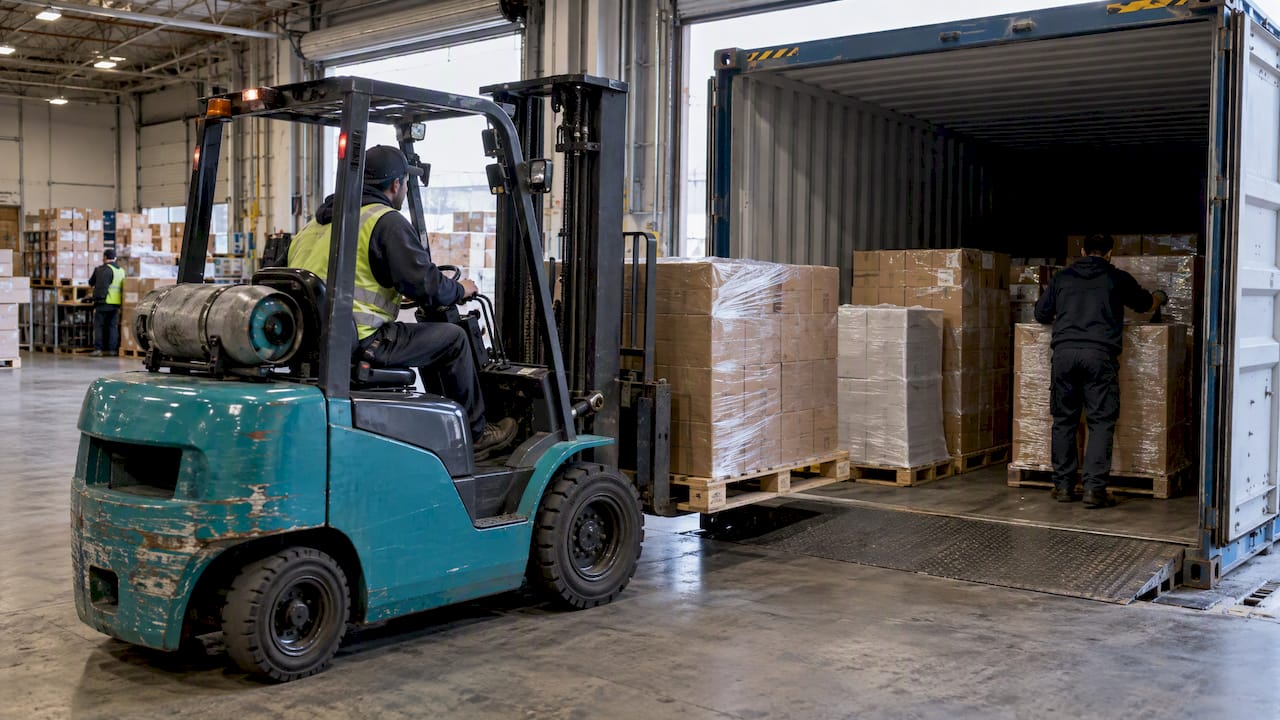
Freight forwarding handles the movement of palletized or containerized inventory: ocean, air, and road booking, documentation, consolidation (LCL/FCL), and door-to-door coordination. This is distinct from courier services, which focus on customer-facing parcel delivery. Freight forwarders arrange cargo and customs brokerage for warehouse-to-warehouse movement; couriers handle the last mile to the end customer. You need both, and they should talk to each other.
Customs brokerage means HTS classification, ACE filing with CBP, duty payment on your behalf, certificate-of-origin handling, and ISF (Importer Security Filing) for ocean shipments. A provider that still does this manually is a liability.

DDP checkout and landed-cost tooling calculates duties, taxes, brokerage fees, and last-mile costs at the moment a customer checks out, so the price they see is the price they pay. Landed-cost components include factory price, freight, origin fees, destination duties at the correct HTS rate, brokerage fees, and last-mile costs, plus potential surcharges for certain origins.
Warehousing and fulfillment ranges from bonded and Foreign Trade Zone (FTZ) storage, which defers duty payment and improves cash flow for high-volume importers, to standard 3PL pick-pack-ship. For most early-stage cross-border sellers, leveraging a 3PL’s negotiated carrier rates and adding fulfillment nodes only when data justifies them prevents premature capital lock-up.
Last-mile courier covers parcel delivery to the end customer, including regional carrier routing and returns/RTS workflows.
Tracking, exception management, and analytics give you real-time shipment visibility, automated alerts on delays or holds, and SKU-level reporting.
Ecommerce-specific features to verify during any vendor evaluation:
- Shopify, Amazon, and WMS platform integrations
- API-based rate shopping across carriers for cost-efficient routing
- SKU-level landed-cost reporting
- Returns and RTS workflow automation
- Advance electronic data (AED) fields for manufacturing origin, not just ship-from address
Pro Tip: The single most common carrier API failure is passing the ship-from address instead of the manufacturing origin. That one mis-mapping causes the majority of AED mismatches and customs rejections. Confirm your provider maps these fields correctly before go-live.
Why DDP and landed-cost automation are non-negotiable in 2026
The compliance picture changed fast. De minimis dropped to $0 for Chinese-origin goods and to $200 for other origins, which means parcels that previously sailed through now require formal entry, correct HTS classification, and duty payment. CBP enforcement has followed the rule change, and the operational cost of getting it wrong is measurable.
Shipment holds often last multiple business days when advance electronic data and correct HTS/origin fields are missing from a filing.
That’s not a rounding error. A 5–12 day hold on a $60 apparel order wipes the margin and probably loses the customer. Merchants who migrated to DDP reported improvements in international order retention and checkout conversion, because the surprise duty bill at delivery is one of the top reasons international customers dispute charges or abandon repeat purchases.
The mechanics you must automate:
- HTS classification at the SKU level, updated when tariff schedules change
- Certificate-of-origin handling for preferential duty rates and origin-based surcharges
- ACE advance electronic data submitted before shipment arrival
- Duties and taxes collected at checkout under DDP terms
- Reconciliation between estimated and actual duty amounts
Direct costs of skipping this: shipment holds, customer returns, unexpected duty bills passed to buyers, elevated support costs, and FTC exposure if your displayed landed cost is materially wrong.
Pro Tip: Start DDP with your top three markets and implement SKU-tier landed-cost modeling before expanding. Canada, the UK, and Australia are the recommended first markets because their customs frameworks are well-documented and hold rates are lower.
How do you choose the right global freight and courier partner?
Require these three capabilities as non-negotiable before any other conversation: DDP and landed-cost automation at checkout, ACE/broker integration with CBP, and end-to-end shipment tracking with exception alerts. Everything else is secondary.
Capability checklist
- DDP checkout integration: can they calculate and collect duties at the point of sale via API?
- HTS classification support: do they classify at the SKU level, or do they ask you to provide codes?
- ACE/CBP broker integration: is the filing automated, or does someone email a spreadsheet?
- Carrier network and rate shopping: do they offer multi-carrier API routing with corridor and weight-based rules?
- Warehousing footprint: bonded, FTZ, and standard 3PL options available?
- Ecommerce platform integrations: Shopify, Amazon Seller Central, WMS connectors?
- Pricing transparency: all-in quotes with itemized duty, brokerage, and last-mile breakdowns?
- SLAs and insurance: written delivery commitments and cargo insurance options?
- Data portability and exit terms: can you export your data and leave without penalty?
Red flags
- Opaque or bundled fees with no HTS-level breakdown
- Manual customs filing only, no ACE automation
- No API for checkout duty calculation
- “Ship-from” used as origin in carrier integrations (the manufacturing-origin mis-mapping problem)
- No written SLA credits for holds or missed delivery windows
Onboarding timeline
| Phase | Days | Milestones |
|---|---|---|
| Discovery | 1–30 | HTS/HS mapping sample, test ACE filings, carrier API audit |
| DDP Pilot | 30–60 | DDP live on top two SKUs/markets, fulfillment cutover tests |
| Scale | — | Inventory to forward nodes, SLA credits and exit terms finalized |
For apparel and custom merchandise, a well-documented merch shipping process that integrates platform data with customs documentation reduces hold risk at each phase.
Questions to ask providers
- “Show me a live checkout duty calculation for a $45 apparel item shipping to Germany.”
- “Walk me through your ACE filing workflow — what triggers the filing and who reviews exceptions?”
- “What happens if a shipment is held? Who owns the resolution, and what’s the SLA?”
- “Can I export my HTS mapping and shipment history if I leave?”
A staged rollout starting with Canada, the UK, and Australia shortens time to profitable international expansion and gives you a compliance baseline before tackling more complex markets.
Key Takeaways
A DDP-first, ACE-integrated freight partner is the single most important infrastructure decision a U.S. cross-border ecommerce merchant can make in 2026.
| Point | Details |
|---|---|
| De minimis changed in 2026 | Chinese-origin goods now face $0 exemption; most other origins dropped to $200, requiring formal customs entry. |
| Shipment holds cost real money | Missing ACE or HTS data causes holds averaging 5–12 business days, wiping margins on low-ticket items. |
| DDP protects conversion | Collecting duties at checkout eliminates surprise bills at delivery, improving retention and reducing disputes. |
| Staged rollout reduces risk | Start with Canada, UK, and Australia; add markets and fulfillment nodes only when shipment data justifies the cost. |
| Or-ner covers the full stack | Or-ner provides DDP checkout workflows, ACE/HTS broker integrations, bonded warehousing, and last-mile courier in one platform. |
The compliance gap most merchants ignore until it’s too late
The conventional wisdom in cross-border ecommerce used to be: get a good forwarder for inbound inventory, use a courier for outbound parcels, and sort out customs as problems arise. That model is broken now, and not because the rules got harder to follow. It’s broken because the rules changed faster than most merchants’ vendor contracts did.
The merchants I see struggling in 2026 aren’t the ones who missed a compliance update. They’re the ones who have a freight partner for inbound and a courier for outbound, and neither system talks to the other. Their HTS codes live in a spreadsheet someone updates quarterly. Their ACE filings go through a broker who emails PDFs. When a hold hits, three teams are pointing at each other.
The fix isn’t a bigger compliance team. It’s a single platform where the HTS classification, the ACE filing, the checkout duty calculation, and the shipment tracking all share the same data. That’s not a luxury feature. It’s the baseline for operating legally and profitably in cross-border ecommerce right now.
Or-ner gives you DDP, ACE, and last-mile in one place
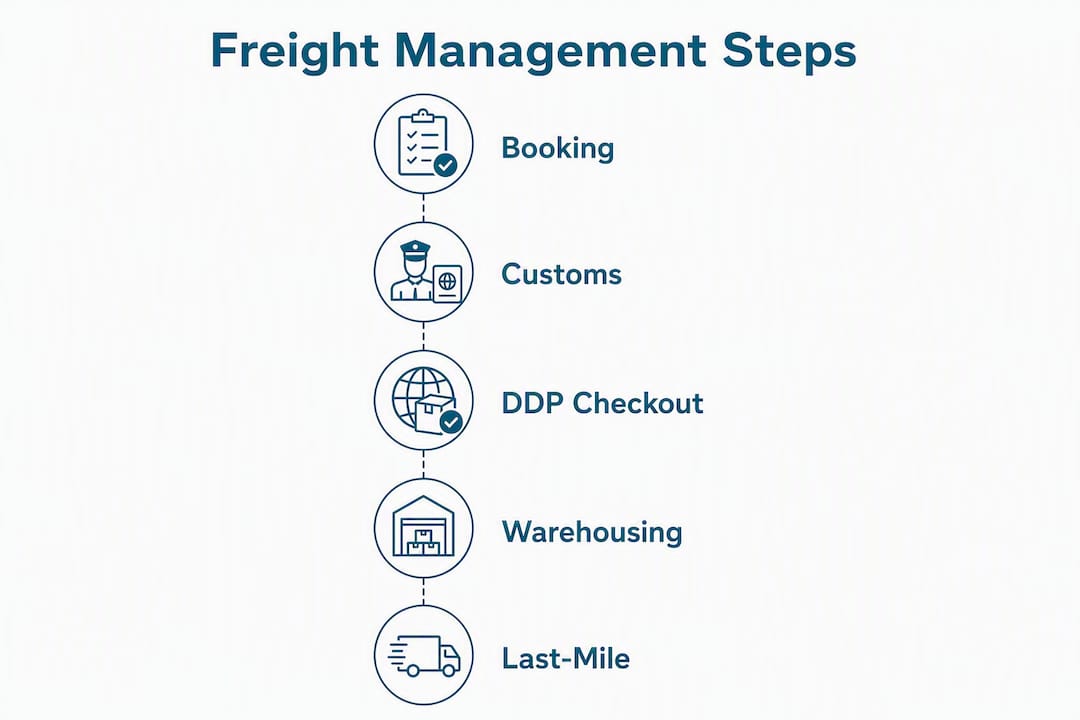
Cross-border compliance in 2026 requires a platform that connects every piece: freight booking, customs brokerage, DDP checkout calculation, bonded warehousing, and last-mile courier, all sharing live data. Or-ner is built exactly for that.
Or-ner’s platform covers global freight solutions for U.S. ecommerce merchants, including ocean, air, and road freight booking with full documentation; ACE/CBP broker integrations with automated HTS classification; DDP checkout workflows that calculate duties, taxes, and brokerage fees at the point of sale; bonded and third-party warehousing with FTZ options; and real-time tracking with exception management across every shipment.
Platform integrations include Shopify, Amazon Seller Central, and major WMS connectors. The 30/60/90-day onboarding pilot maps directly to the compliance timeline above: HTS sample mapping and test ACE filings in the first 30 days, DDP live on your top markets by day 60, and forward inventory nodes finalized by day 90.
Or-ner claims faster delivery through integrated forwarding, and the reliable courier services network covers U.S. last-mile for apparel, home goods, toys, footwear, and musical instruments. Request a demo to see the checkout duty calculation, HTS mapping, and ACE filing workflow live, or start with the freight booking step-by-step guide to map your current inbound flow against Or-ner’s capabilities.
Useful sources
Authoritative references used throughout this article:
- How to Navigate Cross-Border Commerce Compliance in 2026 – Ecommerce Times: covers de minimis threshold changes and AED/carrier API requirements
- How to Build a Cross-Border Compliance Program for the New De Minimis Era – Ecommerce Times: shipment hold data, DDP conversion evidence, landed-cost components, FTZ strategy, and 90-day onboarding milestones
- How to Build a Cross-Border Fulfillment Operation That Scales in 2026 – Ecommerce Times: multi-carrier rate shopping, staged market rollout, and returns infrastructure
FAQ
What did the 2026 de minimis changes mean for U.S. ecommerce?
The U.S. dropped the de minimis exemption to $0 for Chinese-origin goods in February 2026 and to $200 for most other origins in March 2026, requiring formal customs entry and duty payment on parcels that previously cleared automatically.
How long do shipment holds last without ACE automation?
Holds average 5–12 business days when advance electronic data or correct HTS/origin fields are missing, according to carrier and broker reports.
What is DDP and why does it matter at checkout?
DDP (Delivered Duty Paid) means duties and taxes are collected from the buyer at checkout rather than at delivery. It eliminates surprise charges, protects conversion, and reduces the FTC risk of misrepresenting a landed cost.
What should I verify in a freight provider demo?
Ask for a live checkout duty calculation, a walkthrough of the ACE filing workflow, and confirmation that manufacturing origin, not ship-from address, is mapped in carrier API fields.
How does Or-ner handle DDP and customs compliance?
Or-ner provides ACE/CBP broker integrations, automated HTS classification, and DDP checkout workflows that calculate duties and taxes at the point of sale, covering the full compliance stack for U.S. cross-border ecommerce merchants.