Ecommerce logistics is the behind-the-scenes engine that powers every online order, turning buyer clicks into doorstep deliveries at record speeds. Every year, the stakes get higher and the tech gets smarter and now over 90 percent of shoppers say fast shipping directly impacts whether they choose to buy again. Most people think logistics is just about moving boxes, but the real breakthrough is how logistics can be your strongest weapon for customer loyalty and long-term growth. The truth is, in 2025, mastering ecommerce logistics will separate the leaders from everyone else.
Table of Contents
- Understanding What is Ecommerce Logistics
- Essential Components of Ecommerce Logistics
- How Ecommerce Logistics Impacts Your Business
- Best Practices for Modern Ecommerce Logistics
Quick Summary
| Takeaway | Explanation |
|---|---|
| E-commerce logistics is vital for success | Effective logistics management directly influences customer satisfaction and loyalty in online shopping. |
| Utilize advanced technology for efficiency | Implementing AI and automation enhances inventory tracking, order processing, and shipping accuracy. |
| Prioritize customer experience in logistics | Fast, transparent, and flexible delivery options are essential to meet evolving consumer expectations. |
| Embrace continuous improvement | Regular audits and adaptability help businesses respond to market changes and improve logistics operations. |
| View logistics as a strategic asset | Treating logistics not just as a cost center but as a value creator can provide a competitive advantage. |
Understanding What is Ecommerce Logistics
E-commerce logistics represents the complex operational backbone that enables online businesses to deliver products efficiently from seller to customer. At its core, this system orchestrates a sophisticated dance of inventory management, order processing, warehousing, and transportation that transforms digital transactions into physical deliveries.
The Fundamental Components of E-commerce Logistics
E-commerce logistics goes far beyond simple shipping. According to Unisco Freight Glossary, it involves a comprehensive process of planning, organizing, and managing the entire flow of goods, information, and resources from origin to consumption. This intricate system includes multiple critical stages that work seamlessly together.
Key operational elements include inventory tracking, which ensures real-time product availability, order processing that converts digital requests into actionable tasks, and fulfillment strategies that determine how quickly and accurately products reach customers. Vaia Digital Marketing Explanation highlights that these components are essential for maintaining efficient operations and driving customer satisfaction.
Strategic Importance in Modern Business
In today’s digital marketplace, e-commerce logistics represents more than a backend function – it’s a critical competitive differentiator. The ability to manage product movement, storage, and distribution efficiently can significantly impact a company’s bottom line and customer loyalty. WEShip Logistics Guide emphasizes that effective logistics involves precisely coordinating various activities to ensure timely and cost-effective product flow through the supply chain.
Businesses must now view logistics not just as a transactional process, but as a strategic capability that directly influences customer experience. Fast shipping, accurate order fulfillment, and transparent tracking have become baseline expectations for online shoppers. Companies that master these elements can transform logistics from a cost center into a value creation mechanism.
The complexity of modern e-commerce logistics demands sophisticated technological integration. Businesses need robust systems that can track inventory across multiple channels, predict demand, optimize routing, and provide real-time visibility into every stage of product movement. Learn more about advanced courier services for global brands to understand how technology is reshaping logistics capabilities.
Successful e-commerce logistics requires a holistic approach that balances technological innovation, strategic planning, and customer-centric execution. By understanding and implementing these principles, businesses can create seamless, efficient delivery experiences that meet the ever-evolving expectations of the digital consumer marketplace.
Essential Components of Ecommerce Logistics
E-commerce logistics comprises several interconnected systems and processes that transform digital transactions into physical product delivery. Each component plays a critical role in creating a seamless, efficient experience for online shoppers and businesses alike.
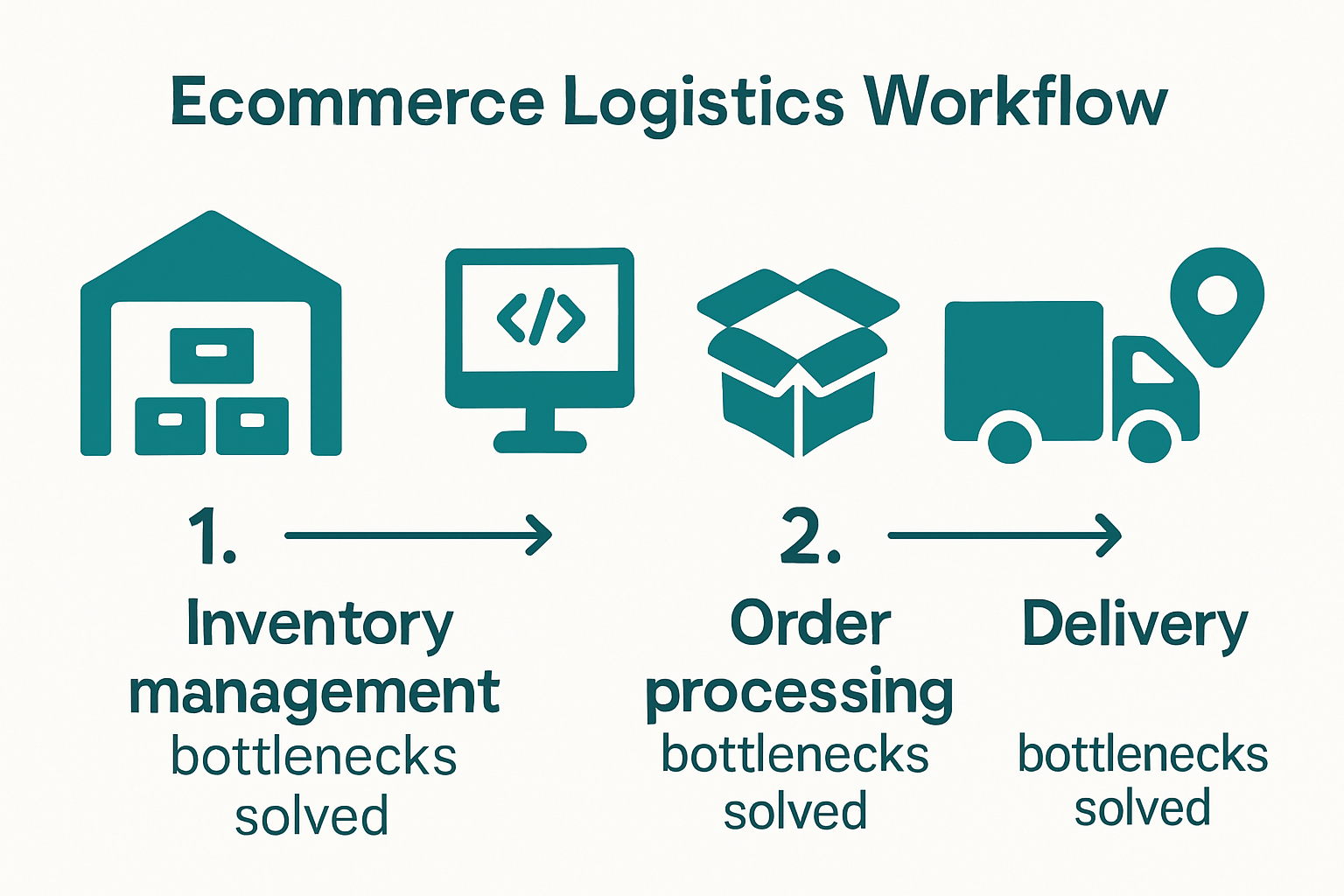
To help readers quickly understand the roles and key technologies associated with each essential component, the following table summarizes the main elements of ecommerce logistics:
| Component | Primary Role | Key Technologies/Practices |
|---|---|---|
| Inventory Management & Tracking | Monitor product quantities, locations, and movement | IoT sensors, machine learning, real-time tracking |
| Order Processing & Fulfillment | Convert digital orders into physical shipments | Automated picking, packing, routing algorithms |
| Transportation & Last-Mile Delivery | Move products to customer; ensure timely delivery | Route optimization, real-time tracking, multi-carrier platforms |
Inventory Management and Tracking
Inventory management represents the foundational pillar of e-commerce logistics. Advanced tracking systems enable real-time monitoring of product quantities, locations, and movement across multiple warehouses and distribution centers. Autonomous delivery research suggests that emerging technologies like IoT sensors and machine learning algorithms are revolutionizing inventory control, providing unprecedented accuracy and predictive capabilities.
Effective inventory management goes beyond simple stock counting. It involves sophisticated demand forecasting, understanding seasonal variations, and maintaining optimal stock levels to prevent overstock or stockout scenarios. Businesses must develop robust strategies that balance customer expectations with operational efficiency.
Order Processing and Fulfillment
Order processing transforms digital requests into physical actions. This complex workflow involves multiple stages: order validation, inventory allocation, picking, packing, and shipping. Explore our advanced courier services to understand how technology streamlines these intricate processes.
Modern fulfillment strategies prioritize speed and accuracy. Automated warehouses with robotic picking systems, intelligent routing algorithms, and integrated shipping platforms help businesses reduce processing times and minimize errors. The goal is to create a frictionless experience from click to delivery.
Transportation and Last-Mile Delivery
Transportation represents the most visible and critical component of e-commerce logistics. According to blockchain supply chain research, emerging technologies are transforming how goods move through global networks. Innovative solutions like route optimization software, real-time tracking, and multi-carrier shipping platforms enable businesses to provide transparent, reliable delivery experiences.
Last-mile delivery – the final stage of product transportation – has become increasingly complex. Consumer expectations for fast, affordable, and flexible delivery options continue to rise. Businesses must invest in diverse delivery networks, including traditional carriers, local couriers, and emerging technologies like autonomous vehicles and drone delivery.
Successful e-commerce logistics requires a holistic approach that integrates advanced technologies, strategic planning, and customer-centric design. By understanding and optimizing these essential components, businesses can create responsive, efficient logistics systems that meet the dynamic demands of the digital marketplace.
How Ecommerce Logistics Impacts Your Business
E-commerce logistics is not just an operational necessity but a strategic lever that can fundamentally transform business performance, customer satisfaction, and competitive positioning. Understanding its multifaceted impact is crucial for companies seeking to thrive in the digital marketplace.
Below is a table summarizing how ecommerce logistics impacts different aspects of your business, based on the key areas discussed in this section:
| Impact Area | Key Influences/Benefits |
|---|---|
| Customer Experience & Loyalty | Fast/transparent delivery, real-time tracking, flexible options |
| Operational Efficiency & Costs | Demand forecasting, reduced transport/holding costs, optimal resource allocation |
| Risk Management & Resilience | Predict disruptions, monitor shipments, develop adaptive strategies |
Customer Experience and Loyalty Dynamics
Customer satisfaction in e-commerce is increasingly determined by logistics performance. Research from Vietnam reveals that delivery time emerges as the most critical factor influencing customer satisfaction, with product availability significantly contributing to customer loyalty. Businesses that optimize their logistics can directly improve customer retention and brand perception.
Today’s consumers expect transparent, fast, and flexible delivery options. A seamless logistics experience can transform a one-time buyer into a loyal customer. This means investing in real-time tracking, multiple delivery choices, and predictable shipping timelines. Companies that fail to meet these expectations risk losing customers to more agile competitors.
Operational Efficiency and Cost Management
Logistics directly impacts a company’s bottom line through operational efficiency and cost management. AI and Machine Learning research demonstrates that advanced technologies can dramatically optimize logistics operations. Predictive analytics can forecast demand more accurately, reduce waste, and minimize unnecessary transportation costs.
Implementing smart logistics solutions enables businesses to:
- Reduce transportation expenses through intelligent route planning
- Minimize inventory holding costs with precise demand forecasting
- Improve resource allocation by understanding real-time operational constraints
Learn more about advanced freight forwarding strategies to understand how technological integration can transform your logistics approach.
Risk Management and Supply Chain Resilience
Modern e-commerce logistics plays a critical role in managing business risks and building supply chain resilience. Emerging technology research highlights how technologies like AI, IoT, and blockchain enhance risk evaluation procedures within transportation logistics.
These technologies provide unprecedented visibility into supply chain operations, enabling businesses to:
- Predict potential disruptions before they impact operations
- Monitor shipments in real-time
- Develop more adaptive logistics strategies
However, technological integration is not without challenges. Businesses must carefully balance implementation costs with potential efficiency gains, ensuring they have the necessary skilled personnel to leverage these advanced systems.
Successful e-commerce logistics is about creating a holistic ecosystem that balances technological innovation, customer expectations, and operational excellence. By viewing logistics not as a cost center but as a strategic asset, businesses can unlock significant competitive advantages in an increasingly complex digital marketplace.
Best Practices for Modern Ecommerce Logistics
Modern e-commerce logistics demands a strategic approach that combines technological innovation, operational efficiency, and customer-centric design. Businesses must continuously evolve their logistics practices to remain competitive in an increasingly complex digital marketplace.
Technological Integration and Automation
The Operations Council emphasizes the critical role of automation and advanced technologies in transforming e-commerce logistics. Implementing AI and machine learning can dramatically optimize key operational processes, from inventory management to order fulfillment and customer interactions.
Companies should focus on developing integrated technology ecosystems that enable:
- Real-time inventory tracking
- Predictive demand forecasting
- Automated order processing
- Intelligent routing and shipping optimization
Advanced algorithms, such as those explored in recent logistics research, demonstrate significant potential in improving delivery times and transportation efficiency. The ant colony algorithm, for instance, offers innovative approaches to solving complex logistics routing challenges.
Supply Chain Connectivity and Visibility
Inbound Logistics highlights the importance of creating seamless connections across the entire supply chain. Investing in integrated platforms that connect customer-facing systems with vendor partners, warehouses, and transportation providers can significantly enhance operational transparency and reduce errors.
Explore our comprehensive courier services to understand how advanced technological integration can transform your logistics operations. Effective supply chain connectivity involves:
- Eliminating manual data entry
- Creating unified communication channels
- Ensuring real-time information sharing
- Developing robust API integrations
Continuous Improvement and Adaptability
Successful e-commerce logistics requires a commitment to continuous learning and adaptation. Businesses must develop agile strategies that can quickly respond to changing market conditions, technological advancements, and customer expectations.
Key practices for maintaining logistics adaptability include:
- Regular performance audits
- Ongoing technology assessment
- Investment in employee training
- Flexible infrastructure development
Implementing a culture of continuous improvement means going beyond traditional logistics management. It requires a holistic approach that considers technological innovation, operational efficiency, and human expertise.
The most successful e-commerce logistics strategies will be those that balance cutting-edge technology with human insight, creating adaptive systems that can navigate the complex and ever-changing digital marketplace. By embracing these best practices, businesses can transform their logistics from a cost center into a strategic competitive advantage.

Frequently Asked Questions
What is ecommerce logistics?
Ecommerce logistics refers to the processes and systems that manage the flow of goods, information, and resources involved in online transactions, from inventory management to order fulfillment and delivery to customers.
Why is ecommerce logistics important for businesses?
Ecommerce logistics is vital as it directly impacts customer satisfaction and loyalty. Effective logistics management can enhance operational efficiency, reduce costs, and create a competitive advantage in the digital marketplace.
What are the key components of ecommerce logistics?
The essential components of ecommerce logistics include inventory management and tracking, order processing and fulfillment, and transportation, particularly last-mile delivery.
How does ecommerce logistics affect customer experience?
Ecommerce logistics significantly influences customer experience by providing fast, transparent, and flexible delivery options. Efficient logistics operations lead to quicker deliveries and accurate order fulfillment, enhancing overall customer satisfaction.
Transform Your Ecommerce Logistics with a Proven End-to-End Partner
Is your business struggling to meet growing demands for fast shipping, real-time tracking, or seamless cross-border fulfillment? The article highlighted how technology, inventory management, and last-mile delivery can make or break customer loyalty. Many ecommerce businesses feel pressure when juggling fragmented systems, delayed shipments, and unpredictable costs. Choosing the right logistics partner is now essential for turning these challenges into competitive advantages.
Or-ner.com was designed to solve these exact problems. Our all-in-one logistics platform gives you:
- Reliable courier services for fast and secure deliveries worldwide
- Real-time shipment tracking and inventory visibility so you are always in control
- Seamless integration with major ecommerce platforms and automated workflows
We support ecommerce brands, wholesalers, and global sellers with scalable warehousing, streamlined customs clearance, and dedicated support for business growth. Ready to unlock stress-free ecommerce logistics and impress your customers? Discover why top sellers choose reliable courier services on Or-ner.com or explore our trusted fulfillment and freight solutions now.
Act today to turn logistics into your business’s strongest advantage.
Recommended
- Types of Courier Services for Ecommerce and Global Brands 2025 – ORNER
- What Is Freight Forwarding? Guide for Modern Supply Chains 2025 – ORNER
- What Is Same Day Delivery? 2025 Guide for Online Retailers – ORNER
- Ocean Freight Documentation Guide 2025 for Ecommerce and Brands – ORNER
- Ecommerce Navigation Optimization Guide for 2025 Success
- Ecommerce Analytics, Google Analytics for Ecommerce Website