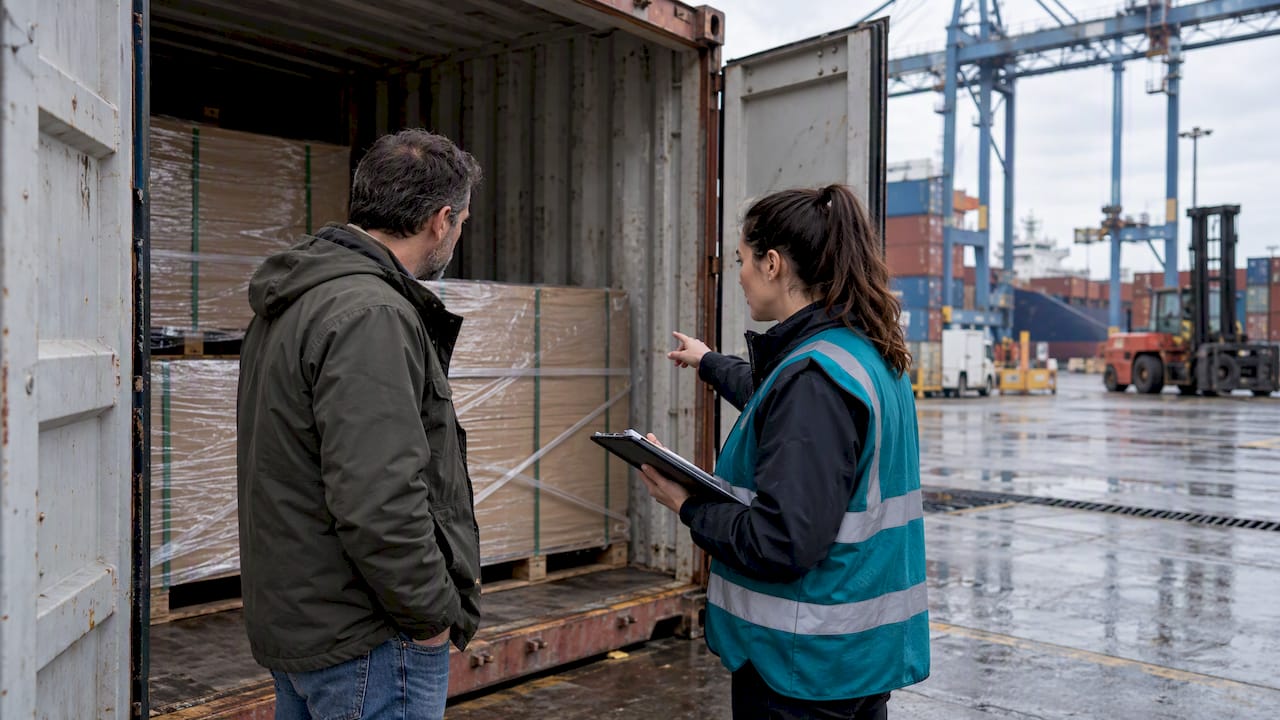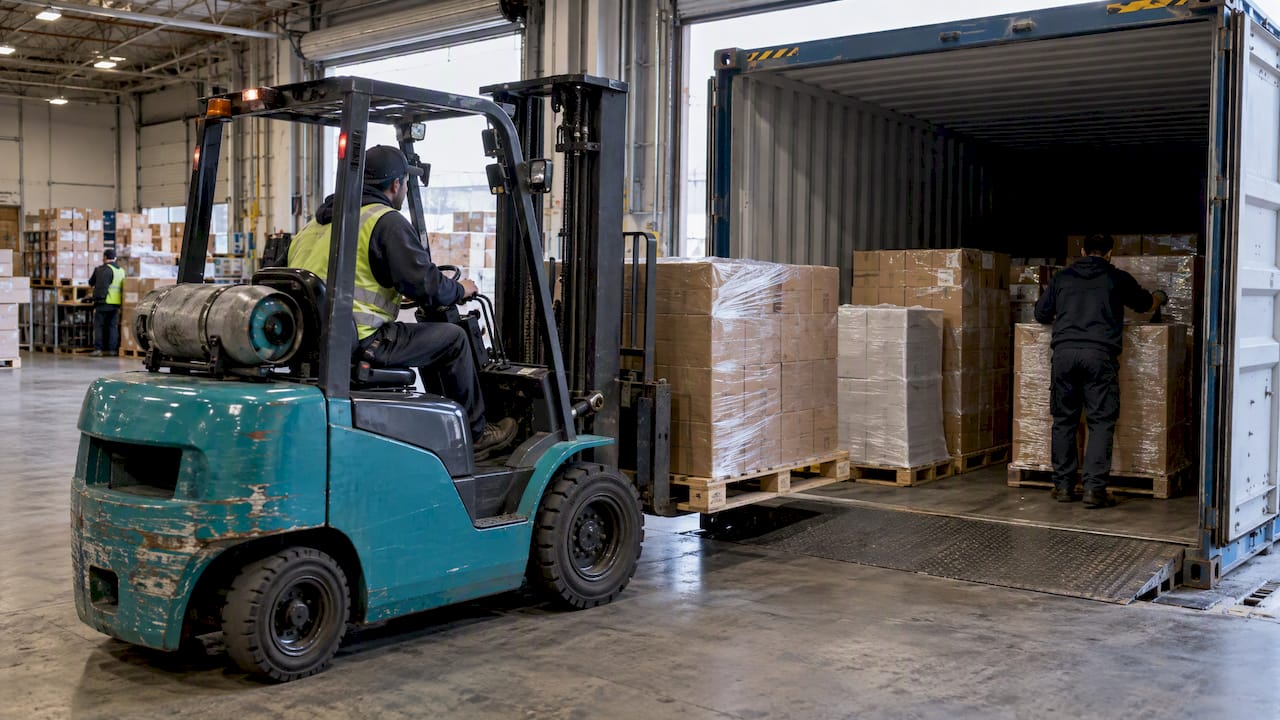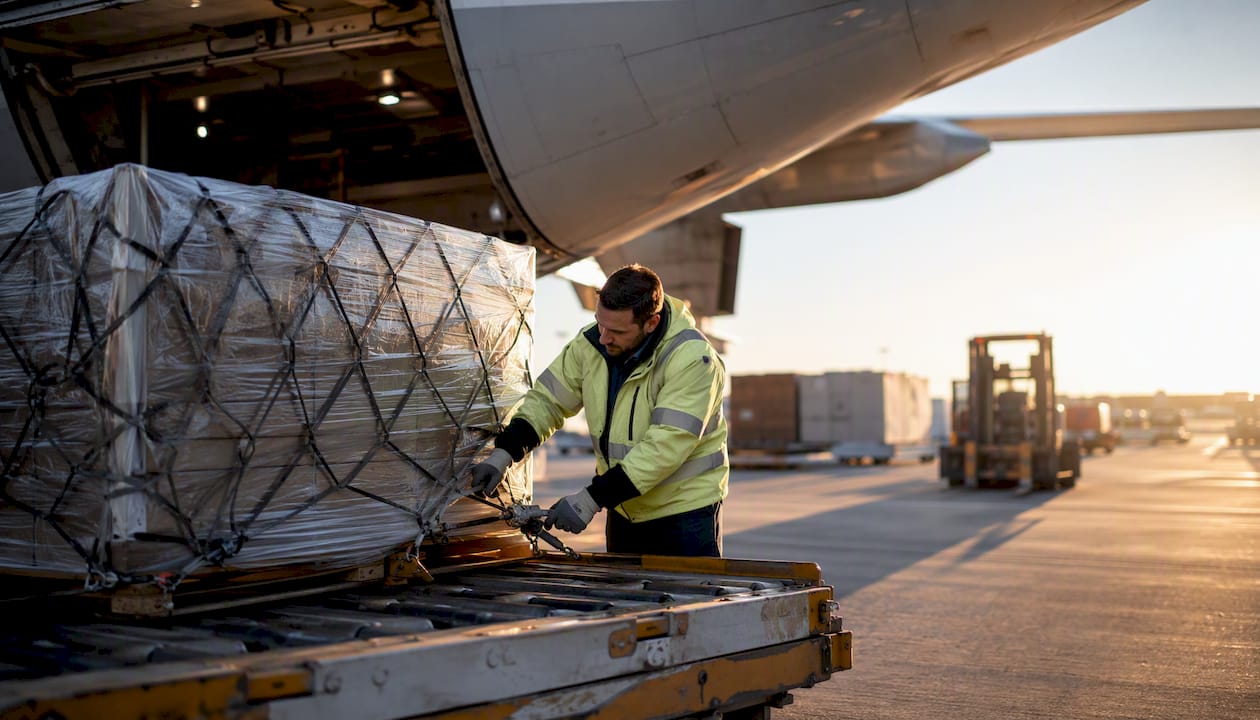
An air freight forwarder is a licensed logistics intermediary that arranges air cargo shipments on behalf of shippers, handling everything from booking airline space and preparing documentation to clearing customs and coordinating final delivery. Think of them as the project manager for your shipment, not the truck driver or the airline. As a freight forwarder, their core job is coordinating and organizing movement of cargo across carriers, agencies, and borders so you don’t have to.
Core services an air freight forwarder provides:
- Freight booking with airlines and cargo carriers
- Documentation preparation (air waybill, commercial invoice, packing list)
- Customs clearance at origin and destination via CBP/ACE
- Cargo consolidation to reduce per-unit shipping costs
- Security screening coordination under TSA IAC/Known Shipper rules
- Insurance and claims support when cargo is lost or damaged
Hire one when your shipment is time-sensitive, crosses international borders, or when you lack direct airline relationships and in-house compliance expertise. If you’re shipping a pallet of electronics from Los Angeles to Frankfurt with a 48-hour delivery window, a forwarder is not optional.
Key Takeaways
An air freight forwarder is a federally regulated IAC that manages the full air shipment process on your behalf, from booking and documentation through customs clearance and final delivery.
| Point | Details |
|---|---|
| Role definition | A forwarder coordinates cargo movement across carriers and agencies; they are not the airline or the customs broker, though many hold both capabilities. |
| When to hire one | Use a forwarder for any international air shipment, regulated commodity, or time-critical move where in-house compliance expertise is absent. |
| Critical documents | Air waybill, commercial invoice, packing list, and EEI/ACE filing (for U.S. exports over $2,500 per Schedule B number) are non-negotiable. |
| Main cost driver | Chargeable weight (actual vs. volumetric) and fuel surcharges drive most invoice surprises; always provide exact dimensions when requesting a quote. |
| Or-ner for U.S. shippers | Or-ner offers freight booking, customs clearance, and ecommerce integration for businesses managing cross-border air shipments. |
Table of Contents
- What does an air freight forwarder actually do?
- How the air shipment process works, step by step
- What air freight service types are available?
- Documents and U.S. compliance you need to get right
- What drives air freight costs and transit times?
- Benefits and drawbacks of using an air freight forwarder
- How to choose an air freight forwarder
- The detail most shippers overlook
- Or-ner handles the complexity so your cargo moves
- Sources
- FAQ
What does an air freight forwarder actually do?
The standard freight forwarding definition undersells the role. A forwarder is not simply a booking agent who passes your cargo to an airline. They negotiate rates and capacity with multiple carriers, arrange multimodal pickup and delivery (truck to airport, airport to warehouse, warehouse to consignee), prepare and verify every document the shipment requires, and manage exceptions when something goes wrong mid-transit.
The clearest way to understand the role is to contrast it with two adjacent roles:
| Role | Who they are | What they sign | Who performs screening |
|---|---|---|---|
| Air freight forwarder | Licensed IAC intermediary | Master air waybill with airline | Forwarder (IAC-certified) |
| Airline / carrier | Asset owner | Contract of carriage | Airline security staff |
| Customs broker | Licensed CBP agent | Power of attorney for importer | N/A (regulatory filing only) |
Many forwarders also hold a customs broker license, but the two functions are legally distinct. A forwarder moves cargo; a broker clears it through CBP. The same company can do both, but they are separate regulated activities.
In the U.S., air freight forwarders are federally regulated Indirect Air Carriers (IAC). Owners and employees must pass TSA background checks, and the TSA conducts spot audits of IAC operations. That federal status is what allows a forwarder to tender cargo to an airline for transport, and it is why working with a non-IAC-compliant vendor creates real legal and security exposure.
Pro Tip: The “unnecessary middleman” label is one of the most persistent myths in logistics. Forwarders reduce the need for a large in-house team by managing airline relationships, TSA security compliance, customs filings, and disruption recovery simultaneously. For most mid-size shippers, building that capability in-house costs far more than the forwarder’s margin.
How the air shipment process works, step by step
Understanding the air freight forwarding process end to end helps you spot where delays happen and who is accountable at each stage.
The seven-stage workflow
- Booking and rate confirmation — Forwarder negotiates space and rates with airlines, confirms chargeable weight, and issues a booking confirmation to the shipper.
- Pickup and packaging verification — Carrier or trucking partner collects cargo from the shipper’s facility; forwarder verifies packaging meets IATA standards and airline requirements.
- Security screening and Known Shipper verification — Forwarder confirms Known Shipper status with TSA or arranges physical screening for non-known shippers. IAC-certified forwarders are the primary interface for this step.
- Air waybill issuance and cargo handover — Forwarder prepares the master air waybill (MAWB) and house air waybill (HAWB), then tenders cargo to the airline at the cargo terminal.
- In-flight and transfer handling — Airline manages the flight; forwarder monitors connections and rebooking if delays occur at transit hubs.
- Customs clearance at destination — Forwarder or its customs broker partner files entry with CBP (for U.S. imports) or the destination country’s customs authority, pays duties, and secures release.
- Final delivery — Cargo moves from the destination airport to the consignee’s address via trucking or courier, completing the door-to-door service.
Who does what
For U.S. exports, the shipper or forwarder must file Electronic Export Information (EEI) through the Automated Export System (AES) via CBP’s ACE portal when the shipment value exceeds $2,500 per Schedule B number or when an export license is required. The forwarder typically handles this filing as part of their documentation service, but the legal responsibility for accuracy sits with the U.S. Principal Party in Interest (the exporter).
Typical door-to-door transit times run 1–3 business days for direct express services, 3–5 days for standard scheduled freight, and 5–10 days for consolidated (groupage) shipments. Delays most often occur at customs clearance, particularly when documentation is incomplete or commodity classifications are disputed.
What air freight service types are available?
Not every air shipment needs the same solution. The right service depends on your cargo volume, urgency, and budget.
- Direct/scheduled freight — Your cargo moves on a specific scheduled airline flight, either in the belly hold of a passenger aircraft or on a dedicated freighter. Best for time-definite shipments where you need a confirmed flight.
- Consolidated (groupage/LCL) — The forwarder combines your cargo with other shippers’ goods into a single ULD (Unit Load Device) or pallet. You pay only for the space you use. Transit times are longer, but per-kilogram costs drop significantly for smaller shipments.
- Full charter — An entire aircraft is booked for a single shipment. Used for oversized, hazardous, or extremely high-value cargo (think turbine parts, live animals, or emergency humanitarian relief). Cost is substantial, but capacity and routing are fully controlled.
- Express/courier — Integrators like FedEx and UPS operate their own aircraft networks and offer guaranteed next-day or two-day delivery with door-to-door tracking. Ideal for small, high-value parcels where speed outweighs cost.
- Door-to-door vs. airport-to-airport — Door-to-door includes pickup at origin and delivery at destination; airport-to-airport hands off at the cargo terminal and requires the shipper or consignee to handle ground transport. Door-to-door costs more but removes coordination burden.
Capacity and pricing are not static. Trade policy shifts, seasonal demand spikes, and surges from sectors such as AI infrastructure can compress available belly capacity on key lanes within days. Peak seasons (Q4 holiday shipping, Chinese New Year pre-stocking) routinely push rates up sharply. Booking 2–4 weeks ahead on high-demand lanes is standard practice, not a luxury.
Documents and U.S. compliance you need to get right
Paperwork errors are the single most common cause of cargo holds and customs seizures. Here is what every U.S. air shipment requires, and where the regulatory pressure points are.
Essential documents
- Air waybill (AWB) — The contract of carriage between the shipper and airline. The MAWB is between the forwarder and the airline; the HAWB is between the forwarder and the shipper. Both must be accurate and consistent.
- Commercial invoice — States the buyer, seller, goods description, HS/Schedule B commodity code, declared value, and terms of sale (Incoterms). Errors here trigger CBP holds.
- Packing list — Itemizes contents, weights, and dimensions. Must match the commercial invoice exactly.
- Export licenses — Required for controlled goods under EAR (Export Administration Regulations) or ITAR (International Traffic in Arms Regulations). The forwarder screens for license requirements but cannot apply for them on the exporter’s behalf.
- Certificate of origin — Required by many destination countries for duty preference claims under trade agreements.
- Dangerous goods declaration — Mandatory for any IATA-regulated hazardous material. Requires shipper certification and specific packaging.
- Insurance certificate — Confirms cargo coverage; standard carrier liability under the Montreal Convention is limited and rarely covers full cargo value.
U.S.-specific compliance
The TSA’s Indirect Air Carrier program requires forwarders to maintain a written security program, conduct employee background checks, and submit to TSA audits. Cargo tendered by a non-IAC forwarder cannot be accepted by a U.S. airline without additional physical screening, which adds time and cost.
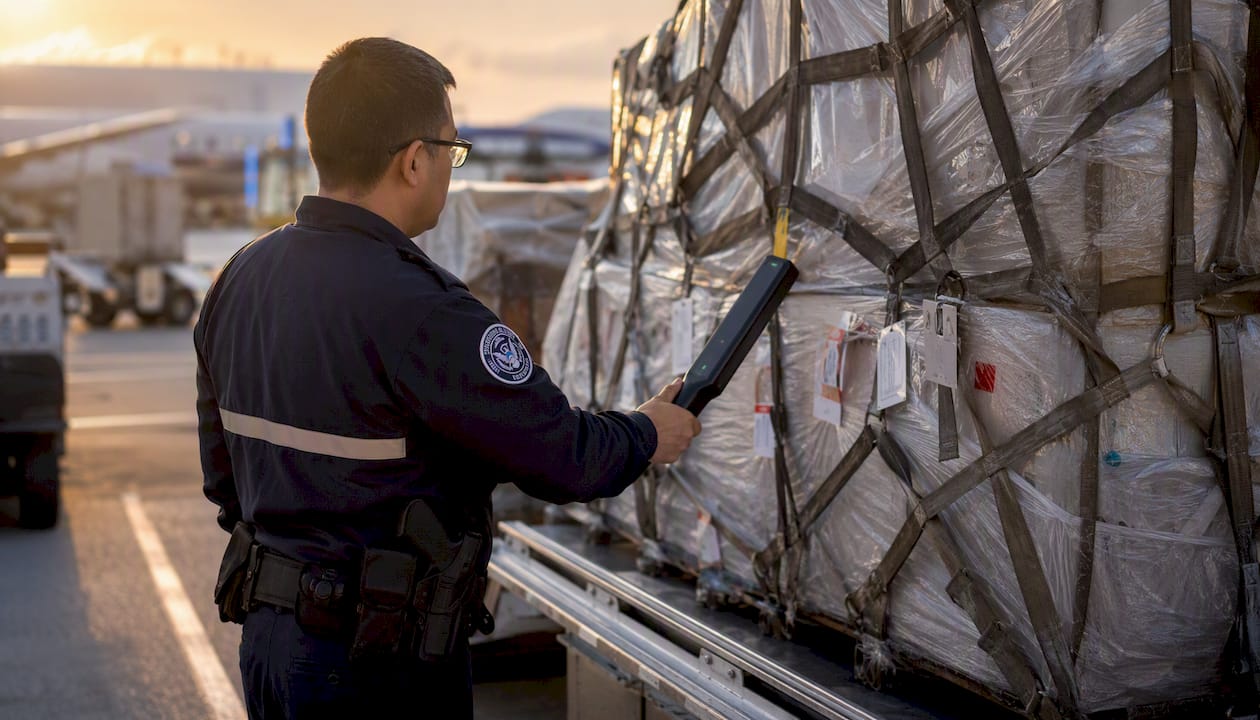
The Known Shipper program allows established shippers with a verified security history to bypass physical screening. New shippers or those who have not shipped in over 12 months typically lose Known Shipper status and must have cargo physically screened before it can be loaded. Your forwarder manages this verification.
For exports, EEI filing through ACE is required when shipment value exceeds $2,500 per Schedule B number or when an export license applies. The air export forwarding process includes this filing as a standard step, but confirm with your forwarder who is listed as the filer of record.
Pro Tip: Cargo insurance through your forwarder is almost always worth the cost. Montreal Convention carrier liability caps at roughly 22 Special Drawing Rights per kilogram, which translates to well under $30 per kilogram at current rates. For high-value electronics or pharmaceuticals, that coverage gap is enormous.
What drives air freight costs and transit times?
Air freight is substantially more expensive than ocean shipping, primarily because of fuel costs, aircraft maintenance, and landing fees. Understanding the cost levers helps you avoid surprises on the invoice.
Primary cost drivers
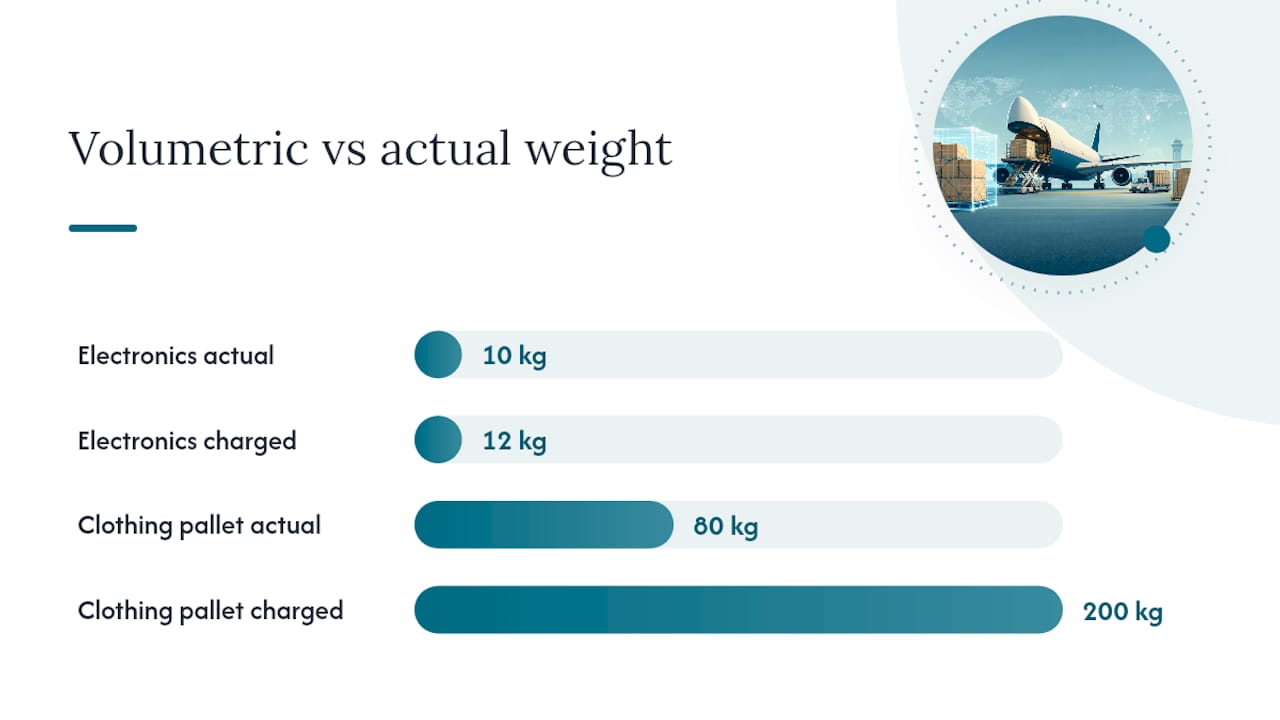
- Chargeable weight — Airlines charge on whichever is greater: actual gross weight or volumetric weight (length × width × height in cm ÷ 6,000 for most carriers). A large, lightweight box of clothing will almost always be charged on volumetric weight.
- Fuel surcharges — Fluctuate with jet fuel prices and are quoted separately from base rates. They can represent 20–40% of the total freight charge on some lanes.
- Security and handling fees — Airport handling, X-ray screening, and terminal fees are added line items. Ask for a fully landed rate quote, not just the base freight rate.
- Consolidation savings — Groupage shipments share fixed costs across multiple shippers. If your cargo is under 500 kg or 3 CBM, consolidation often cuts per-unit costs by 30–50% versus booking a direct slot.
- Seasonal peak pricing — Q4 (October–December) and the pre-Chinese New Year period (January–February) see the sharpest rate increases on trans-Pacific and trans-Atlantic lanes.
- Customs duties and taxes — Assessed at destination based on declared value and HS code. Not a freight charge, but a cash-flow item that surprises first-time importers.
Scenario example: A 10 kg shipment of consumer electronics in a 60 × 40 × 30 cm box has a volumetric weight of 12 kg (60 × 40 × 30 ÷ 6,000). The airline charges on 12 kg, not 10 kg. A pallet of clothing at 80 kg actual weight in a 120 × 100 × 100 cm configuration has a volumetric weight of 200 kg. The clothing pallet is charged at 200 kg, more than double its actual weight.
Pro Tip: Always provide exact dimensions and weights when requesting a quote. Forwarders who quote on estimated dimensions will adjust the invoice when cargo is measured at the terminal. Accurate specs upfront eliminate the most common source of invoice disputes.
Benefits and drawbacks of using an air freight forwarder
Advantages
- Speed — Air is the fastest mode for international cargo, with transit times measured in days rather than weeks.
- Consolidated buying power — Forwarders hold contracts with multiple airlines and can access rates individual shippers cannot negotiate directly.
- Compliance expertise — TSA IAC status, CBP clearance, EEI filing, and dangerous goods handling require specialized knowledge most businesses don’t maintain in-house.
- Exception management — When a flight is cancelled or cargo is held at customs, an experienced forwarder has the contacts and authority to rebook or resolve the issue quickly.
- Flexibility — Forwarders can combine air with truck, rail, or ocean for the segments where speed is less critical, reducing total cost without sacrificing delivery windows.
Disadvantages
- Cost — Air freight typically costs several times more per kilogram than ocean freight. For non-urgent, high-volume, or low-value goods, the premium rarely makes financial sense.
- Weight and size limits — Aircraft have structural limits that ocean vessels do not. Oversized or extremely heavy cargo may require charter, which multiplies cost.
- Minimum charges — Most forwarders apply a minimum chargeable weight (often 45 kg or 100 kg) regardless of actual shipment size, making air uneconomical for very small parcels where express courier services are a better fit.
When to outsource to a forwarder
For ecommerce sellers and small businesses, the decision is usually straightforward. If your shipment crosses a border, contains regulated goods, or must arrive within a fixed window, a forwarder’s compliance infrastructure and carrier relationships pay for themselves. If you’re shipping domestically and have no customs exposure, a courier or parcel carrier is simpler. The benefits of freight forwarding scale with shipment complexity, not just volume.
How to choose an air freight forwarder
Selection criteria
The biggest forwarders by volume are not automatically the best fit for your lane or commodity. Annual rankings measure metric tons handled, and while scale matters for capacity access, a niche specialist often outperforms a global giant on specific routes or product categories. Evaluate on these dimensions:
- IAC/TSA compliance — Confirm the forwarder holds active IAC status. Ask for their TSA IAC number and verify it.
- Customs clearance capability — Do they hold a CBP-licensed customs broker in-house, or do they subcontract? Subcontracting adds a communication layer and potential delay.
- Airline contracts and network coverage — Which carriers do they have direct contracts with on your specific lane? A forwarder with no direct contract on your route will pay spot rates, which get passed to you.
- Digital tracking and visibility — Can you track your shipment in real time? What system do they use for exception alerts?
- Insurance and claims process — What is their claims turnaround time? Who is the underwriter? Get this in writing before you ship.
- Pricing transparency — A quote that lists only “freight charge” without breaking out fuel surcharges, handling fees, and customs costs is a red flag.
Questions to ask on the first call
- What is your IAC number, and can you provide your TSA compliance documentation?
- Do you hold a CBP customs broker license in-house?
- What are your standard transit times on my specific lane (origin city to destination city)?
- What is your minimum chargeable weight?
- Who handles customs clearance at the destination, and what is the typical clearance time?
- Can you provide two references from shippers in my industry or commodity type?
- What is your liability limit per kilogram, and what cargo insurance options do you offer?
- How do you handle flight cancellations or customs holds?
Red flags to watch for
- Inability or unwillingness to provide an IAC number or TSA compliance documentation
- Vague liability terms (“we follow standard industry practice”) with no written policy
- No local agent or direct contact at the origin or destination airport
- Unfamiliarity with Known Shipper requirements or EEI/ACE filing for U.S. exports
- Quotes that arrive without a breakdown of surcharges and fees
Simple scoring checklist
Rate each shortlisted forwarder 1–5 on these five criteria, then total the scores:
Any forwarder scoring below 3 on IAC compliance or customs clearance should be removed from consideration regardless of price.
The detail most shippers overlook
The conventional wisdom in logistics is to pick the biggest forwarder you can afford, on the theory that scale equals reliability. That logic breaks down fast on specialized lanes or regulated commodities.
A large forwarder’s strength is volume and network breadth. Their weakness is that your 200 kg pharmaceutical shipment is a rounding error in their daily throughput. When a customs hold hits at 11 PM on a Friday, the person who picks up the phone and knows your commodity, your HS code, and your CBP entry history is the one who matters. That person is rarely at a call center handling thousands of accounts.
The forwarders who consistently resolve time-critical problems are the ones who have built deep relationships with specific CBP port directors, specific airline cargo managers, and specific ground handlers at the airports on your lane. Those relationships are not visible in a tonnage ranking. They show up when your shipment is the one that gets rebooked onto the next available flight instead of sitting in a queue.
The air import forwarding side of the equation deserves equal attention. Import compliance errors, particularly misclassified HS codes or missing ISF filings, generate CBP penalties that dwarf the cost of getting it right the first time. A forwarder who treats import compliance as an afterthought is a liability, not a partner.
Or-ner handles the complexity so your cargo moves
U.S. shippers dealing with cross-border air freight face a specific set of pressures: TSA IAC compliance, CBP clearance, EEI filing, and ecommerce platform integration all have to work together without gaps. Or-ner is built for exactly that combination.
Or-ner provides freight booking, customs clearance, and cross-border logistics for ecommerce sellers and businesses shipping internationally, with direct integration for Amazon and other major platforms. The platform gives you real-time shipment visibility, exception alerts, and a single point of contact for documentation and compliance, so you’re not chasing three vendors when a customs hold appears. Whether you’re moving a single air freight consignment or managing recurring international lanes, you can start your freight booking and get a quote directly through Or-ner.
Sources
The sources below cover regulatory requirements, industry rankings, and market context referenced throughout this article.
- Freight forwarder – Wikipedia
- K+N still largest airfreight forwarder despite DSV takeover of Schenker – Air Cargo News
- Ranking the World’s 25 Largest Air Freight Forwarders – Supply Chain 24/7
FAQ
What exactly does a freight forwarder do?
A freight forwarder coordinates the movement of cargo on behalf of a shipper, arranging carriage, preparing documentation, handling customs clearance, and managing exceptions when delays occur. They act as the operational hub between the shipper, airlines, customs authorities, and ground handlers.
Who is the largest air freight forwarder?
Global rankings by tonnage are published annually by outlets including Transport Topics and Supply Chain 24/7.
What is the main disadvantage of using an air freight forwarder?
Cost is the primary drawback. Air freight is substantially more expensive than ocean shipping per kilogram, driven by fuel, aircraft operating costs, and landing fees. For non-urgent or high-volume, low-value cargo, the speed premium rarely justifies the price difference.
Do I need a forwarder if I already use an express courier?
Express integrators handle their own customs clearance and documentation for standard commercial shipments, so a separate forwarder is not always necessary for small parcels. A forwarder adds the most value when shipments are large, regulated, require specific airline routing, or involve complex import/export compliance that standard courier services don’t cover.
How do I verify that a forwarder is TSA IAC compliant?
Ask the forwarder directly for their TSA IAC number and request a copy of their security program documentation. IAC status is a federal requirement for any forwarder tendering cargo to U.S. airlines, and a legitimate forwarder will provide this information without hesitation.