

Inventory management sounds like a dry spreadsheet job, right? But consider this. Businesses using advanced inventory strategies can cut their inventory costs by up to 35 percent while still keeping customers happy. What might surprise you is that the biggest wins often come from a few simple changes, not massive overhauls.
Table of Contents
- What Are Inventory Management Strategies And Their Importance?
- Why Effective Inventory Management Matters For Businesses
- Key Concepts Behind Inventory Management Strategies
- Different Types Of Inventory Management Strategies Explained
- Real-World Applications Of Inventory Management Strategies
Quick Summary
| Takeaway | Explanation |
|---|---|
| Optimize inventory to reduce costs. | Effective management strategies can lower expenses related to storage and excess stock. |
| Implement Just in Time (JIT) strategy. | JIT minimizes holding costs by receiving goods only when needed in production. |
| Utilize ABC classification for inventory. | This method helps prioritize stock based on value, focusing on high-impact items. |
| Leverage advanced analytics for demand forecasting. | Using statistical models enables precise inventory planning, aligning stock with market needs. |
| Aim for efficient order fulfillment. | Well-managed inventory ensures product availability, improving customer satisfaction and operational speed. |
What are Inventory Management Strategies and Their Importance?
Inventory management strategies represent systematic approaches businesses use to optimize stock levels, reduce costs, and maximize operational efficiency. These strategies are critical frameworks that help organizations track, manage, and control their product inventory to meet customer demand while minimizing financial risks.
Understanding Core Inventory Management Principles
At its core, inventory management involves balancing supply and demand to ensure products are available when customers need them. This requires sophisticated planning that goes beyond simple stock tracking. Effective strategies help businesses predict market trends, manage storage costs, and maintain optimal inventory levels.
Businesses employ various inventory management strategies depending on their specific industry, product type, and operational requirements. Some common approaches include:
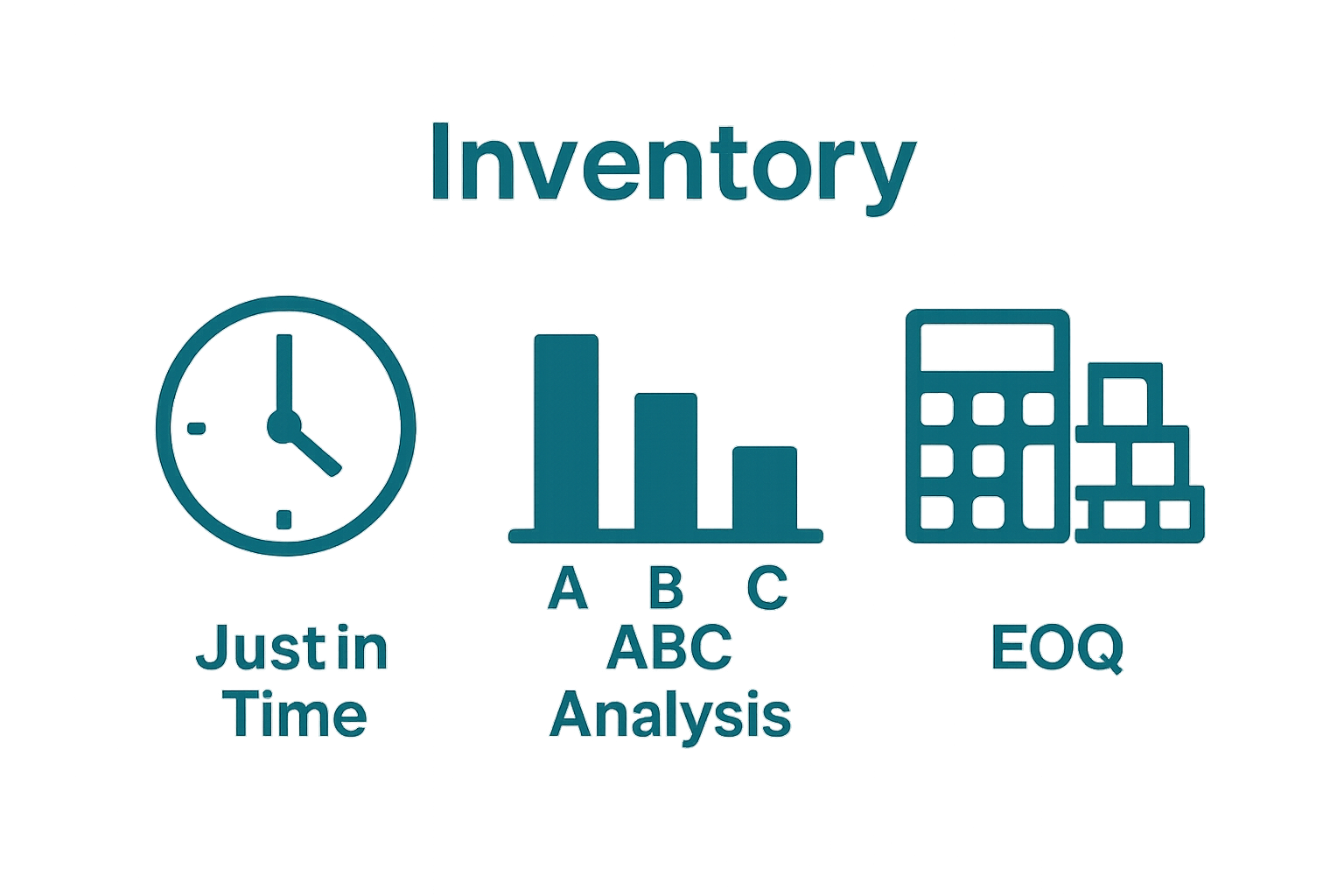
- Just in Time (JIT) Strategy: Minimizes inventory holding costs by receiving goods only as they are needed in the production process
- ABC Inventory Classification: Prioritizes inventory items based on their value and importance
- Economic Order Quantity (EOQ): Determines the ideal order quantity that minimizes total inventory costs
Strategic Benefits of Robust Inventory Management
Properly implemented inventory management strategies deliver significant advantages. Companies can reduce waste, improve cash flow, and enhance customer satisfaction. According to McKinsey & Company, organizations with advanced inventory management techniques can reduce inventory costs by up to 35% while maintaining high service levels.
By reading our guide on just in time delivery, businesses can gain deeper insights into modern inventory optimization techniques. The right strategy transforms inventory from a potential financial burden into a strategic asset that drives operational excellence and competitive advantage.
Why Effective Inventory Management Matters for Businesses
Inventory management is more than tracking products—it is a critical strategic function that directly impacts a company’s financial health, operational efficiency, and customer satisfaction. By implementing robust inventory management practices, businesses can transform potential operational challenges into significant competitive advantages.
Financial Impact and Cost Control
Effective inventory management serves as a powerful financial optimization tool. When businesses precisely track and control their inventory, they minimize unnecessary expenses associated with overstocking, storage, and potential product obsolescence. Research from Supply Chain Quarterly indicates that companies can reduce holding costs by up to 30% through strategic inventory control.
Key financial benefits include:
- Reduced storage and warehousing expenses
- Minimized risk of product spoilage or depreciation
- Improved cash flow by preventing capital tied up in excess inventory
- Lower insurance and maintenance costs for stored goods
Operational Efficiency and Customer Satisfaction
Beyond financial considerations, effective inventory management directly influences a business’s ability to meet customer expectations. When inventory systems are well-managed, companies can:
- Ensure product availability during peak demand periods
- Reduce order fulfillment times
By exploring our comprehensive logistics solutions, businesses can understand how precise inventory tracking translates into enhanced operational performance and customer trust.
Companies that master inventory management create a responsive supply chain capable of adapting quickly to market changes. This agility becomes a significant competitive differentiator, enabling businesses to outperform competitors who struggle with inefficient inventory processes.
To help you quickly compare the most common inventory management strategies discussed, the following table outlines their core purpose and main advantages.
| Strategy | Core Purpose | Main Advantage |
|---|---|---|
| Just in Time (JIT) | Receive goods only as needed for production | Reduces holding and storage costs |
| ABC Classification | Prioritize inventory by value and importance | Focuses control on high-impact items |
| Economic Order Quantity | Calculate optimal order size to minimize costs | Balances ordering and holding expenses |
| Kanban Method | Use visual cues to trigger stock replenishment | Minimizes excess and avoids stockouts |
| Materials Requirements Planning (MRP) | Schedule inventory based on production needs | Improves supply chain coordination |
| Vendor Managed Inventory (VMI) | Supplier monitors and restocks inventory | Reduces stockouts, saves management time |
| Consignment Inventory | Stock owned by supplier until sold/used | Lowers upfront purchasing cost |

Key Concepts Behind Inventory Management Strategies
Inventory management strategies represent complex frameworks that help businesses optimize their stock control, balancing operational efficiency with financial prudence. Understanding the fundamental concepts driving these strategies is crucial for creating robust and responsive inventory systems.
Fundamental Inventory Cost Structures
Successful inventory management hinges on comprehending different cost categories that impact stock control. Organizations must analyze and minimize four primary cost components: purchasing costs, ordering costs, holding costs, and stockout costs. According to OpenStax Principles of Finance, these interconnected expenses determine the overall financial effectiveness of inventory strategies.
Key cost considerations include:
- Purchasing costs associated with acquiring inventory
- Ordering expenses for processing and receiving new stock
- Holding costs related to warehouse storage and maintenance
- Potential revenue losses from product unavailability
Demand Forecasting and Inventory Classification
Advanced inventory management relies on sophisticated demand prediction techniques. Businesses utilize statistical models and historical data to anticipate future product requirements, enabling more precise stock planning. By classifying inventory items based on their strategic importance, companies can allocate resources more effectively.
Inventory classification methods like the ABC Analysis help organizations prioritize items:
To clarify how businesses classify inventory items for better management, here are the three categories of the ABC Analysis with their defining characteristics and best use.
| Category | Definition | Control Level | Typical Use |
|---|---|---|---|
| A Items | High-value, high-priority products | Very tight control | Critical stock and fast movers |
| B Items | Moderate value and importance | Intermediate control | Regular attention, not critical |
| C Items | Low-value, low-priority products | Minimal control | Bulk or slow-moving inventory |
- A Items: High-value products requiring tight control
- B Items: Moderate value with intermediate monitoring
- C Items: Low-value products with minimal tracking requirements
By exploring our comprehensive freight forwarding solutions, businesses can gain deeper insights into optimizing their supply chain management and inventory strategies. Understanding these foundational concepts transforms inventory from a passive asset into a dynamic, strategic tool for operational excellence.
Understanding the typical cost categories that impact inventory decisions is critical. The table below organizes the fundamental inventory cost structures described in the article.
| Cost Type | Description | Financial Impact |
|---|---|---|
| Purchasing Costs | Expenses for acquiring inventory | Directly affects cost of goods sold |
| Ordering Costs | Costs for processing and receiving new stock | Increases with frequent or small orders |
| Holding Costs | Expenses for storage, insurance, and maintenance | Grows with excess or slow-moving inventory |
| Stockout Costs | Revenue loss and customer dissatisfaction from shortages | Lost sales, reduced customer satisfaction |
Different Types of Inventory Management Strategies Explained
Inventory management strategies are not one-size-fits-all solutions. Each approach offers unique advantages tailored to specific business models, operational requirements, and industry dynamics. Understanding these variations helps organizations select the most appropriate method for their specific needs.
Lean Inventory Management Approaches
Lean inventory strategies focus on minimizing waste and maximizing efficiency.
 These approaches aim to reduce excess stock while maintaining optimal product availability. According to Harvard Business School, several core lean methodologies dominate modern inventory management:
- Just in Time (JIT): Receives inventory precisely when needed, reducing storage costs
- Kanban Method: Uses visual signals to trigger inventory replenishment
- Economic Order Quantity (EOQ): Calculates ideal order quantities to minimize total inventory costs
Advanced Inventory Control Methods
More sophisticated inventory management strategies leverage technology and predictive analytics to enhance stock control. These methods go beyond traditional tracking, introducing dynamic management techniques that respond quickly to market changes.
Complex inventory strategies include:
-
Materials Requirements Planning (MRP): Uses production schedules to determine inventory needs
-
Vendor Managed Inventory (VMI): Allows suppliers to monitor and restock inventory automatically
-
Consignment Inventory: Reduces upfront purchasing costs by paying only for used items
By exploring our comprehensive logistics solutions, businesses can discover how advanced inventory strategies transform supply chain management. The right approach can significantly reduce costs, improve operational efficiency, and create a more responsive business ecosystem.
Real-World Applications of Inventory Management Strategies
Inventory management strategies transcend theoretical concepts, offering tangible solutions for businesses across diverse industries. Practical implementation demonstrates how sophisticated inventory approaches can dramatically transform operational performance and financial outcomes.
Manufacturing and Production Environments
Manufacturing sectors leverage inventory management strategies to optimize complex production processes. Companies use advanced techniques to balance raw material procurement, work-in-progress tracking, and finished product storage. Critical applications include:
- Automotive Industry: Implementing just-in-time inventory to reduce warehouse costs
- Electronics Manufacturing: Using predictive analytics for component procurement
- Pharmaceutical Production: Maintaining strict inventory controls for sensitive materials
Retail and Ecommerce Inventory Applications
Retail environments represent another critical domain where inventory management strategies prove essential. Online and brick-and-mortar retailers utilize sophisticated tracking systems to manage diverse product lines, anticipate seasonal demands, and minimize stock-related risks.
Key retail inventory strategies involve:
- Real-time inventory tracking across multiple sales channels
- Automated reordering systems triggered by predefined stock levels
- Dynamic pricing based on inventory availability
By exploring our comprehensive freight forwarding guide, businesses can understand how integrated logistics solutions complement advanced inventory management techniques. Successful implementation requires a holistic approach that combines technological innovation, strategic planning, and adaptive management practices.
Take Control of Your Inventory and Grow with Reliable Courier Services
Struggling with unpredictable inventory levels or late shipments can stall your business and erode customer trust. The article highlights how mastering inventory management strategies leads to reduced costs, faster order fulfillment, and stronger cash flow. The real challenge is turning theory into action while maintaining visibility, speed, and reliability across every step of your supply chain.

Unlock reliable courier services, end-to-end inventory optimization, and scalable growth for your ecommerce business today. Discover how or-ner.com supports smarter inventory decisions with real-time shipment tracking, integrated warehousing, and seamless fulfillment. Ready to simplify operations and deliver a better experience to your customers? Visit or-ner.com now and see why businesses choose our logistics solutions for lasting success.
Frequently Asked Questions
What are inventory management strategies?
Inventory management strategies are systematic approaches businesses use to optimize stock levels, reduce costs, and maximize operational efficiency, ensuring that products meet customer demand while minimizing financial risks.
Why is effective inventory management important for businesses?
Effective inventory management is crucial as it impacts financial health, operational efficiency, and customer satisfaction. It helps reduce unnecessary expenses, improve cash flow, and ensure product availability during peak demand periods.
What are the core principles of inventory management?
Core principles of inventory management include balancing supply and demand, tracking inventory accurately, analyzing cost structures, and predicting market trends to maintain optimal inventory levels.
What strategies can businesses use for effective inventory control?
Businesses can employ various strategies for inventory control, such as Just in Time (JIT) to minimize holding costs, ABC inventory classification to prioritize stock, and Economic Order Quantity (EOQ) to determine the ideal order amounts that minimize total inventory costs.