TL;DR:
- Offering three public shipping tiers, including free standard and paid faster options, broadens buyer appeal.
- Using regional carriers for dense zones can cut shipping costs by up to 30%, improving margins and speed.
Every ecommerce seller should offer at least three public shipping tiers: free standard ground delivery, paid expedited delivery, and paid 2-day, with same-day, overnight, scheduled delivery, LTL/FTL freight, and international air or sea available as add-ons based on your product mix and customer base. Understanding the full range of delivery speed options is what separates stores that compete on price alone from those that convert on trust.
Here is the practical starting point for most sellers:
- Default 3-tier public offering: Free standard ground (5–7 days) as your baseline, paid expedited delivery (3–4 days), and paid 2-day as your premium tier. Most customers will pick free standard, but the paid tiers capture high-intent shoppers who would otherwise abandon.
- Optional add-ons: Same-day delivery for metro-area customers, scheduled delivery or curbside pickup for high-ticket or fragile items, and LTL/FTL freight for heavy or palletized goods. International air and sea round out the mix for cross-border sellers.
Shoppers increasingly treat 2–3 day delivery as a baseline expectation rather than a premium. Offering only one speed tier leaves money on the table at both ends of the urgency spectrum.
Table of Contents
- What are the main types of delivery speed options?
- How do U.S. carriers map to each delivery speed tier?
- National, regional, and local carriers: what the coverage difference actually means
- How delivery speed choices affect your pricing, margins, and fulfillment
- How to choose the right delivery speed mix for your store
- The multi-carrier stack: research-backed approach to speed and cost
- Key Takeaways
- What actually works when you scale shipping beyond a single carrier
- Or-ner helps you build and run a multi-carrier delivery mix
- Useful sources
- FAQ
What are the main types of delivery speed options?
The nine core shipping speed tiers cover every order type you will encounter in U.S. ecommerce, from a $4 impulse buy to a 500-lb pallet. Each has a distinct transit window, cost profile, and customer fit.
Economy shipping
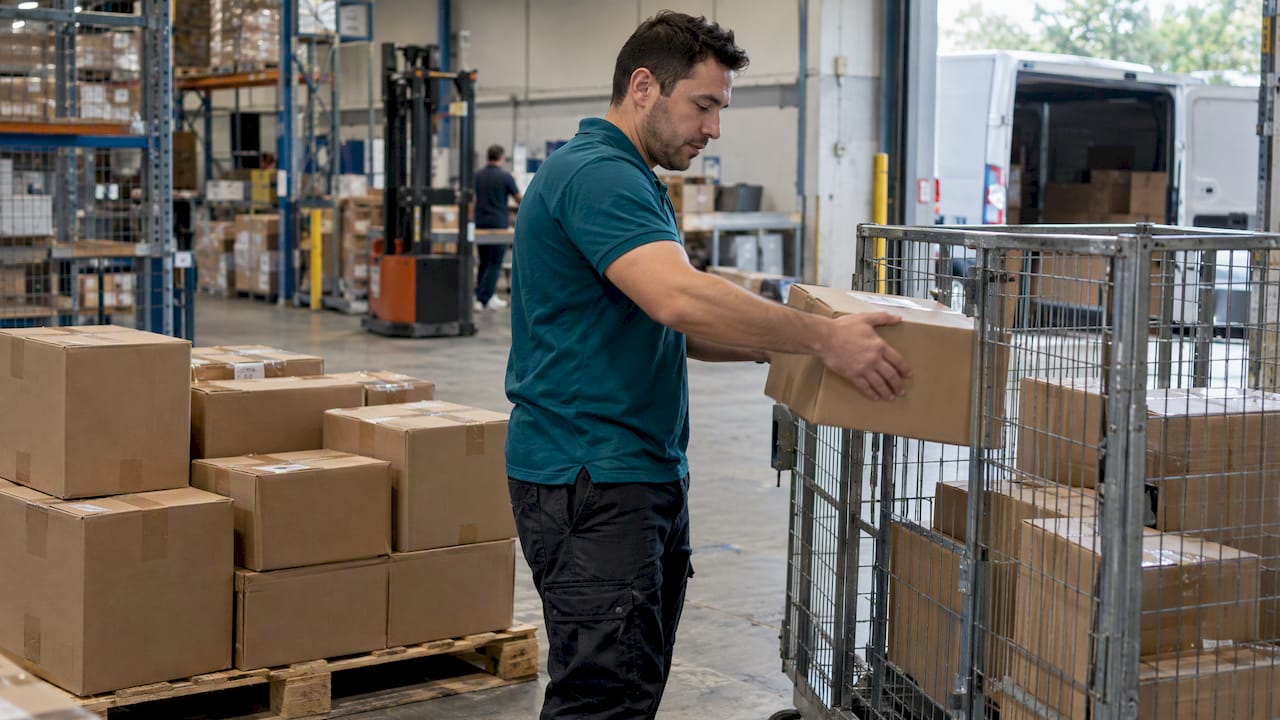
Economy shipping typically runs 5–10 business days and costs less than standard ground, often by a meaningful margin for lightweight parcels. USPS Ground Advantage is the go-to here: for packages under 1 lb to residential addresses, it beats most private carriers on price even after recent rate increases. Best for low-margin products, non-urgent replenishment orders, and customers who explicitly choose the cheapest option at checkout. The main drawback is limited tracking granularity and no service guarantee.
Standard ground
Standard ground is the workhorse of domestic ecommerce: 1–5 business days depending on zone distance, with Zone 1–2 shipments often arriving in 1–2 days and Zone 6–8 cross-country runs taking 3–5 days. UPS Ground and FedEx Ground are the dominant options, with recent rate increases respectively. Cost sits at roughly 1x your baseline carrier rate. This is the tier most of your volume will flow through, so packaging optimization and zone-aware warehouse placement matter most here.
Expedited (2–3 day)
Expedited sits between standard ground and 2-day, typically delivering in a few business days at a moderate cost premium over ground. UPS 3-Day Select and FedEx Express Saver are the most common service names. It captures the middle segment of urgency buyers who want faster delivery but will not pay 2-day prices. One underappreciated use case: expedited often outperforms “2-day” in actual transit time for Zone 1–3 shipments, because ground networks are already fast on short hauls.
Two-day shipping
Two-day has become the Prime baseline that many shoppers now expect as a standard option. UPS 2nd Day Air and FedEx 2Day reach most U.S. addresses within 48 hours. Cost runs several times standard ground. The real margin question is not the label price but whether your fulfillment cutoff times are tight enough to actually ship same-day on orders placed in the afternoon. Miss that window and a “2-day” promise becomes a 3-day delivery.
Pro Tip: Set your 2-day cutoff time conservatively — 1:00 PM local warehouse time — and display it at checkout (“Order by 1 PM ET for 2-day delivery”). Customers who see a specific cutoff convert at higher rates than those who see a vague promise.
Next-day / overnight
Same-day delivers within 4–8 hours in major metros; overnight delivers the next business day. Overnight comes in three windows: early AM (by 8:00–8:30 AM), standard AM (by 10:30 AM), and end-of-day (by end of business). UPS Next Day Air Early, FedEx First Overnight, and USPS Priority Mail Express all serve this tier. Cost is typically 4–6x ground. Reserve overnight for time-critical categories: medical supplies, legal documents, manufacturing components, and last-minute gift buyers. Geographic availability is broad but rural surcharges apply, and Saturday delivery costs extra on most carriers.

Same-day delivery
Same-day operates on a fundamentally different model from the rest: it is courier-based, not carrier-based, and primarily available in major metro areas. Delivery windows run 4–8 hours from order placement. Pricing is typically distance-based rather than zone-based, and costs can be significantly higher than standard ground. For most ecommerce sellers, same-day makes sense only as an optional upsell for local customers or as a competitive differentiator in dense urban markets. Urban delivery networks and gig-economy courier platforms have expanded same-day availability significantly, but rural and suburban coverage remains thin.
Scheduled delivery and curbside / in-store pickup
Scheduled delivery lets customers choose a specific date and time window, which is especially valuable for large appliances, furniture, white-glove items, and anything requiring a signature or installation appointment. In-store pickup and curbside eliminate last-mile cost entirely and tend to show higher average order values because customers often add items when they arrive. Neither option requires carrier integration in the traditional sense, but both require inventory visibility and staff coordination. For high-ticket items, offering a scheduled window reduces failed delivery attempts and the associated re-delivery costs.
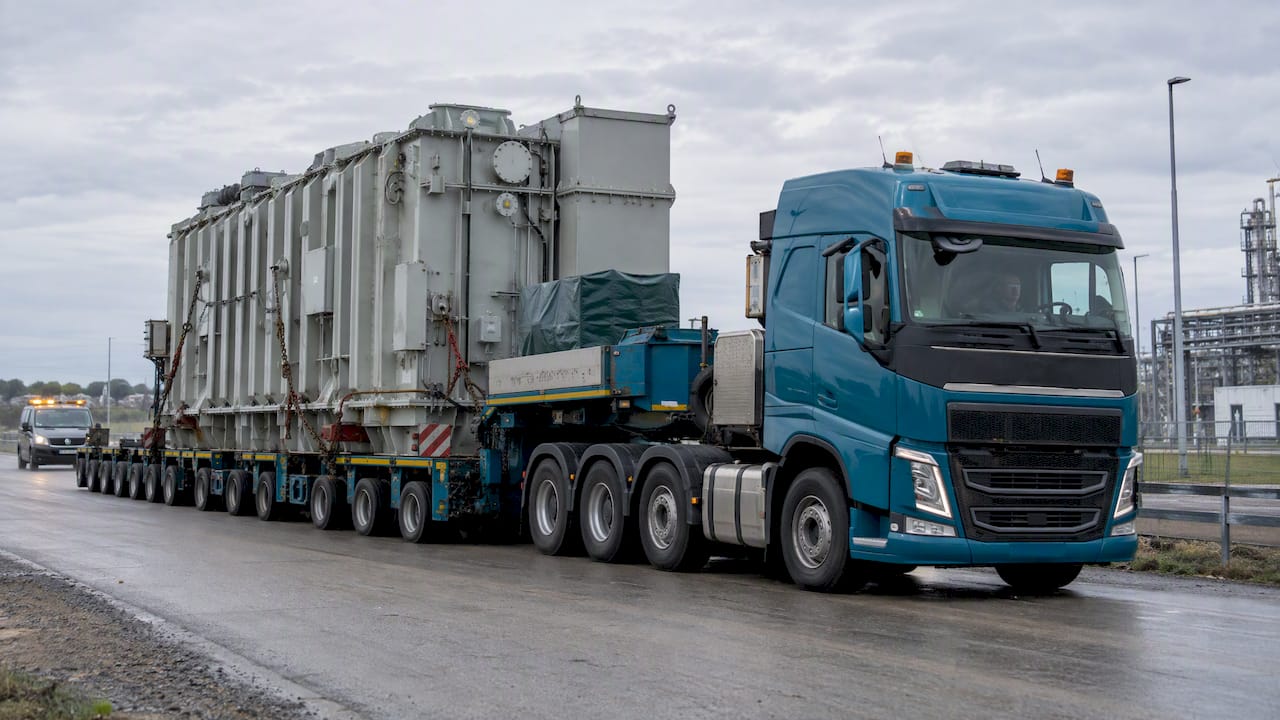
LTL and FTL freight
Less-than-truckload (LTL) and full-truckload (FTL) freight apply when shipments exceed standard parcel limits, typically above 150 lbs or when dimensional weight pushes a shipment out of parcel pricing. Transit times for LTL run 2–7 business days domestically depending on lane and carrier. FTL is faster and more predictable but requires a full trailer load to be cost-effective. Freight is the right tier for furniture, fitness equipment, bulk B2B orders, and anything palletized. The freight booking process involves different documentation, carrier classes, and accessorial charges than parcel shipping, so sellers new to freight should budget time to learn the nuances.
International economy and express (air vs. sea)
International shipping splits into two fundamentally different cost-speed trade-offs. Air express (DHL Express, FedEx International Priority, UPS Worldwide Express) delivers to most major markets in 1–5 business days at a significant premium. International economy air runs 5–10 business days at lower cost. Ocean freight is the slowest option, typically 15–45 days port-to-port, but the cost per unit for heavy or bulky goods is dramatically lower. Customs clearance adds unpredictable time to any international shipment, so always communicate estimated delivery ranges rather than firm dates to international customers.
| Speed Tier | Typical U.S. Transit Time | Cost vs. Ground | Best Use Case |
|---|---|---|---|
| Economy | 5–10 business days | Below 1x | Low-margin, non-urgent, sub-1 lb parcels |
| Standard ground | 1–5 business days | 1x baseline | Most domestic ecommerce orders |
| Expedited | 3–4 business days | 2x | Mid-urgency buyers, Zone 1–3 orders |
| Two-day | 2 business days | 2–3x | Urgency buyers, Prime-expectation shoppers |
| Overnight | Next business day | 4–6x | Time-critical, medical, legal, gifts |
| Same-day | 4–8 hours | 5–10x | Metro-area, local courier networks |
| Scheduled / pickup | Customer-chosen window | Varies | High-ticket, fragile, white-glove |
| LTL / FTL freight | 2–7 business days | Weight-based | Heavy, palletized, bulk B2B |
| International express | 1–5 business days | High premium | Cross-border, time-sensitive |
| International economy | 5–10 business days | Moderate | Cross-border, non-urgent |
How do U.S. carriers map to each delivery speed tier?
Knowing which carrier typically owns each speed tier helps you match service guarantees to customer promises and avoid gaps in rural or extended-zip coverage.
| Carrier | Speed Tier Coverage | Typical Transit | Rural Reach | Tracking & Reliability | Notable Strength |
|---|---|---|---|---|---|
| USPS | Economy, standard, overnight | 1–10 days | Excellent (every address) | Good | Best for sub-1 lb residential |
| UPS | Ground through overnight | 1–5 days (ground), next-day | Good | Excellent | — |
| FedEx | Ground through overnight | 1–5 days (ground), next-day | Good | Excellent | Multiple overnight time windows |
| DHL | International economy and express | 1–5 days (express) | Limited domestic | Excellent | Cross-border and customs expertise |
| OnTrac | Ground and expedited (West) | 1–3 days in footprint | Limited to 8 western states | Good | Cost and speed in dense western zones |
| Spee-Dee | Ground and expedited (Midwest) | 1–3 days in footprint | Strong in Midwest rural | Good | Cost advantage on Midwest regional lanes |
A few things worth noting about service guarantees. UPS and FedEx both offer money-back guarantees on most express services, though both have suspended or modified those guarantees during peak periods in recent years. USPS Priority Mail Express carries a money-back guarantee for its overnight service, but standard Priority Mail does not. DHL’s domestic U.S. parcel network is limited; its real strength is international.
Regional carriers like OnTrac and Spee-Dee consistently beat national carriers on transit time and cost inside their footprints:
- OnTrac covers Arizona, California, Colorado, Idaho, Nevada, Oregon, Utah, and Washington. For sellers with heavy West Coast volume, it is worth a serious look.
- Spee-Dee covers Illinois, Iowa, Kansas, Minnesota, Missouri, Nebraska, North Dakota, South Dakota, and Wisconsin. Strong rural penetration in the Midwest makes it useful for sellers whose customer base skews toward smaller cities and towns.
- Both carriers typically require volume commitments to unlock their best rates, but even at standard rates they can undercut national carriers on dense regional lanes.
USPS consistently outperforms private carriers on last-mile reach. No other carrier delivers to every U.S. address, including P.O. boxes, military APO/FPO addresses, and remote rural ZIP codes. For sellers with a geographically diverse customer base, USPS remains indispensable for the long tail of hard-to-reach addresses.
National, regional, and local carriers: what the coverage difference actually means
The carrier type you choose affects more than just price. It shapes transit predictability, claims resolution, and whether your customers in rural Montana get the same experience as customers in Chicago.
National carriers (USPS, UPS, FedEx, DHL) offer the broadest coverage and the most predictable zone-based transit times. Their service guarantees and tracking infrastructure are mature. The trade-off is cost: national carriers price for universal coverage, which means you pay for rural reach even on your densely urban orders.
Regional carriers (OnTrac, Spee-Dee, and similar) operate on a different model. Inside their footprint, they often deliver faster than national carriers because their networks are optimized for density rather than breadth. Regional carriers can save 15–30% on comparable ground routes versus national carriers in dense zones. Outside their footprint, they either hand off to a national carrier or simply do not operate, so you need a national carrier as a fallback for out-of-footprint orders.
Local couriers and same-day networks operate at the city or metro level. Pricing is typically per-mile or per-hour rather than zone-based. Integration with ecommerce platforms varies widely, from API-connected platforms to phone-based dispatch. They are the right tool for restaurant-style delivery, perishables, and same-day promises to local customers, but they do not scale nationally.
- Audit your order ZIP distribution before adding a regional carrier. If only a small share of your monthly orders fall inside a regional carrier’s footprint, the operational complexity of managing a second carrier relationship may outweigh the savings.
- Claims resolution differs significantly by carrier type. USPS claims can take 30–60 days to resolve, while major private carriers average 7–14 days. For high-value SKUs, that timeline directly affects your cash flow.
Pro Tip: Run a ZIP-code analysis on recent orders before approaching a regional carrier. If a sufficient share of your volume ships to ZIP codes inside OnTrac’s or Spee-Dee’s footprint, you have enough density to negotiate a meaningful rate and justify the integration work.
How delivery speed choices affect your pricing, margins, and fulfillment
Speed costs money at every level of the supply chain, and the visible carrier rate is rarely the whole story.
Flat rate vs. real-time carrier rates
Flat-rate shipping simplifies the customer experience and makes revenue forecasting easier, but it creates winners and losers in your margin structure. Heavy or distant orders subsidized by light, nearby ones. Real-time carrier rates, where the checkout displays the actual carrier quote based on weight, dimensions, and destination ZIP, shift cost transparency to the customer and let urgency buyers self-select into paid faster tiers. Most mid-market ecommerce platforms support real-time rating natively.
Dimensional weight: a worked example
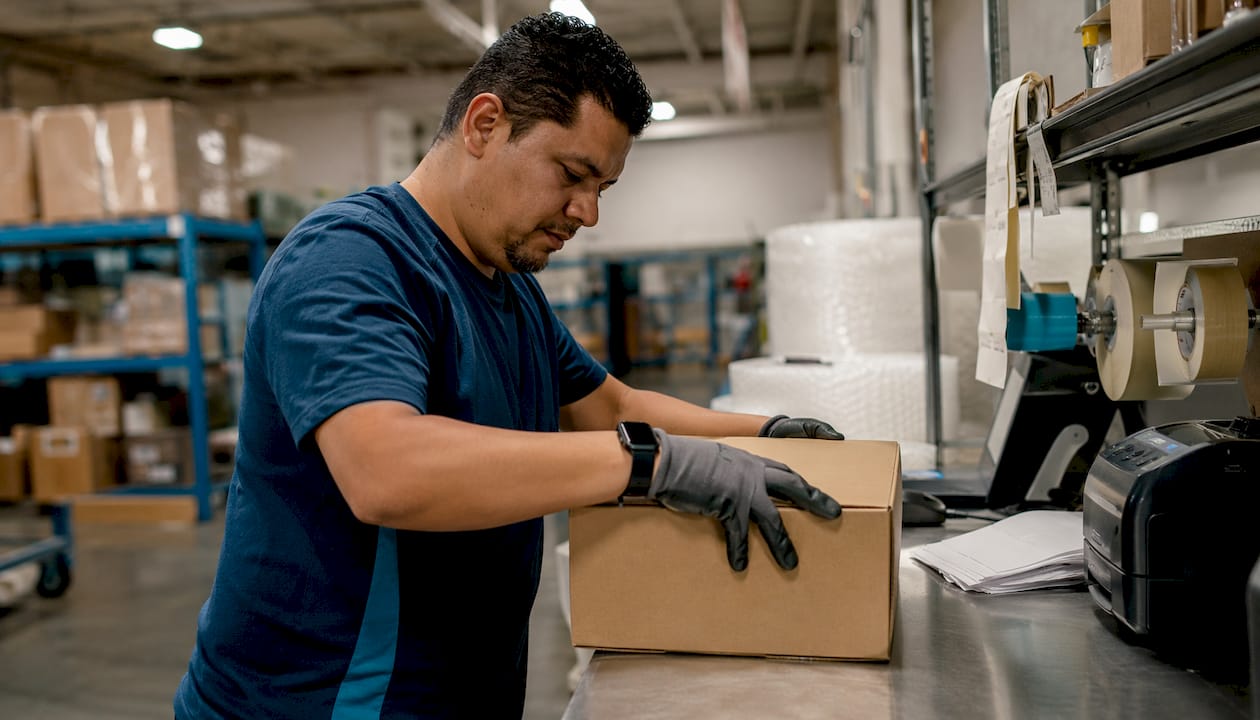
Carriers charge based on whichever is greater: actual weight or dimensional weight. Dimensional weight is calculated as (length × width × height in inches) ÷ 139 for most domestic carriers. A lightweight product in a large box, say a 2 lb item in a 18" × 14" × 12" box, has a dimensional weight of (18 × 14 × 12) ÷ 139 = 21.6 lbs. You get billed at 21.6 lbs, not 2 lbs. Packaging audits that right-size boxes to actual product dimensions are one of the highest-ROI cost levers available to ecommerce sellers, and they do not require changing your carrier at all.
Common surcharges by speed tier
| Surcharge | Tiers Most Affected | Notes |
|---|---|---|
| Fuel surcharge | All tiers | Percentage applied to base rate; fluctuates weekly |
| Residential delivery | Ground, expedited | Applies to most B2C shipments |
| Extended ZIP / rural | All tiers | Adds $3–$6+ per package in remote areas |
| Peak / holiday season | All tiers | Applied October–January by most carriers |
| Saturday delivery | Overnight, 2-day | Extra fee; not all carriers offer it |
| Oversize / pallet handling | LTL, FTL | Triggered by weight or dimension thresholds |
| Address correction | All tiers | Charged when carrier corrects a bad address |
Fuel, residential, and extended-ZIP surcharges together can add $5–$12 to a single ground shipment to a rural address. For sellers with thin margins on low-AOV products, these surcharges can flip a profitable order into a loss. Build surcharge modeling into your shipping cost estimates before setting free-shipping thresholds.
Fulfillment cutoff times are the operational constraint that most sellers underestimate. Same-day and overnight services require carrier pickup by early afternoon, often 2:00–3:00 PM, which means your pick-pack-label process must be fast enough to hit that window consistently. Saturday pickups are available from UPS and FedEx at most locations but require advance scheduling. Oversized items that exceed parcel limits (typically 150 lbs or 165 inches in combined length plus girth) automatically move into LTL pricing regardless of the speed tier you select.
How to choose the right delivery speed mix for your store
The right mix is not the same for every seller. A DTC apparel brand shipping 500 orders a day has different constraints than a B2B industrial supplier shipping 50 pallets a week. Work through this checklist in order.
- Audit your order ZIP distribution. Pull your last 90 days of orders and map them by destination ZIP. Identify your top 10 ZIP codes by volume. These are the routes where transit time improvements deliver the most customer impact.
- Analyze your product weight and size mix. Separate your SKUs into three buckets: under 1 lb (USPS-favorable), 1–70 lbs (standard parcel), and over 70 lbs (freight candidates). Each bucket has a different optimal carrier strategy.
- Identify your top SKUs by revenue. High-revenue SKUs justify faster shipping promises and better packaging. Low-revenue SKUs need cost discipline.
- Define your customer delivery window promise. What are you currently promising at checkout? What are you actually delivering? The gap between those two numbers drives support tickets.
- Set margin thresholds for paid shipping. Decide the maximum shipping cost as a percentage of order value you can absorb before free shipping becomes unprofitable. This sets your free-shipping threshold.
- Build your default 3-tier public offering: free standard (5–7 days), paid expedited delivery, paid 2-day. Add same-day as a metro upsell, scheduled delivery for high-ticket items, and LTL for heavy goods.
When evaluating carrier contracts or pilots, ask these specific questions:
- What is your on-time delivery rate for my top 10 destination ZIP codes, by service level?
- What is your average claim resolution time, and what documentation do you require?
- Do you offer a money-back guarantee on express services, and under what conditions is it suspended?
- What are your peak-season surcharge schedules, and when are they applied?
- What are your Saturday and Sunday pickup and delivery options?
Three red flags to watch for: carriers that cannot provide ZIP-level on-time data, claim resolution timelines longer than 21 days, and pickup SLAs that vary by more than 30 minutes day-to-day. Inconsistent pickups cascade into missed cutoffs and broken delivery promises.
For rollout, run a 30–60 day pilot with a regional carrier on your top 10 ZIP codes. Measure transit time delta versus your current carrier, support ticket volume per 1,000 orders, and average shipping cost per order. Those three metrics tell you whether the pilot is worth expanding.
The multi-carrier stack: research-backed approach to speed and cost
Many scaling brands have moved away from single-carrier dependency toward a multi-carrier approach that pairs national carriers for broad rural reach with regional carriers for dense zones. The result is faster transit at lower cost on the routes that matter most.
Supply-chain analysts consistently find that regional carriers can save 15–30% on comparable ground routes inside their footprints. That is not a marginal improvement. On $500,000 in annual shipping spend with 30% of volume in a regional footprint, a 20% savings on that slice is $30,000 back in margin per year.
Here is how to implement it:
- Identify your top 10 destination ZIP codes by volume. These are your pilot candidates.
- Run transit-time comparisons between your current national carrier and the regional carrier serving those ZIPs. Use carrier transit-time calculators with your actual origin ZIP.
- Pilot the regional carrier on those ZIP codes for 30–60 days. Keep your national carrier as the fallback for out-of-footprint orders.
- Integrate routing rules into rate-shopping software or your logistics platform so the system automatically selects the lowest-cost carrier that meets the promised delivery window. Tools like ShipBob, EasyPost, or Or-ner’s platform can handle this logic.
- Measure three metrics throughout the pilot: transit time delta to top ZIP codes, customer support tickets per 1,000 orders, and average shipping cost per order.
Zone-skipping, where you move inventory closer to your customers through distributed fulfillment, compounds these savings. A seller shipping from a single East Coast warehouse to West Coast customers is paying Zone 7–8 rates on every cross-country order. Moving even 20–30% of inventory to a West Coast fulfillment center can cut those orders to Zone 2–3, reducing both cost and transit time simultaneously. Distributed fulfillment is no longer an enterprise-only tactic; mid-market sellers with 200+ daily orders can make the math work.
A realistic timeline for a mid-market DTC seller: weeks 1–2 for ZIP analysis and carrier outreach, weeks 3–4 for integration and pilot setup, weeks 5–10 for live pilot data collection, week 12 for go/no-go decision on full rollout. The delivery performance metrics that matter most during this window are on-time rate by ZIP, ticket volume, and cost per order.
Key Takeaways
Offering a three-tier public shipping menu (free standard, paid expedited, paid 2-day) captures the broadest range of buyer urgency while keeping operational complexity manageable, and adding a regional carrier pilot on your top ZIP codes is the fastest path to meaningful cost savings.
| Point | Details |
|---|---|
| Start with three public tiers | Free standard (5–7 days), paid expedited delivery (3–4 days), and paid 2-day cover most buyer urgency profiles. |
| Zone distance drives transit time | Zone 1–2 orders typically arrive in 1–2 days; Zone 6–8 cross-country runs take 3–5 days on ground. |
| Regional carriers save 15–30% | Inside their footprints, regional carriers beat national carriers on cost and often on speed for dense routes. |
| Dimensional weight is a hidden cost | Right-sizing packaging to actual product dimensions is one of the highest-ROI cost levers with no carrier change required. |
| Or-ner for multi-carrier execution | Or-ner’s logistics platform supports rate shopping, freight booking, and routing rules to implement a multi-carrier stack. |
Pro Tip: After any carrier or tier change, track support tickets per 1,000 orders for 30 days. A spike in “where is my order” tickets is the earliest signal that your transit-time promises are out of sync with actual performance.
What actually works when you scale shipping beyond a single carrier
The conventional wisdom in ecommerce shipping is to pick one carrier, negotiate a volume discount, and stay loyal. That logic made sense when volumes were low and the operational cost of managing multiple carrier relationships was high. At any meaningful scale, it is leaving money on the table.
What tends to work better is treating your carrier mix the way a good investor treats a portfolio: different assets for different jobs. USPS for the long tail of rural and sub-1 lb residential. A regional carrier for your densest lanes. A national carrier for everything else, with express services reserved for genuinely time-critical orders rather than as a default for impatient customers.
The piece most sellers miss is the connection between transit time and support cost. A carrier that saves one day to your top ZIP codes can justify a 5–10% rate premium because it reduces “where is my order” tickets, return rates on time-sensitive products, and negative reviews. Shipping cost per order is the metric everyone tracks. Support cost per order is the one that usually tells the more honest story.
Shoppers also convert at higher rates when given a specific arrival date rather than a vague range. “Arrives by Thursday” outperforms “3–5 business days” in checkout conversion, which means your transit-time accuracy directly affects revenue, not just operations.
Or-ner helps you build and run a multi-carrier delivery mix
Choosing the right delivery speed tiers is one decision. Actually executing them, across multiple carriers, fulfillment locations, and order types, is where most sellers hit a wall.
Or-ner’s global logistics platform connects rate shopping, freight booking, customs clearance, and inventory management in one place, so you can implement the multi-carrier stack this article describes without stitching together five separate tools. Whether you are running a regional carrier pilot on your top ZIP codes, booking LTL freight for heavy SKUs, or managing cross-border shipments with customs documentation, Or-ner handles the routing logic and carrier integrations. Sellers using Or-ner’s cloud logistics platform gain visibility across every shipment in real time, with exception alerts before a delay becomes a customer complaint. Get a quote or explore Or-ner’s courier and fulfillment services at or-ner.com.
Useful sources
| Source | Why it is useful |
|---|---|
| Parcel Path: Delivery Speeds & Services | Transit time ranges, on-time rate data, and service-level definitions for U.S. carriers |
| OnlineStoreNews: Cut Shipping Costs Without Killing Speed | Regional carrier savings data, multi-carrier stack guidance, and zone-skipping tactics |
| eSellSphere: Ecommerce Shipping Strategy | Tiered offering recommendations, USPS sub-1 lb guidance, and ZIP-level analysis framework |
| BigCommerce: Ecommerce Shipping in 2026 | Broad overview of shipping methods, carrier contract negotiation, and speed-cost trade-offs |
| Or-ner: Logistics Platform | Multi-carrier rate shopping, freight booking, and fulfillment implementation support |
FAQ
What is the fastest delivery option available in the U.S.?
Same-day delivery is the fastest option, completing delivery within 4–8 hours in major metro areas. Overnight (next-day) is the fastest nationally available option, with early AM windows delivering by 8:30 AM the following business day.
What are the main types of delivery speed options for ecommerce?
The core tiers are economy (5–10 days), standard ground (1–5 days), expedited (3–4 days), two-day, overnight, same-day, scheduled delivery or pickup, LTL/FTL freight, and international air or sea. Most ecommerce sellers start with a three-tier public offering and add specialty tiers as volume and customer demand justify them.
How does zone distance affect delivery speed?
Zone distance is the single biggest driver of ground transit time. Zone 1–2 shipments typically arrive in 1–2 business days, Zone 3–5 in 2–4 days, and Zone 6–8 cross-country routes in 3–5 days. Alaska and Hawaii add a minimum of 5–7 days on most ground services.
When does it make sense to use a regional carrier?
Regional carriers like OnTrac (western U.S.) and Spee-Dee (Midwest) make sense when a meaningful share of your orders ship to ZIP codes inside their footprint. They can save 15–30% on comparable ground routes and often deliver faster than national carriers on dense regional lanes.
What is the most cost-effective shipping option for small, light packages?
For packages under 1 lb shipping to residential addresses, USPS Ground Advantage is typically the lowest-cost option in the U.S., even after the 2026 rate increases. It covers every domestic address, including P.O. boxes and rural ZIP codes where private carriers add residential and extended-ZIP surcharges.