TL;DR:
- Choosing the right delivery service depends on product value, customer location, and speed expectations.
- Most businesses should segment shipments and match delivery tiers to the specific needs of each order.
Types of delivery services are the distinct logistics methods businesses and individuals use to transport goods, varying by speed, geographic reach, cost, and operational control. Choosing the wrong method costs money and damages customer trust. The right choice depends on your product type, your customer’s location, and how fast they expect delivery. This guide breaks down every major delivery category, explains the trade-offs, and gives you a clear framework for matching the right service to each shipment.
1. What are the main types of delivery services?
Courier services have evolved into strategic logistics models categorized by parcel size, urgency, security, and distance. That shift means businesses no longer default to one method. They select the right type for each shipment.
The five primary categories are:
- Same-day delivery: Fastest option available, typically within 2–8 hours. Best for urgent, metro-area shipments. Same-day delivery costs run $35–$85 per package.
- Next-day delivery: Guaranteed arrival by the following business day. Costs range from $30–$65. Best for time-sensitive B2B orders or premium ecommerce customers.
- Two-day and standard delivery: Balances cost and speed. Widely used in ecommerce. Typically costs $15–$30 depending on weight and distance.
- Ground delivery: The most budget-friendly option for non-urgent shipments. Ground delivery takes 5–7 business days across the continental U.S. and costs $8–$20 per package. USPS Ground Advantage rates increased roughly 7.8% in january 2026, so ground is still affordable but no longer as cheap as it once was.
- International courier services: Express options cover door-to-door delivery in over 220 countries in 3–7 days at $40–$150+. Economy international options take 10–21 days at lower cost but require more patience and customs planning.
Pro Tip: Match the service tier to the product value. Shipping a $500 item via ground to save $15 on freight creates real risk. Use express for high-value goods and ground for replenishable stock.
2. Hyper-fast delivery: the new standard for urban markets
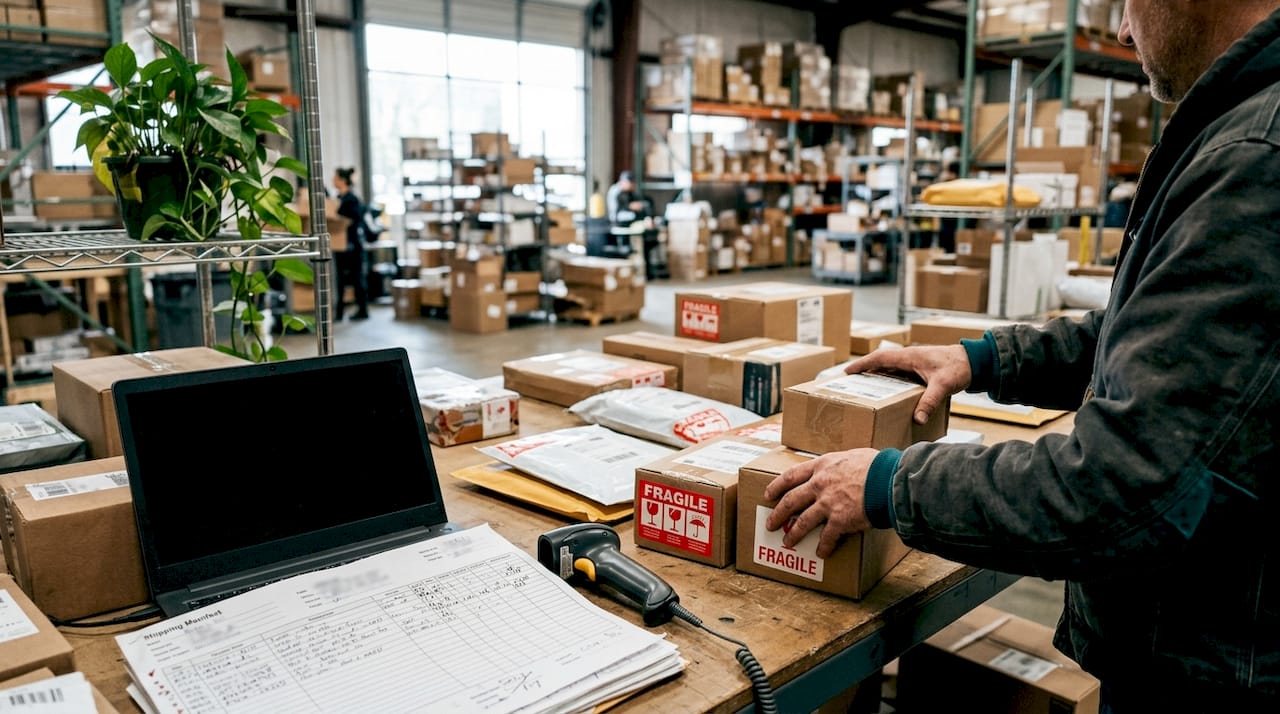
Same-day delivery has split into its own sub-category. Large retailers now offer 1-hour delivery at $19.99 and 3-hour delivery in 2,000+ U.S. cities at $14.99 for non-members. That pricing signals a market shift. Speed is now a product feature, not just a logistics detail.
For businesses, this creates pressure. Customers who receive 1-hour delivery from a major retailer will benchmark your shipping speed against that experience. You do not need to match it for every order. You do need to understand when offering a faster tier will retain a customer versus when standard delivery is acceptable.
Urban fulfillment centers and micro-warehousing make hyper-fast delivery possible. If your inventory sits in a single warehouse across the country from your customers, same-day is not a realistic option without a logistics partner who has local distribution points. Or-ner’s network of fulfillment centers addresses exactly this gap for ecommerce sellers.
3. How delivery service models differ by operational control
The type of delivery service you choose also determines who controls the customer experience. Delivery model choices directly impact brand control and customer data ownership. That is a business decision, not just a logistics one.
Three models define the spectrum:
- First-party delivery: Your company owns the vehicles, employs the drivers, and controls every touchpoint. Full brand control and customer data ownership. High cost and operational complexity. Practical only for large-volume businesses with dense delivery routes.
- Third-party marketplace delivery: You hand the shipment to a carrier network. Broad geographic reach at lower cost. You lose visibility into the final mile and cannot control the delivery experience directly.
- White-label and hybrid delivery: A third-party logistics provider handles fulfillment under your brand identity. You maintain brand presence without managing a fleet. This is the model most growing ecommerce businesses use.
Pro Tip: If customer data matters to your business, read the data terms in any third-party delivery contract carefully. Some marketplace delivery agreements transfer customer contact data to the carrier’s platform.
Hybrid models give you the flexibility to use ground carriers for standard orders while routing urgent or high-value shipments through a dedicated courier. That combination lowers average shipping cost without sacrificing speed on orders that need it. You can learn more about comparing shipping carriers before committing to a single model.
4. Specialized delivery service types for specific business needs
Not every shipment fits a standard parcel box. Specialized delivery methods exist for situations where size, fragility, security, or urgency fall outside normal parameters.
| Service Type | Best For | Key Feature |
|---|---|---|
| Heavy freight delivery | Furniture, appliances, machinery | Liftgate service, curbside or threshold delivery |
| Dedicated courier | Legal documents, medical samples | Exclusive vehicle, direct point-to-point routing |
| White-glove delivery | High-value electronics, art, luxury goods | Inside delivery, unpacking, installation |
| Overnight freight | Large urgent shipments | Air freight with next-morning delivery |
| Secure courier | Cash, contracts, sensitive data | Chain-of-custody documentation, signature required |
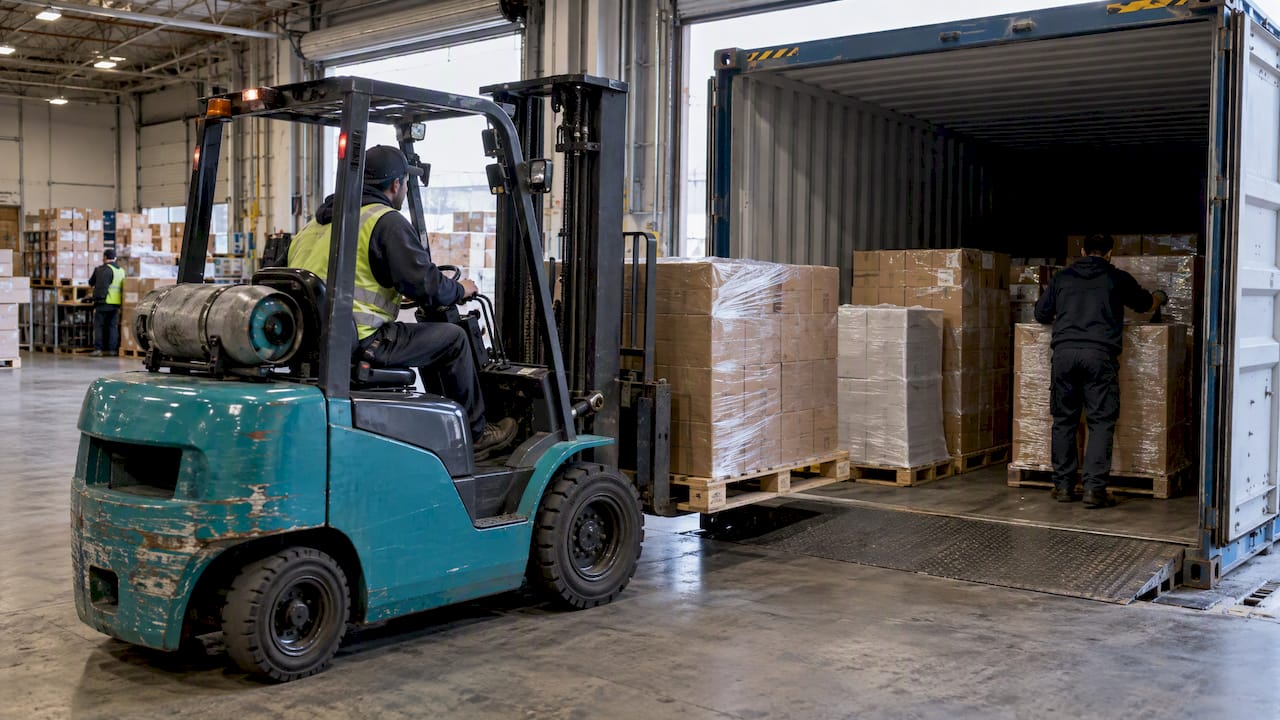
Heavy and bulky goods delivery requires carriers with liftgate-equipped trucks and drivers trained for residential delivery. Standard parcel networks cannot handle a 200-pound treadmill. Routing that shipment through a general carrier creates damage claims and failed deliveries.
Dedicated courier services use a single vehicle exclusively for your shipment. No stops, no co-loading with other packages. This matters for time-critical legal documents, biological samples, or same-day medical equipment. The cost is higher, but the accountability is absolute. Courier services provide guaranteed delivery windows with refund agreements for delays, unlike general delivery services that only offer estimated arrival times.
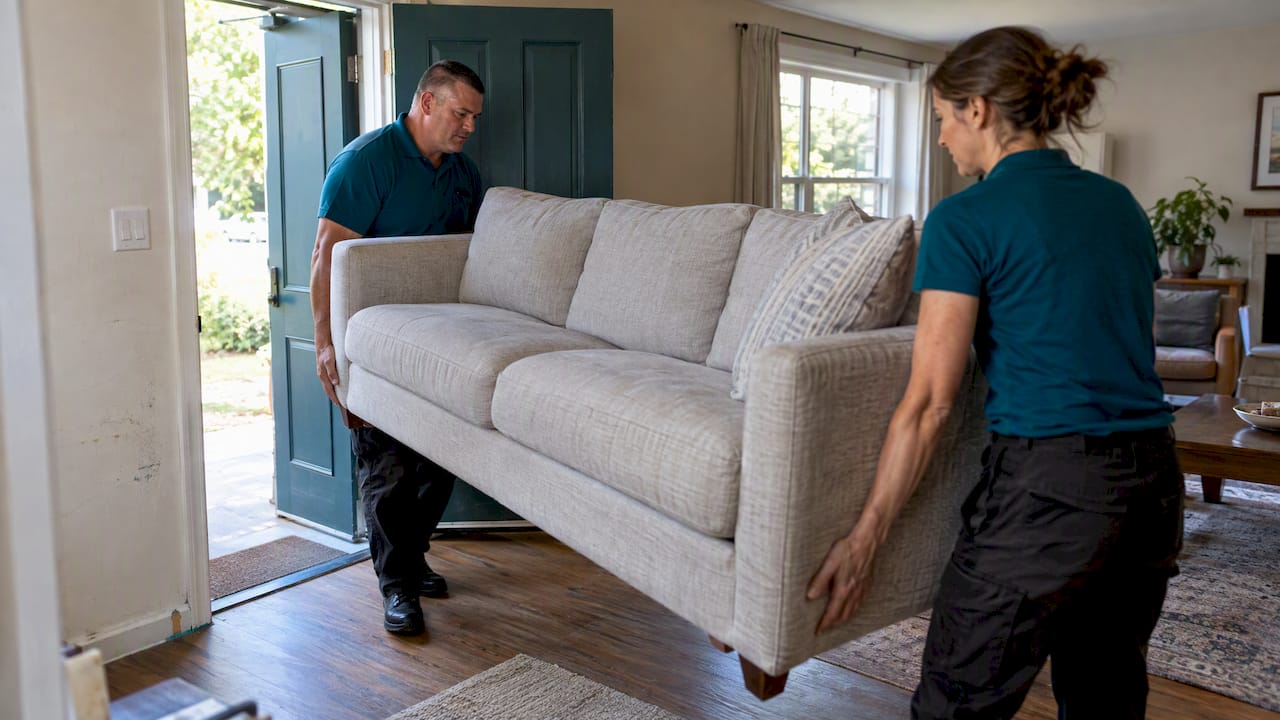
White-glove delivery goes further. The carrier brings the item inside, places it in the designated room, removes packaging, and sometimes handles basic assembly. For luxury furniture brands or high-end electronics retailers, this is not optional. It is the product experience.
5. How to choose the best delivery service for your business
Selecting the right delivery method comes down to four variables: cost, speed, package characteristics, and customer expectations. Average delivery costs by service tier break down as follows: ground $8–$20, next-day $30–$65, same-day $35–$85. Those ranges represent the cost-speed trade-off in concrete numbers.
Use this framework when evaluating your options:
- Cost sensitivity: If your margins are thin and your customers are price-conscious, ground delivery is the right default. Offer express as a paid upgrade at checkout.
- Delivery speed requirements: If your product is perishable, urgent, or time-sensitive, express or same-day is non-negotiable. Factor that cost into your product pricing.
- Package size and weight: Oversized items need freight or specialized carriers. Forcing them through parcel networks increases damage rates and surcharges.
- Geographic coverage: International shipments require carriers with customs expertise. A domestic ground carrier cannot clear customs. Use a provider with cross-border logistics capabilities.
- Brand reputation: Slow or failed deliveries damage repeat purchase rates. If your product category has high return customers, invest in reliable delivery over cheap delivery.
Pro Tip: Run a quarterly audit of your delivery performance metrics. Track on-time rate, damage rate, and cost per shipment by service tier. That data tells you which tier is underperforming and where to shift volume.
One underappreciated nuance: hybrid carrier models like UPS Ground Saver route final-mile delivery through USPS. Ground Saver adds one to two days to delivery times and reduces tracking control compared to a fully managed carrier network. For lightweight residential shipments, the cost saving is real. For customers who expect precise tracking updates, it creates friction. Know which model your carrier uses before you commit to a service level agreement.
Tracking visibility also affects customer satisfaction. Customers who receive proactive shipment tracking updates report higher satisfaction scores even when delivery takes longer than expected. Transparency compensates for speed.
For ecommerce sellers managing multiple product lines, the practical answer is a multi-tier delivery strategy. Use ground for standard orders, next-day for premium customers, and a dedicated courier for high-value or fragile items. Or-ner’s platform supports this kind of layered approach across ocean, air, and land transport modes. You can also review ecommerce shipping trends to understand how customer expectations are shifting heading into 2026.
Key takeaways
Choosing the right delivery service type requires matching speed, cost, and operational control to your specific product and customer profile.
| Point | Details |
|---|---|
| Cost scales with speed | Ground costs $8–$20; same-day costs $35–$85. Match the tier to your margin and product value. |
| Operational model affects brand control | First-party delivery gives full control; hybrid and white-label models balance reach with brand presence. |
| Specialized services exist for a reason | Heavy freight, dedicated couriers, and white-glove delivery solve problems standard parcel networks cannot. |
| Hybrid carrier models reduce visibility | Services that hand off final-mile to postal networks add transit time and reduce tracking precision. |
| Multi-tier strategies outperform single-carrier approaches | Using ground, express, and dedicated courier together lowers average cost while protecting high-value shipments. |
What I’ve learned about delivery strategy that most guides skip
I have spent years watching businesses make the same mistake: they pick one carrier and one service tier, then apply it to every shipment. That approach is almost always wrong.
The businesses that get delivery right treat it the same way they treat pricing. They segment. A $12 candle and a $400 camera lens do not belong in the same shipping tier. One should go ground. The other should go express with tracking and signature confirmation.
The second thing most guides miss is the customer expectation gap. Customers in major metro areas now expect 2-day delivery as the baseline, not a premium. If you are shipping from a single warehouse in the Midwest to customers in Los Angeles, you are already behind on transit time before the package leaves the dock. The answer is not always a faster carrier. Sometimes it is smarter warehouse location strategy that puts inventory closer to demand.
The third insight is about accountability. A guaranteed delivery window with a refund clause is worth more than a cheap rate with no recourse. When a shipment fails, you absorb the customer service cost, the replacement cost, and the reputational damage. A carrier that charges $5 more per package but guarantees delivery is often cheaper in total cost.
My honest advice: audit your last 90 days of shipments. Sort by service tier, on-time rate, and damage rate. The data will show you exactly where you are overpaying for speed you do not need and underpaying for reliability you cannot afford to lose.
— Maayan
Or-ner’s courier services for every delivery type you need
Or-ner supports businesses across every delivery tier discussed in this article, from ground and express to dedicated courier and cross-border freight.
Whether you run a small ecommerce store or manage logistics for a global brand, Or-ner’s platform connects you to reliable courier services across the United States with real-time tracking, customs clearance support, and fulfillment center access. For smaller operations, Or-ner also offers courier services for small businesses designed to give you enterprise-level delivery options without enterprise-level overhead. The platform integrates with major ecommerce operators and gives you the visibility to manage multiple delivery tiers from a single dashboard.
FAQ
What are the main types of delivery services?
The main types are same-day, next-day, two-day, ground, and international courier delivery. Each differs by speed, cost, and geographic coverage.
How do I choose the right delivery service for my business?
Match the service tier to your product value, customer location, and delivery speed expectations. Use ground for standard orders and express or dedicated courier for high-value or time-sensitive shipments.
What is the difference between a courier service and general delivery?
Courier services offer guaranteed delivery windows with refund accountability for late shipments. General delivery services provide estimated arrival times without financial penalties for delays.
What does white-glove delivery mean?
White-glove delivery includes inside delivery, room placement, unpacking, and sometimes basic assembly. It is used for high-value, fragile, or oversized items where standard drop-off is not sufficient.
Are hybrid carrier models reliable for ecommerce?
Hybrid models like those that hand off final-mile delivery to postal networks lower cost but add one to two days to transit time and reduce tracking precision. They work well for lightweight, non-urgent residential shipments.