
A truck freight calculator returns a CWT-and-class-based estimate for LTL shipments or a per-mile estimate for full truckload, plus a fuel surcharge and any known accessorials layered on top. Treat that number as planning-grade, not a locked price, unless the tool pulls live carrier rates. You’ll need origin and destination, weight, dimensions, and service type (LTL or FTL) before the math means anything.
TL;DR:
- A freight calculator provides an estimate based on CWT and class for LTL, or per-mile rates for FTL, but actual prices depend on live carrier rates and specific shipment details.
- Proper measurements of weight, dimensions, and accurate freight class are critical to avoid unexpected reclassification fees and invoice disputes.
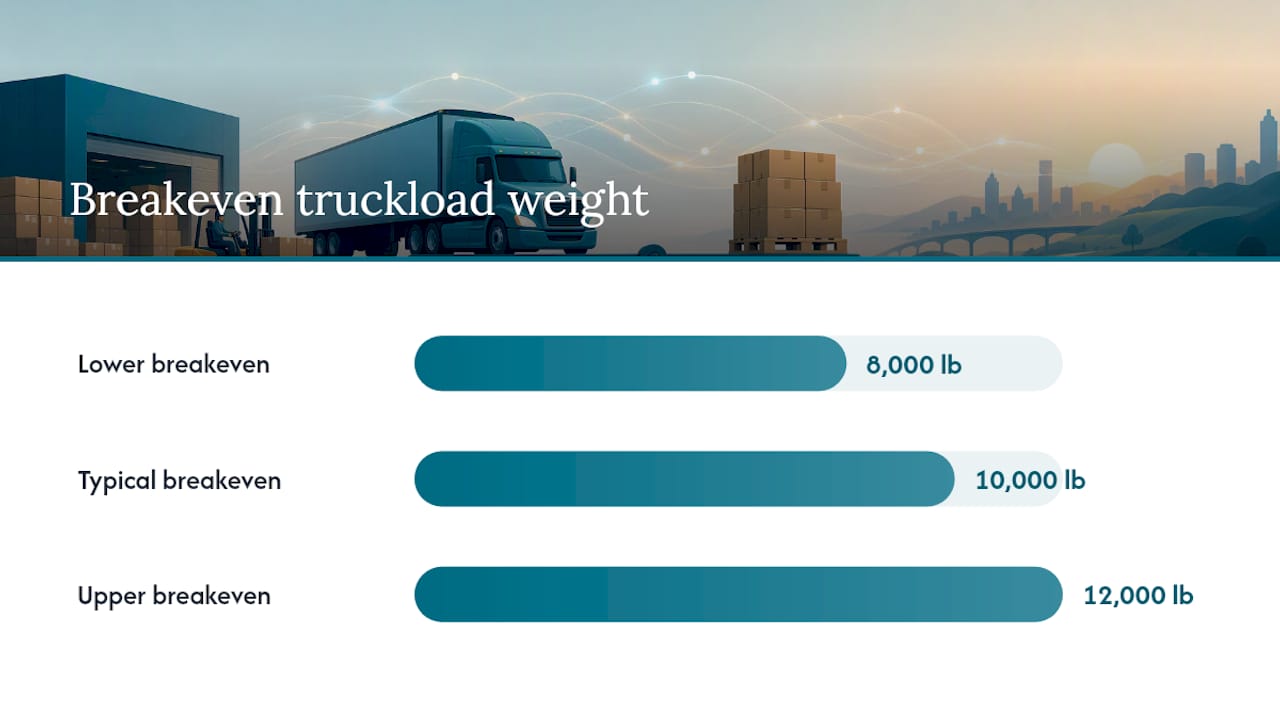
- The breakeven point between LTL and FTL typically falls between 8,000 and 12,000 pounds, but factors like freight class and lane length can shift this range.
- Additional costs such as detention, liftgate fees, residential surcharges, and market-based fuel adjustments often cause invoices to differ from initial estimates.
- For complex shipments, multi-leg routes, or shipments crossing borders, obtaining verified, live-rate quotes is essential to ensure accurate pricing and secure booking.
Table of Contents
- How Truck Freight Calculators Work for LTL and FTL
- Inputs the Calculator Needs and How to Measure Them Correctly
- LTL vs FTL: When Does Truckload Actually Win?
- Key Cost Drivers and Accessorials That Change Estimates
- Worked Examples: CPM, CWT, and Sample Calculations
- How to Get the Most Accurate Freight Estimate
- When an Estimate Is Enough, and When to Book Through a Provider
- Get a Verified Quote and Book With Or-ner
- Sources
- FAQ
How Truck Freight Calculators Work for LTL and FTL
LTL and FTL pricing run on completely different logic, which is why the same shipment can spit out two very different-looking numbers depending on which mode you select.
LTL rates key off hundredweight (CWT) and NMFTA freight class, a system running from class 50 (dense, easy-to-handle freight) to class 500 (light, bulky, fragile). Carriers charge more per CWT as class climbs, because low-density freight eats truck space without paying for the weight it displaces. FTL, by contrast, is priced per mile or as a flat lane rate, since the truck is dedicated to one shipment regardless of how much it weighs.
Both modes then layer on the same two categories of extra cost:
- A fuel surcharge tied to a public diesel index, applied as a percentage of linehaul for LTL or cents per mile for FTL
- Accessorial charges for services outside standard dock-to-dock delivery, from liftgates to residential drop-offs
One more wrinkle matters here: a freight quote combines base rate, fuel surcharge, accessorials, and taxes, and that total shifts depending on whether you’re looking at a published tariff rate, a negotiated contract rate, or a spot-market rate quoted the day you need the truck.
Inputs the Calculator Needs and How to Measure Them Correctly
Garbage in, garbage out applies harder to freight math than almost anywhere else in logistics. Four inputs drive most of the variance between your estimate and your invoice.
- Origin and destination zip codes. FTL pricing scales directly with lane mileage, so a rough city name instead of a precise zip can throw off the per-mile total by real dollars.
- Actual weight versus dimensional density. Density is pounds divided by cubic feet, and it’s the single biggest lever behind your freight class assignment for LTL.
- Pallet count and stacking. Non-stackable freight, oversized pallets, and mixed-height loads all trigger different handling assumptions than a calculator’s default guess.
- Freight class accuracy. Entering a class lower than what your product actually qualifies for is the single fastest way to get hit with a reclassification fee after the carrier inspects the shipment.
Guessing on class to save a few dollars almost always backfires. Carriers reweigh and reclass at the dock, and that correction shows up as a surprise line item, not a courtesy call. If you’re unsure how your product maps to a class, understanding freight class determination before you quote saves the headache later.
LTL vs FTL: When Does Truckload Actually Win?
There’s a rough tipping point where LTL stops being the cheaper option, and it’s worth knowing before you request quotes.
The crossover typically lands between 8,000 and 12,000 pounds, or roughly 8 to 12 pallets on a standard lane. Below that range, LTL almost always wins because you’re only paying for the space and weight you use. Above it, a dedicated truck starts to beat the accumulated per-CWT charges of LTL pricing.
That range isn’t fixed, though. It moves with two variables you control less than you’d like:
- Freight class shifts the breakeven down. Low-density, high-class freight (think stacked plastic totes or foam packaging) hits the crossover point at a lower weight than dense, low-class freight like machinery parts.
- Lane length matters. A short regional lane favors LTL longer, while a long-haul lane can make FTL competitive even under 8,000 pounds if the LTL carrier network requires multiple transfer points.
Pro Tip: Once your shipment lands anywhere near that 8,000 to 12,000-pound window, run both an LTL and an FTL quote. It costs nothing and the math genuinely can go either way depending on class and lane.
That crossover zone is exactly where guessing costs money. When LTL cost creeps toward a full truckload’s flat rate for the lane, FTL usually becomes the cheaper path even for a shipment that technically fits on a partial trailer.
Key Cost Drivers and Accessorials That Change Estimates
The base rate is rarely the whole story. Most invoice surprises come from charges a calculator either estimates loosely or doesn’t know to include at all.
- Fuel surcharge (FSC): indexed to a public diesel benchmark and reapplied regularly, so it moves independently of your negotiated linehaul rate.
- Detention: charged when a driver waits beyond the free loading or unloading window, commonly around $75 per hour after two hours of free time, assuming arrival and departure times get documented.
- Liftgate and inside delivery: flat accessorial fees added whenever the delivery point lacks a dock.
- Residential surcharges: applied automatically for home addresses, since residential stops take longer and often need smaller trucks.
- Reclassification: the carrier’s correction fee when your declared freight class doesn’t match the inspected shipment.
Market conditions swing pricing too. When the truck-to-load ratio tightens, spot rates climb regardless of what your calculator’s default assumptions say, which is exactly why a seasonal quote in December can look nothing like the same lane in March.
Pro Tip: If detention shows up on an invoice, check the documented arrival and departure timestamps before disputing it. Carriers track this closely, and disputing a properly logged detention charge rarely goes your way.
Worked Examples: CPM, CWT, and Sample Calculations
Running your own quick math against a calculator’s output is the fastest way to catch an error before it becomes an invoice dispute.
Cost per mile (CPM) is the backbone of FTL pricing. The formula is simple: total fixed and variable costs, divided by total miles, including deadhead (the empty miles driven between drop-off and the next pickup). Skipping deadhead miles is the most common mistake operators make, and it produces a CPM that looks profitable on paper while losing money in practice. Financed operators running the full cost stack typically land around an all-in CPM of $1.80 to $2.50 per mile in 2026.
Here’s how the two modes stack up on a sample shipment:
For the LTL example: 1,200 lbs converts to 12 CWT. At a sample rate of $35 per CWT for class 85, that’s $420 before fuel surcharge and any accessorials get added.
How to Get the Most Accurate Freight Estimate
A calculator only gets you close. Closing the remaining gap comes down to a handful of habits that separate a clean invoice from a disputed one.
- Measure length, width, and height precisely, then calculate density before you enter a freight class guess.
- Select every accessorial you’ll actually need at booking, since adding a liftgate request after pickup costs more than declaring it upfront.
- Re-quote close to your actual pickup date rather than trusting a quote from weeks earlier, since fuel and market inputs move fast enough to change the total meaningfully.
- Compare every line item on the final invoice against your original quote, not just the bottom-line total.
Pro Tip: Rebuild your rate assumptions monthly if you’re shipping regularly. Diesel prices and detention exposure change often enough that a quote from last quarter isn’t a reliable benchmark anymore.
When an Estimate Is Enough, and When to Book Through a Provider
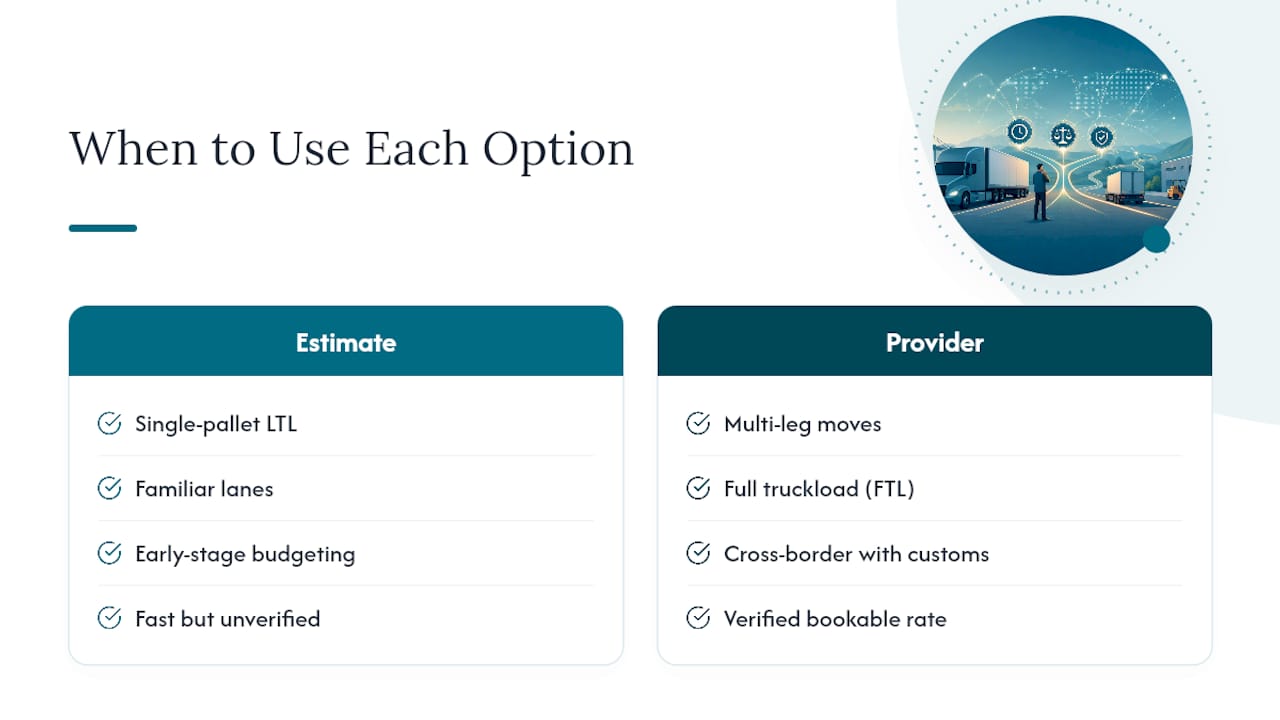
An instant estimate is genuinely all you need for a single-pallet LTL shipment on a familiar lane, or for early-stage budgeting before a purchase order is even confirmed. The math holds up fine at that scale.
Where it stops holding up: multi-leg moves, anything crossing a border with customs documentation attached, or full truckload shipments where a few cents per mile times 800 miles adds up to real money. That’s the point where a verified, bookable rate matters more than a fast one. Or-ner’s freight booking process pairs instant estimates with freight forwarding services that verify rates against live carrier availability before you commit. If your shipment involves customs clearance or coordination across ocean, air, and ground legs, that’s the moment to loop in a specialist instead of trusting a self-serve number.
Get a Verified Quote and Book With Or-ner
Instant estimates are useful right up until you’re actually ready to move freight, and that’s where most calculators stop being helpful. Live-rate verification and booking support can be available to ecommerce sellers to avoid chasing carriers for confirmation.

Instead of exporting a number and hoping it holds, you can get a quote checked against real carrier capacity before committing a pallet or a truckload to a lane. That matters most on the shipments where a rough estimate isn’t good enough: multi-pallet LTL runs, full truckload lanes, or anything with a tight delivery window. If you’re planning your next shipment, walk through freight booking step by step to see exactly how the estimate turns into a confirmed, bookable rate.
Sources
- How To Calculate Cost Per Mile: Formula & Sheet | AFT Dispatch
- How Freight Quotes Are Calculated | Freightera
- LTL vs FTL shipping costs guide
- Detention fees and related LTL cost drivers
FAQ
How Is Truck Freight Calculated?
Freight cost is base rate (per CWT for LTL, per mile for FTL) plus a fuel surcharge tied to a diesel index, plus any accessorials like liftgate or detention, plus applicable taxes.
How Do You Calculate Hauling Cost Per Mile?
Divide all fixed and variable operating costs by total miles driven, including deadhead miles, not just loaded miles; financed operators typically land near $1.80 to $2.50 per mile all-in.
How Should I Charge for Freight as a Small Trucking Operation?
Start from your true CPM (including deadhead and fixed costs), add your fuel surcharge, and price above that floor rather than matching a competitor’s rate blindly, since an undocumented CPM often hides unprofitable loads.
Is a Truck Freight Calculator’s Estimate the Same as My Final Invoice?
Not usually. It’s planning-grade unless the tool pulls live carrier rates, and your final invoice can differ based on accessorials, reclassification, or fuel index changes between quote and pickup.
What’s the Fastest Way to Check If LTL or FTL Is Cheaper for My Shipment?
Run both quotes whenever your shipment falls near 8,000 to 12,000 pounds, since freight class and lane length can shift the breakeven point in either direction.