
TL;DR:
- Combining clear exception rules, approval gates, predictable staffing, and inventory buffers reduces logistics chaos for ecommerce and wholesale businesses. Or-ner’s platform consolidates OMS, WMS, and TMS data into a single source of truth, minimizing operational errors and stress. Implementing these best practices leads to more predictable shipping processes and less firefighting during peak seasons.
The fastest way for ecommerce sellers and wholesalers to cut logistics stress is to combine clear exception rules, human-in-the-loop approval gates, predictable staffing schedules, and conservative inventory buffers. That combination handles the four biggest sources of operational chaos before they become fires you’re putting out at 11 PM.
Here’s the short checklist:
- Define exception rules first. Write down exactly what happens when an order can’t ship as planned. Who decides? What’s the fallback carrier?
- Gate high-cost automation. Auto-suggest, don’t auto-fire, on labels over $75 or freight quotes with more than 50% rate variance.
- Publish schedules two weeks out. Peak-season burnout accelerates when workers don’t know when the intensity ends.
- Hold safety stock. Use trailing lead-time averages plus variance, not vendor promises, to set reorder points.
- Score your carriers. Measure total delivered cost and tracking accuracy, not just headline rates.
- Standardize packaging and SOPs. One label format, one pack verification step, one returns process.
“Cognitive stress in parcel operations often stems from operational design flaws rather than personnel issues; simplifying interfaces and predictable workflows reduces errors and fatigue.” — Vanderlande
Or-ner’s platform connects OMS, WMS, and TMS data into a single source of truth, which means your team sees one version of every order, not six conflicting screens. That alone removes a category of stress that no motivational poster ever fixed.
Table of Contents
- Why does shipping cause so much operational stress?
- Six techniques that actually reduce logistics stress
- How do you staff for peak season without burning out your team?
- What’s the right automation policy to avoid new stress?
- How do inventory buffers and SOPs cut day-of-shipment stress?
- How should you select carriers and write SLAs?
- What does a 90–180 day implementation plan look like?
- What should you do this week, this month, and this quarter?
- How does Or-ner apply these techniques in practice?
- Key Takeaways
- Why operational design beats people-only fixes
- Or-ner cuts logistics stress where it actually starts
- Useful sources
- FAQ
Why does shipping cause so much operational stress?
The honest answer: the systems, not the people. Vanderlande’s research on parcel and distribution centers shows that cluttered interfaces, unclear exception workflows, and unpredictable task sequences drive cognitive load and errors far more than individual effort or motivation.
The specific failure modes show up the same way across most ecommerce operations:
- Fragmented systems force staff to rekey data between an OMS, a carrier portal, and a spreadsheet.
- Unclear exception handling means every split shipment or address problem becomes an improvised decision.
- Poor facility layout and UX put the wrong information in front of the wrong person at the wrong moment.
- Unpredictable peak schedules leave workers unsure whether the crunch lasts two more weeks or two more months.
- Unreliable carriers generate WISMO tickets that ops teams have to chase manually.
“The disconnect shows up in everyday operations. Teams route orders with incomplete information. Then they chase down inventory discrepancies and lose time reconciling conflicting data across systems.” — Shopify, Unified Supply Chain Guide
A concrete example: a mid-size apparel seller running separate carrier portals for two regional couriers will routinely generate split shipments when one carrier’s zone pricing changes and the routing rule isn’t updated. The fix isn’t hiring a smarter router. It’s a single routing rule that updates automatically when rate cards change.
Six techniques that actually reduce logistics stress
These are ranked by impact-to-effort ratio. Start at the top.
-
Defined exception rules and approval gates. Write a decision tree for every common exception: carrier delay, address failure, out-of-stock mid-pick. Assign an owner. Approval gates configured on cost thresholds prevent expensive automated mistakes without requiring manual review of every order.
-
OMS/WMS integration and a single source of truth. Automated order management connects OMS, ERP, and WMS to reduce middleware costs and lower touches per package. One data layer means one version of inventory, orders, and location data.
-
Predictable staffing and workload calibration. Publish schedules at least two weeks in advance and set explicit end-dates for peak intensity. Workers who know when the sprint ends perform better through it.
-
Conservative inventory buffers and draft purchase orders. Use trailing lead-time averages plus variance to set reorder points, not vendor-quoted lead times. Generate draft POs automatically; a human approves before anything fires.
-
Carrier scorecard and blended routing. Weight speed, reliability, tracking accuracy, regional coverage, and total delivered cost. Route by lane, not by habit.
-
Packaging and labeling standardization with written SOPs. One label format, one pack verification checklist, one returns process. Fewer variations mean fewer mis-shipments and less rework.
Pro Tip: Start automation on high-volume, low-complexity tasks first — order confirmations, status updates, inventory syncing. Prove ROI there before touching anything that touches money or legal documents.
How do you staff for peak season without burning out your team?
Predictable schedules, advance notice, and explicit end-dates are the three levers that prevent indefinite peak-season intensification. Staffing plans need to be built before the volume arrives, not after.
A workable timeline for a Q4 peak looks like this: hire and onboard temporary staff by early October, publish November and December schedules by mid-October, define the last high-intensity date in writing, and rotate shift assignments every two weeks so no single team absorbs the full load. For peak season logistics, the planning window starts in August.
Staffing checklist:
- Identify roles that require cross-training (pick, pack, receiving, returns)
- Cross-train at least two people per critical station
- Assign a single point of contact for each shift’s exception decisions
- Confirm temporary staff contracts include explicit end-dates
Pro Tip: Publishing schedules two weeks in advance isn’t just a courtesy. It’s a retention tool. Workers who can plan their lives around a predictable schedule are less likely to call out during your highest-volume days.
Manufacturing and warehouse turnover is often high, according to Newcastle’s trend reports. Operations that invest in schedule predictability before peak season are protecting their own throughput capacity.
What’s the right automation policy to avoid new stress?
Automation should reduce routine touches, not create dangerous surprises. The rule is simple: auto-suggest on borderline decisions, auto-fire only on low-cost, high-confidence ones.
A practical policy template:
- Auto-fire: order confirmation emails, inventory sync updates, standard label generation for orders under $75
- Auto-suggest (human approves): labels over $75, freight quotes with more than 50% rate variance, purchase orders above a defined dollar threshold, any customs documentation
“Practitioners recommend ‘draft-by-default’ for automated replenishment and approval gates for high-cost routing or purchase orders.” — AiSolv, AI for E-commerce Operations
Verification workflows matter as much as the gates themselves. Draft POs should sit in a review queue with a defined window — 4 hours for standard replenishment, 1 hour for urgent restocks. Log every approval and rejection. That log becomes the feedback loop that tells you whether your thresholds are calibrated correctly.
Pro Tip: Design delegation by decision type. Automate routine, low-impact decisions. Reserve high-impact or legally sensitive decisions for senior staff. Decision fatigue is a real throughput killer.
How do inventory buffers and SOPs cut day-of-shipment stress?
Reorder points built on vendor promises fail regularly. The better method: track actual receipt dates versus promised dates per SKU, then use trailing averages plus variance to set a realistic reorder point. Here’s a simple example:
| SKU | Avg. daily velocity | Avg. lead time (days) | Lead time variance (days) | Safety stock multiplier | Reorder point (units) |
|---|---|---|---|---|---|
| SKU-A | 50 | — | 3 | — | — |
| SKU-B | 20 | — | 5 | — | — |
| SKU-C | — | — | 2 | — | 1,— |
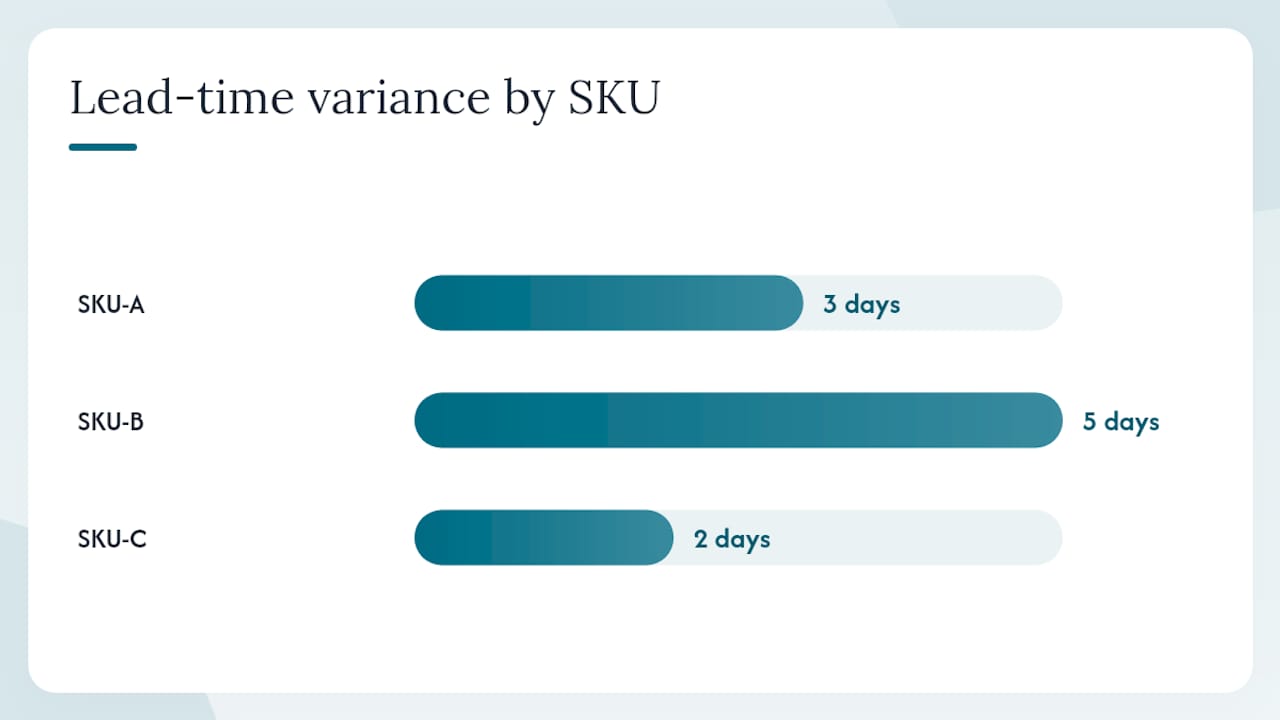
Reorder point = (avg. velocity × avg. lead time) + (variance × safety stock multiplier × avg. velocity)
SOP bullets for pick/pack and returns:
- Use a single label template per carrier; never hand-write addresses
- Run a two-point pack verification (item count + weight check) before sealing
- Photograph high-value items before sealing the box
- Log every return with reason code on receipt; review reason codes weekly
- Keep packaging standards documented in a shared folder, not in someone’s head
How should you select carriers and write SLAs?
Measure total delivered cost and tracking accuracy. Headline rates are almost always misleading once you add fuel surcharges, residential fees, and the labor cost of chasing missing packages.
A carrier scorecard with five weighted dimensions:
| Dimension | Weight | What to measure |
|---|---|---|
| Total delivered cost | — | All-in rate including surcharges |
| Reliability (on-time %) | 30% | Actual vs. promised delivery date |
| Tracking accuracy | 20% | Scan events per shipment, gap rate |
| Regional coverage | — | Zone reach for your top delivery zip codes |
| Transit speed | 5% | Average days in transit by lane |
Review carrier performance quarterly, monthly during peak. When a lane’s reliability score drops below your threshold, re-route that lane before the next billing cycle, not after a customer complaint spike. For lane-level routing decisions, Or-ner’s transportation mode guide covers the trade-offs between parcel, LTL, and freight by volume and distance.
SLA terms worth including in every carrier contract: on-time delivery percentage by zone, maximum claims resolution window, and a rate-lock clause for at least 90 days.
What does a 90–180 day implementation plan look like?
Automation underperforms without clean data. Budget the first phase entirely for cleanup before touching any automation configuration.
| Phase | Duration | Owner | Success metric |
|---|---|---|---|
| Data cleanup | Weeks 1–4 | Ops + IT | Standard SKUs, consistent carrier fields, clean address database |
| Low-stakes automation | Weeks 5–8 | Ops manager | Order confirmations, status updates, inventory sync live |
| OMS routing rules | Weeks 9–12 | Ops + carrier team | Routing exceptions under 5% of orders |
| Carrier scoring | Weeks 13–16 | Procurement | Scorecard live, first quarterly review complete |
| Pallet/LTL automation | Weeks 17–24 | Logistics lead | Draft BOLs generated automatically, human approval rate tracked |
Cost and ROI signals to watch: labor hours saved per 1,000 orders, average order-to-ship time, exception rate as a percentage of total orders, and tracking accuracy by carrier. Set a measurement baseline in Phase 1 so every subsequent phase has something to compare against. Supply chain optimization metrics work best when they’re tracked from day one, not retrofitted after the fact.
What should you do this week, this month, and this quarter?
This week:
- Map your top five recurring exceptions and assign an owner to each
- Pull your last 30 days of carrier on-time data by lane
- Identify the three highest-volume, lowest-complexity tasks you’re still doing manually
This month:
- Configure approval gates for labels over $75 and freight quotes with more than 50% variance
- Publish next month’s schedule at least two weeks in advance
- Set reorder points for your top 20 SKUs using trailing lead-time averages
This quarter:
- Complete data cleanup (standard SKUs, consistent carrier fields)
- Run your first carrier scorecard review and re-route underperforming lanes
- Document pick/pack and returns SOPs in a shared, version-controlled folder
Metric tracker:
| Metric | Baseline (Week 1) | Target | Owner |
|---|---|---|---|
| Exception rate (% of orders) | Measure now | Under 5% | Ops manager |
| Avg. order-to-ship time | Measure now | Define target | Fulfillment lead |
| Tracking accuracy (% with full scan events) | Measure now | High on-time delivery percentage | Carrier team |
How does Or-ner apply these techniques in practice?
Or-ner operates as a single source of truth across OMS, WMS, and TMS data, which means the approval gates, routing rules, and carrier scorecards described in this guide can be configured and monitored in one place rather than across three separate portals.
Platform capabilities that map directly to the techniques above:
- Integration layer: connects order management, warehouse systems, and carrier APIs so routing rules update automatically when rate cards change
- Draft PO and BOL workflows: auto-generates draft documents for human review before anything fires, with configurable approval windows
- Carrier scoring and blended routing: routes by lane based on weighted scorecard dimensions, not by default carrier habit
- Exception management dashboard: surfaces flagged orders in a single queue so the ops team isn’t hunting across systems
A wholesale seller managing 800 orders per day across three carriers reduced their routing exception rate by consolidating carrier data into Or-ner’s tracking dashboard, replacing a manual daily reconciliation process that had consumed two staff hours every morning. The order fulfillment process becomes measurably more predictable when every exception surfaces in one place.
Key Takeaways
The most effective operational stress reduction combines exception rules, human approval gates, predictable staffing, inventory buffers, and carrier scorecards into a single, phased system.
| Point | Details |
|---|---|
| Exception rules first | Define who decides and what the fallback is before the next exception hits. |
| Gate high-cost automation | Auto-suggest on labels over $75 and freight quotes with more than 50% variance; never auto-fire. |
| Publish schedules two weeks out | Advance notice and explicit peak end-dates reduce burnout and unplanned absences. |
| Reorder points from real data | Use trailing lead-time averages plus variance, not vendor quotes, to set safety stock. |
| Or-ner as single source of truth | Or-ner consolidates OMS, WMS, and TMS data so routing rules, approval gates, and carrier scores live in one place. |
Why operational design beats people-only fixes
Most logistics stress conversations end up in the wrong place. Teams add headcount, run extra training sessions, or ask people to work harder during peak. Those moves aren’t wrong, but they treat the symptom. The Vanderlande evidence is clear: cognitive load in distribution environments is primarily a design problem. Cluttered screens, ambiguous exception paths, and unpredictable task sequences produce errors and fatigue regardless of how experienced or motivated the team is.
The change management piece matters too. Staff who help write the exception rules are far more likely to follow them. Small wins, measured and shared with the team, build the kind of trust that makes the next change easier to adopt. Start with one exception rule, measure the result, and show the team what changed. That cycle, repeated, is how operational culture actually shifts.
Or-ner cuts logistics stress where it actually starts
Fewer exceptions, faster decisions, and one place to see everything: that’s what Or-ner delivers for ecommerce sellers and wholesalers managing real shipping volume. The platform’s integration layer connects your OMS, WMS, and carrier APIs so routing rules, approval gates, and carrier scorecards work together instead of in parallel.
Three capabilities that map directly to this guide:
- Approval gate configuration for labels, freight quotes, and purchase orders above your defined thresholds
- Carrier scorecard and blended routing that routes by lane performance, not by default habit
- Real-time exception dashboard that surfaces flagged orders before they become WISMO tickets
If you’re ready to move from reactive firefighting to a predictable fulfillment operation, explore Or-ner’s global logistics platform or review the reliable courier services available for U.S. sellers. Request a platform walkthrough to see how the approval gates and routing rules are configured for your order volume.
Useful sources
| Source | What it covers |
|---|---|
| Vanderlande: Cognitive Wellbeing in Parcel Operations | Evidence that operational design, not personnel, drives cognitive stress in distribution centers |
| AiSolv: AI for E-commerce Operations | Approval gate thresholds, draft-PO workflows, and reorder-point methodology for mid-market operators |
| Shopify: Automated Order Management | How OMS/WMS/ERP integration reduces manual touches and routing errors |
| Shopify: Unified Supply Chain Guide | The cost of fragmented data layers and the structure of a unified supply chain |
| BigCommerce: Ecommerce Automation | Which task types yield fast ROI from automation and how to sequence rollout |
| Last-Mile Carrier Selection Guide | Carrier scorecard dimensions, weighting methodology, and review cadence |
| Global Trade Magazine: Peak Season Workforce | Turnover data and workforce planning practices for peak-season readiness |
| Burnout Prevention for Warehouse Workers | Schedule predictability and explicit end-dates as burnout prevention tools |
| Or-ner: Global Logistics Platform | Or-ner platform capabilities for courier reliability, routing, and fulfillment |
FAQ
What are the highest-impact stress reduction techniques for ecommerce logistics?
Defining exception rules, configuring approval gates on high-cost decisions, and integrating OMS and WMS into a single data layer produce the fastest reduction in operational stress. These address the root causes rather than the symptoms.
How do approval gates reduce logistics errors without slowing everything down?
Gates trigger only on specific thresholds — labels over $75 or freight quotes with more than 50% rate variance — so routine orders flow automatically while high-cost decisions get a human review. The result is fewer expensive mistakes with no added friction on standard volume.
When should you publish peak-season schedules to prevent burnout?
Publish schedules at least two weeks in advance and include an explicit end-date for peak intensity. Industry guidance links this practice directly to lower absenteeism and reduced turnover during high-volume periods.
How do you set reorder points that actually prevent stockouts?
Track actual receipt dates versus vendor-promised dates per SKU, then calculate reorder points using trailing lead-time averages plus variance. Vendor-quoted lead times consistently understate real variability.
How does Or-ner help reduce fulfillment stress for U.S. sellers?
Or-ner consolidates OMS, WMS, and carrier data into one platform, with configurable approval gates, carrier scorecards, and a real-time exception dashboard. That single source of truth removes the manual reconciliation work that generates most day-to-day operational stress.