The most effective professional networking tips for ecommerce and logistics professionals share one thing in common: they treat relationships as infrastructure, not as a side project. In a sector where a single trusted 3PL connection can cut your fulfillment costs or unlock a new shipping lane, who you know shapes what your operation can actually do. The strategies below are built specifically for courier and fulfillment professionals in the US market, not generic advice recycled from a business school syllabus.
Table of Contents
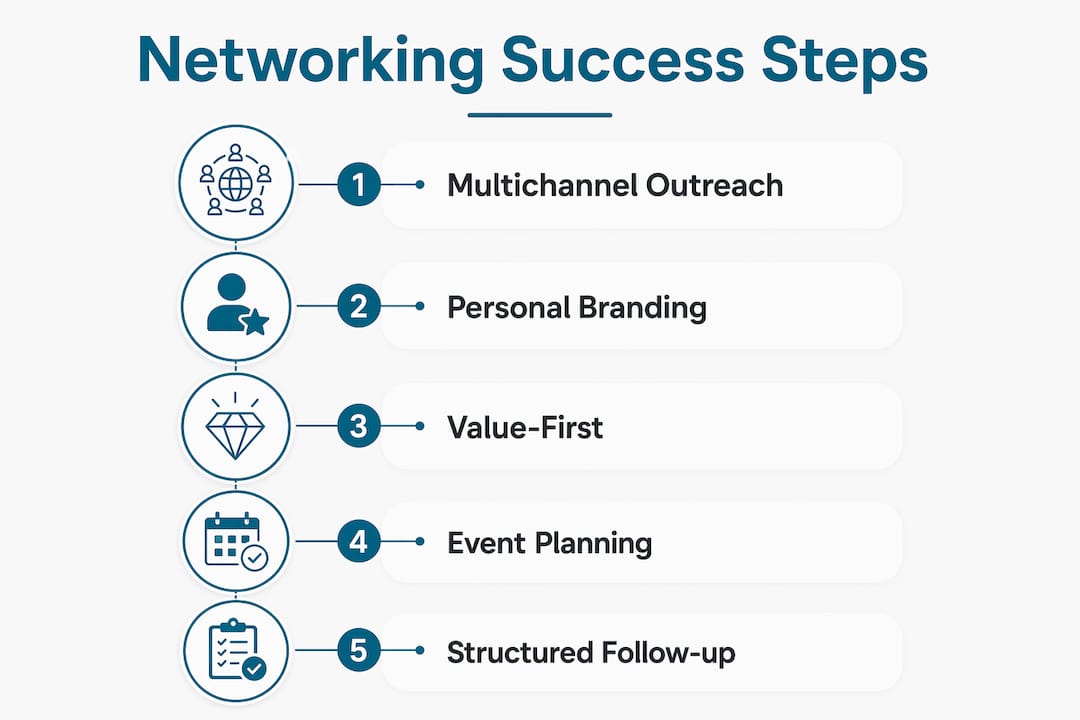
- 1. Use a multichannel approach from the first outreach
- 2. Build a personal brand around operational specifics
- 3. Adopt a value-first networking philosophy
- 4. Attend the right events with a plan
- 5. Leverage certification cohorts and industry associations
- 6. Implement structured relationship management
- 7. Engage digital communities beyond connection requests
- 8. Follow up with specificity and timing
- How Or-ner supports your networking through reliable logistics
- Key Takeaways
- FAQ
1. Use a multichannel approach from the first outreach
Supply chain partner discovery works best when you combine LinkedIn Sales Navigator, personalized email, and phone calls rather than relying on any single channel. Roles across logistics vary widely in communication preference: a VP of Supply Chain may respond to a LinkedIn message, while a warehouse operations director prefers a direct call. Starting with LinkedIn to establish credibility, then following up by email after 3–5 business days, and reserving phone calls for contacts who have already engaged, creates a natural sequence that respects each person’s workflow. The goal is to show up where they actually are.
2. Build a personal brand around operational specifics
Generic LinkedIn profiles do not generate inbound conversations. What does: documenting the actual decisions you faced, the tradeoffs you weighed, and what happened next. This approach, sometimes called the Infrastructure Legibility Framework, works because it makes invisible operational complexity visible to the people who depend on it. A post that opens with “when our primary carrier announced a rate increase in February, we had three options” will outperform a credential summary every time.
Personal branding in logistics is built as much in the comments as in original posts. Engaging authentically with peers, sharing a sharp observation on someone else’s thread, or asking a pointed question in a group discussion all build recognition over time. Consistency matters more than polish.
3. Adopt a value-first networking philosophy
Value-first networking flips the default script: you give before you ask. For ecommerce founders and logistics professionals, this means sharing a high-performing fulfillment partner with a peer, offering an honest assessment of a carrier you’ve tested, or making an introduction that costs you nothing but means a lot to the recipient. The goodwill compounds. People remember who helped them before they needed anything in return, and that memory drives referrals, partnerships, and open doors that cold outreach never reaches.
Cross-sector collaboration fits naturally here. A 3PL operator who connects an ecommerce brand with a customs broker they trust is doing value-first networking. So is an ecommerce founder who co-authors a case study with a fulfillment partner. Both parties gain credibility and audience reach without a sales pitch in sight. Building a strong ecommerce SEO network follows the same logic: shared value creates shared visibility.
4. Attend the right events with a plan
Showing up at MODEX, ProMat, or the CSCMP EDGE Conference without a plan is expensive and mostly unproductive. Before any logistics or ecommerce event, identify the 10 contacts you most want to meet, schedule coffee meetings in advance, and prepare two or three specific questions for each person. Follow up within 24 hours with a personalized note that references something concrete from your conversation, not a generic “great to meet you.”

Micro-events with 10–15 carefully chosen participants often outperform large conferences for relationship depth. A virtual roundtable where you pose open-ended questions like “What’s the biggest fulfillment challenge you’re solving this quarter?” creates the kind of candid conversation that a trade show floor never allows. The format, virtual or in-person, matters less than the quality of the attendee list and the absence of a sales pitch.
Pro Tip: At large conferences, use a digital business card with a QR code so contacts can save your details instantly. Paper cards get lost; a link to your profile and contact page does not.
5. Leverage certification cohorts and industry associations
Certification cohorts form some of the most pre-vetted professional networks available. If you are pursuing a CPIM, CSCP, or CLTD credential through ASCM, the peers in your study group already share your professional focus and your commitment level. Those bonds tend to produce referrals faster than cold LinkedIn connections because the shared experience creates an implicit trust baseline before you ever discuss business.
Industry associations like ASCM, CSCMP, and ISM offer local chapter meetings, virtual webinars, and member directories that give you structured access to mid-career and senior professionals in your specific function. Attending even one virtual event per month keeps you visible and gives you a natural reason to follow up with people you meet.
6. Implement structured relationship management
Ad-hoc networking fades. The contacts you meet at a conference in March are forgotten by June unless you have a system. Assigning clear internal ownership for key relationships, rather than treating them as a shared team responsibility, is one of the most practical shifts a logistics business can make. When one person owns the relationship with a specific carrier or fulfillment partner, follow-up happens consistently and nothing falls through the cracks.
A CRM tool, even a basic one, changes the quality of your follow-up. CRM tools and digital business cards help you track conversation context, set reminders, and see at a glance which contacts have gone cold. When you reach back out after three months, referencing a specific challenge the person mentioned in your last call is the difference between a warm reconnection and a cold restart. Pair this with Or-ner’s internal logistics partner management strategies to keep your fulfillment relationships as organized as your contact list.
7. Engage digital communities beyond connection requests
LinkedIn is not just a directory. Commenting with a specific insight on a post from a VP of Procurement, sharing a short observation about a carrier rate trend, or asking a follow-up question in a logistics group all build visibility without requiring you to create original content every week. The professionals who get noticed are the ones who show up consistently in conversations, not just in people’s inboxes.
Beyond LinkedIn, industry-specific forums and Facebook groups for logistics and ecommerce professionals offer a less formal environment where candid questions get candid answers. These communities are where you learn what your peers are actually struggling with, which is also the best possible intelligence for positioning your own expertise or services.
8. Follow up with specificity and timing
A follow-up message that references something concrete from your last conversation lands differently than a generic check-in. “I’ve been thinking about the carrier diversification challenge you mentioned at ProMat” is a sentence that shows you listened. “Just checking in” is a sentence that shows you have a CRM reminder. The difference is obvious to the recipient.
Timing matters too. Following up within 24 hours after an event keeps the conversation warm. For ongoing relationships, monthly touchpoints, whether a shared article, a quick question, or a relevant introduction, maintain connection without feeling forced. The networking best practices that work in courier and fulfillment are the same ones that work everywhere: be specific, be timely, and make the other person feel remembered.
How Or-ner supports your networking through reliable logistics
Building a strong professional network in ecommerce and logistics is easier when your operational foundation is solid. Or-ner provides freight booking, real-time shipment tracking, customs clearance, and cross-border logistics through a single platform integrated with Amazon and other major ecommerce operators. When your fulfillment runs reliably, you spend less time firefighting and more time building the relationships that grow your business.
Or-ner’s warehousing and inventory management tools give ecommerce sellers the visibility they need to have confident conversations with partners, carriers, and buyers. Reliable data makes you a credible counterpart in any logistics negotiation. And when you’re ready to expand your courier network, Or-ner’s reliable courier services connect US ecommerce businesses with dependable last-mile delivery options across the country.
Ready to back your networking with logistics that actually deliver? Explore Or-ner’s courier services for ecommerce and see how a dependable fulfillment partner changes the conversations you get to have.
Key Takeaways
The most durable professional relationships in ecommerce and logistics are built through consistent, value-driven outreach across multiple channels, not through one-off conference handshakes.
| Point | Details |
|---|---|
| Multichannel outreach | Combine LinkedIn Sales Navigator, email, and phone calls to match each contact’s communication preference. |
| Infrastructure Legibility | Share specific operational decisions and tradeoffs, not credential summaries, to build real credibility. |
| Value-first philosophy | Give resources, introductions, and expertise before asking for anything to generate lasting goodwill. |
| Structured ownership | Assign one person to manage each key relationship so follow-up stays consistent and contacts stay warm. |
| Micro-events over mass events | Small gatherings of 10–15 participants build deeper trust than large trade show floors. |
FAQ
What are the most effective networking strategies for logistics professionals?
Combining LinkedIn Sales Navigator for contact discovery with personalized email follow-ups and phone calls produces the best results, since communication preferences vary widely across logistics roles and company cultures.
How do I build a personal brand in ecommerce and logistics?
Document specific operational decisions, tradeoffs, and outcomes rather than posting generic industry commentary. Consistency in comments and original posts builds recognition faster than polished content alone.
Which industry events are best for logistics and ecommerce networking?
MODEX, ProMat, and the CSCMP EDGE Conference offer direct access to decision-makers. Micro-events with 10–15 targeted attendees often produce deeper relationships than large conference floors.
How should I follow up after meeting a logistics contact?
Send a personalized message within 24 hours that references a specific detail from your conversation. Monthly touchpoints afterward, such as a relevant article or a quick question, keep the relationship warm without feeling forced.
How does Or-ner help ecommerce professionals build stronger logistics networks?
Or-ner provides freight booking, real-time tracking, and cross-border fulfillment through one platform, giving ecommerce sellers the operational reliability that makes them credible, confident partners in any logistics relationship.