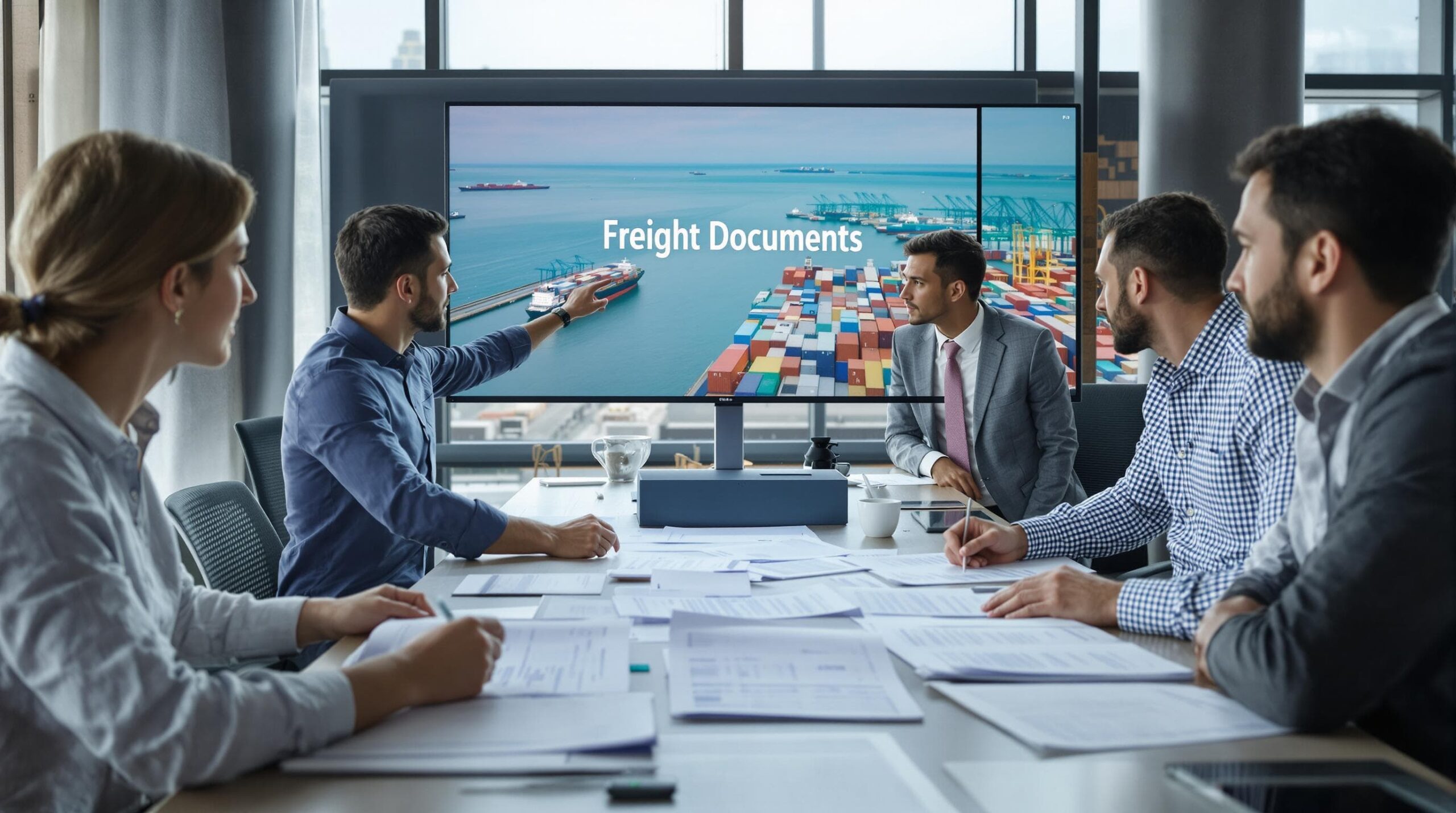
Shipping goods across oceans might sound simple, but the paperwork behind every shipment is anything but small. Nearly 80 percent of global trade moves by sea, yet one missing signature or typo can hold up an entire container at port and cost brands thousands in fees. Most people think customs delays are about inspections, but it is almost always a documentation slipup that brings shipments to a halt. Get ready to see how smart documentation and new tech can turn the tide for smoother, faster international shipping.
Table of Contents
- Key Ocean Freight Documents Explained
- Step-By-Step Document Preparation Process
- Common Mistakes And How To Avoid Them
- Digital Trends In Ocean Freight Documentation 2025
Quick Summary
| Takeaway | Explanation |
|---|---|
| Accurate commercial invoices are crucial. | Ensure your Commercial Invoices include precise product details and pricing to avoid customs issues. |
| Utilize Bill of Lading effectively. | This document acts as a contract and receipt, ensuring ownership transfer and clear shipping instructions. |
| Double-check for documentation accuracy. | Regularly review and maintain updated templates to avoid costly mistakes in documentation. |
| Invest in technological solutions. | Leverage AI and automation to streamline documentation processes and minimize human error. |
| Stay informed about regulatory compliance. | Continuous education on international regulations is essential to prevent compliance-related delays or penalties. |
Key Ocean Freight Documents Explained
Ocean freight documentation represents the critical paperwork that enables global trade, serving as the legal and logistical foundation for international shipping transactions. For ecommerce brands and manufacturers, understanding these documents is not just a regulatory requirement but a strategic necessity for smooth cross-border operations.
Essential Commercial Documentation
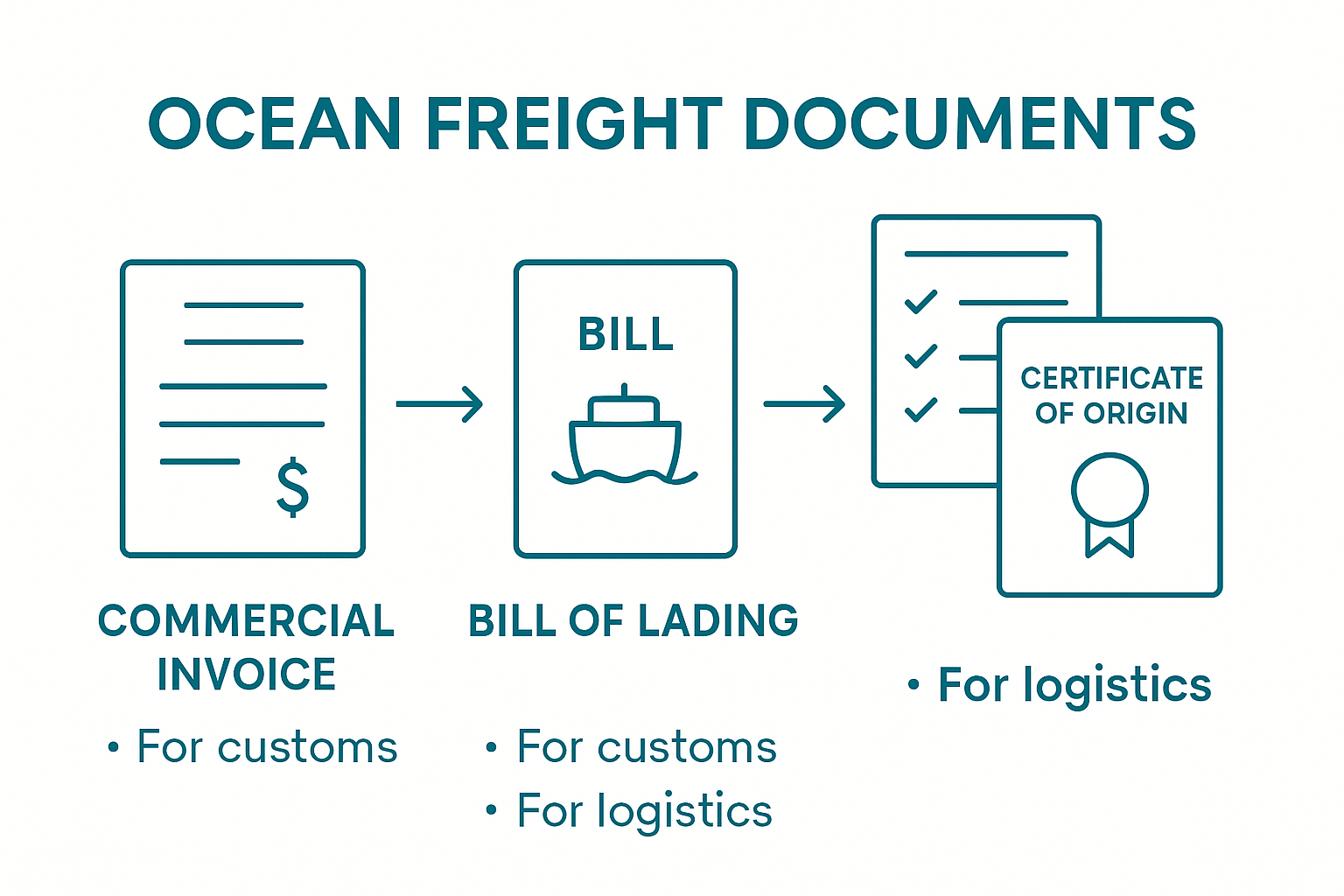
The Commercial Invoice sits at the heart of ocean freight documentation. According to Maersk, this document serves as comprehensive proof of sale, detailing crucial transaction information including consignment specifics, financial terms, and applicable taxes. Ecommerce sellers must ensure their Commercial Invoices are meticulously prepared, reflecting accurate product descriptions, harmonized system (HS) codes, unit prices, and total shipment value.
Beyond financial records, the Commercial Invoice plays a pivotal role in customs clearance. Customs authorities use this document to assess duties, validate product classifications, and confirm the legitimate origin of goods. Incomplete or inaccurate invoices can trigger delays, additional inspections, or potential shipment rejections.
Critical Shipping Contracts and Compliance Documents
The Bill of Lading emerges as a fundamental legal document in ocean freight transportation. The U.S. Department of Commerce defines it as a binding contract between cargo owners and shipping carriers, serving multiple critical functions. This document not only establishes ownership transfer but also acts as a receipt for goods and a negotiable instrument that can be traded.
For international shipments, the Certificate of Origin becomes equally important. This document validates the manufacturing or production country of exported goods, which impacts potential trade agreements, tariff classifications, and customs processing. Ecommerce brands must obtain this certificate from authorized chambers of commerce or relevant governmental agencies, ensuring transparent and compliant international trade practices.
Technological Advancements in Document Processing
Recent technological innovations are transforming ocean freight documentation management. Research published on arXiv highlights the emergence of Optical Character Recognition (OCR) technologies that automate document classification and processing. These advanced systems can rapidly scan, interpret, and validate complex shipping documents like Commercial Invoices, Packing Lists, and Bills of Lading, significantly reducing manual processing time and minimizing human error.
For ecommerce brands looking to optimize their international shipping workflows, understanding and efficiently managing these key documents is paramount. While the documentation process might seem complex, strategic preparation and leveraging modern technological solutions can streamline operations. Learn more about our freight forwarding solutions to navigate these intricate logistics challenges effectively.
By mastering ocean freight documentation, businesses can ensure smoother customs clearance, reduce potential shipping complications, and establish a robust foundation for successful global trade endeavors.
Here is a table summarizing the main types and purposes of key ocean freight documents discussed above:
| Document Type | Purpose | Prepared By | Used By |
|---|---|---|---|
| Commercial Invoice | Proof of sale, details transaction info, used for customs | Seller/Exporter | Customs, Importer, Carrier |
| Bill of Lading | Contract of carriage, receipt, ownership transfer | Carrier (based on seller info) | Carrier, Importer, Customs |
| Certificate of Origin | Certifies manufacturing country for trade & tariffs | Chamber of commerce/Exporter | Customs, Importer |
| Packing List | Itemizes shipment contents, aids inspection/shipping | Shipper/Exporter | Carrier, Customs |
Step-by-Step Document Preparation Process
Successful ocean freight shipping hinges on a meticulous document preparation process that demands precision, attention to detail, and strategic planning. Ecommerce brands and manufacturers must navigate this complex workflow to ensure smooth international transactions and minimize potential shipping complications.
Initial Documentation Gathering
The document preparation journey begins with comprehensive information collection. The Trade Commissioner Service of Canada recommends starting with a comprehensive checklist of required documents. This initial phase involves gathering critical information such as precise product descriptions, exact quantities, total shipment value, and specific shipping terms.
Key elements to compile include:
- Detailed product specifications: Complete and accurate product descriptions
- Pricing information: Exact unit and total shipment values
- Shipping parameters: Weight, dimensions, and packaging details
- Recipient information: Complete consignee details and delivery address
Document Compilation and Verification
Once initial information is collected, the next critical step involves systematic document compilation. Shipping Solutions emphasizes the importance of creating a comprehensive document package that includes multiple interconnected forms. This process requires cross-referencing information across different documents to ensure consistency and accuracy.
Critical documents to prepare include:
- Commercial Invoice: Detailing transaction specifics
- Packing List: Itemizing shipment contents
- Certificate of Origin: Confirming product manufacturing location
- Bill of Lading: Establishing shipping contract and ownership transfer
Advanced Documentation Compliance

Vskills professional documentation guidelines recommend a final verification stage that goes beyond simple document compilation. This advanced compliance check involves multiple layers of review to minimize potential customs or shipping complications.
Key verification steps include:
- Cross-document consistency check: Ensuring matching information across all documents
- Regulatory compliance review: Verifying adherence to international shipping regulations
- Customs documentation audit: Confirming all required forms are complete and accurate
For ecommerce brands seeking to streamline their international shipping processes, understanding and executing this detailed document preparation workflow is crucial. Explore our comprehensive freight forwarding solutions to simplify your global logistics management.
Precise documentation preparation is not merely an administrative task but a strategic approach that directly impacts shipping efficiency, cost-effectiveness, and overall international trade success. By investing time and resources in thorough document management, businesses can significantly reduce shipping delays, minimize potential customs issues, and establish a reputation for reliable international operations.
Below is a step-by-step table outlining the document preparation process as described above:
| Step | Main Actions | Key Outcomes |
|---|---|---|
| Initial Gathering | Collect all product, pricing, shipping, and recipient info | Complete and accurate data compiled |
| Compilation & Verification | Prepare & cross-check core shipping documents | Consistent, accurate document set |
| Advanced Compliance Review | Cross-document check, regulatory audit, customs prep | Compliance and minimized errors |
Common Mistakes and How to Avoid Them
Ocean freight documentation presents numerous potential pitfalls that can derail international shipping operations. Understanding and proactively addressing these common mistakes can save ecommerce brands significant time, money, and logistical headaches.
Documentation Accuracy Challenges
EP Logistics highlights that documentation errors represent the most frequent and costly mistakes in international shipping. Inaccurate or incomplete paperwork can trigger extensive customs delays, unexpected financial penalties, and potential shipment rejections.
Common documentation accuracy issues include:
- Incorrect product classifications: Misidentifying goods can lead to incorrect duty calculations
- Incomplete shipping details: Missing or inconsistent information across documents
- Outdated commercial invoices: Failing to update pricing or product specifications
To mitigate these risks, businesses must implement rigorous documentation review processes. This involves cross-checking information, maintaining updated templates, and establishing clear internal protocols for document preparation.
Regulatory Compliance Pitfalls
Geo Commerce emphasizes that many ecommerce brands struggle with complex import-export regulations. Inadequate understanding of international trade rules can result in significant operational challenges. Compliance mistakes often stem from insufficient knowledge of specific country requirements, changing trade regulations, and intricate customs protocols.
Key compliance challenges include:
- Misunderstanding trade agreements: Overlooking specific country-specific import regulations
- Incorrect duty and tax calculations: Failing to accurately assess applicable financial obligations
- Incomplete customs declarations: Omitting critical information required by customs authorities
Successful navigation requires continuous education, regular compliance training, and potentially partnering with experienced logistics professionals who understand evolving international trade landscapes.
Technology and Documentation Management
Modern technology offers powerful solutions to mitigate documentation mistakes. Advanced digital platforms can automate document verification, provide real-time compliance checks, and reduce human error. Implementing robust document management systems allows businesses to:
- Standardize documentation processes
- Automatically flag potential inconsistencies
- Maintain comprehensive digital records
- Ensure version control and documentation tracking
Learn more about our advanced freight management solutions to streamline your international shipping documentation.
Ultimately, preventing documentation mistakes requires a proactive, systematic approach. By investing in comprehensive training, leveraging technological solutions, and maintaining meticulous attention to detail, ecommerce brands can transform potential documentation challenges into opportunities for smooth, efficient international trade operations.
Digital Trends in Ocean Freight Documentation 2025
The ocean freight documentation landscape is undergoing a transformative digital revolution, driven by emerging technologies that promise unprecedented efficiency, transparency, and operational intelligence. As we move into 2025, ecommerce brands and global logistics providers are witnessing a fundamental reimagining of traditional documentation processes.
Digital Twin and AI-Powered Documentation Systems
Research from advanced maritime technology studies reveals the emergence of digital twin technologies revolutionizing port operations. These sophisticated systems create comprehensive virtual replicas of physical shipping environments, enabling real-time situational awareness and intelligent decision-making. Digital twins allow businesses to simulate documentation workflows, predict potential challenges, and optimize documentation processes before physical execution.
Key capabilities of digital twin technologies include:
- Predictive documentation validation
- Real-time workflow simulation
- Comprehensive data analytics
- Multi-stakeholder collaboration interfaces
Connectivity and Automation Innovations
Emerging maritime networking research highlights the integration of AI and 6G technologies, which are set to transform ocean freight documentation management. These advanced solutions promise always-available connectivity, enabling real-time data exchange and unprecedented levels of automation in shipping documentation processes.
Critical technological advancements include:
- Automated document generation
- Instant cross-border verification systems
- AI-powered compliance checking
- Blockchain-enabled secure documentation transfers
Autonomous Navigation and Documentation Management
Cutting-edge maritime research demonstrates the development of sophisticated vessel traffic management systems designed for autonomous ships. These systems incorporate multi-layered AI tools that not only recognize complex maritime situations but also manage documentation and navigation protocols with minimal human intervention.
The autonomous documentation ecosystem will likely feature:
- AI-driven situation recognition
- Automated regulatory compliance verification
- Intelligent sensing and actuation infrastructure
- **Comprehensive guidance and navigation control
Explore our advanced freight forwarding technologies to understand how these innovations are reshaping global logistics.
As digital technologies continue to evolve, ocean freight documentation is transitioning from a complex administrative task to a strategic, intelligence-driven process. Ecommerce brands that embrace these technological advancements will gain significant competitive advantages, achieving greater operational efficiency, reduced errors, and enhanced global trade capabilities.
Frequently Asked Questions
What are the essential documents required for ocean freight?
Key documents required for ocean freight include the Commercial Invoice, Bill of Lading, Certificate of Origin, and Packing List. Each of these plays a critical role in ensuring smooth customs clearance and regulatory compliance.
How can I avoid documentation errors in ocean freight shipping?
To avoid documentation errors, implement a rigorous review process, keep templates updated, and maintain consistency across all documents. Regular training for your team on shipping protocols can also help reduce mistakes.
What is the role of a Commercial Invoice in ocean freight?
The Commercial Invoice serves as proof of sale and details transaction specifics like product descriptions, prices, and terms of sale. It is essential for customs clearance, as it helps authorities assess duties and validate product classifications.
How do technological advancements impact ocean freight documentation?
Technological advancements, such as AI and digital twin technologies, automate and streamline ocean freight documentation processes. These innovations enhance accuracy, reduce processing time, and provide real-time compliance checks, leading to improved operational efficiency.
Unlock Reliable Ocean Freight Documentation with End-to-End Support
Are customs delays, missing paperwork, or confusing freight documents slowing down your business growth? Many brands struggle with ocean freight shipping because one small documentation error can lead to unexpected costs and major shipment setbacks. You deserve a trusted partner that eliminates these pain points, not a process that leaves your goods stuck at port. Our latest guide shows how essential documents like the Commercial Invoice and Bill of Lading are the backbone of seamless international trade. But paperwork is just the start—what if you could automate, track, and verify every step while keeping your shipments on schedule?
Let us help you streamline your entire logistics workflow. At or-ner.com, we offer reliable courier services, real-time tracking, automated compliance checks, and digital ocean freight management—all connected in one platform. Grow confidently with our advanced freight forwarding solutions and global network. Take control of your documentation, accelerate customs clearance, and move your cargo without worries. Visit or-ner.com today to simplify ocean shipping and boost your ecommerce success.