The global e-commerce market grew by 27% in 2025, pushing manufacturers and online sellers to rethink their logistics strategies. Many businesses assume international air freight is the fastest mode of transporting goods across borders yet prohibitively expensive or complex. This misconception keeps countless sellers from leveraging air freight’s speed and reliability for time-sensitive shipments. This guide breaks down the essentials of international air freight services, from understanding freight classes and customs procedures to selecting the right logistics partners. Whether you’re shipping electronics, fashion, or pharmaceuticals, you’ll discover how to optimize your cross-border supply chain and boost customer satisfaction in 2026.
Table of Contents
- Understanding International Air Freight Services
- Key Benefits And Challenges Of International Air Freight
- International Air Freight Process From Booking To Delivery
- Choosing The Right International Air Freight Service For Your Business
- Enhance Your International Air Freight Strategy With ORNER
- Frequently Asked Questions
Key takeaways
| Point | Details |
|---|---|
| Speed vs cost tradeoff | Air freight delivers the fastest international shipping but costs significantly more than ocean freight. |
| Documentation is critical | Accurate air waybills, commercial invoices, and packing lists ensure smooth customs clearance and avoid delays. |
| Freight forwarders simplify complexity | Expert forwarding services handle booking, compliance, and end-to-end logistics coordination. |
| Service selection impacts efficiency | Choosing between express, standard, and deferred air freight affects both transit times and overall supply chain performance. |
Understanding international air freight services
International air freight services move goods across borders via cargo airlines, connecting manufacturers, wholesalers, and e-commerce sellers to global markets. These services rely on three main components: cargo airlines that provide the aircraft and routes, freight forwarders who coordinate shipments and documentation, and customs brokers who navigate regulatory requirements. Together, they form the backbone of fast cross-border logistics.
Key terminology helps you communicate effectively with logistics partners. An air waybill serves as the contract of carriage and receipt for your shipment. Freight class categorizes cargo based on density, value, and handling requirements, directly influencing pricing. Volumetric weight calculates charges based on package dimensions rather than actual weight, often surprising first-time shippers when a lightweight but bulky item incurs higher fees.
Businesses choose air freight when speed trumps cost. High-value products like smartphones, fashion items with short selling seasons, and temperature-sensitive pharmaceuticals benefit most from air transport. Industries relying heavily on air freight include:
- Electronics manufacturers shipping components to assembly facilities
- Fashion brands launching seasonal collections globally
- Pharmaceutical companies distributing vaccines and medications
- Automotive suppliers delivering urgent replacement parts
- Musical instrument makers sending delicate, high-value goods
E-commerce sellers use air freight to maintain competitive delivery promises, especially during peak shopping seasons. Manufacturers depend on it to keep production lines running when critical components face shortages. Understanding these fundamentals helps you evaluate whether air freight fits your air import freight forwarding strategy and recognize the benefits of freight forwarding partnerships.
Key benefits and challenges of international air freight
Air freight delivers distinct advantages that reshape supply chain strategies. Speed stands out as the primary benefit, with most international shipments arriving within 1 to 5 days compared to 20 to 45 days for ocean freight. This velocity reduces inventory holding costs, allowing you to operate with leaner stock levels and respond quickly to market demand shifts. Reliability also improves, as cargo airlines maintain strict schedules with fewer weather-related disruptions than sea routes. Global reach expands your market access, connecting you to airports in nearly every major commercial hub worldwide.
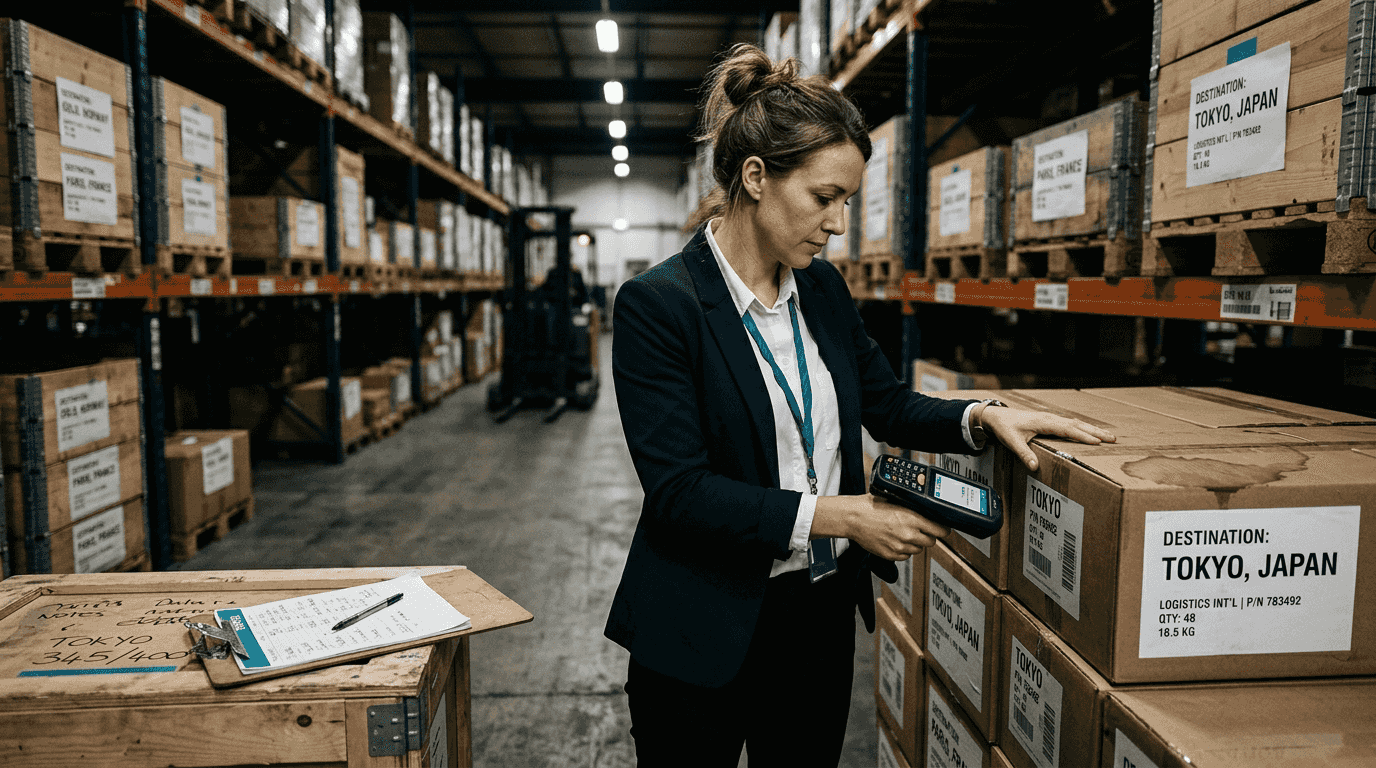
Air freight provides unmatched speed but typically costs more than ocean freight, which impacts budgeting decisions. This cost premium stems from fuel consumption, limited cargo capacity, and premium service positioning. Weight and size restrictions further complicate planning, as airlines impose strict limits on dimensions and total shipment weight. Freight class and volumetric weight calculations often surprise shippers, with lightweight but bulky items incurring charges based on space occupied rather than actual weight.
Regulatory complexity adds another layer of challenge. Each country enforces unique customs requirements, import duties, and prohibited item lists. Hazardous materials face especially stringent rules, requiring specialized packaging, documentation, and carrier approvals. Navigating these regulations demands expertise, making shipping hazardous materials guidelines essential reading for affected shippers.
Common challenges include:
- Higher per-kilogram costs compared to ocean and ground transport
- Strict weight limits per package and per shipment
- Volumetric weight pricing that penalizes low-density cargo
- Complex documentation requirements varying by origin and destination
- Limited capacity during peak seasons like holidays
Pro Tip: Negotiate volume contracts with freight forwarders or consolidate multiple shipments to secure better rates. Many forwarders offer tiered pricing that rewards consistent shipping volumes, potentially reducing your international shipping costs by 15 to 30%.
“The key to successful air freight strategy lies in knowing when speed justifies the premium. For products with high margins, short shelf lives, or urgent demand, air freight transforms from an expense into a competitive advantage.” — Global Logistics Director, Fortune 500 Manufacturer
International air freight process from booking to delivery
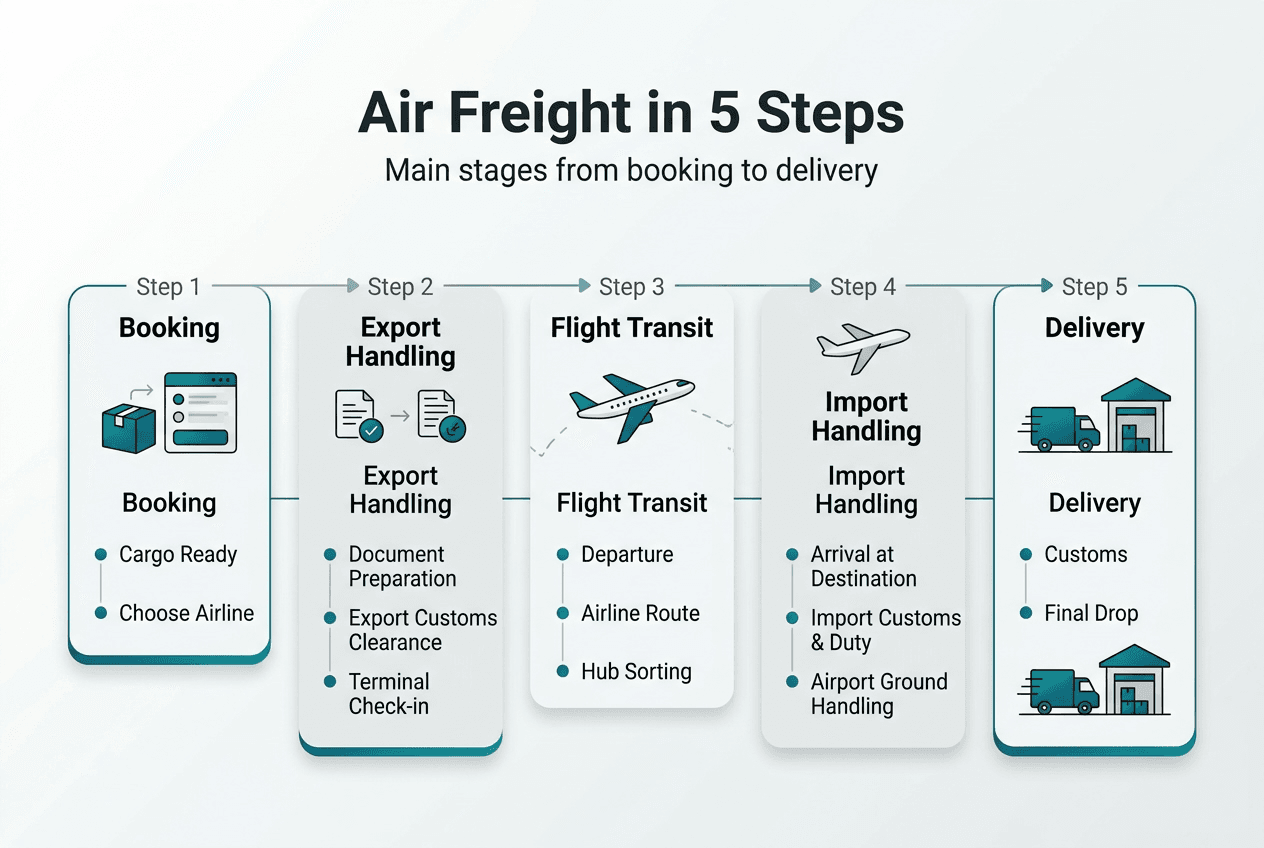
The air freight journey follows a structured sequence that begins long before your cargo boards an aircraft. Understanding each step helps you anticipate requirements, avoid delays, and maintain shipment visibility from origin to destination.
Step-by-step air freight process:
- Booking: Contact a freight forwarder or cargo airline to reserve space, providing shipment details including dimensions, weight, origin, destination, and desired transit time.
- Packaging: Prepare cargo according to airline specifications, using appropriate materials for fragile, hazardous, or temperature-sensitive goods.
- Documentation: Complete required paperwork including air waybill, commercial invoice, packing list, and any certificates of origin or compliance documents.
- Air transport: Cargo moves from your facility to the origin airport, undergoes security screening, loads onto the aircraft, and flies to the destination country.
- Customs clearance: Customs officials review documentation, assess duties and taxes, and release cargo for delivery or request additional information.
- Final delivery: Once cleared, cargo transfers to ground transportation for delivery to your warehouse, fulfillment center, or end customer.
Freight forwarders play a crucial role managing the end-to-end air freight process, including booking, documentation, and customs clearance. Their expertise proves invaluable when navigating complex international regulations and coordinating multiple logistics providers.
Key documentation required for customs clearance:
- Air waybill with complete shipper and consignee details
- Commercial invoice listing item descriptions, values, and HS codes
- Packing list detailing package contents and dimensions
- Certificate of origin proving product manufacturing location
- Import licenses or permits for regulated goods
- Safety data sheets for hazardous materials
| Service Type | Typical Transit Time | Relative Cost | Best For |
|---|---|---|---|
| Express Air Freight | 1-2 days | Highest | Urgent shipments, critical components, time-sensitive goods |
| Standard Air Freight | 3-5 days | Moderate | Regular inventory replenishment, seasonal products |
| Deferred Air Freight | 5-7 days | Lower | Less urgent shipments where cost matters more than speed |
Pro Tip: Choose freight forwarders with dedicated customs brokerage teams and strong relationships with destination country officials. This expertise accelerates clearance, reducing the risk of costly delays that negate air freight’s speed advantage. Review the air freight forwarding process and customs clearance explained resources for deeper operational insights.
Choosing the right international air freight service for your business
Selecting the optimal air freight service requires balancing speed, cost, and reliability against your specific business needs. Different service tiers cater to varying urgency levels and budget constraints, making it essential to match your shipment characteristics with the appropriate option.
| Service Type | Pros | Cons |
|---|---|---|
| Express Air Freight | Fastest delivery (1-2 days), premium handling, extensive tracking | Highest cost, limited weight capacity, premium fuel surcharges |
| Standard Air Freight | Balanced speed and cost, wide carrier availability, reliable schedules | Moderate pricing, 3-5 day transit, less flexibility for changes |
| Deferred Air Freight | Lower cost than express/standard, still faster than ocean, good for planned shipments | Longer transit (5-7 days), fewer flight options, less priority handling |
When evaluating logistics partners, focus on criteria that directly impact your operations. Network coverage determines whether a forwarder can efficiently handle your origin and destination pairs. Pricing transparency reveals hidden fees before they surprise you on invoices. Technology capabilities enable real-time tracking, automated documentation, and seamless integration with your systems. Customs expertise prevents clearance delays that undermine air freight’s speed advantage.
Selecting the right freight forwarder and air freight service can improve supply chain efficiency and reduce costs significantly. Ask potential partners these critical questions:
- What is your on-time delivery rate for my specific trade lanes?
- How do you handle customs delays or documentation issues?
- What technology platforms do you provide for shipment visibility?
- Can you provide references from businesses in my industry?
- What volume commitments are required for preferential pricing?
- How quickly can you respond to urgent or expedited requests?
Pro Tip: Verify carrier certifications like IATA membership, TSA approval for secure cargo handling, and ISO quality standards before committing to a partnership. Check online reviews and request case studies demonstrating successful handling of shipments similar to yours. These validation steps prevent costly mistakes and ensure your logistics partner can deliver on promises.
Integrating shipment tracking software enhances transparency and control. Modern platforms provide real-time updates, exception alerts, and predictive analytics that help you anticipate delays and communicate proactively with customers. Many freight booking solutions comparison tools now offer API integrations with popular e-commerce platforms, automating data flow and reducing manual entry errors.
Consider your product characteristics when making service decisions. High-value electronics justify express air freight costs through reduced inventory risk and faster time to market. Fashion items with short selling seasons benefit from standard air freight that balances speed and cost. Commodity products with predictable demand patterns may work well with deferred air freight, saving money while still outpacing ocean transport.
Enhance your international air freight strategy with ORNER
Navigating international air freight becomes simpler when you have expert resources at your fingertips. ORNER provides comprehensive comparisons of top freight booking solutions and freight forwarding services, helping e-commerce sellers and manufacturers make informed decisions quickly. Our platform connects you with vetted logistics partners who specialize in cross-border air freight, reducing the time spent researching and vetting providers.
Whether you’re shipping electronics from Asia, fashion from Europe, or pharmaceuticals globally, ORNER’s curated guides streamline your decision-making process. Explore our detailed freight forwarding procedure guide to understand end-to-end logistics workflows, or dive into service comparisons to identify partners that match your volume, budget, and service requirements. Let ORNER be your trusted resource for optimizing international air freight operations in 2026.
Frequently asked questions
What factors affect the cost of international air freight?
Speed, weight, volume, and freight class create the foundation of air freight pricing. Heavier and bulkier shipments cost more due to limited aircraft capacity, while higher freight classes for fragile or hazardous goods incur premium handling fees. Fuel surcharges fluctuate with oil prices, often adding 20 to 40% to base rates. Customs fees, import duties, and destination country taxes further increase total landed costs. Reducing expenses involves consolidating shipments, negotiating volume discounts, choosing slower service tiers when urgency permits, and optimizing packaging to minimize volumetric weight. Review international shipping cost factors for detailed breakdowns.
How can I ensure smooth customs clearance for air freight shipments?
Accurate and complete documentation forms the cornerstone of smooth customs clearance. Ensure your commercial invoice includes precise item descriptions, correct HS codes, and declared values matching actual transaction amounts. Working with experienced customs brokers or freight forwarders who understand destination country regulations prevents common pitfalls like missing certificates or incorrect classifications. Pre-clearance programs offered by some countries allow advance document review, accelerating release upon arrival. Compliance programs like C-TPAT in the United States or AEO in Europe provide trusted trader status, reducing inspection frequency and clearance times. Consult customs clearance explained for step-by-step guidance.
What are the differences between air freight and courier services for international shipping?
Air freight handles larger shipments exceeding courier weight limits, typically starting at 100 kilograms and scaling to multiple pallets or containers. Courier services like DHL, FedEx, and UPS excel at smaller parcels under 70 kilograms, offering door-to-door delivery with integrated customs clearance. Air freight generally costs less per kilogram for bulk shipments but requires separate ground transportation and customs brokerage arrangements. Couriers provide faster end-to-end transit for small packages through streamlined processes and extensive delivery networks. Choose air freight for consolidated inventory shipments to warehouses or fulfillment centers, and couriers for direct-to-consumer deliveries or urgent small parcels. Learn more about the difference between courier and freight to match your shipping needs.
How do I calculate volumetric weight for air freight shipments?
Volumetric weight converts package dimensions into a weight equivalent for pricing purposes, ensuring airlines charge fairly for space-consuming cargo. Calculate by multiplying length, width, and height in centimeters, then dividing by 6,000 (the standard air freight volumetric divisor). For example, a box measuring 50cm x 40cm x 30cm equals 60,000 cubic centimeters, divided by 6,000 gives 10 kilograms volumetric weight. Airlines charge based on whichever is greater: actual weight or volumetric weight. Optimize packaging by minimizing empty space, using custom boxes sized to your products, and avoiding oversized outer packaging that inflates volumetric calculations unnecessarily.
What items are prohibited or restricted in international air freight?
Prohibited items vary by country but commonly include explosives, flammable liquids, toxic substances, radioactive materials, and certain biological agents. Restricted items like lithium batteries, dry ice, and aerosols require special packaging, labeling, and documentation to ship legally. Each airline maintains a dangerous goods list specifying handling requirements for restricted cargo. Countries also enforce import bans on items like certain foods, plants, animals, and cultural artifacts. Always verify both airline and destination country regulations before booking. Violating restrictions results in shipment refusal, fines, and potential legal consequences. Freight forwarders with dangerous goods certification can guide you through compliance requirements for restricted items.