

Over 80 percent of businesses say shipping challenges have a direct impact on customer satisfaction. Every lost package or delayed delivery can put your reputation at risk and cut into profits. Choosing the right shipping carrier involves more than just looking at price tags or brand names; it requires matching your unique business needs with carrier strengths. This guide walks you through each key step so you can make confident, informed decisions that improve efficiency and delight your customers.
Table of Contents
- Step 1: Define Your Shipping Requirements And Destinations
- Step 2: Compare Carrier Costs, Delivery Speed, And Reliability
- Step 3: Evaluate Service Coverage And Special Handling Options
- Step 4: Review Technology Integration And Tracking Capabilities
- Step 5: Test Carriers With Trial Shipments And Analyze Results
Quick Summary
| Key Point | Explanation |
|---|---|
| 1. Define your shipping requirements clearly | Begin by identifying shipping destinations, package specifics, and handling needs to match your business logistics. |
| 2. Compare carrier costs and reliability | Create a spreadsheet to track shipping rates, delivery times, and service reliability for effective comparison. |
| 3. Evaluate service coverage and special handling | Assess carriers on their ability to manage unique product needs for safe and efficient delivery. |
| 4. Investigate technology integration | Check for advanced tracking systems that enhance customer satisfaction and streamline shipping processes. |
| 5. Test carriers with trial shipments | Conduct trial shipments to gather data on carrier performance before making final decisions. |
Step 1: Define your shipping requirements and destinations
Identifying your shipping requirements and destinations is the foundational step in selecting reliable carrier services. This critical process will help you match your business needs with the right shipping solutions.
According to the U.S. Department of Commerce, businesses must carefully evaluate their international shipping options by considering several key factors. Start by mapping out your precise shipping destinations, which could range from local regions to global markets. Consider the specific countries or regions where you plan to ship products, understanding that each location might have unique logistics challenges. The National Academies Press recommends assessing factors like reliability, transit time, and transportation costs National Academies Press.
When defining your shipping requirements, create a comprehensive checklist that includes critical elements such as package dimensions, weight ranges, expected delivery timelines, and potential special handling needs. Pay attention to whether you require standard ground shipping, express delivery, or specialized international freight services. Consider your product characteristics – fragile electronics will have different shipping needs compared to robust industrial equipment. Reliable courier services in the USA can help you navigate these complex decisions.
Pro Tip: Always factor in potential customs requirements and additional documentation needed for international shipments, as these can significantly impact your overall shipping strategy.
By thoroughly understanding your shipping requirements upfront, you will be better positioned to select carriers that align perfectly with your business objectives and customer expectations.

Step 2: Compare carrier costs, delivery speed, and reliability
Comparing shipping carrier options is a critical step in developing an efficient and cost effective logistics strategy. Your goal is to find the most reliable and economical solution that meets your specific business needs.
GovFacts provides valuable insights into comparing major carriers by examining their performance across key metrics. Create a comprehensive comparison spreadsheet that tracks important factors like base shipping rates, dimensional weight pricing, delivery timeframes, and service reliability. Pay close attention to zone based pricing, which can significantly impact your overall shipping expenses. Consider not just the upfront costs but the total landed cost including potential surcharges for fuel adjustments, residential delivery, or special handling requirements.
When evaluating carrier performance, look beyond just price. The USPS Office of Inspector General emphasizes the importance of consistent delivery performance and service reliability. 7 Key Factors in Comparison of Shipping Carriers can help you develop a nuanced assessment strategy. Analyze historical on time delivery rates track record of damage claims and customer service responsiveness.
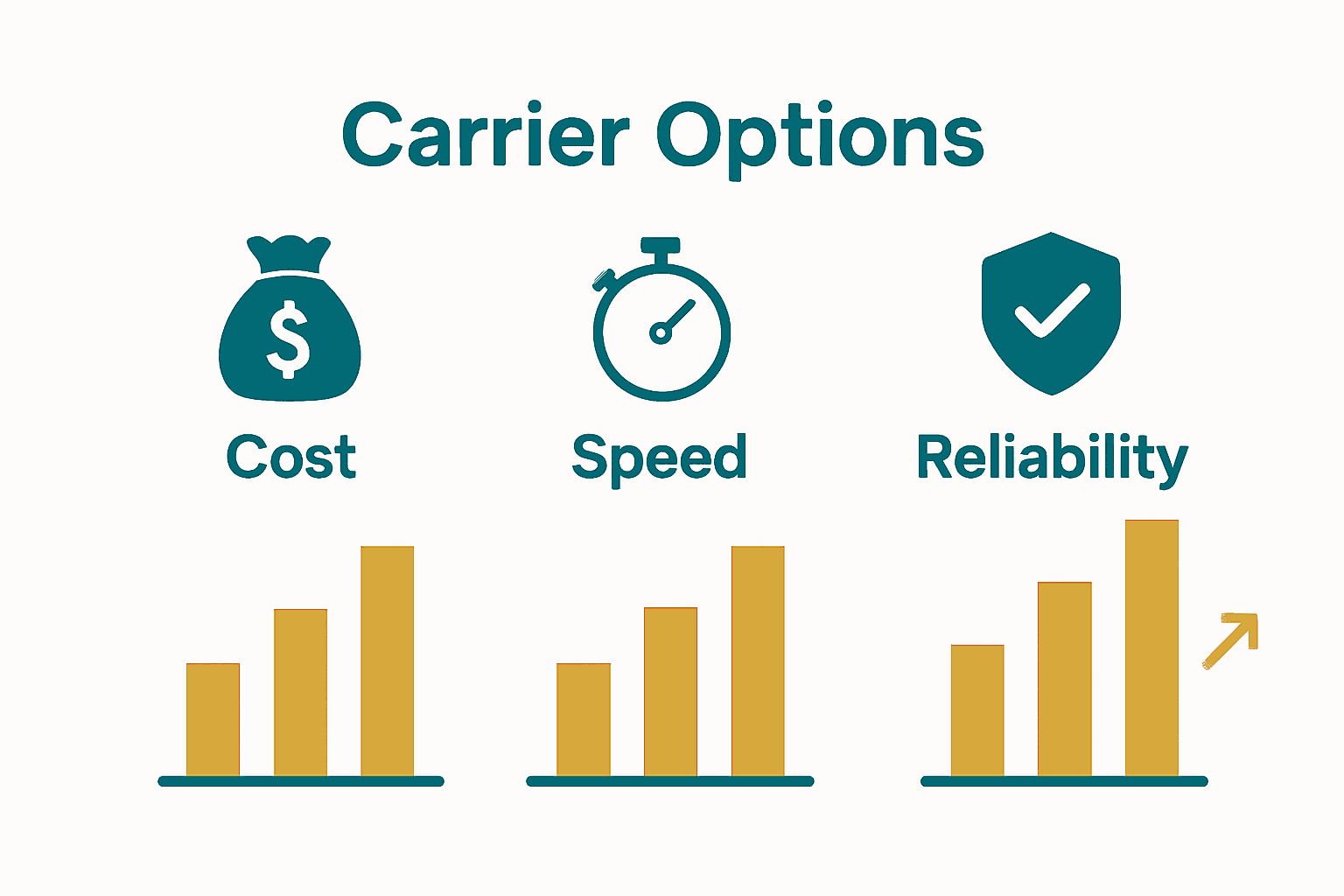 Some carriers might offer lower rates but have inconsistent delivery performance that could harm your business reputation.
Pro Tip: Request detailed shipping reports from potential carriers and analyze their performance data over multiple quarters to get a comprehensive understanding of their reliability.
By methodically comparing carrier options you will find a shipping partner that balances cost effectiveness with reliable service performance.
Step 3: Evaluate service coverage and special handling options
Evaluating service coverage and special handling options is crucial for ensuring your products arrive safely and efficiently. This step will help you match carrier capabilities with your unique shipping requirements.
According to the U.S. Department of Commerce, businesses must carefully assess carriers based on their ability to handle specific product needs. Some carriers specialize in fragile items, while others excel in oversized or temperature sensitive shipments. Create a detailed inventory of your products unique characteristics including weight dimensions special storage requirements and potential handling challenges. For instance electronics might need anti static packaging while perishable goods require climate controlled transportation.
Examine each potential carriers service coverage map to understand their geographical reach and delivery capabilities. International Parcel Shipping resources can help you identify carriers with robust global networks. Look beyond standard shipping options and investigate specialized services such as express delivery signature confirmation insurance options and tracking capabilities. Pay attention to how carriers manage exception handling damage claims and customer support for complex shipments.
Pro Tip: Request sample handling protocols from potential carriers and review their track record with similar product types in your industry.
By thoroughly evaluating service coverage and special handling capabilities you will minimize shipping risks and create a more reliable logistics strategy.
Step 4: Review technology integration and tracking capabilities
Technology integration and tracking capabilities are critical components in selecting the right shipping carrier for your business. This step will help you evaluate the digital tools and real time visibility options that can streamline your logistics operations.
According to the American Customer Satisfaction Index, advanced tracking technologies significantly impact customer satisfaction and carrier performance. Assess each carriers technological ecosystem by examining their mobile apps API integration capabilities and tracking precision. Look for features like real time shipment updates customizable tracking notifications and compatibility with your existing inventory management systems. Track and Trace Technology solutions can provide deeper insights into your shipping workflows and help you make more informed logistical decisions.
The USPS Office of Inspector General emphasizes the importance of robust tracking infrastructures. Evaluate carriers based on their ability to provide granular tracking information including precise geolocation estimated delivery times and proof of delivery documentation. Consider how easily their tracking systems integrate with your current business intelligence tools and whether they offer advanced analytics that can help you optimize shipping strategies.
Pro Tip: Request detailed demonstrations of tracking platforms and test their responsiveness across different device types and network conditions.
By thoroughly investigating technology integration and tracking capabilities you will select a carrier that provides transparency and empowers your business with actionable shipping intelligence.
Step 5: Test carriers with trial shipments and analyze results
Testing carriers through trial shipments is the ultimate validation method for your shipping strategy. This critical step transforms theoretical carrier assessments into concrete performance insights that will guide your final decision.
According to the General Services Administration, systematic data collection through trial shipments is essential for measuring actual carrier performance. Design a comprehensive test protocol that involves shipping multiple packages across different destinations using each potential carrier. Select a representative sample of your product types including various weights dimensions and fragility levels. Essential courier services for small businesses can provide additional context for structuring these trial shipments.
The National Academies Press recommends a meticulous approach to analyzing trial shipment results. Create a detailed tracking spreadsheet that captures key performance metrics including delivery time accuracy package condition upon arrival total shipping costs unexpected fees and customer satisfaction indicators. Pay special attention to how carriers handle exception scenarios like address corrections package redirections or potential damage claims.
Pro Tip: Send identical test packages simultaneously through different carriers to create a direct comparative analysis that eliminates external variables.
By methodically testing and analyzing carrier performance through trial shipments you will transform subjective impressions into data driven shipping decisions.
Find Reliable Courier Services That Simplify Your Shipping Challenges
Choosing the right shipping carriers for reliable delivery can feel overwhelming with so many factors to consider like costs, transit times, special handling, and technology integration. Your goal is to reduce surprises, avoid delays, and delight customers every time. At or-ner.com, we understand these pain points and provide a streamlined platform to help ecommerce sellers and businesses like yours connect with trusted carriers tailored to your needs.
With our comprehensive logistics solutions, you get more than just shipping options. Benefit from real-time tracking, customs clearance support, and a global network of fulfillment centers. This means your shipments stay visible and reliable from origin to destination, making sure your products arrive safely and on schedule. Discover how our end-to-end tools empower you to take control of your logistics and turn shipping challenges into competitive advantages.
Ready to transform your delivery experience with reliable courier services designed for your business?
Explore our platform today at or-ner.com and start testing carriers with confidence backed by data, technology, and dedicated support. Your customers expect on-time delivery. We make it happen seamlessly.
Frequently Asked Questions
How do I define my shipping requirements for choosing carriers?
Understanding your shipping requirements involves evaluating factors such as package dimensions, weight ranges, and delivery timelines. Create a checklist of these elements to identify the specific services you need, ensuring they align with your product characteristics, like fragility or size.
What should I compare when evaluating shipping carrier costs?
When comparing shipping carrier costs, focus on base shipping rates, delivery timeframes, and reliability metrics. Create a comparison spreadsheet to track these factors, including potential surcharges, to determine the total landed cost for your shipping needs.
How do I assess a carrier’s service coverage and special handling options?
To evaluate a carrier’s service coverage and special handling options, examine their geographical reach and ability to manage your product’s unique needs. Create a detailed inventory of your products’ characteristics and match these with the carriers’ capabilities to ensure safe and efficient delivery.
What technology features should I look for in a shipping carrier?
Look for carriers that offer robust tracking technologies like real-time shipment updates and API integration capabilities. Assess their tracking precision and ensure their systems can seamlessly integrate with your existing tools to enhance operational efficiency.
How do I perform trial shipments to test potential carriers?
Conduct trial shipments by sending multiple packages through different carriers using a representative sample of your products. Track performance metrics such as delivery time accuracy and package condition to gain insights for your carrier selection, simplifying your decision-making process.
Why is it important to analyze carrier performance with trial shipments?
Analyzing carrier performance with trial shipments provides concrete data on reliability and service quality. Collect metrics such as shipping costs and customer satisfaction to ensure you’re making an informed choice, ultimately leading to a more successful shipping strategy.